Tassel knowledge base

What Are Beaded Tassels?

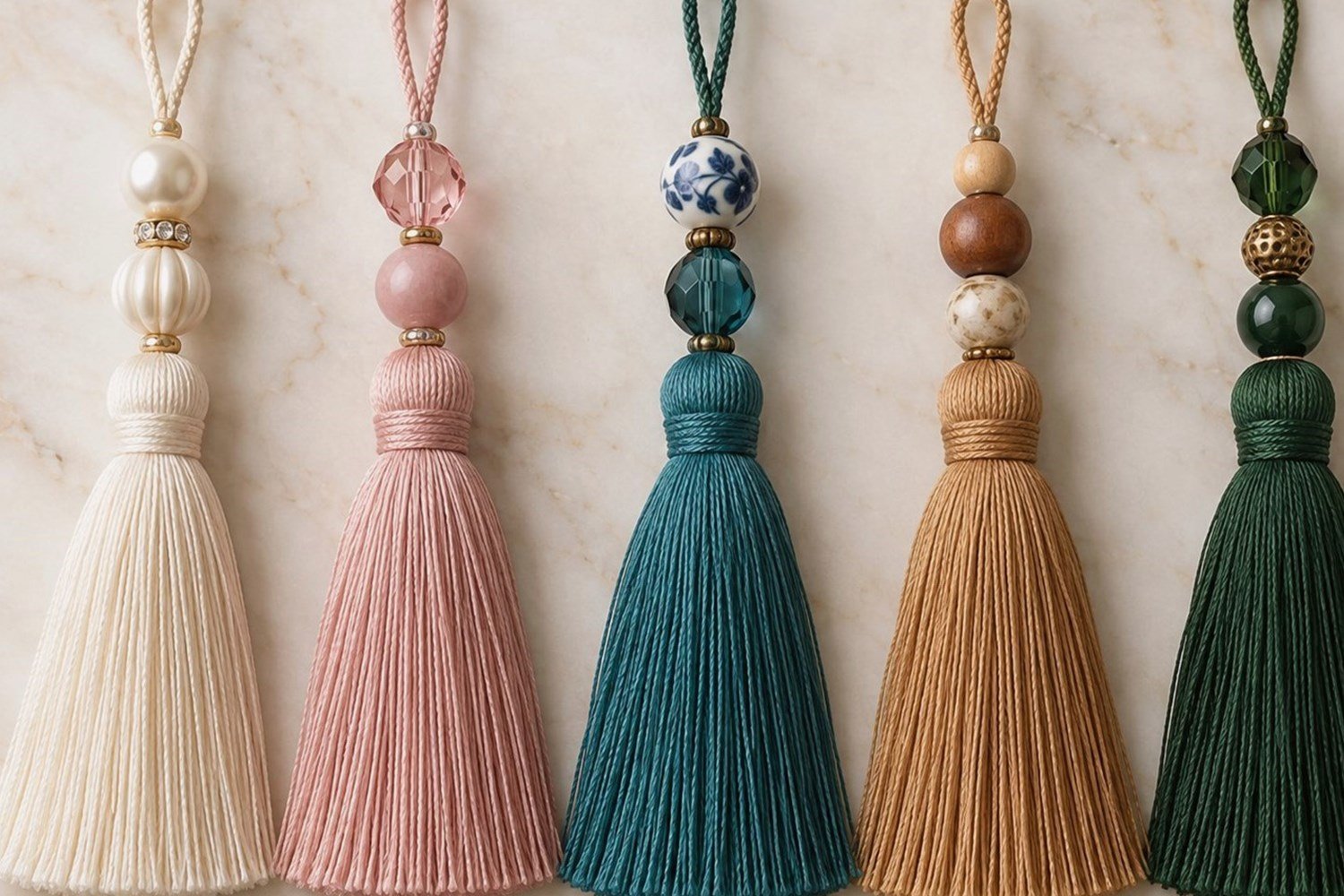
Beaded tassels are tassels in which beads form a visible and defining part of the structure or decorative design. Beads can form strands, sit above the tassel head, appear on the cord, or act as decorative components on a textile tassel. They are not made entirely from beads, and can also be decorative, bookmark, key, curtain, or accessory tassels.

Beaded tassel showing textile body, bead strands, head, cord, loop, and decorative components

Quick Reference

Beaded Tassel Basics

What is it?
A tassel with visible bead structure or detail.
Main structures
Textile tassel with beads or bead strands.
Bead materials
Glass, wood, acrylic, metal, verified crystal.
Applications
Décor, curtains, bookmarks, bags, accessories.
Quick rule
Specify beads and textile parts together.
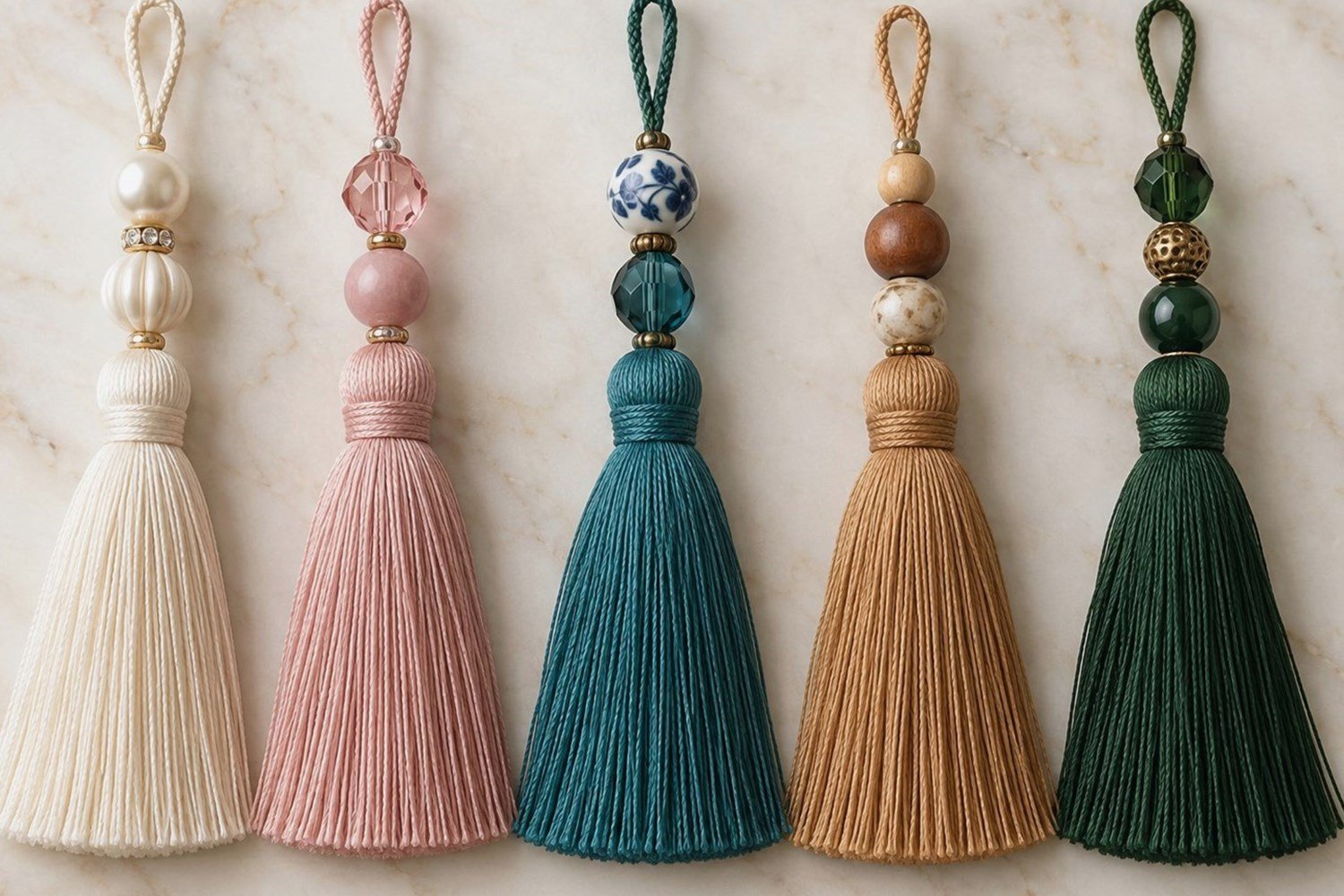
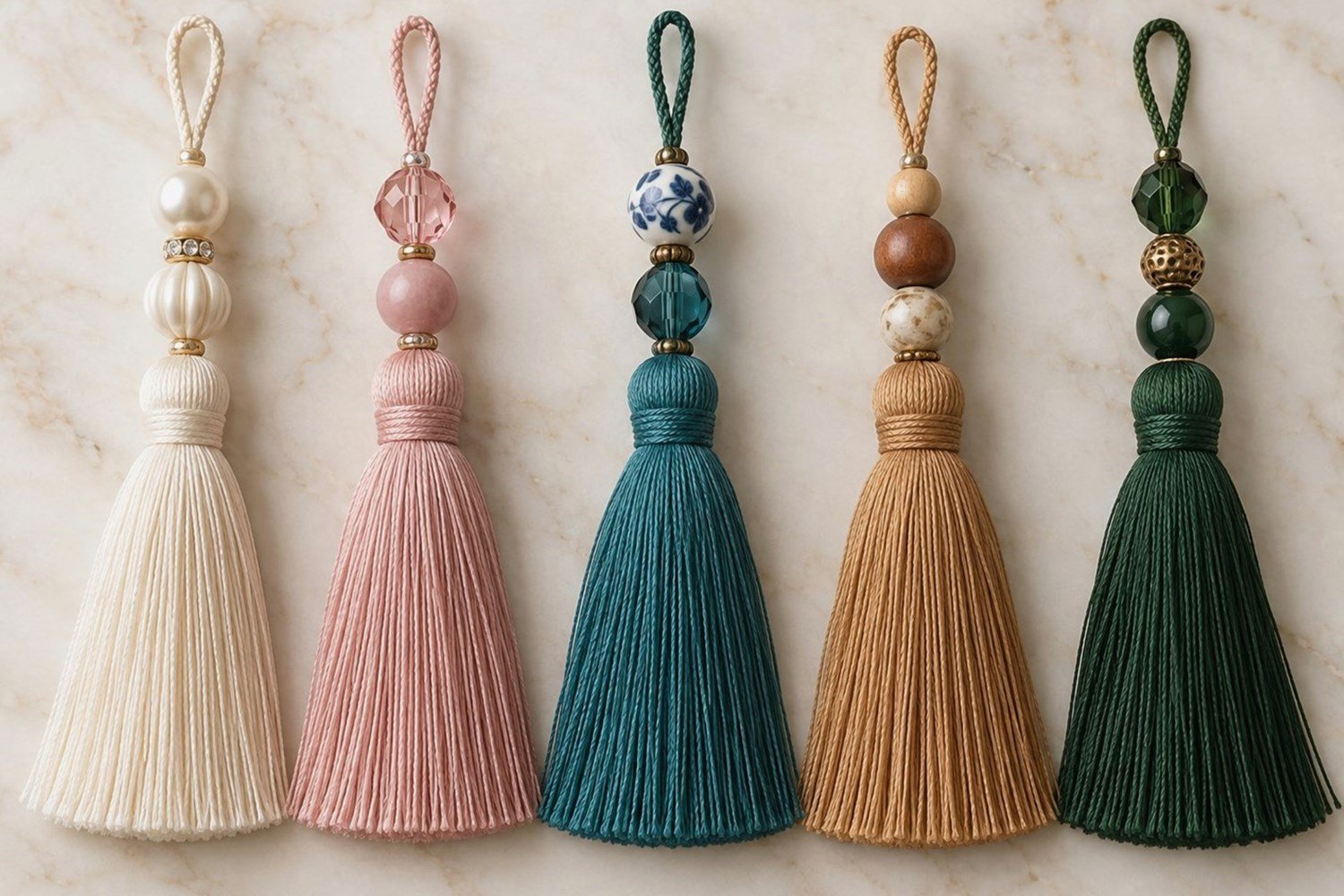
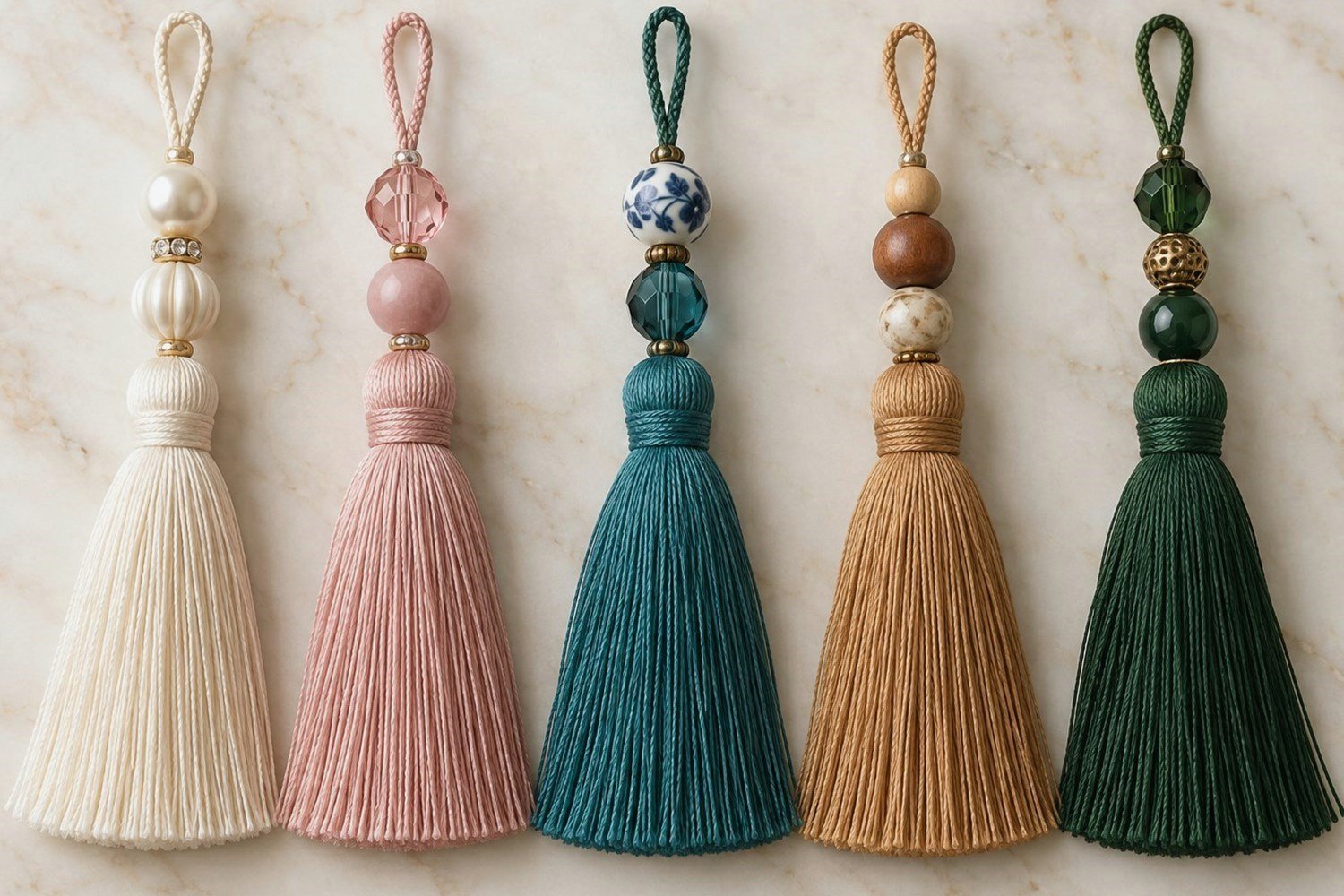
Beaded tassels with textile bodies, bead strands, cords, caps, and mixed decorative components

Overview

Beads Define a Visible Product Feature

A beaded tassel is defined by beads that are visibly important to the finished design, rather than by one fixed construction or one bead material. Beads may form the hanging strands, create a head, sit on the cord, or decorate a textile body. The appropriate structure depends on intended use, movement, scale, material context, and approved product direction.

FeatureWhat Can Vary
Textile bodyYarn, thread, cord, skirt
Bead structureStrands, head, cord, accent
Bead materialGlass, wood, acrylic, metal, crystal-style
PlacementAbove head, within skirt, on cord, at end
ScaleBead size, tassel size, overall weight
AttachmentLoop, cord, ring, product-specific connection

Main Content

What Are the Main Beaded Tassel Structures?

Textile tassel with beads compared with bead-strand tassel construction

Beaded tassels commonly use either a textile tassel body with decorative beads or a bead-strand structure where beads form a larger part of the visible hanging element. Both can be beaded tassels. A product does not need to be made entirely from beads, and a beaded construction can overlap with decorative or application-specific categories.

StructureTypical Focus
Textile tassel with beadsThread or yarn body plus bead accents
Bead-strand tasselBeads form visible hanging strands
Beaded head tasselBeads group around head or neck
Cord-beaded tasselBeads decorate the cord or loop
Mixed-material tasselTextile, beads, caps, and other parts

Common parts include the head or binding, textile skirt or bead strands, cord or loop, beads, caps, rings, and other decorative components. Bead placement affects movement, visual balance, and the attachment relationship with the finished product.

Bead Materials, Shapes, and Weight

Glass, wooden, acrylic, metal, seed, and crystal-style beads used in beaded tassels

Bead material, size, shape, and placement influence the appearance, movement, visual weight, and suitability of a beaded tassel. Seed beads can create fine detail; glass can provide a smooth reflective look; wood can give a natural direction; acrylic can support varied shapes; metal can add an accent. “Crystal” should be used only when the bead material is verified.

Bead materialWhat to Discuss
Seed beadsFine visual detail and pattern
Glass beadsColor, transparency, finish
Wooden beadsNatural grain and scale
Acrylic beadsShape, color, and surface
Metal beadsFinish and connection
Crystal-style beadsVerified material and reflected appearance

There is no universal bead size, count, or tassel weight. Heavier tassels are not automatically better, and more beads or more sparkle do not automatically indicate higher quality. Choose the weight and proportion for the actual curtain, cushion, bookmark, bag, key, jewelry, or packaging application.

Placement, Color, Size, and Movement

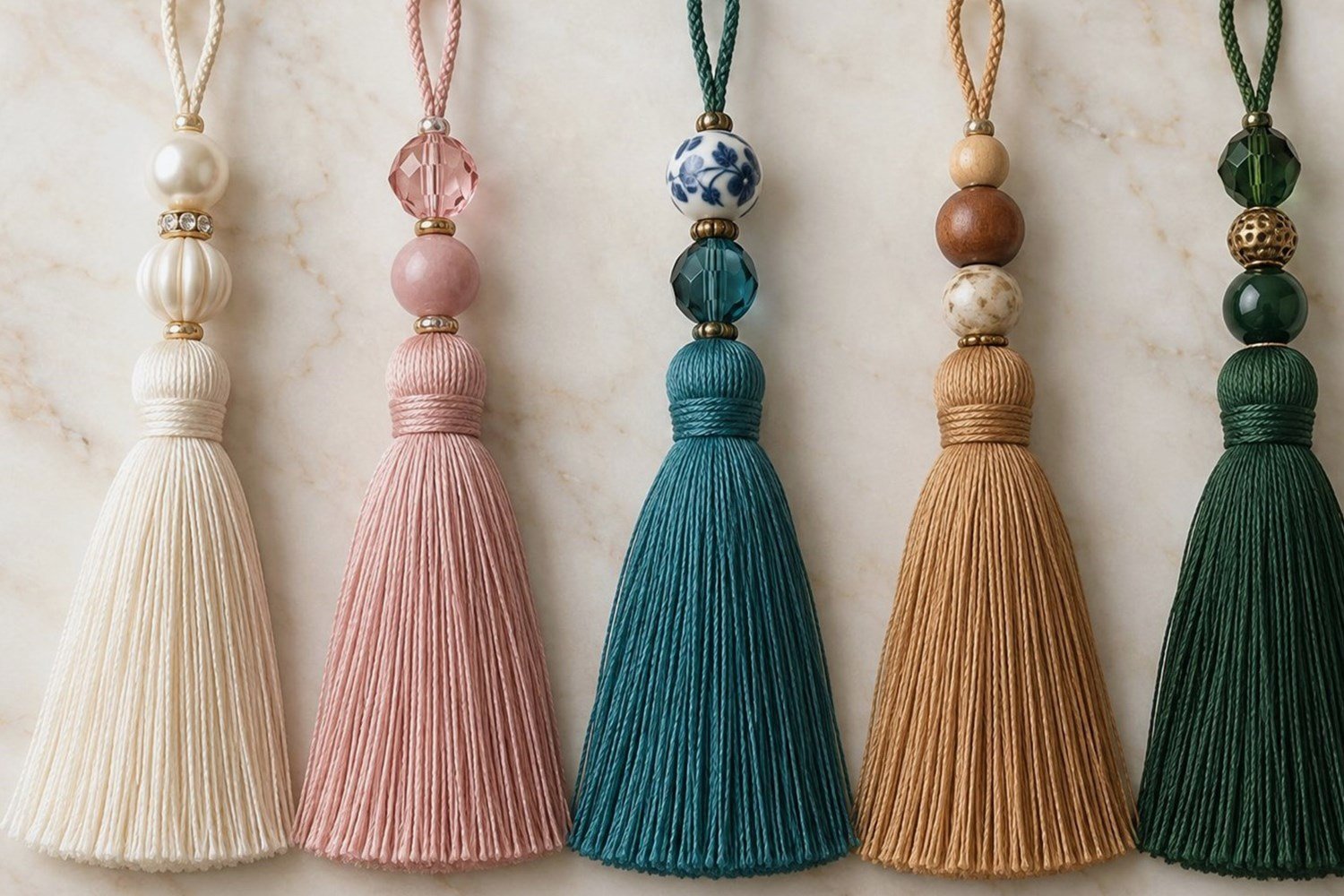
Beaded tassels compared for bead placement, bead size, color, body length, cord, and overall proportion

Placement and proportion should be specified together because bead position changes a tassel’s silhouette, movement, visual balance, and relationship with the product. Beads can sit above the head, around the neck, within textile strands, on cords, or at hanging ends. The choice should complement the textile body and intended attachment.

CheckWhy It Matters
Bead placementControls visual focus and movement
Bead shapeChanges surface and style direction
Bead sizeAffects proportion and visual weight
Tassel bodyBalances strands against beads
Cord or loopSets connection and hanging position
ColorCoordinates beads, textile, and product

Define body length, cord length, loop length, and overall assembled size separately. No universal beaded tassel size exists. Use Tassel Size and Length and Tassel Colors for related planning.

Where Are Beaded Tassels Used?
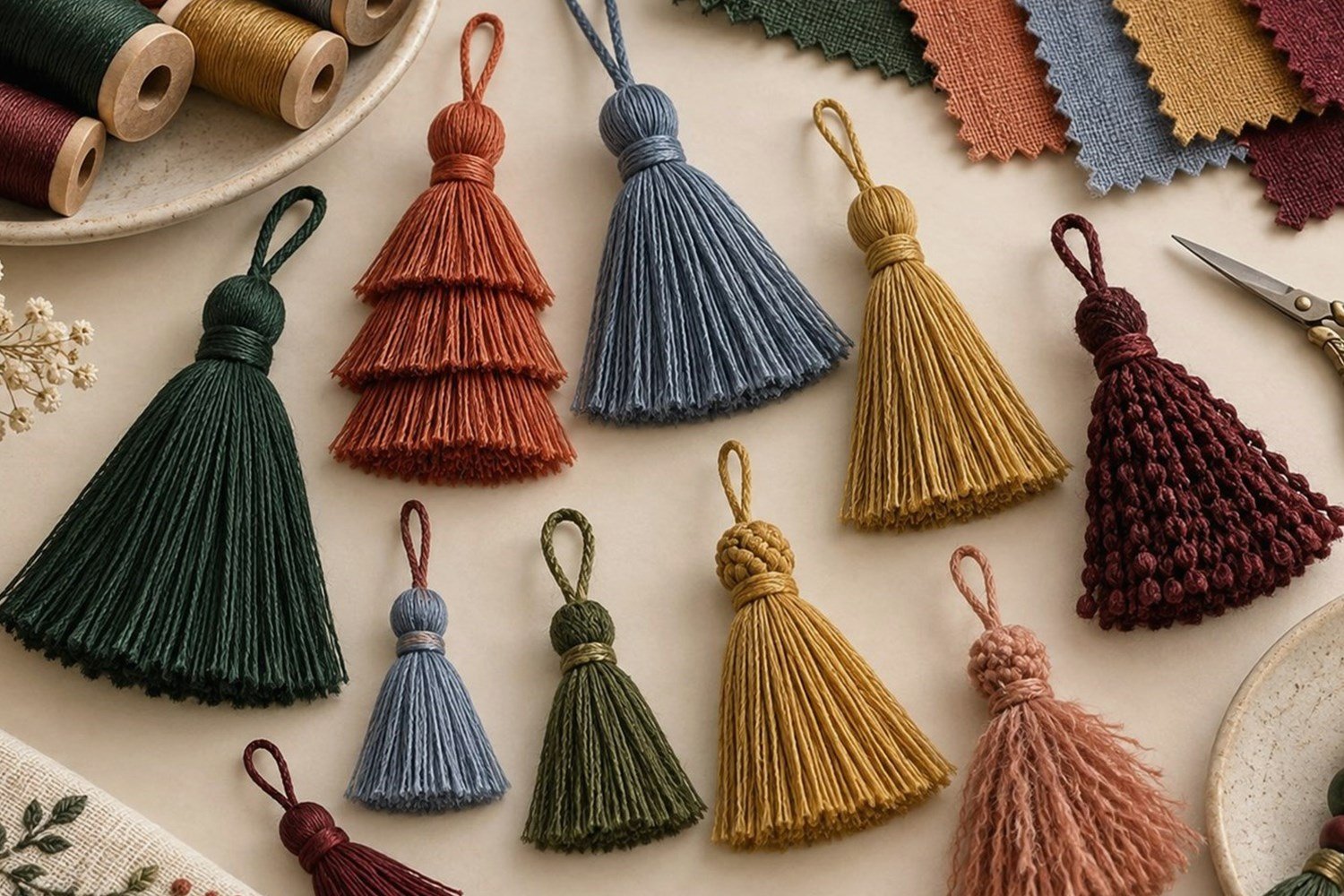
Beaded tassels used on curtains, cushions, bookmarks, keys, bags, jewelry, and decorative products

Beaded tassels are used where a product needs a visible ornamental detail with texture, color, movement, or a component-led accent. Home décor and curtain styles may use beads with cords and textile bodies; bookmarks require an appropriate loop and visual weight; bags, keys, and accessories need a suitable connection; jewelry designs may use smaller component-led forms.

ApplicationKey Consideration
Curtains and draperyCord, fabric coordination, hanging scale
Cushions and furnitureCorner or seam proportion, attachment
BookmarksLoop, hole, body weight, page use
Keys and bagsConnection and movement
Jewelry and accessoriesComponent finish and scale
Gifts and packagingTheme, color, and presentation

A beaded tassel can also be a Beaded Tassel, a Bookmark Tassel, or a Decorative Tassel. The product category and bead feature can overlap.

Beaded Tassels, Trim, Fringe, and Decorative Tassels
Individual beaded tassel, continuous beaded tassel trim, beaded fringe, and decorative tassel compared

An individual beaded tassel is different from continuous beaded tassel trim and continuous beaded fringe, even though all may use beads and textile decoration. A beaded tassel is one ornament. Beaded tassel trim repeats tassels along a continuous header. Beaded fringe is a continuous hanging construction. Decorative tassel is a purpose category that can include a beaded tassel.

FormConstructionUse
Beaded tasselOne ornament with beadsAccent, cord, corner, accessory
Beaded tassel trimRepeated tassels on trimEdges and upholstery
Beaded fringeContinuous strands with beadsBorders and decoration
Decorative tasselOrnamental-purpose categoryCan include beaded forms

Custom Beaded Tassels, Quality, and B2B Requirements

Custom beaded tassels with specified bead materials, colors, textile bodies, cords, loops, and attachments

Custom beaded tassels should be specified through the complete structure: application, textile body, bead materials, bead placement, dimensions, color, cord, attachment, and approved reference. Selection should begin with the finished product, not a bead image alone. A sample should show material balance, components, movement, and proportion in use.

  1. Define application and attachment.
  2. Define textile body, bead material, size, shape, and placement.
  3. Define color, cord, loop, caps, rings, and other components.
  4. Define body, cord, loop, and overall dimensions separately.
  5. Approve a complete reference and inspect relevant production units against it.
RequirementBuyer ReferenceApproved Specification
ApplicationCurtain, cushion, bookmark, bag, accessory
Tassel bodyMaterial, head, skirt, cord, loop
BeadsMaterial, shape, size, placement
ColorTextile, bead, components, reference
ScaleBody, cord, overall proportion
QualitySample, finishing, packaging

Quality checklist: check bead material, shape, color, placement, connection, textile body, strands, head, cord, loop, attachment, finishing, and relevant consistency. See How to Check Tassel Quality and How to Customize Tassels.

Common Beaded Tassel Mistakes

Common beaded tassel mistakes involving bead weight, placement, material, color, attachment, and proportion

Most beaded tassel problems result from undefined materials, unclear bead placement, untested weight, or evaluating beads without the textile body and end product. A documented complete sample reduces those risks.

MistakeBetter Approach
Assuming beads define the whole productSpecify textile and bead parts
Using crystal without verificationName actual bead material
Choosing more beads for qualityReview proportion and execution
Ignoring weightTest with intended product
Undefined placementShow approved position
Assuming one sizeDefine actual dimensions
Confusing trim and individual tasselSpecify product form
Screen-only colorsApprove material reference
Beaded tassel examples showing bead materials, textile bodies, cords, loops, applications, and attachment methods

FAQ

Frequently Asked Questions

Direct answers about bead-defined tassel products.

What are beaded tassels?

Beaded tassels are tassels with beads as a visible and defining structural or decorative feature. Beads may form strands or act as components on a textile tassel body.

Are beaded tassels made entirely from beads?

No. A beaded tassel can combine yarn, thread, cord, caps, loops, and other parts with beads. The exact construction depends on the design.

What beads are used for tassels?

Common options include seed beads, glass, wood, acrylic, metal, and verified crystal-style components. Each changes appearance, weight, and application suitability.

What is a seed bead tassel?

A seed bead tassel uses small beads to create fine visible detail or patterns. It may be a bead-strand construction or combine seed beads with textile parts.

Can beaded tassels be used on curtains?

Yes. Curtain and drapery applications should specify cord, fabric coordination, bead materials, scale, attachment, and the intended hanging effect.

Can beaded tassels be used on bookmarks?

Yes, when the loop, body weight, bead placement, bookmark material, and hole or eyelet system suit the complete bookmark product.

Do beaded tassels have a standard size?

No. There is no universal beaded tassel or bead size. Dimensions should be selected for the specific application and approved reference.

Are heavier beaded tassels higher quality?

No. Weight should be appropriate for the application. Quality depends on material, construction, attachment, finishing, proportion, and inspection.

Are beaded tassels decorative tassels?

They can be. Beaded describes a defining feature, while decorative describes an ornamental purpose, so one tassel can fit both categories.

Can beaded tassels be customized?

Yes. Customization can include bead material, shape, placement, textile body, color, cord, loop, caps, attachment, and overall scale.

What is beaded tassel trim?

Beaded tassel trim is a continuous trim with repeated tassels, often used along edges. It is different from one individual beaded tassel.

How do you check beaded tassel quality?

Compare bead material, color, placement, connections, textile parts, cord, loop, attachment, finishing, and relevant units with the approved sample or specification.

Beaded tassels displayed with home décor, curtains, bookmarks, bags, accessories, and gifts

Conclusion

What Are Beaded Tassels? Key Takeaways

A beaded tassel is a tassel in which beads form a visible, defining structural or decorative feature. It does not need to be made entirely from beads, and it can combine textile strands, cords, loops, caps, and other components. Beaded describes the feature, while decorative, bookmark, curtain, and key tassels describe purpose or application.

  • Bead material, placement, size, shape, and weight affect the finished result.
  • There is no universal bead count, bead size, tassel size, or weight.
  • More beads or sparkle do not automatically mean higher quality.
  • Individual beaded tassels differ from beaded tassel trim and beaded fringe.
  • Buyers should approve the complete product reference.

Continue with Beaded Tassels, What Are Decorative Tassels?, What Are Bookmark Tassels?, and Tassel Materials.

Discuss a beaded tassel project

Inquiry Form

Discuss a Beaded Tassel Requirement

Describe the application, bead material, bead placement, textile body, color, dimensions, cord, loop, and project requirements in one request.

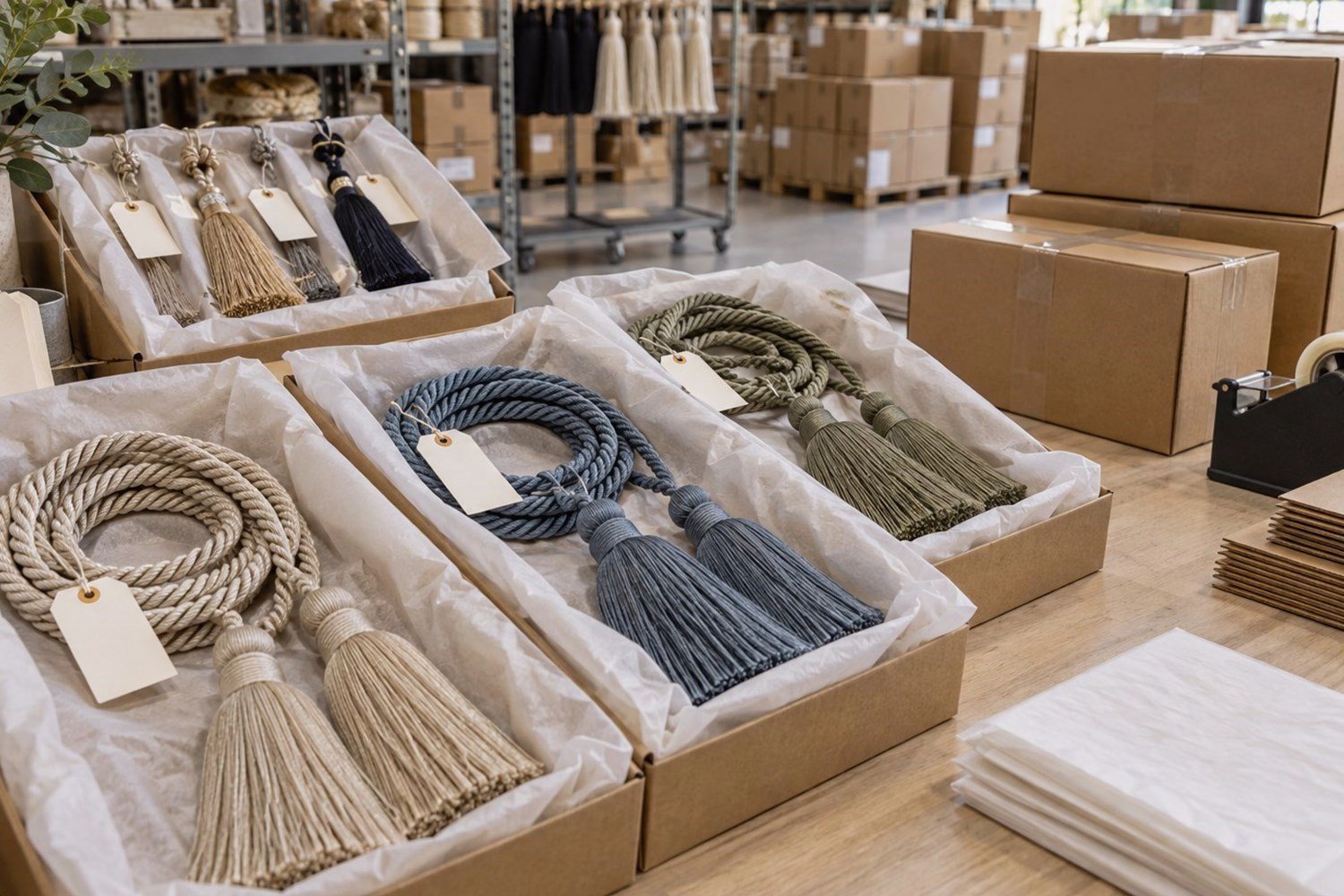
Beaded tassel samples, bead materials, colors, cords, loops, and product references prepared for a B2B inquiry

Close-up beaded tassel showing beads, textile strands, head, cord, loop, and attachment details

Published: •Topic: Beaded tassel structure and applications

Start a conversation

Tell us what you need

Share your product type, colour, dimensions and quantity. Our sales team will review your request and reply by email.

  • Emailsales@evnubtrims.com
  • Phone+86 18268767650