Main Content
What Is a Tassel?
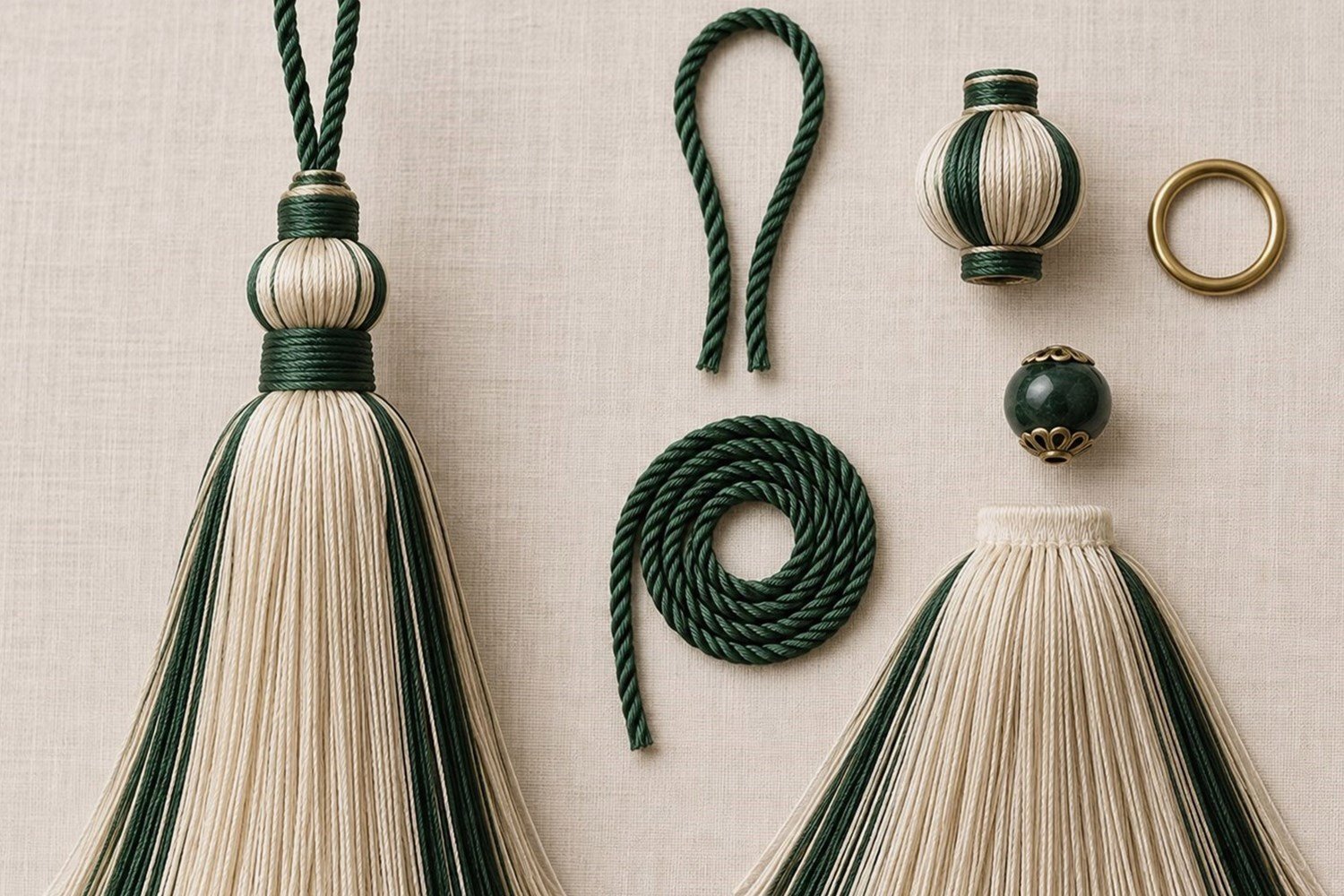
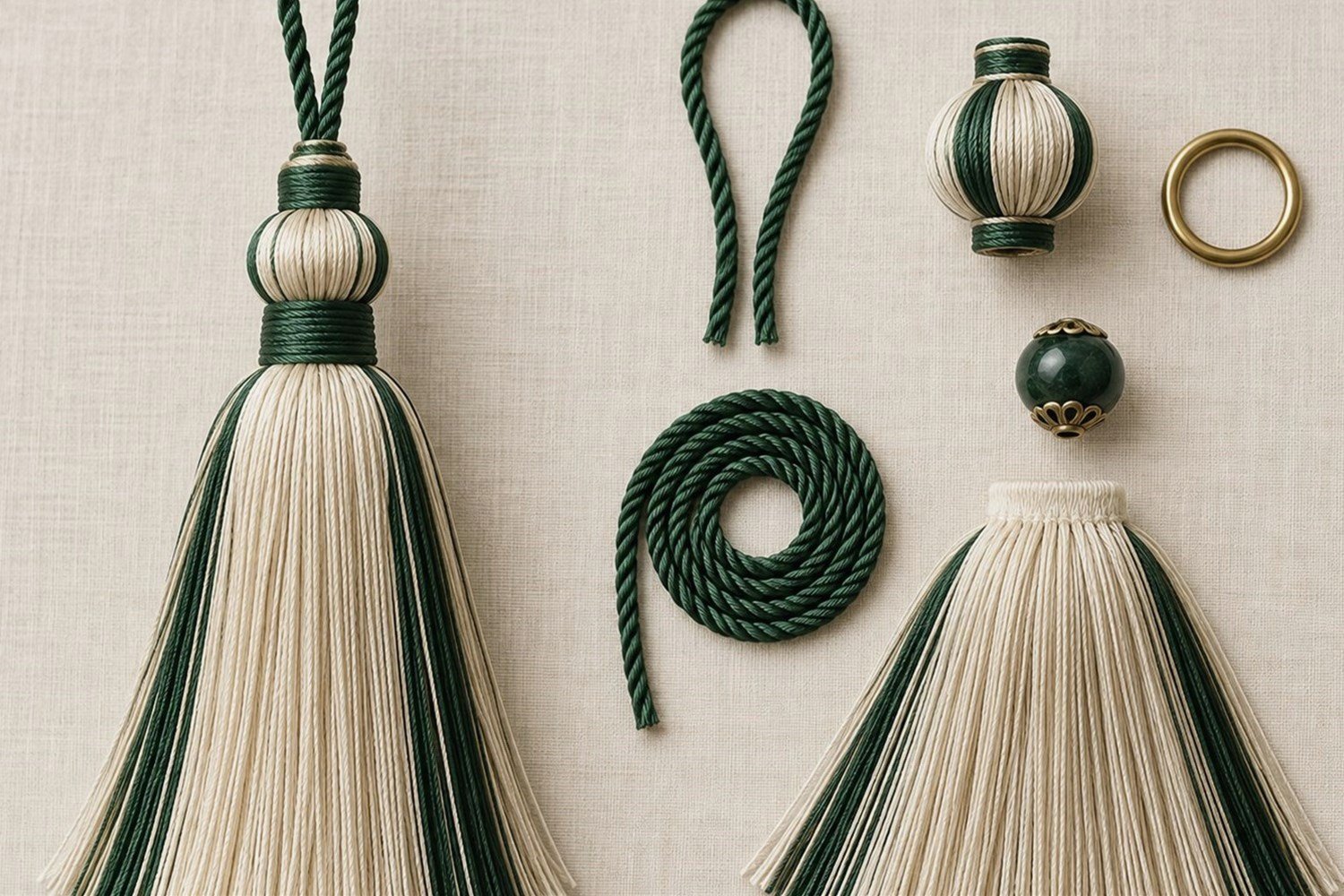
A tassel is a hanging decorative ornament or finishing element made from grouped flexible strands secured together at or near one end. Its lower strands move as a unified form rather than remaining a loose bundle of thread. Tassels appear in textile decoration, clothing, ceremonial items, interiors, stationery, accessories, and many decorative products.
In simple terms, a tassel turns flexible strands into a deliberate visual accent. It may hang from a cord, sit at the end of a tie, mark an attachment point, or provide an ornamental finish. The head, neck, skirt, and connecting details create its recognizable silhouette.
A tassel usually has:
- A suspension point or loop
- A cord or connecting element when required
- A head or upper body
- A neck or binding area
- A hanging skirt or fringe-like strands
- Optional beads, knots, caps, charms, or decorative components
Not every tassel contains every component. A basic thread tassel may be only a bound yarn bundle, while a decorative tassel may combine cords, beads, caps, and multiple materials.
What Are the Parts of a Tassel?
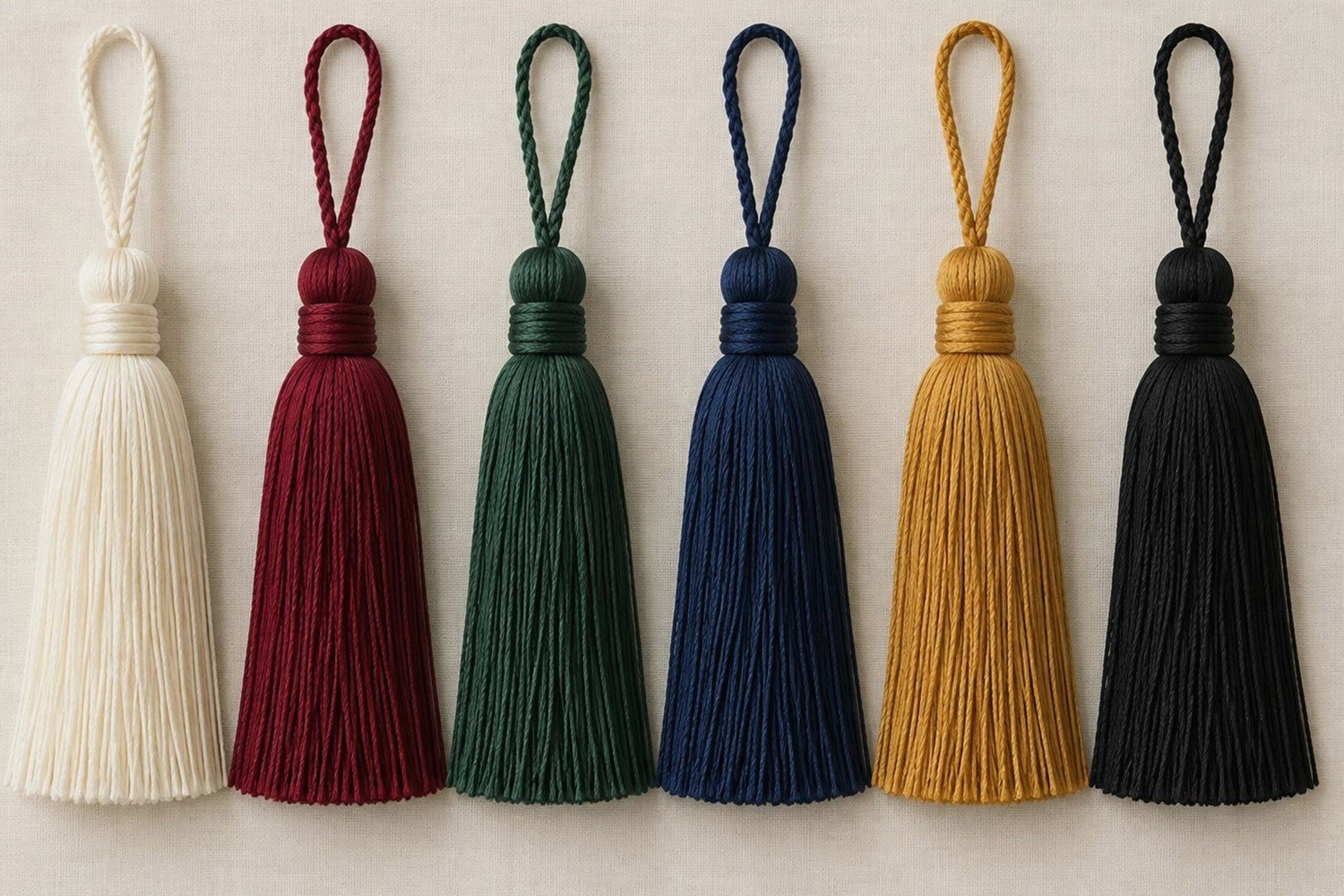
Tassel anatomy describes the visible elements that support, shape, and decorate the hanging strands. Names vary among product categories and regions, so the terms below provide a practical reference rather than a universal construction standard.
| Part | Function | Common Variations |
|---|---|---|
| Loop or suspension cord | Hangs or attaches the tassel | Thread loop, braided cord, ring, or attached end |
| Cord | Connects the tassel to a product | Twisted, braided, chainette, or plain thread |
| Head | Forms the upper decorative body | Wrapped, molded, beaded, capped, or knotted |
| Neck | Secures the head and skirt transition | Binding, knot, wrap, collar, or bead |
| Skirt | Creates the hanging tassel body | Fine thread, yarn, cord, or mixed strands |
| Decorative elements | Add visual detail | Beads, charms, caps, knots, and metallic accents |
For sourcing, it is useful to identify the part that drives the appearance. A curtain tassel may be judged by head proportion and skirt fullness, while a bookmark tassel may depend more on loop construction and finished length.
A Brief History of Tassels
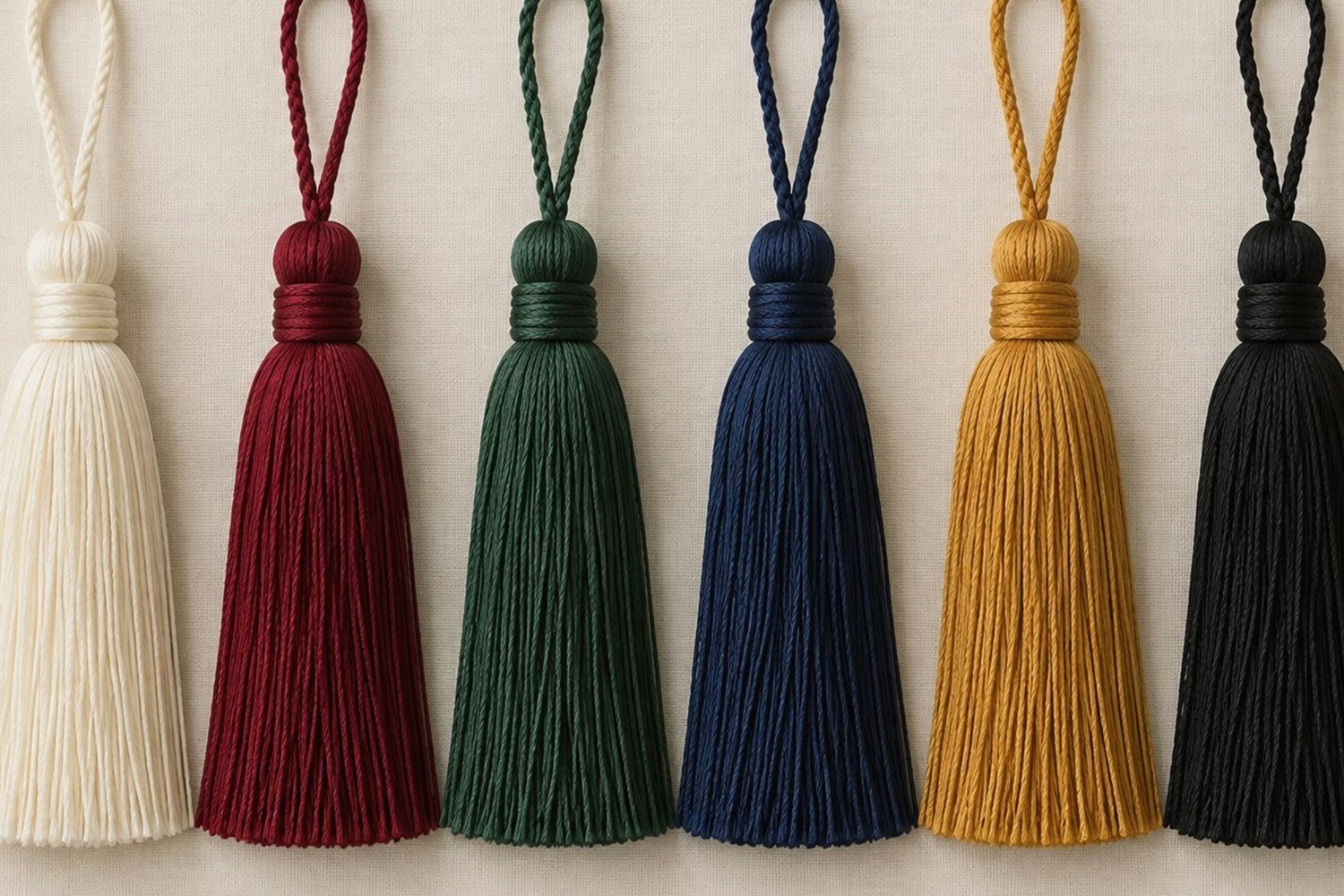
Tassel-like ornaments have appeared across cultures and historical periods as textile decoration, ceremonial detail, and furnishing trim. Their materials and symbolism have changed, but the grouped hanging-strand form has remained useful for decoration, identification, and finishing.
- Textile and clothing decoration. Hanging cords and grouped fibers have long appeared on garments, belts, accessories, and ceremonial dress.
- Furnishings and trimmings. Tassels, cords, fringes, and braids became important parts of interior decoration and upholstery traditions.
- Passementerie. This term describes a decorative trimming tradition that includes tassels, cords, fringes, braids, and related textile ornaments.
- Modern ceremonial use. Graduation tassels remain a recognizable feature of academic regalia, while tassels also continue in bookmarks, keys, gifts, and fashion items.
Historical style references can inform a collection, but modern B2B products should be specified by their actual construction, dimensions, color, and intended application rather than by a broad historical label.
What Are the Different Types of Tassels?
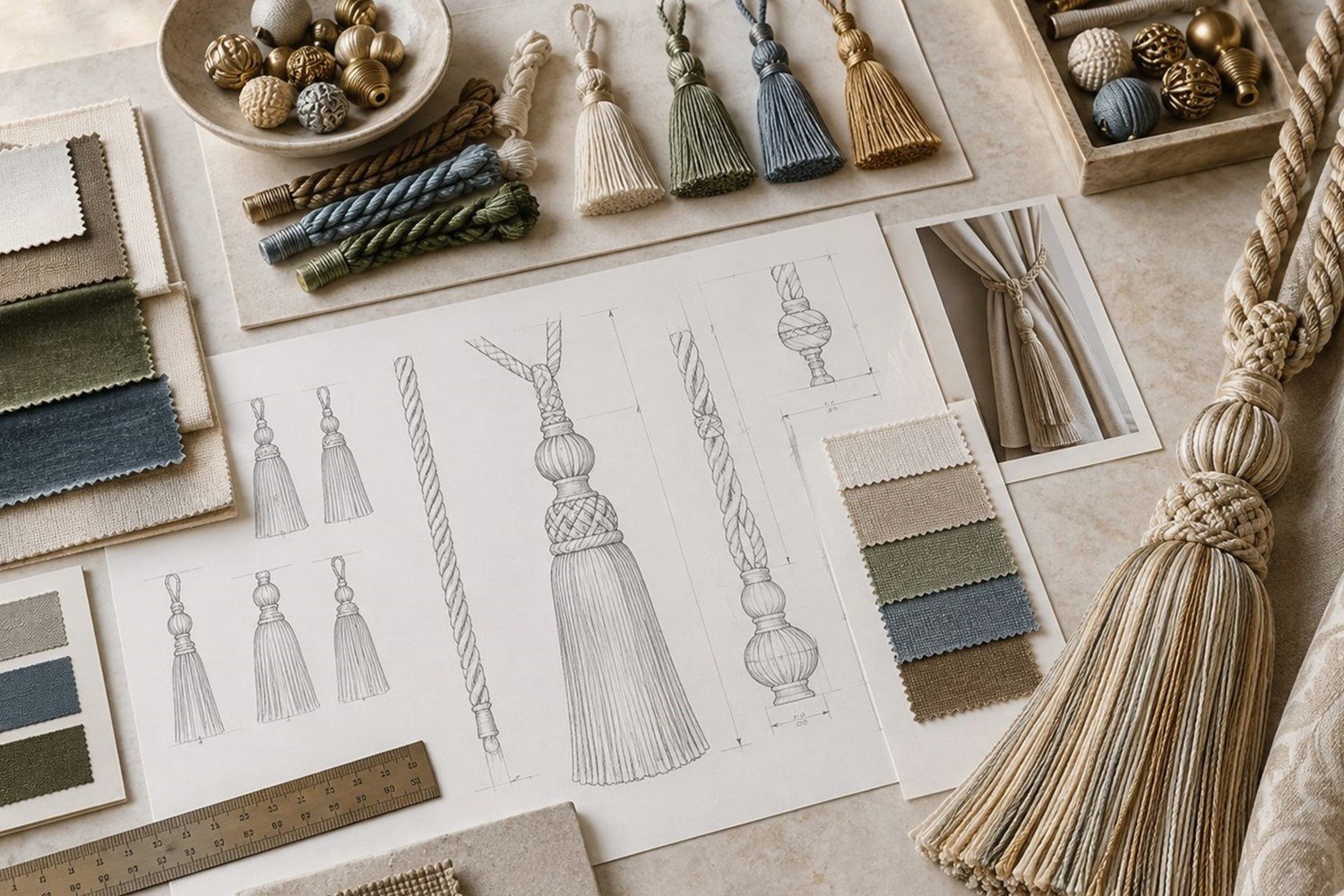
Tassels can be classified by construction, material, application, or decorative elements, so there is no single universal taxonomy. The same product may be both a cord tassel and a curtain tassel, or both a beaded tassel and a decorative tassel.
| Type | Key Characteristics | Typical Applications |
|---|---|---|
| Simple thread tassels | Grouped threads with a basic bound head | Craft, packaging, stationery, and decoration |
| Cord tassels | Cord or rope detail forms part of the body | Home textiles, accessories, and decorative pulls |
| Decorative tassels | Enhanced heads, trims, components, or mixed materials | Interiors, gifts, accessories, and ornaments |
| Beaded tassels | Visible beads combined with strands or cords | Decorative products and curated collections |
| Graduation tassels | Ceremonial construction, often with a loop or charm | Academic regalia and commemorative products |
| Bookmark tassels | Lightweight, narrow, and suited to page markers | Books, stationery, journals, and gift packaging |
| Key tassels | Decorative hanging structure for keys or hardware | Keys, decorative hardware, and gift products |
| Curtain tassels | Proportioned for furnishing and drapery use | Curtains, tiebacks, cushions, and interiors |
Dedicated product pages provide category-specific information. This guide remains focused on the shared structure and decision factors behind the wider tassel family.
What Materials Are Tassels Made From?
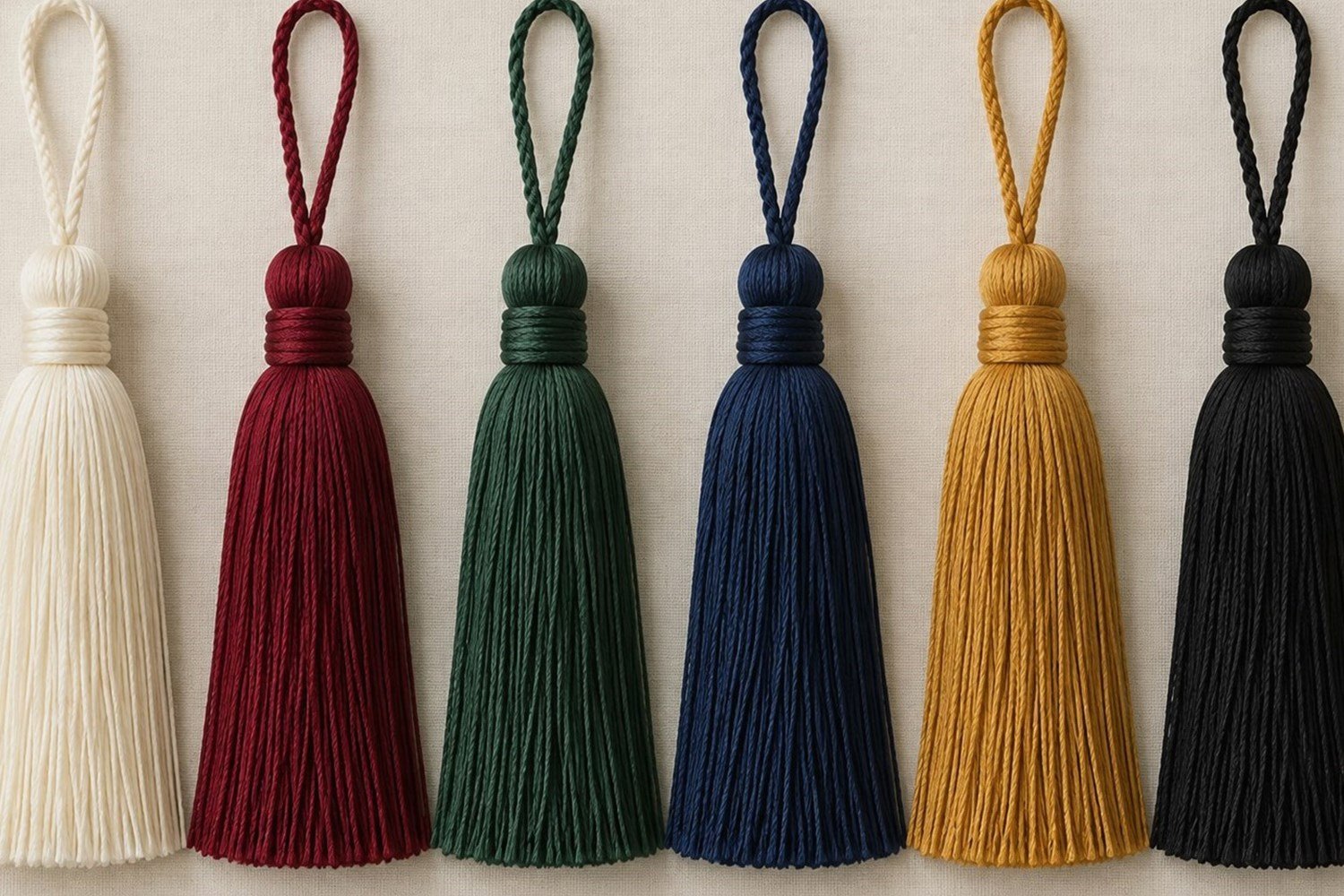
Tassel material selection depends on the intended appearance, texture, application, cost target, and buyer specification. A fiber name alone does not predict the finished visual result because yarn thickness, twist, sheen, density, color, and construction all influence the final tassel.
| Material | Visual Character | Typical Considerations | Common Applications |
|---|---|---|---|
| Polyester | Broad visual range | Yarn thickness, sheen, and construction affect the look | Decorative and commercial accessories |
| Cotton | Soft, matte, textile-led | Texture and fullness need specification | Craft, home textile, and natural-style products |
| Rayon or viscose-type fibers | Smooth or lustrous appearance | Strand alignment and finish influence presentation | Decorative and ceremonial tassels |
| Silk or silk-like fibers | Fine, fluid appearance | Appearance and construction should be sampled | Specialty decorative applications |
| Metallic yarn | Reflective accent | Often used as a detail rather than the entire body | Regalia, festive, and decorative trims |
| Beads and components | Visible focal detail | Material, size, shape, placement, and connection matter | Beaded and multi-component tassels |
The same tassel may combine yarn, cord, beads, wood, resin, acrylic, metal, leather, or faux-leather details. Available material combinations should always be confirmed against the required design.
What Are Tassels Used For?
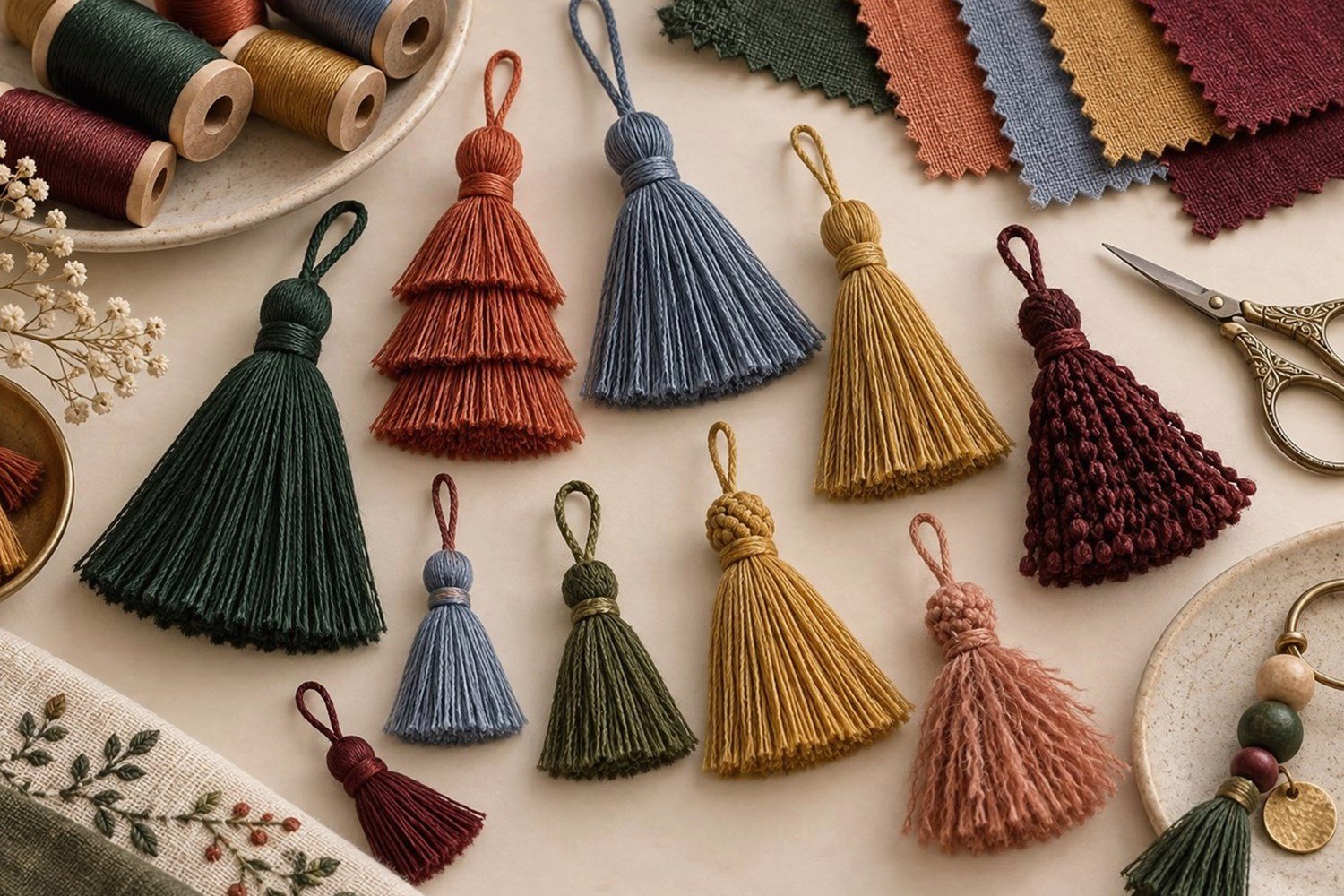
Tassels are primarily decorative finishing elements, identifiers, ceremonial accessories, hanging ornaments, or functional-decorative pulls. Their exact role changes with the product: a tassel may identify a graduation cap, mark a bookmark, finish a curtain tieback, or add a tactile detail to a gift item.
| Application | Role of the Tassel |
|---|---|
| Graduation and ceremonial products | Provides a recognizable ceremonial or commemorative detail. |
| Home textiles and curtains | Adds decorative weight, trim, or a coordinated finishing element. |
| Bookmarks and stationery | Marks a page while adding a visible finishing detail. |
| Keys and decorative hardware | Creates a hanging identifier or ornamental pull. |
| Fashion and accessories | Adds movement, texture, and visual punctuation. |
| Gift and packaging products | Provides a tactile and decorative finishing accent. |
| Furniture and interiors | Coordinates with fabrics, cords, trims, or furnishing styles. |
Tassel vs Fringe: What Is the Difference?
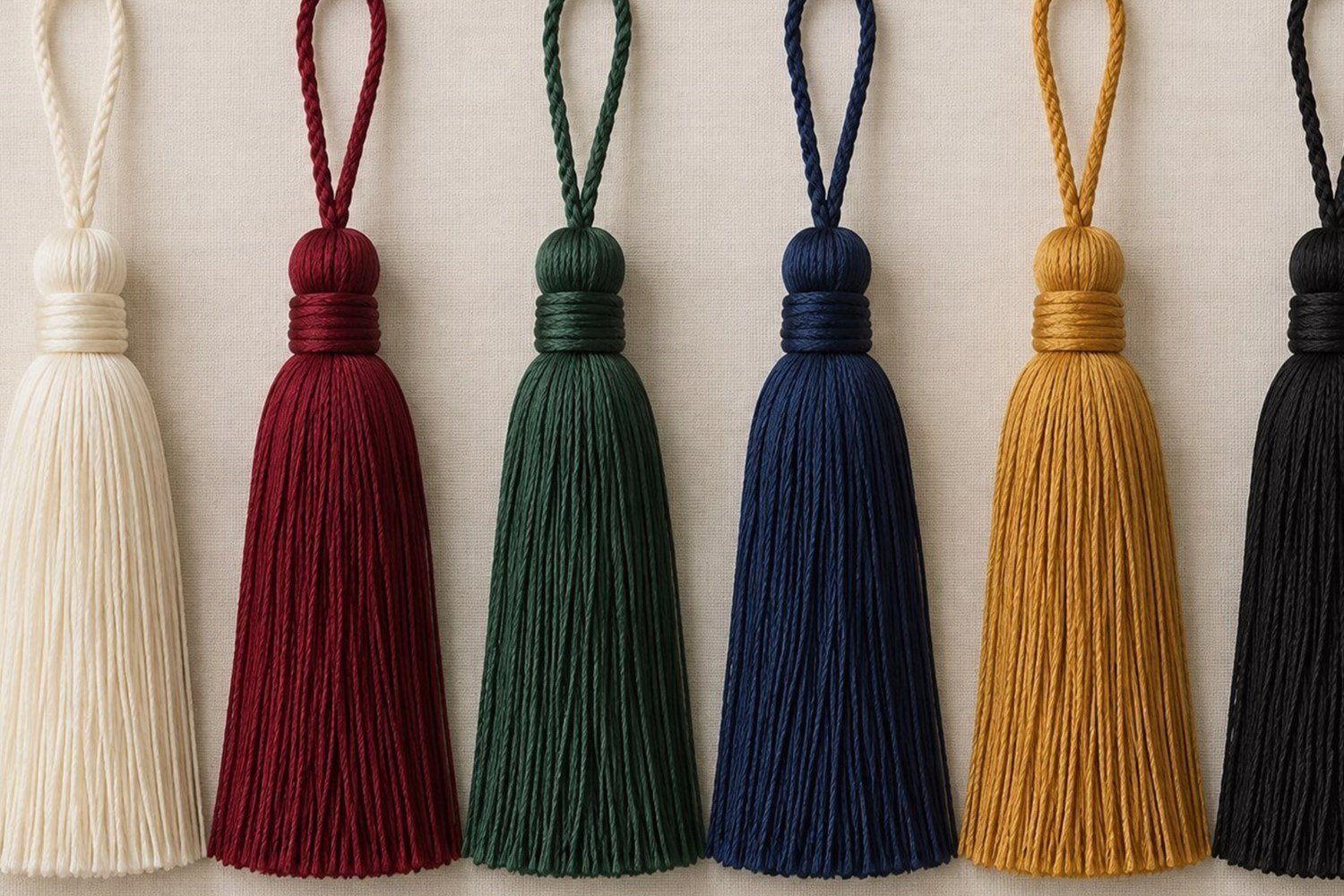
A tassel is generally a localized hanging ornament attached at a point, while fringe is a repeated line of hanging strands running along an edge. Both belong to decorative trimmings and can be used together in one product, but their placement and visual behavior differ.
| Feature | Tassel | Fringe |
|---|---|---|
| Basic form | Individual grouped ornament | Continuous series of strands |
| Attachment | Point, cord end, loop, or selected position | Runs along an edge or seam |
| Placement | Localized accent | Border or trim treatment |
| Movement | Moves as one hanging form | Moves across a continuous line |
| Common uses | Bookmarks, cords, regalia, accessories, and tiebacks | Textile edges, cushions, garments, and furnishings |
| Customization | Head, skirt, cord, loop, and components | Length, density, color, and attachment edge |
How Are Tassels Made?
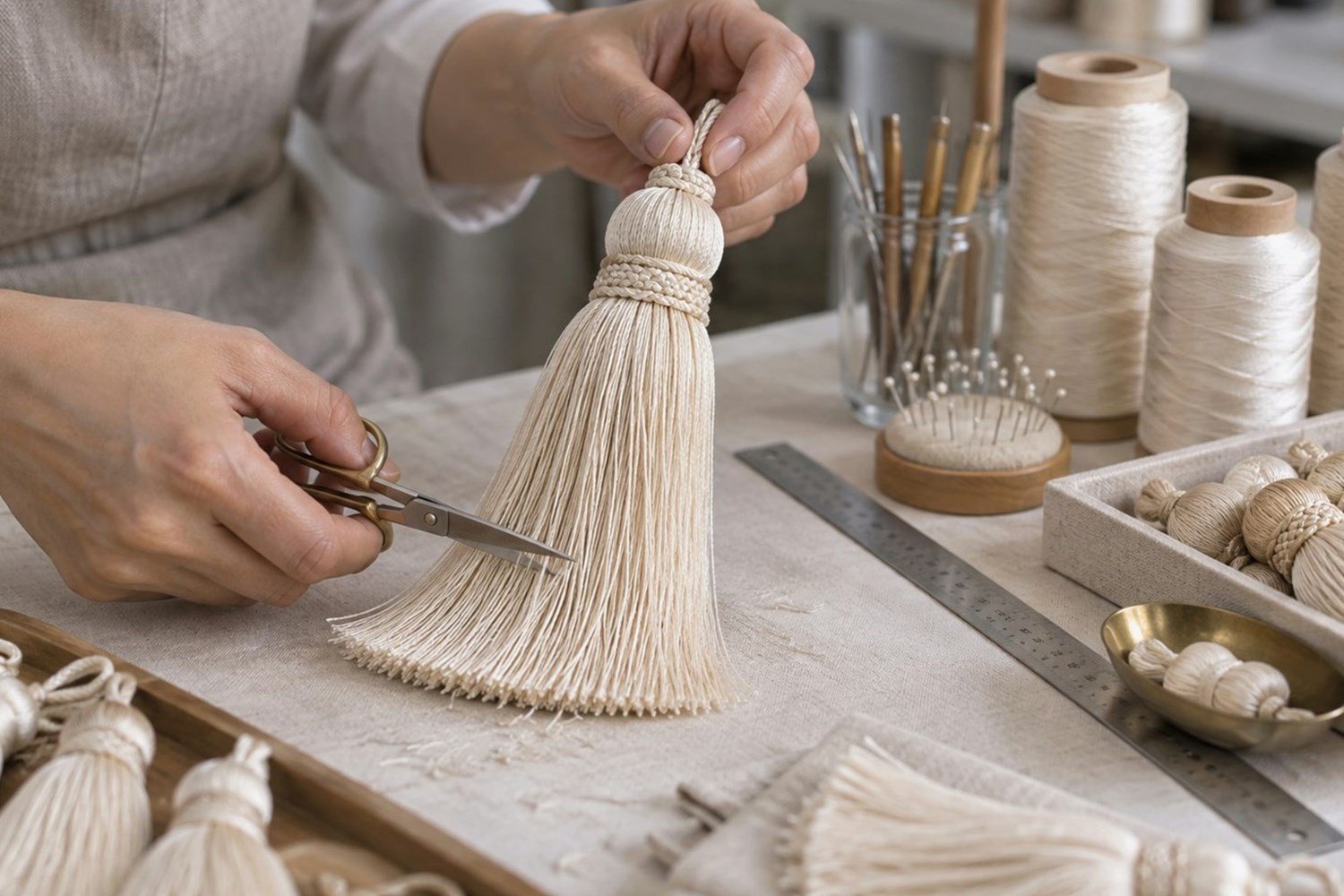
Tassel manufacturing converts selected yarns, cords, and decorative components into a controlled hanging form. The exact method differs significantly between simple thread tassels, graduation tassels, beaded tassels, molded decorative tassels, and other constructions.
- Product requirements are defined.
- Yarn, cord, beads, or components are selected.
- Strands or yarns are prepared.
- The tassel body or skirt is formed.
- The head and neck are constructed or bound.
- Cord, loop, beads, or decorative components are added.
- Length, fullness, and shape are adjusted.
- Loose fibers and visible finishing details are checked.
- A sample is reviewed against the required specification.
- An approved specification becomes the reference for bulk production.
This sequence is educational rather than a universal factory method. Actual operations and controls must follow the product construction and agreed specification.
How to Choose the Right Tassel
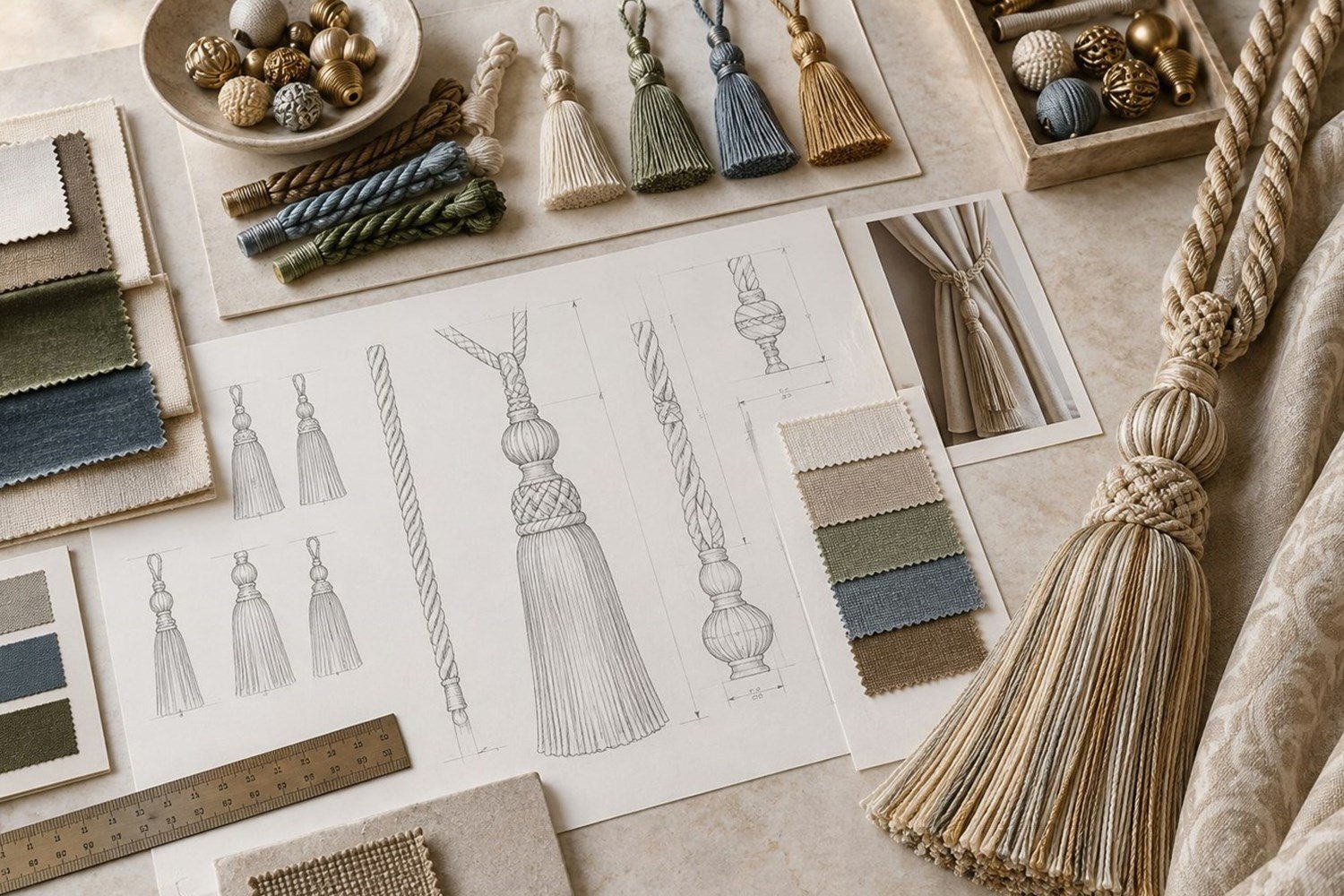
The right tassel is chosen by matching its structure, dimensions, material, and attachment to the intended product. The basic decorative principle is shared, but a graduation tassel, bookmark tassel, curtain tassel, and key tassel often need different lengths, head proportions, loops, and packaging.
Selection checklist
- Application and product style
- Overall size, tassel length, head size, and skirt length
- Fullness, material, texture, and surface sheen
- Color reference and multi-color arrangement
- Cord, loop, or attachment requirements
- Beads, charms, caps, or decorative components
- Packaging and set or pair requirements
| Application | Typical Structure | Priority |
|---|---|---|
| Graduation | Cord, loop, hanging skirt, optional charm | Color, length, and ceremonial appearance |
| Bookmark | Lightweight thread or cord structure | Length, slim profile, and attachment |
| Curtain | Decorative head, cord, and fuller skirt | Scale, drape, color coordination, and finish |
| Key | Durable hanging body and loop | Attachment, size, and visual identity |
What Can Be Customized on a Tassel?
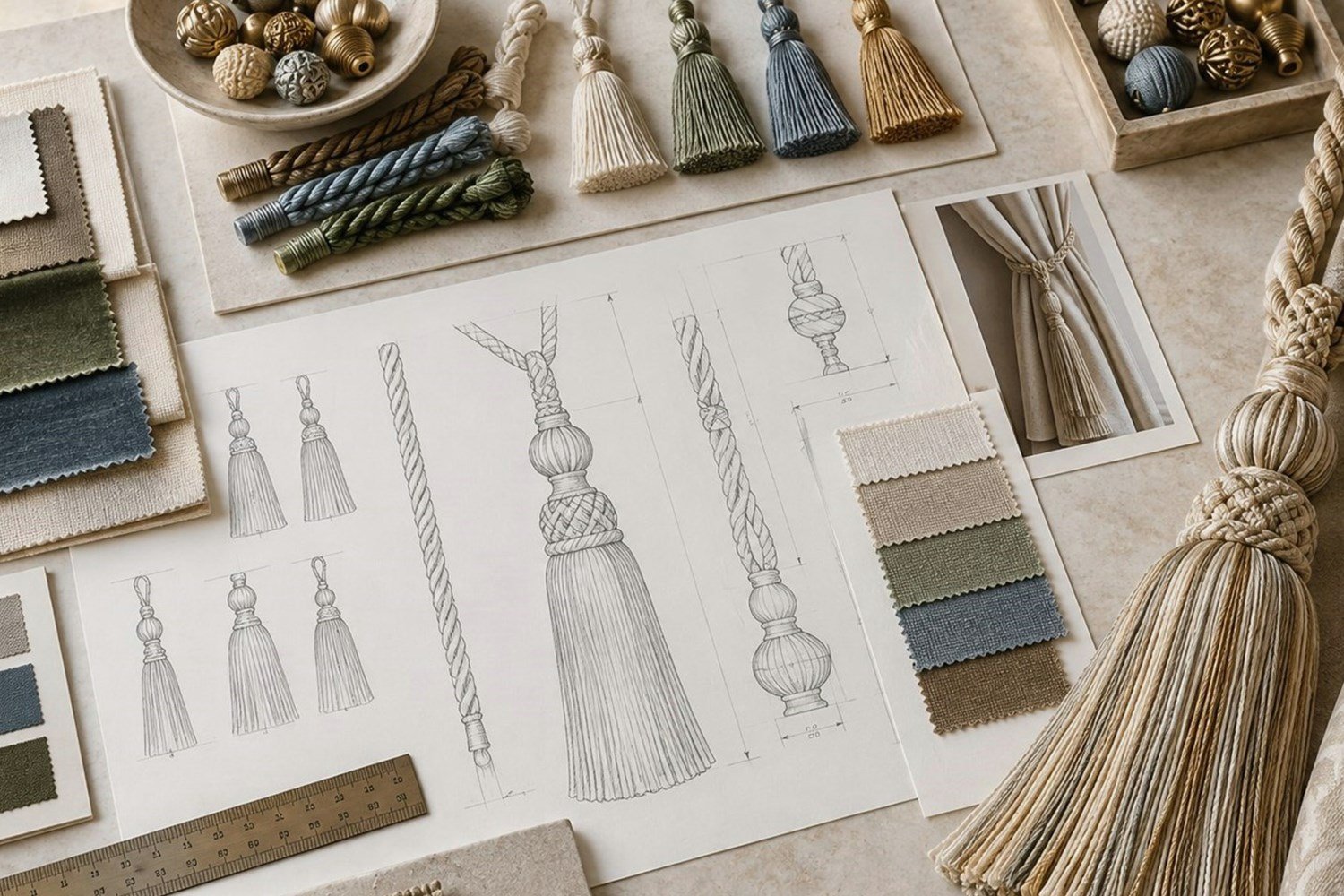
Custom tassels can be developed around color, dimensions, construction, materials, decorative details, and packaging. Available options depend on the required product design and should be confirmed during development or sampling rather than assumed from a reference image.
- Overall length, skirt length, head size, cord length, and loop size
- Yarn type, thread thickness, sheen, density, and fullness
- Single-color, multi-color, and collection-matching color directions
- Head, neck, cord, loop, and binding construction
- Bead arrangement, charms, caps, knots, and decorative components
- Attachment method, set requirements, labeling, and packaging
Three practical starting points are an existing physical sample, a reference image or drawing, and a new product requirement. A sample is especially useful because it helps align the visual target, measurements, construction, and finish.
How Is Tassel Quality Evaluated?
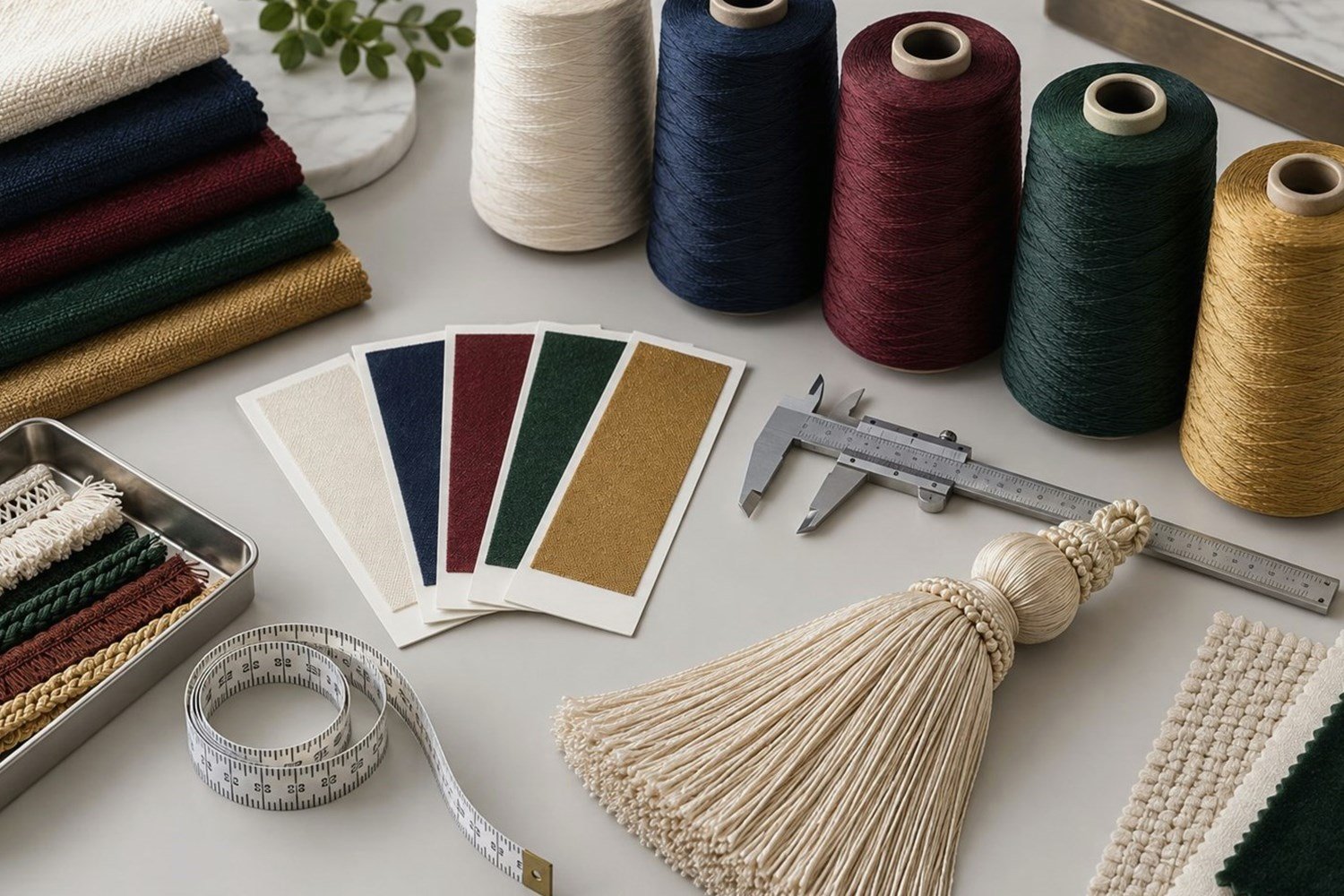
Tassel quality should be evaluated against the approved product specification and sample, not appearance alone. Acceptable tolerances depend on the construction, materials, application, and buyer requirements. A useful review considers both visible consistency and the details that affect attachment, proportion, and presentation.
| Quality Point | What to Check | Why It Matters |
|---|---|---|
| Color consistency | Color reference and multi-color arrangement | Supports collection coordination |
| Dimensions | Overall, skirt, head, cord, and loop measurements | Supports fit and product proportion |
| Construction | Head shape, binding, cord, knot, and loop details | Defines the intended design |
| Skirt finish | Fullness, alignment, trimming, and loose fibers | Controls visible presentation |
| Components | Bead placement, caps, charms, and connectors | Controls decorative detail |
| Packaging | Condition, pair consistency, and presentation | Helps preserve the agreed product state |
What Should B2B Buyers Specify When Ordering Tassels?
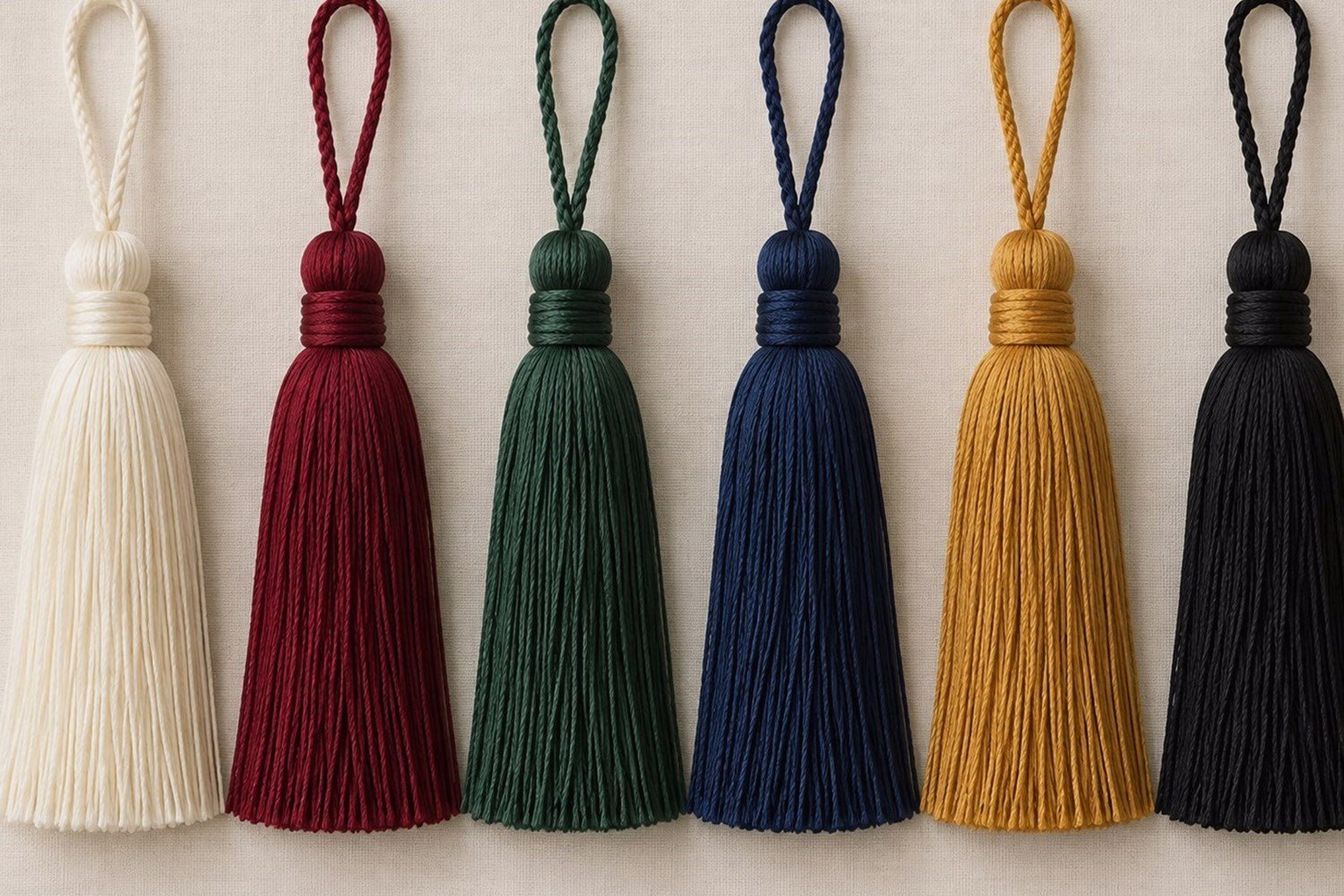
Clear tassel specifications reduce ambiguity during sampling and bulk production. A professional inquiry should state the application and design target, then identify the measurements, color direction, construction, materials, components, packaging, and any critical inspection requirements.
Buyer specification checklist
- Tassel type and intended application
- Reference image, drawing, or physical sample
- Overall, skirt, head, cord, and loop dimensions
- Color reference and material requirements
- Construction, decorative elements, and attachment method
- Estimated quantity, packaging requirement, and target market or project
- Special inspection requirements where applicable
Minimum information for an initial inquiry
| Information | Why It Helps |
|---|---|
| Product type | Sets the correct construction discussion. |
| Reference image or sample | Clarifies the intended visual direction. |
| Required size and color | Defines essential specification variables. |
| Estimated quantity | Provides commercial context without assuming an MOQ. |
| Application and special requirements | Identifies fit, attachment, packaging, and inspection needs. |
How Are Tassels Different Across Applications?
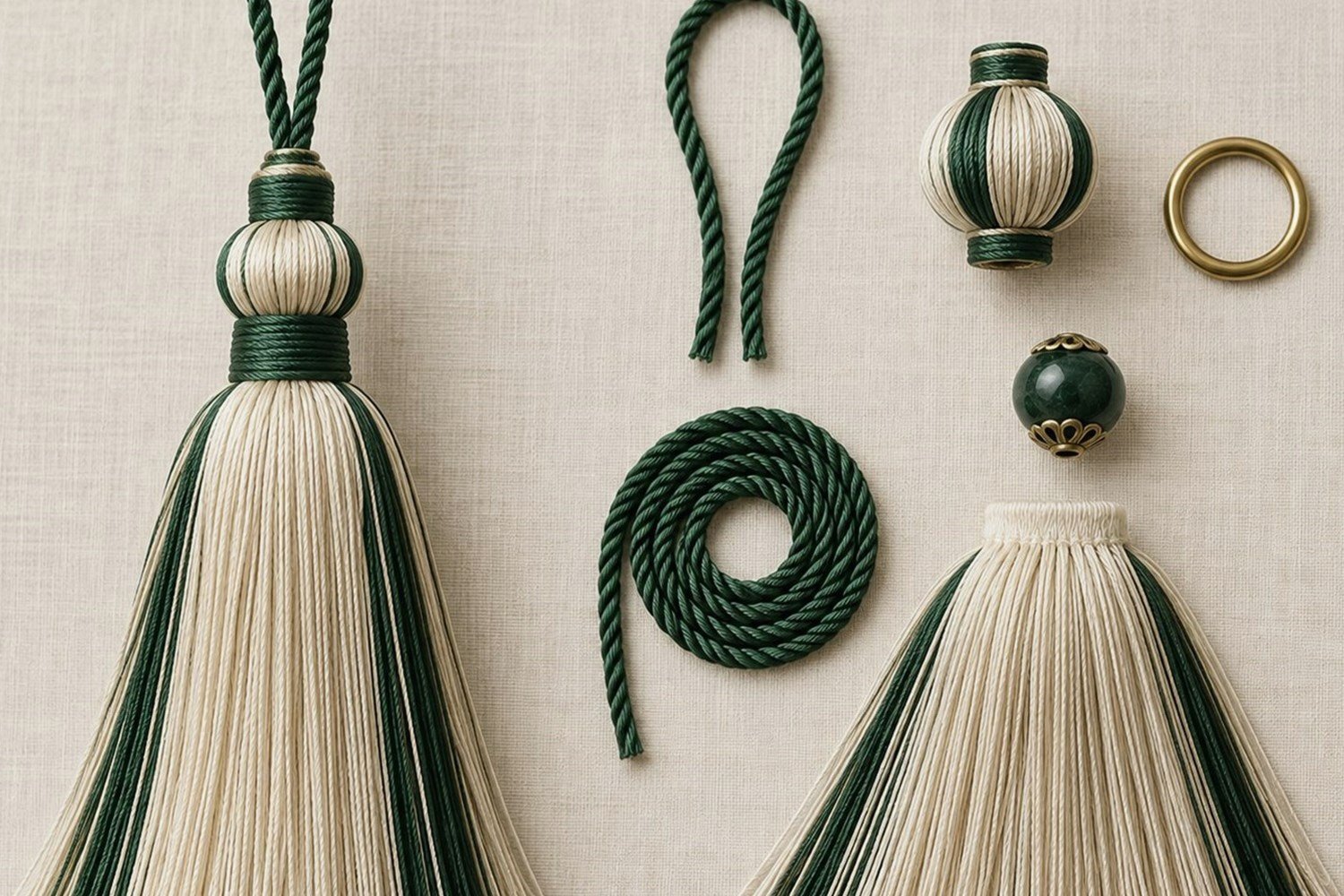
The word tassel describes a broad decorative structure rather than one standardized product. Application changes the expected scale, construction, attachment, and visible detail, so category-specific product development remains important.
| Application | Typical Structure | Important Selection Factors |
|---|---|---|
| Graduation tassel | Loop, cord, skirt, and optional year detail | Ceremonial color, length, and attachment |
| Bookmark tassel | Light, narrow cord or thread body | Length, weight, profile, and book fit |
| Decorative tassel | Enhanced head, skirt, and components | Style, finish, color, and material combination |
| Beaded tassel | Beads with thread, cord, or skirt | Bead arrangement, connection, and visual balance |
| Key tassel | Hanging body with loop or hardware connection | Attachment, scale, and decorative identity |
| Curtain tassel | Decorative head, fuller skirt, and cord | Interior scale, drape, and collection coordination |