Main Content
What Materials Are Tassels Made From?

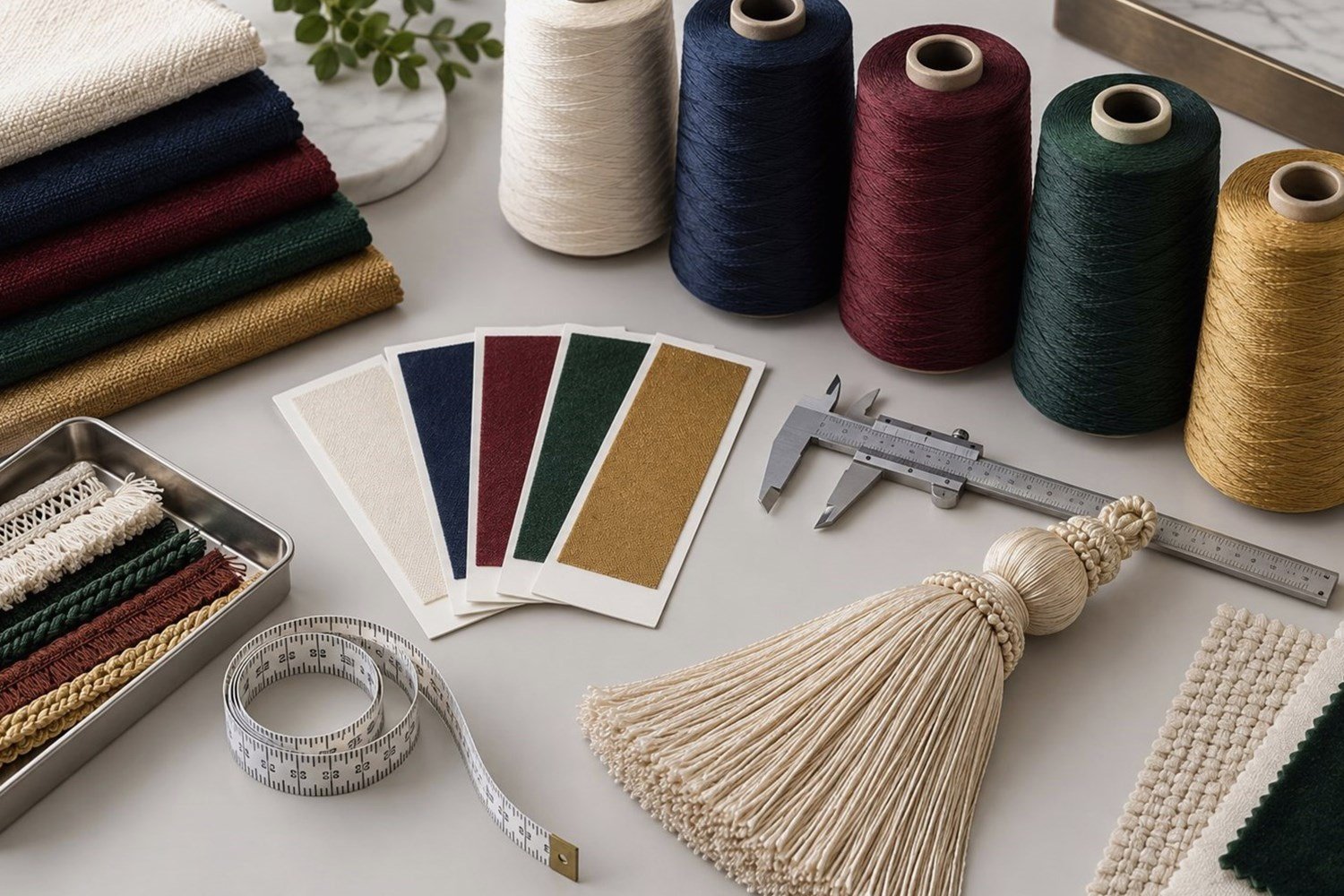
Tassels can be made from natural fibers, synthetic fibers, regenerated cellulose fibers, metallic-effect yarns, leather-based materials, beads, and mixed decorative components. The material name attached to a tassel often describes the dominant hanging fiber rather than every part of the finished item.
Primary Fiber
The primary fiber forms most of the skirt or hanging strands. Common directions include polyester, rayon or viscose, cotton, silk, and wool. Its yarn thickness, twist, density, and finishing affect the final visual result.
Structural Materials
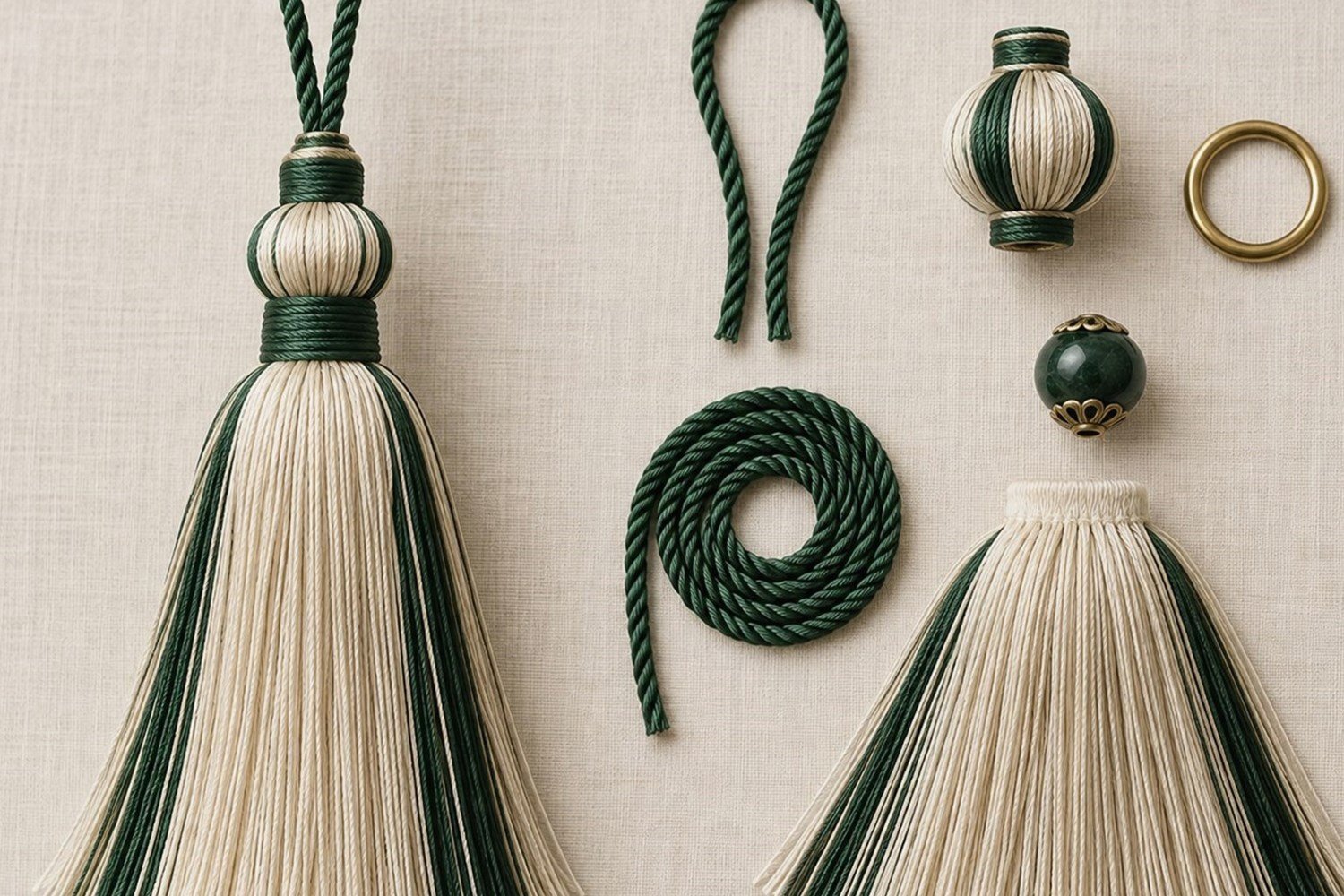
Cords, loops, heads, cores, binding, and wrapping may use a different textile construction from the skirt. A tassel can therefore have a rayon-looking skirt and a separate braided textile cord or wrapped upper structure.
Decorative Materials
Beads, metallic yarn, wood, acrylic, resin, glass, metal components, charms, and knots can add visual detail. They should be named as components rather than assumed to be the main fiber.
| Material Layer | Function | Examples |
|---|---|---|
| Primary fiber | Forms the main hanging body | Polyester, rayon, cotton, silk, wool |
| Structural material | Supports connection and shape | Cord, loop, core, binding, wrapping |
| Decorative material | Adds visible detail | Beads, metallic yarn, wood, resin, charms |
| Attachment material | Connects to the finished product | Loop, cord, ring, or specified hardware |
Polyester Tassels
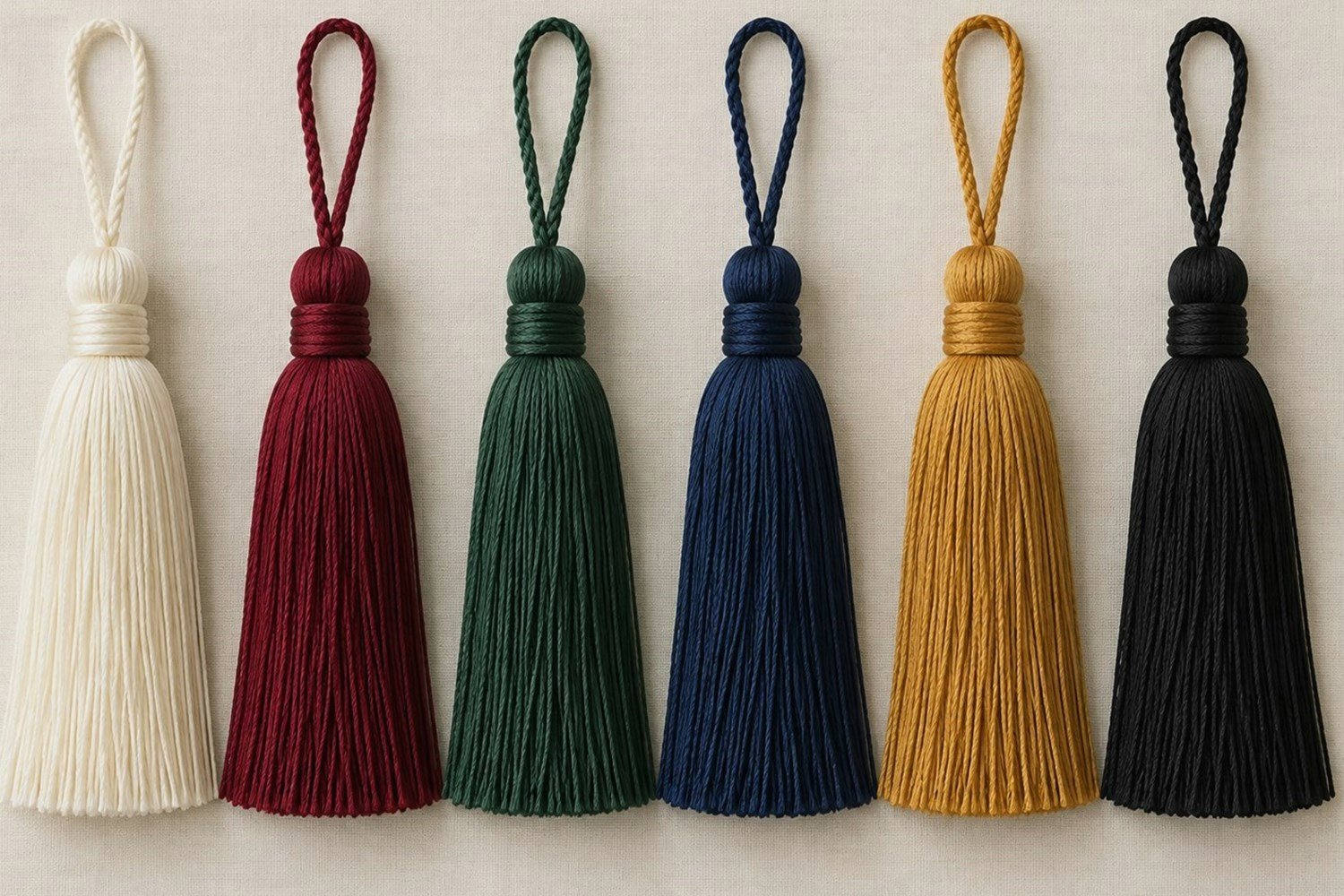
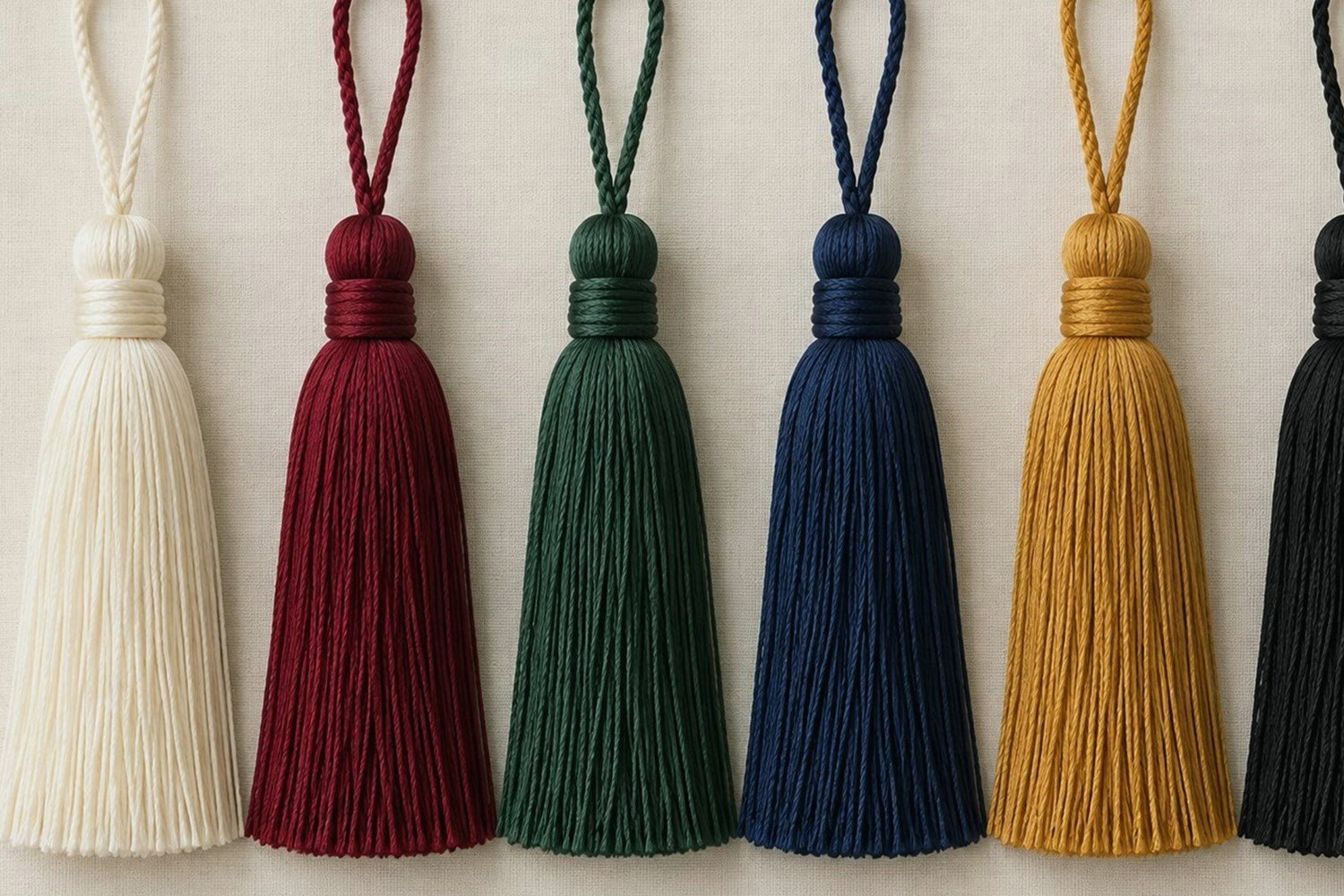
Polyester is a synthetic fiber commonly used for textile accessories and can support many tassel colors, yarn thicknesses, finishes, and constructions. It is often considered where a project needs a synthetic fiber and a versatile visual direction across a product collection.
Polyester does not automatically mean a shiny or matte tassel. Filament structure, yarn twist, surface finish, strand density, color, and head construction all affect the appearance. A fine, smooth polyester yarn can look very different from a thick, spun, textured, or cord-based polyester construction.
When to consider polyester
- A consistent visual direction across many colors is important.
- The project calls for a synthetic fiber.
- The design needs a versatile yarn option or a volume-oriented tassel body.
- The finished application is graduation, bookmarks, decorative accessories, gifts, home textiles, or fashion detail.
Fiber name alone does not establish specific colorfastness, washing, UV, or durability performance. Those requirements need separate confirmation against the finished product and any applicable test plan.
Rayon and Viscose Tassels
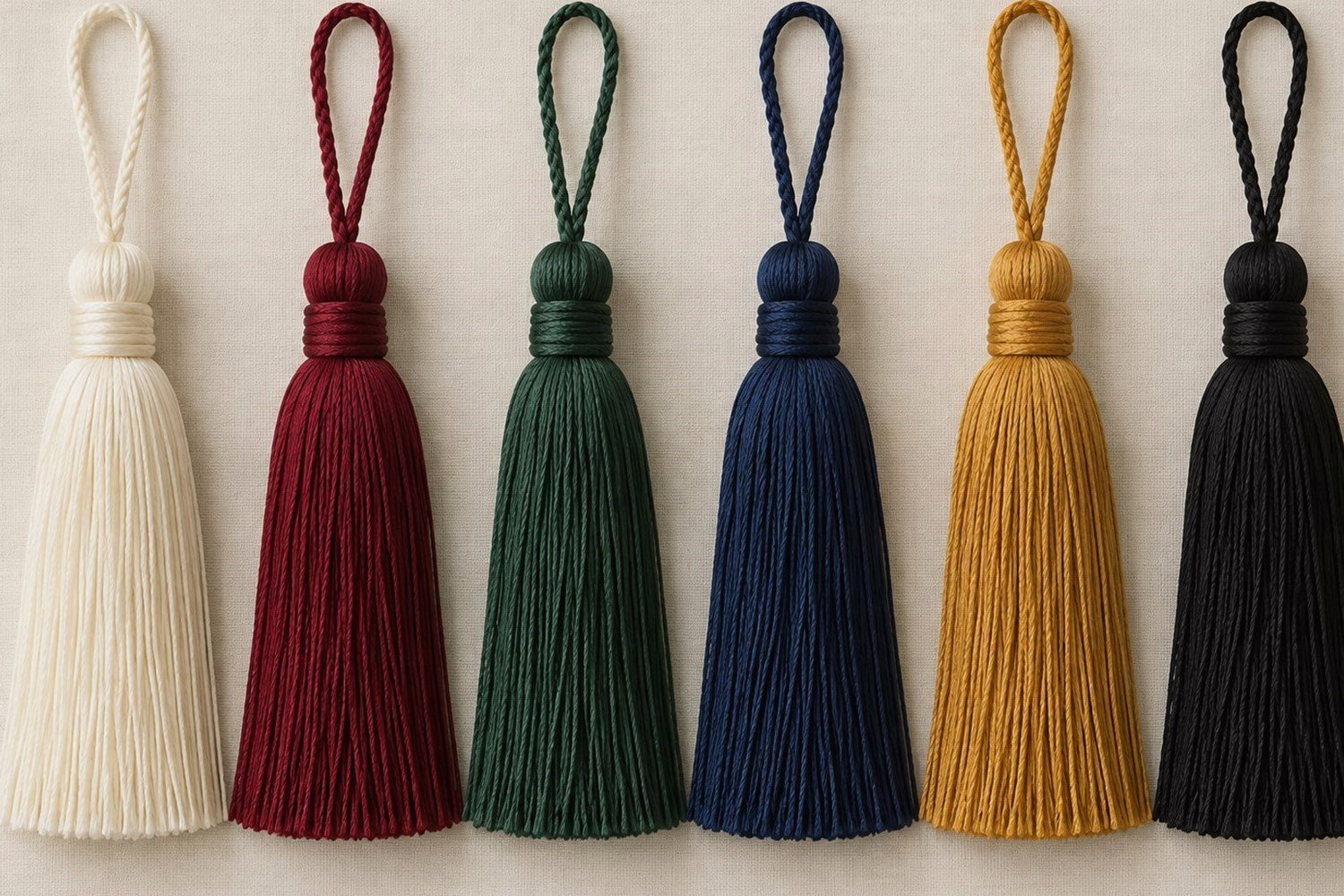
Rayon and viscose are regenerated cellulose-based fibers that can produce smooth strands, fluid visual drape, and a silk-like sheen. They are not natural silk, even when a finished tassel is described visually as silky or lustrous.
Rayon or viscose may be considered for graduation tassels, decorative tassels, fashion accessories, home-textile decoration, gift products, and furnishing trims where a refined, soft visual effect is part of the design. The level of luster still depends on the particular yarn and its construction.
| Buyer Note | Why It Matters |
|---|---|
| “Silky” appearance | May describe the look rather than the fiber identity. |
| Rayon or viscose | Regenerated cellulose-based material, not natural silk. |
| Exact composition | Should be confirmed when material identity matters. |
| Reference sample | Helps align sheen, drape, fullness, and color direction. |
Instead of specifying only “silky,” identify whether the requirement is rayon, viscose, polyester, genuine silk, or a specific blend when that distinction affects sourcing.
Cotton Tassels

Cotton is a natural cellulose fiber that generally gives tassels a softer, more matte and textile-led visual character than highly lustrous filament yarns. It is often considered for casual, home textile, handmade-inspired, decorative, gift, and craft-oriented product directions.
Cotton tassels can vary widely. Yarn thickness, twist, combing, dyeing, construction, and skirt fullness change their texture and silhouette. Cotton does not automatically make a tassel rustic; it can be selected for many visual styles when the yarn and finished proportion suit the product.
Cotton Selection Factors
- Required texture and desired fullness
- Color direction and yarn thickness
- Application and handling requirements
- Finished-product care requirements
- Attachment and relationship to surrounding textiles
Silk Tassels
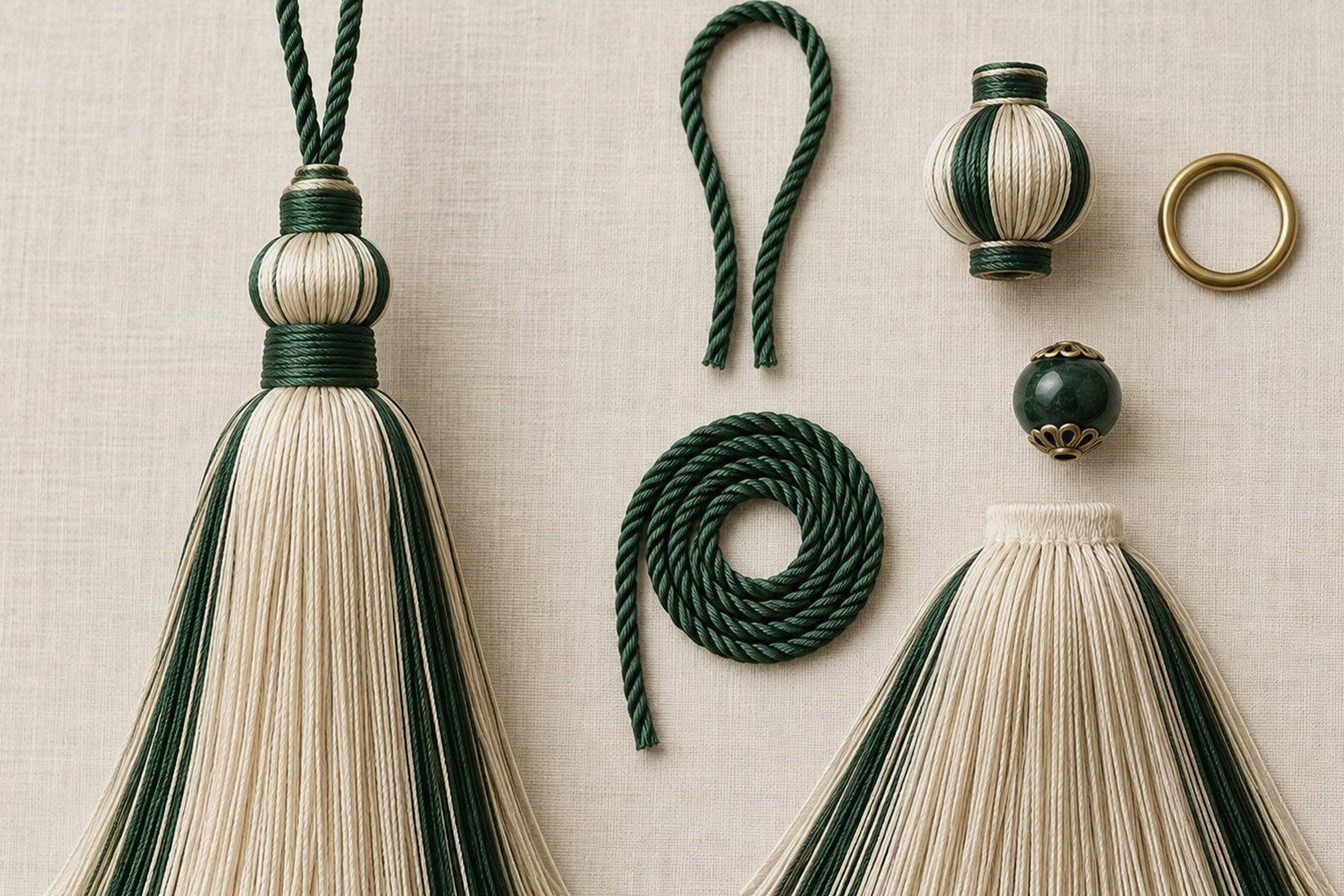
Genuine silk is a natural protein fiber associated with fine texture and characteristic natural luster, but a shiny tassel is not automatically a silk tassel. Rayon, viscose, and polyester may all create a smooth or silk-like visual effect through their yarn construction and finish.
Genuine silk or silk-like qualities may be requested for specialty decorative products, fashion accessories, ceremonial products, fine interior accessories, and gift items. Quality should be assessed against the full yarn, construction, and appearance specification; fiber category alone does not make one option universally higher quality.
| Material | Fiber Category | Typical Visual Character | Selection Reason |
|---|---|---|---|
| Genuine silk | Natural protein fiber | Fine texture and natural luster | Confirmed silk requirement |
| Rayon/viscose | Regenerated cellulose | Smooth, silk-like visual effect | Specified sheen and drape |
| Polyester | Synthetic fiber | Broad finish possibilities | Versatile yarn direction |
Metallic Tassels
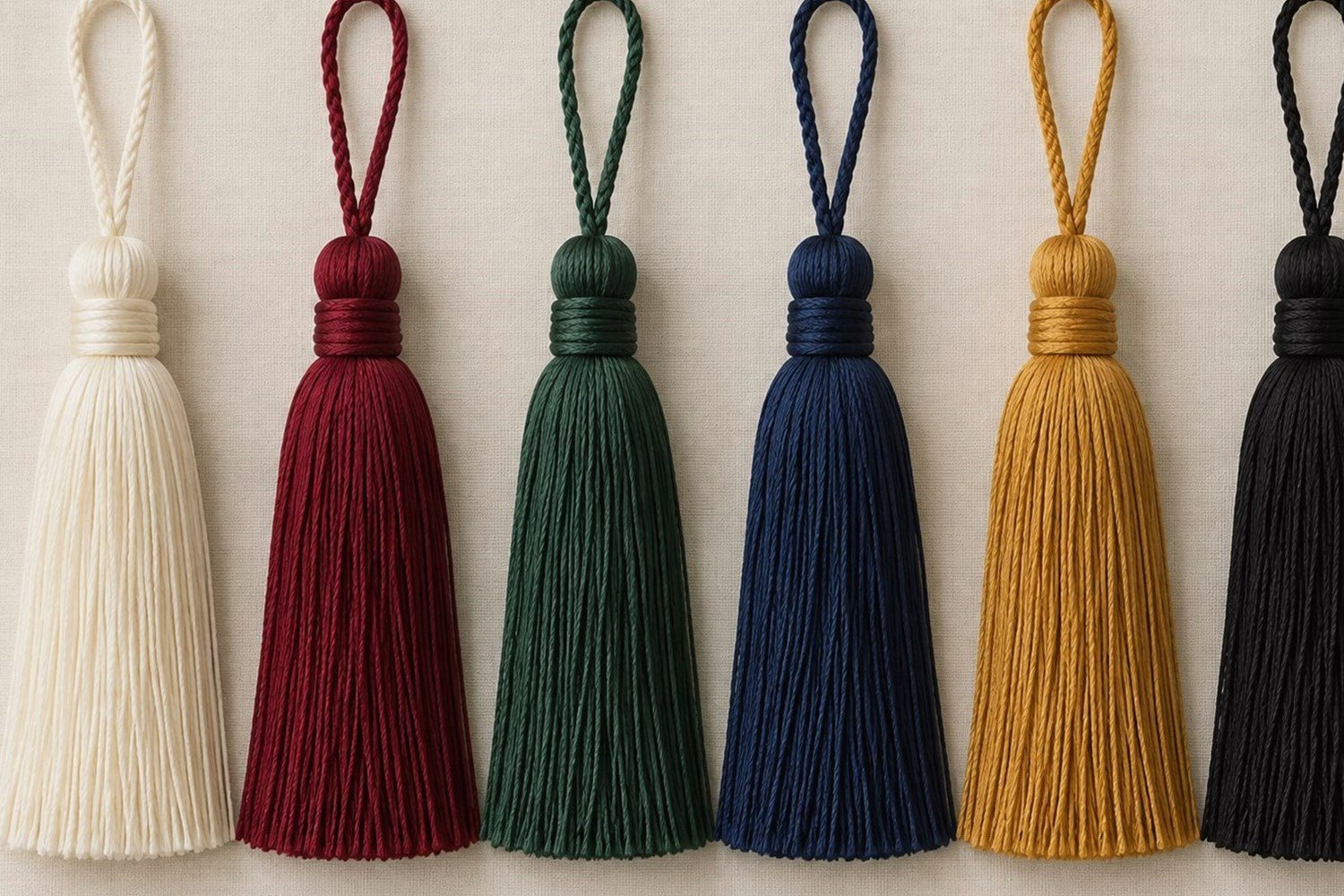
Metallic tassels use metallic-effect yarn, metallic thread, or decorative metallic components to create reflective gold, silver, bronze, or mixed-metallic appearances. Metallic-effect yarn should not be assumed to be solid metal unless the specification confirms that composition.
Metallic yarn can form the main visible body, be mixed with another textile fiber, appear only as an accent, or be used in cords and wrapping. Common applications include graduation products, holiday decoration, ceremonial products, gift packaging, fashion accessories, and decorative home products.
Questions to confirm
- Desired metallic color and surface appearance
- Full metallic or mixed textile construction
- Yarn combination, cord direction, and components
- Application, reference sample, or image
Wool and Other Textured Yarn Tassels
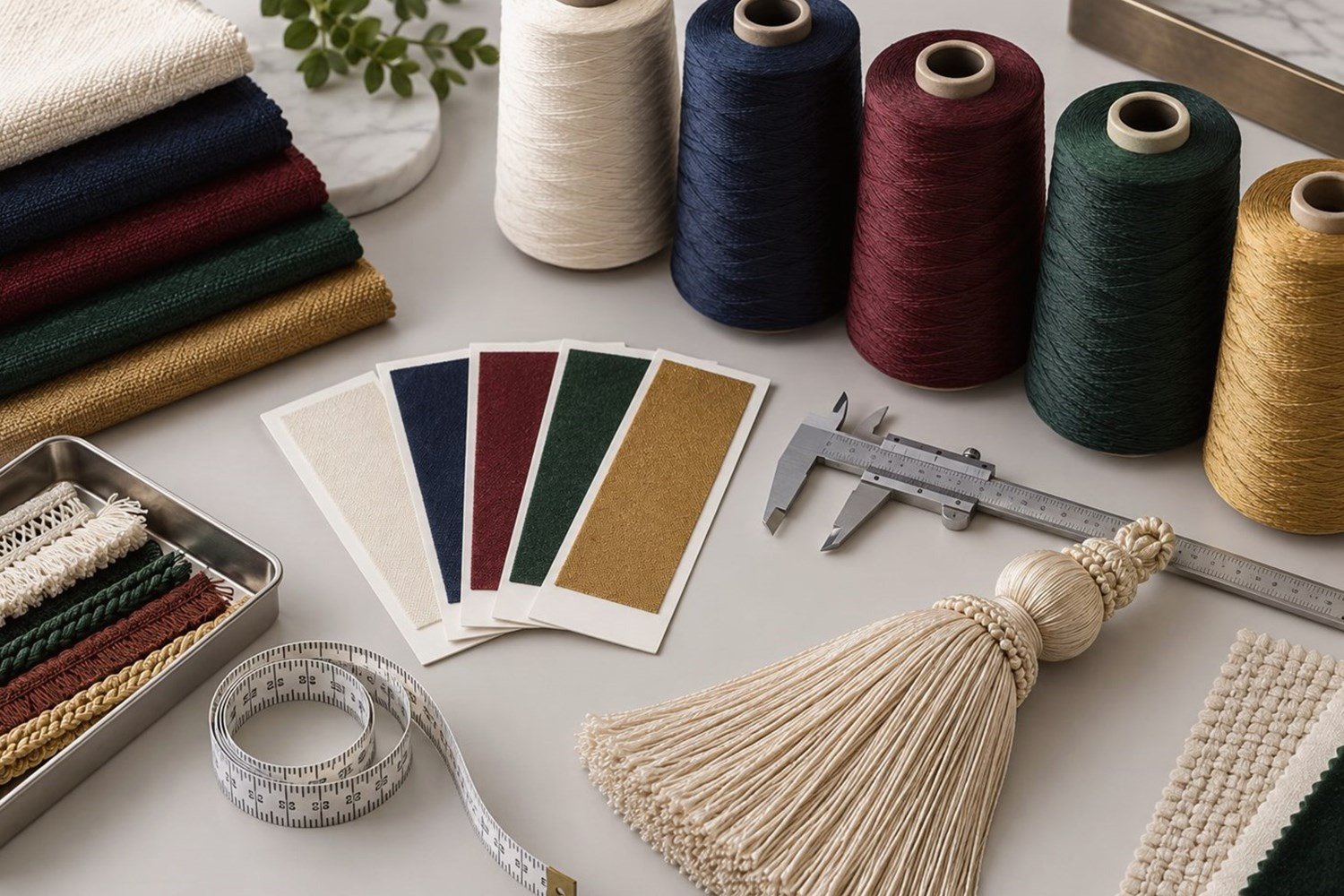
Wool and wool-like or other spun yarns can create fuller, softer, and more visibly textured tassels. These directions are often considered for home textiles, throws, cushions, seasonal accessories, fashion products, and decorative crafts where surface texture matters.
Yarn texture can be as important as fiber identity. Fine filament yarn often creates a smooth, aligned effect; spun yarn may produce a softer, more textile-led surface; textured or thick decorative yarn can create visual weight and fullness. Thick or textured yarn should not automatically be described as wool without a confirmed fiber specification.
| Yarn Direction | How It Can Change the Tassel |
|---|---|
| Fine filament yarn | Smoother surface and more aligned strands |
| Spun yarn | Softer, more textile-led texture |
| Textured yarn | More visible surface variation |
| Thick decorative yarn | Greater visual weight and fullness |
Leather and Faux Leather Tassels

Leather and faux leather tassels are structurally different from traditional thread tassels because they are often formed from cut strips rather than grouped yarn strands. They are commonly used on handbags, key accessories, zipper pulls, fashion accessories, and gift-related products.
| Feature | Thread Tassel | Leather or Faux Leather Tassel |
|---|---|---|
| Construction | Grouped yarn, thread, or cord | Cut strip-based form |
| Movement | Fiber-led hanging strands | Strip-based swing and separation |
| Texture | Soft, smooth, spun, or textured yarn | Surface-led material character |
| Attachment | Loop, cord, or wrapped head | Cap, loop, ring, or specified hardware |
| Typical use | Textiles, regalia, interiors | Bags, keys, accessories |
The term “leather tassel” should only be used when the material is actually leather. When the design uses a synthetic alternative, identify it as faux leather or by the specified material.
What Materials Are Used in Beaded Tassels?
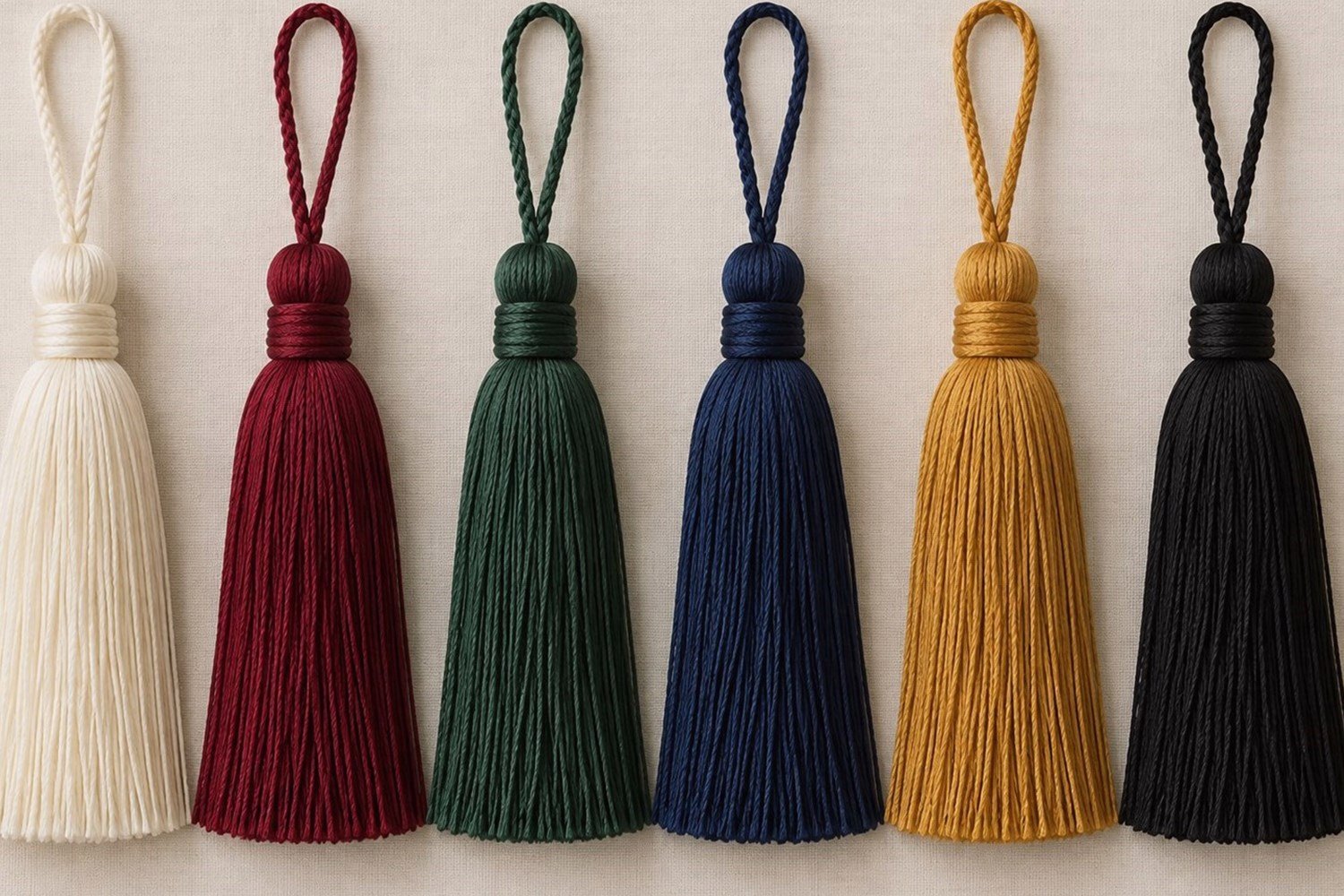
Beaded tassels combine a textile tassel structure with visible bead components, so they commonly use more than one material category. The skirt may be polyester, rayon or viscose, cotton, metallic yarn, or another specified fiber, while the beads add a separate decorative layer.
| Bead Material | Typical Visual Character | Selection Considerations |
|---|---|---|
| Glass | Clear, colored, or reflective visual detail | Shape, color, placement |
| Acrylic | Lightweight decorative direction | Surface, color, proportion |
| Wood | Natural or textured accent | Finish and material coordination |
| Resin | Varied color and shape options | Design direction and attachment |
| Metal | Reflective or structured component | Finish and visible placement |
Bead selection affects visual weight, color, surface reflection, movement, and design complexity. Availability should be confirmed against the actual product design. See Beaded Tassels for the related category.
Mixed-Material Tassels
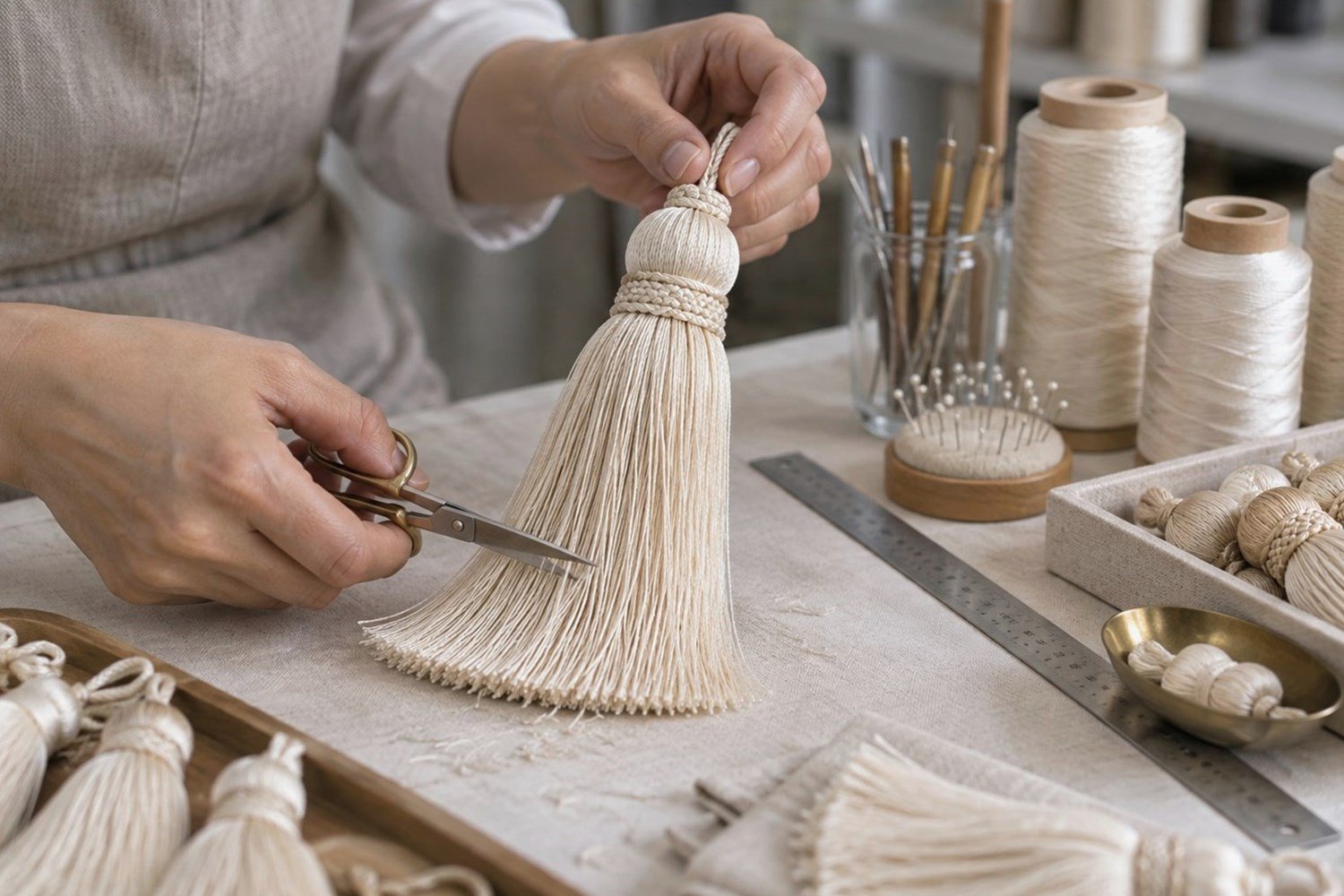
Many decorative tassels are mixed-material products rather than single-fiber items. A finished design can combine textile yarn, braided cord, a wrapped head, beads, wood or resin elements, metal parts, charms, and decorative knots for contrast, structure, attachment, or product differentiation.
Conceptual combinations might include a rayon skirt with braided textile cord and a bead, a polyester skirt with metallic accent yarn, a cotton tassel with a wood component, or a thread tassel with a metal charm. These are design examples, not fixed factory specifications. Each component’s material, location, and connection should be reviewed as part of the complete product brief.
Polyester vs Rayon, Cotton, and Other Material Comparisons
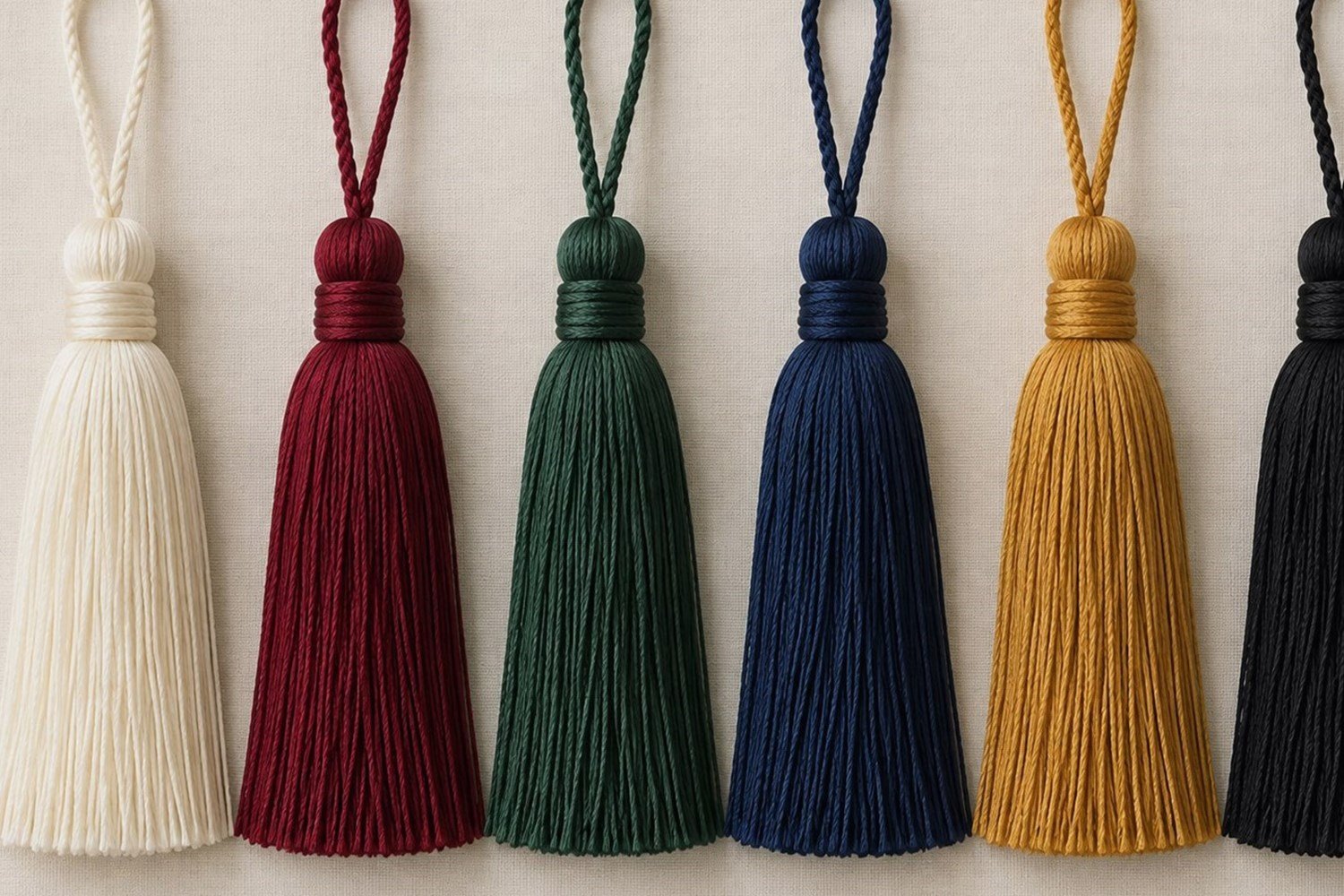
Polyester and rayon can both be used for tassels, but they differ in fiber composition and typical visual character. Rayon or viscose is often selected for a smoother, silk-like sheen and fluid appearance, while polyester offers broad versatility in color, construction, and finish. Yarn specification and tassel construction can significantly change either result.
| Feature | Polyester | Rayon/Viscose |
|---|---|---|
| Fiber category | Synthetic fiber | Regenerated cellulose-based fiber |
| Typical sheen | Finish and yarn dependent | Often smooth with silk-like luster |
| Visual drape | Construction dependent | Often fluid-looking |
| Color possibilities | Broad visual directions | Depends on yarn and specification |
| Common applications | Accessories, regalia, decoration | Decorative and ceremonial designs |
| Selection focus | Finish, color, construction | Sheen, drape, fiber identity |
Cotton versus polyester: cotton is often selected for a softer, matte, natural-fiber appearance, while polyester can offer a broad range of synthetic yarn constructions and finishes. Neither is universally superior. The suitable choice depends on the desired visual style, texture, construction, application, and buyer requirement.
| Material Group | Examples | How to Describe It |
|---|---|---|
| Natural fibers | Cotton, silk, wool, leather | Fiber identity should be confirmed |
| Regenerated cellulose | Rayon, viscose | Separate from natural silk and conventional synthetics |
| Synthetic fibers | Polyester, nylon, acrylic fibers, faux leather | Specify material and visual requirement |
The correct material category does not automatically determine quality or make an environmental claim. Selection should follow application, appearance, texture, construction, handling requirements, and buyer specifications.
How Does Material Affect Tassel Appearance?
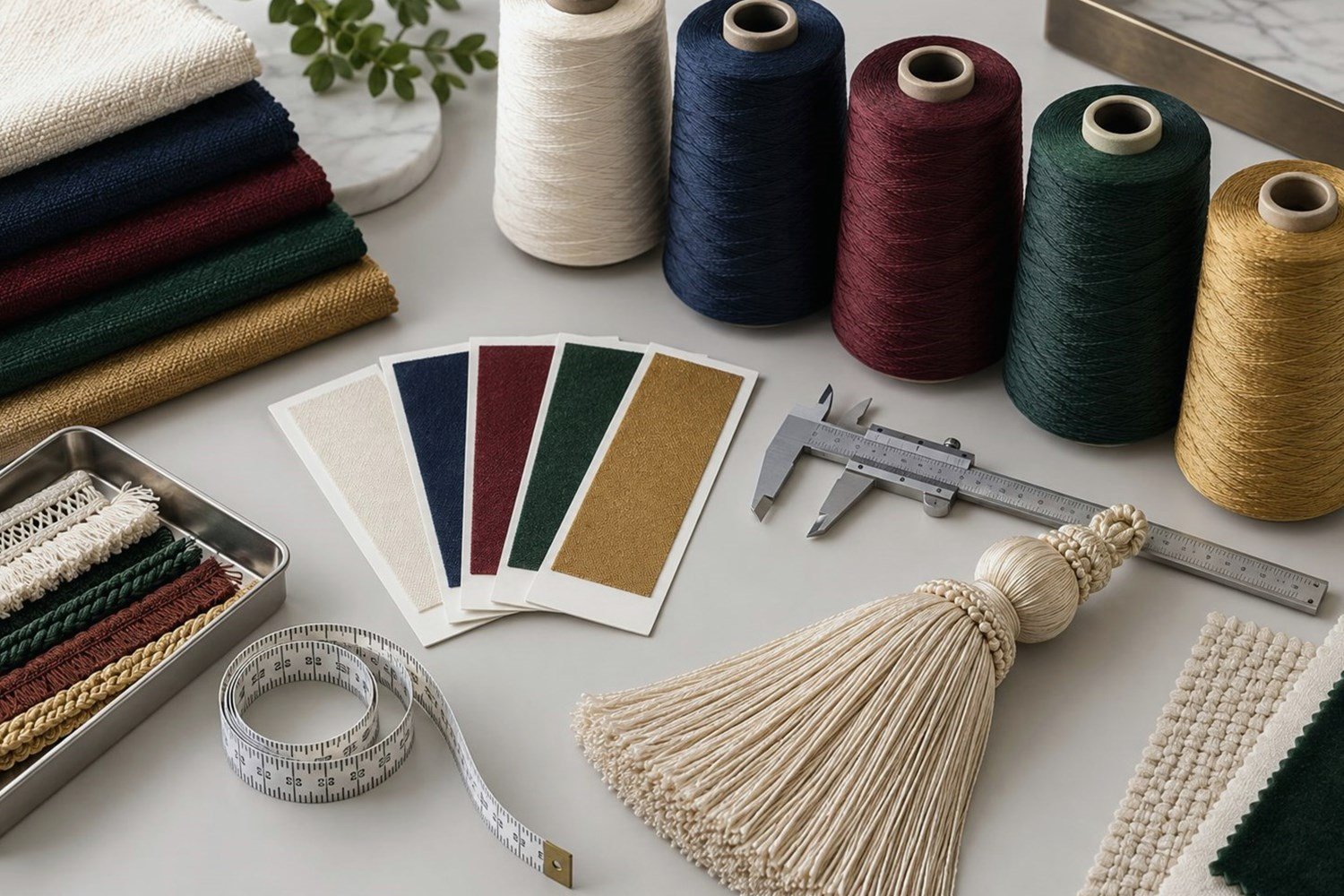
Material influences a tassel’s visible and tactile character, including sheen, texture, drape, movement, fullness, color appearance, and surface detail. It does not determine the result alone because yarn thickness, twist, density, skirt length, head structure, and finishing also shape the finished tassel.
| Characteristic | How Material Can Affect It |
|---|---|
| Sheen | Matte, soft luster, high luster, or metallic reflection |
| Texture | Smooth, soft, spun, coarse, structured, or strip-based |
| Drape | Fluid, straight, soft, or visually full |
| Movement | Light, soft, or visually weighted hanging motion |
| Fullness | Influenced by yarn thickness and density |
| Color appearance | Matte, bright, deep, or reflective color impression |
| Surface detail | Smooth, fuzzy, twisted, braided, or metallic effect |
Which Tassel Material Is Best for Different Applications?
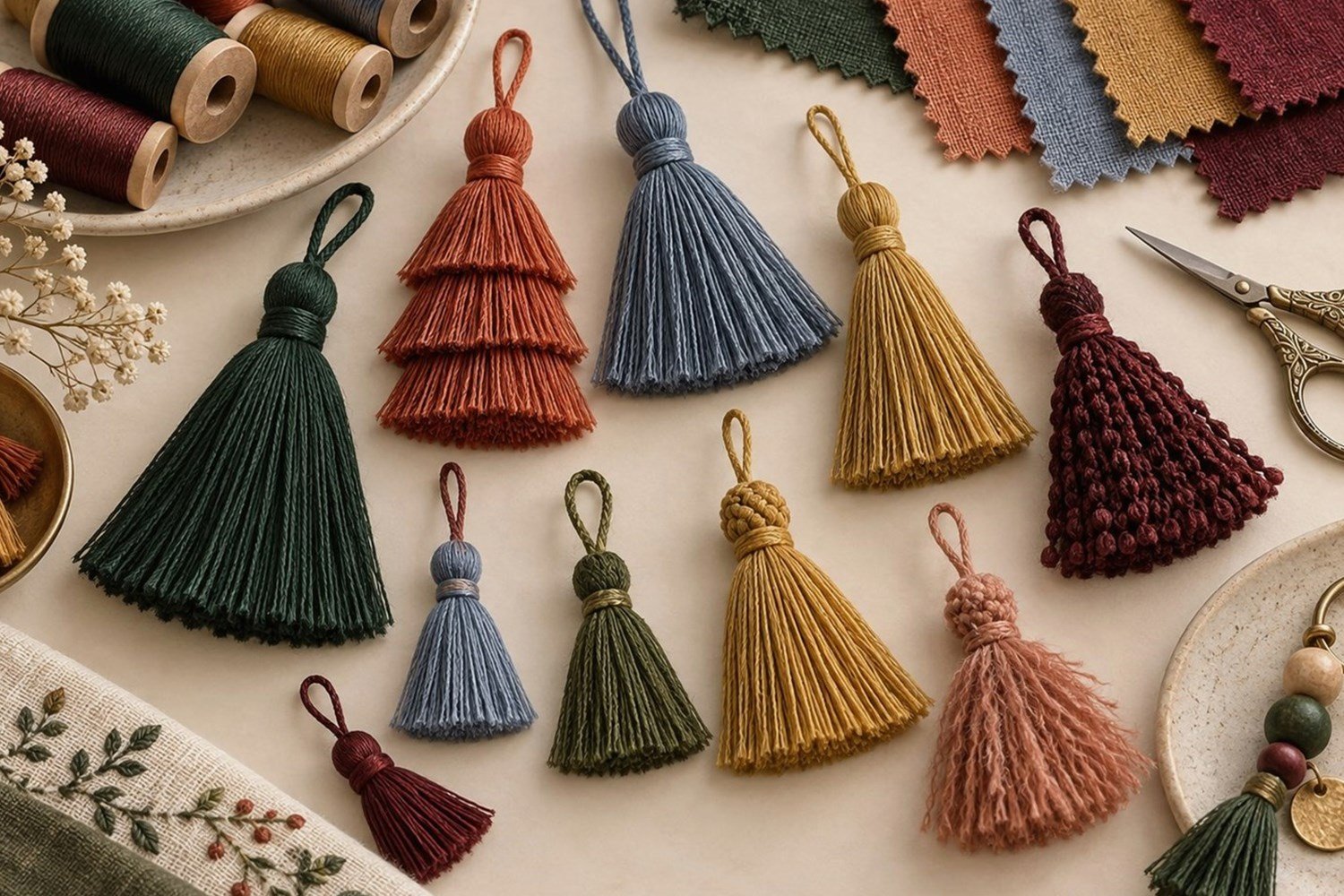
There is no single best tassel material for every application; the appropriate choice depends on the product, required appearance, construction, handling conditions, and buyer specification. The table below presents common directions, not universal material rules.
| Application | Common Material Directions | Important Selection Factors |
|---|---|---|
| Graduation | Polyester or rayon/viscose directions | Appearance and institutional requirements |
| Bookmark | Fine textile yarn or cord | Weight, length, attachment |
| Key | Textile, leather/faux leather, or mixed | Loop, visual detail, connection |
| Curtain | Rayon, polyester, cord, or mixed directions | Scale, fullness, color coordination |
| Home textile | Cotton, polyester, rayon, wool-like, or mixed | Texture and product style |
| Fashion or bag | Thread, cord, leather-based, or mixed | Weight, movement, surface |
| Gift packaging | Textile yarn, cord, metallic, or mixed | Proportion and attachment |
| Beaded decoration | Textile yarn plus specified beads | Component balance and placement |
How to Choose Tassel Materials
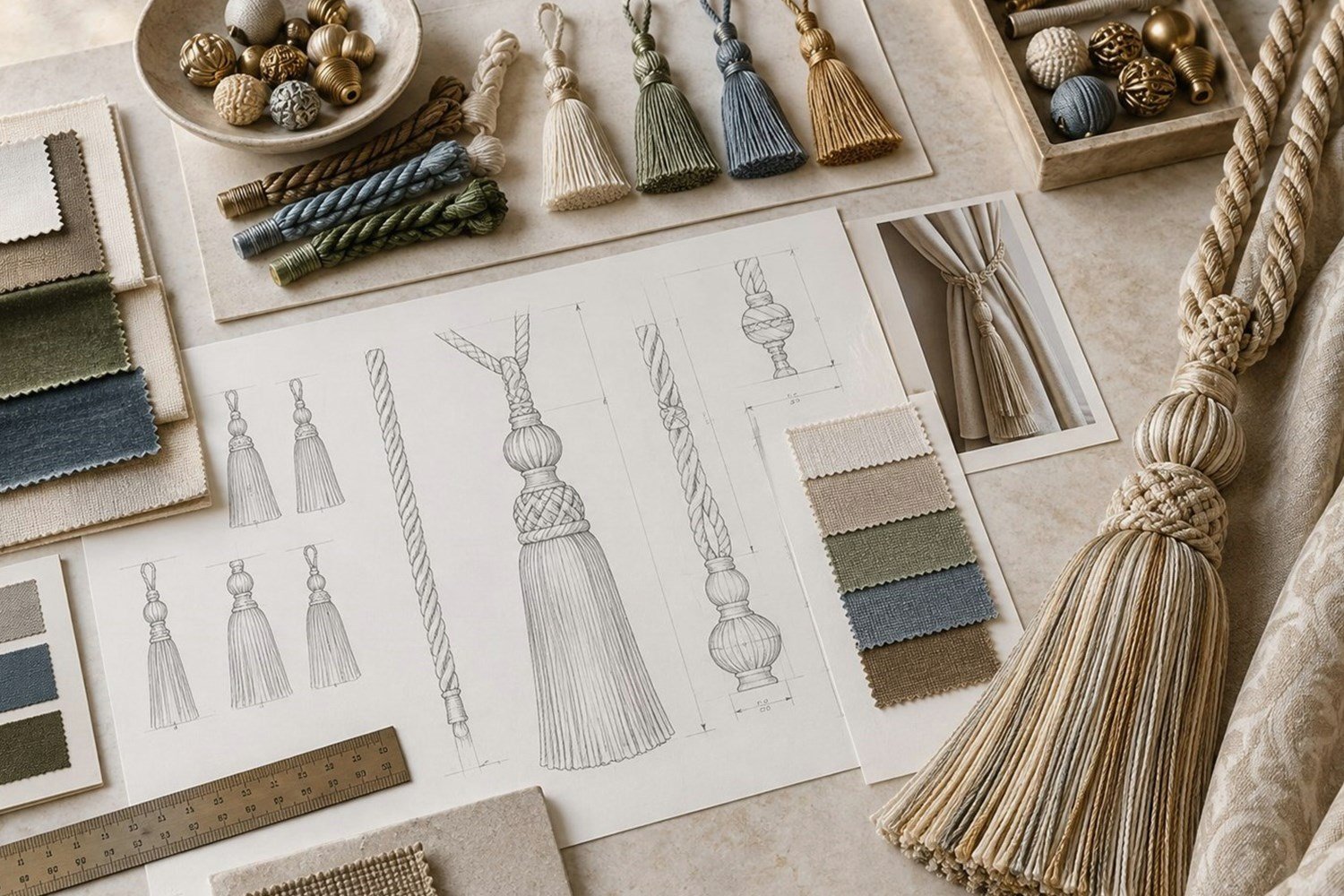
Choose tassel materials by starting with the finished application and desired visual character, then defining the yarn, structure, color, and decorative components. A fiber name is useful, but it should be paired with clear requirements for sheen, texture, fullness, drape, and attachment.
- Define the end application.
- Describe the desired visual character.
- Choose matte, lustrous, textured, or metallic direction.
- Determine texture, drape, movement, dimensions, and fullness.
- Select the main fiber or yarn.
- Define cord, loop, head, and structural materials.
- Select beads or decorative components if required.
- Confirm color requirements and material identity.
- Review the complete material specification.
- Approve a representative sample when necessary.
Questions to Ask Before Selecting a Material
- What product will use the tassel?
- What appearance, sheen, texture, and movement are required?
- Is a natural fiber specifically required?
- Are beads, metallic accents, cords, or loops needed?
- Is the exact material composition important?
- Is there a reference sample, image, or drawing?
How to Evaluate Tassel Material Quality

Tassel material quality cannot be judged only by a fiber name because polyester, rayon, cotton, and other tassels can vary with yarn specification and construction. Review the finished sample against the approved product specification, color reference, and intended application.
| Quality Point | What to Check | Why It Matters |
|---|---|---|
| Fiber or yarn consistency | Visible uniformity in the sample | Supports the agreed appearance |
| Color and sheen | Color reference and surface direction | Coordinates the finished collection |
| Yarn thickness and alignment | Strand body and skirt presentation | Controls fullness and visual order |
| Head and cord construction | Wrapping, binding, and connection | Defines finished proportion |
| Components | Beads, charms, and visible finish | Controls decorative detail |
| Overall sample consistency | Material, construction, and presentation | Provides a meaningful comparison basis |
Loose fibers, fraying, surface variation, cord construction, head wrapping, and decorative-component finish should be considered relative to the approved sample rather than to an invented numerical tolerance.
What Should B2B Buyers Specify About Tassel Materials?
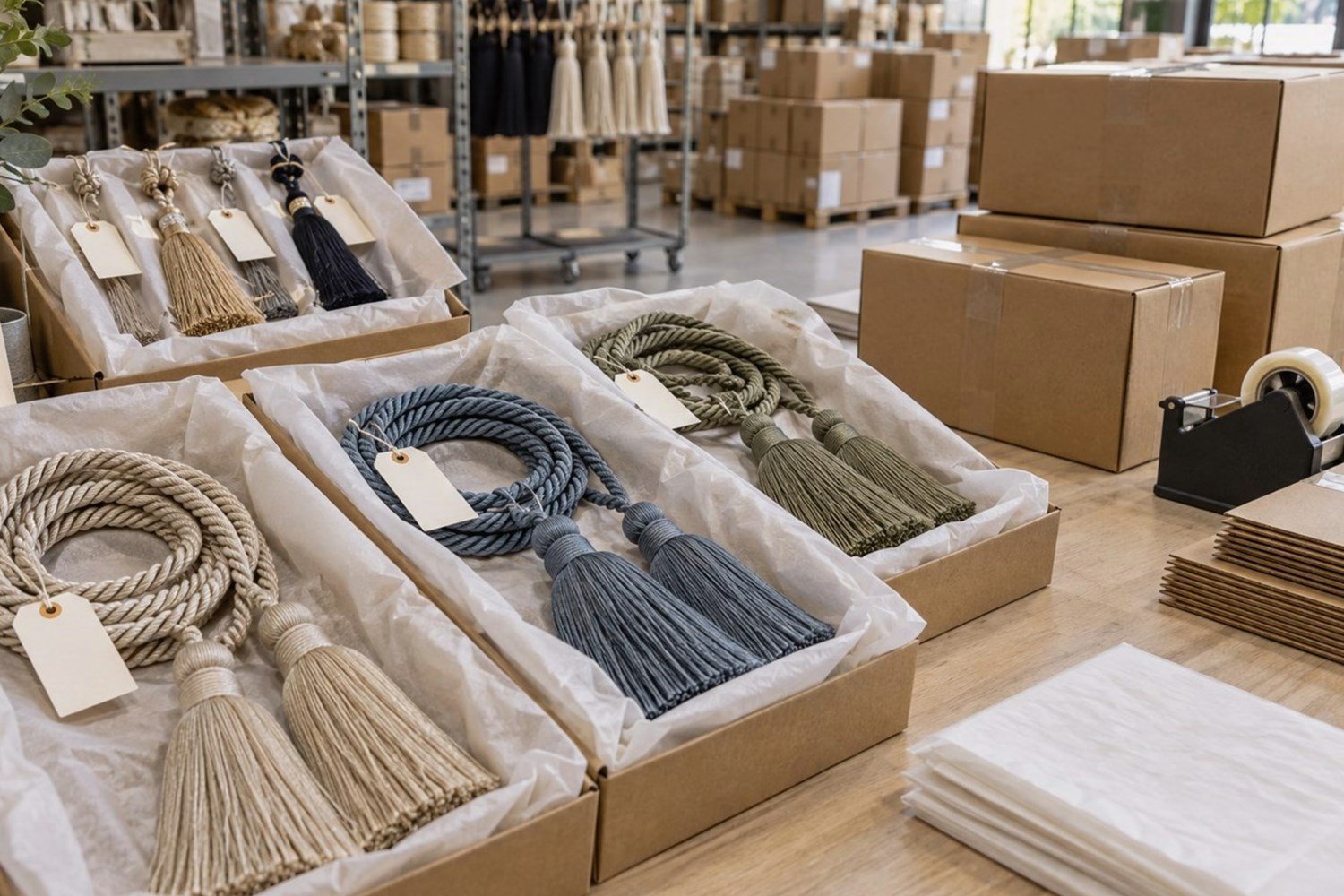
Writing only “polyester tassel” or “silk-like tassel” may not provide enough information for accurate product development. Buyers should specify both the desired material identity and the finished visual result, then add the dimensions, construction, components, application, and reference materials that explain the requirement.
| Information | Why It Matters |
|---|---|
| Main fiber and yarn type if known | Identifies the primary material direction |
| Color and desired sheen | Defines visual appearance |
| Dimensions, skirt length, and fullness | Sets proportion and tassel body |
| Cord, head, and attachment construction | Defines structural materials |
| Beads, components, and hardware if relevant | Defines decorative layers |
| Application and reference sample | Connects material choice to the end product |
| Packaging and quantity context | Provides development context |
When the exact fiber is unknown, provide a physical sample or reference product and describe the desired appearance and application. This supports comparison and sampling without promising an exact replication. Related commercial pages include Custom Tassels, Graduation Tassels, and Decorative Tassels.