Main Content
What Dimensions Make Up Tassel Size?
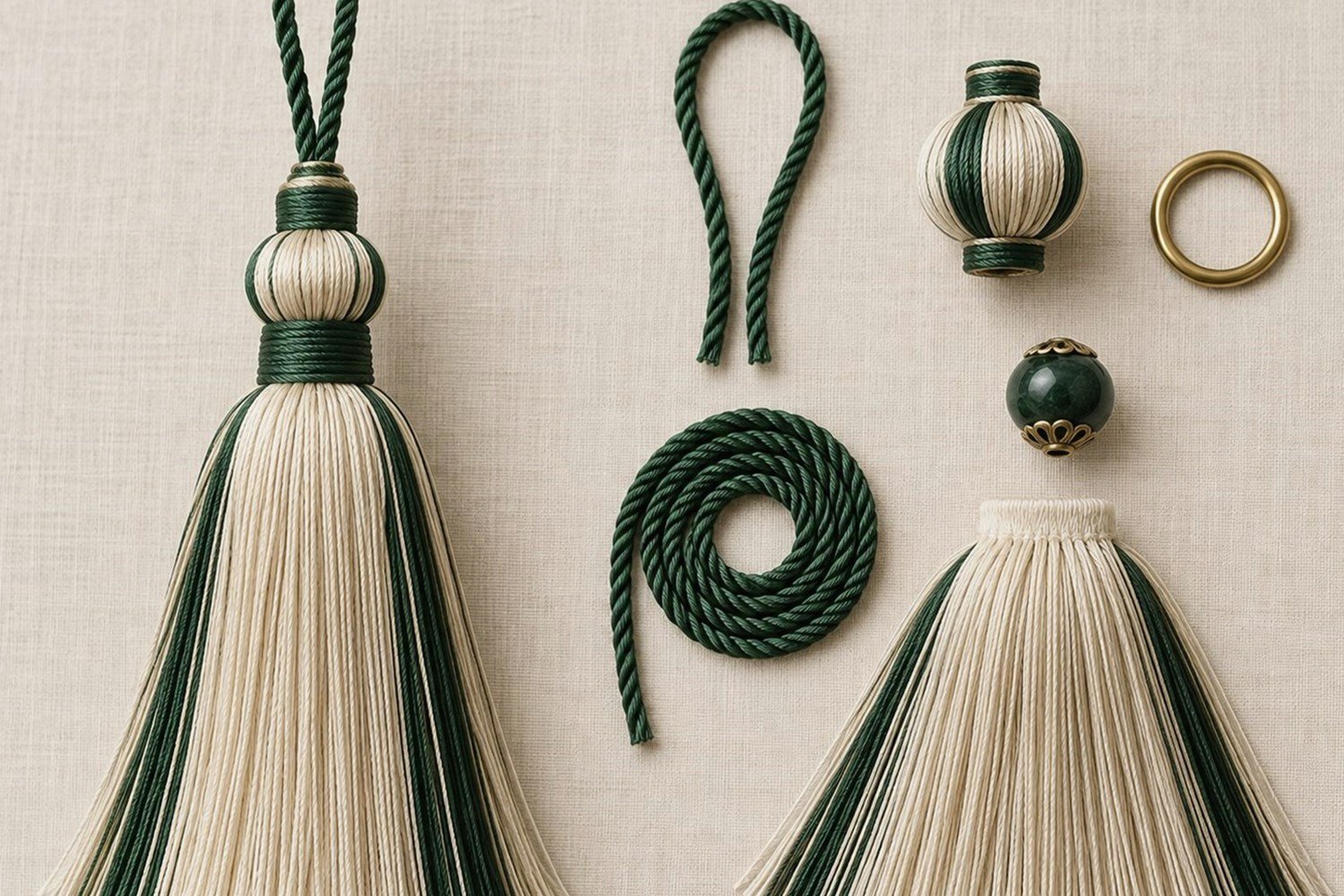
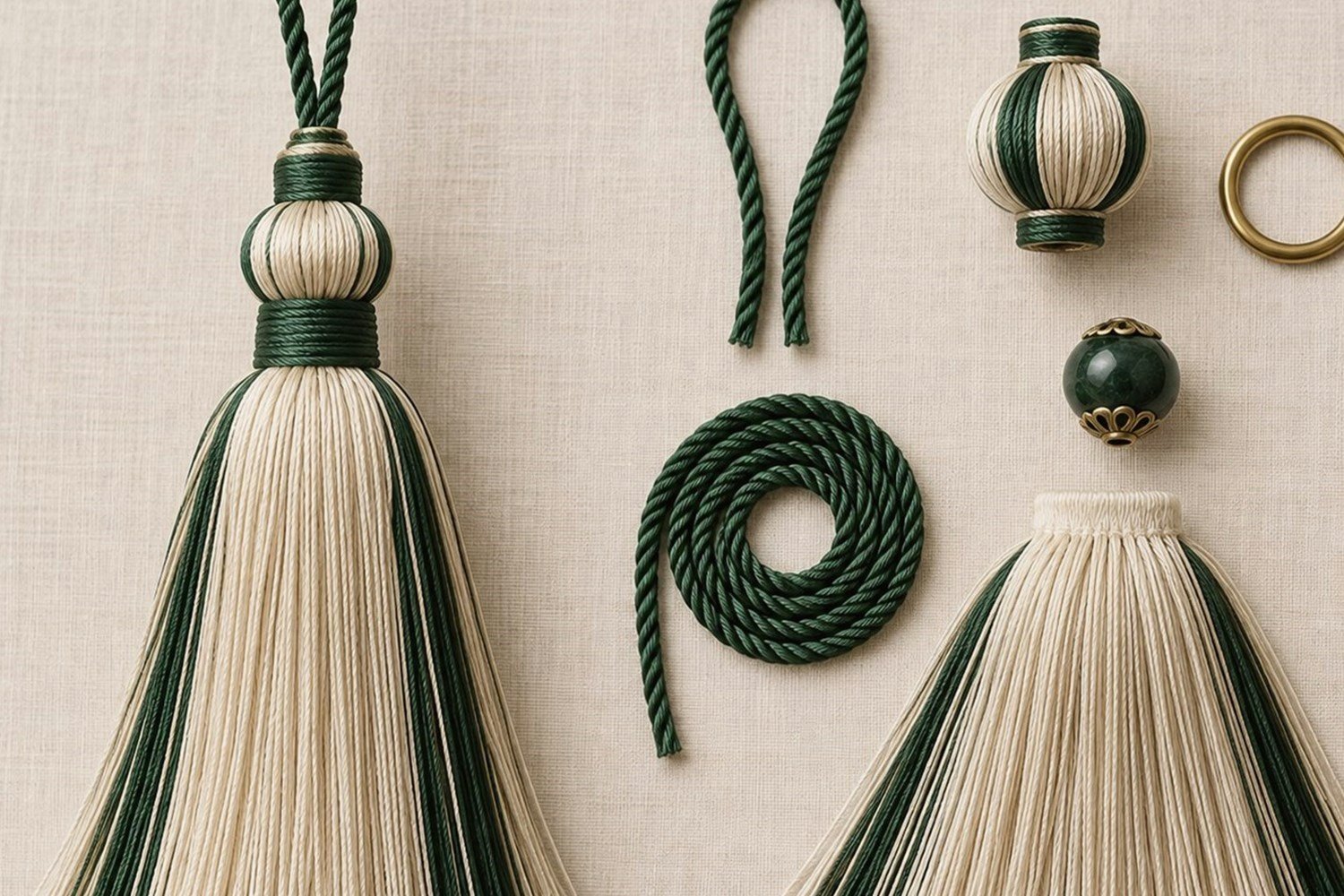
Tassel size can include independent vertical, horizontal, and component measurements. A simple thread tassel may need only a body length and loop. A decorative tassel with a shaped head, beads, and braided cord needs a more complete set of dimensions.
Vertical measurements
- Overall length, body length, skirt length, and head height.
- Cord length, loop length, and the actual hanging drop where relevant.
Horizontal measurements
- Head width or diameter, skirt diameter, and maximum tassel width.
- Spread, when the item is part of a larger curtain tieback assembly.
Component measurements
- Bead diameter, cap dimensions, charm size, cord diameter, and loop opening.
| Dimension | Direction | Typical Reference Point | Important Note |
|---|---|---|---|
| Overall length | Vertical | Named top point to skirt end | State whether loop is included |
| Body length | Vertical | Top of body to bottom edge | State whether head is included |
| Skirt length | Vertical | Neck or head edge to strand ends | Define the upper edge |
| Head size | Vertical/horizontal | Head boundaries | Irregular heads need more than width |
| Loop length | Variable | Agreed loop method | Flat and folded values differ |
What Is Tassel Length?
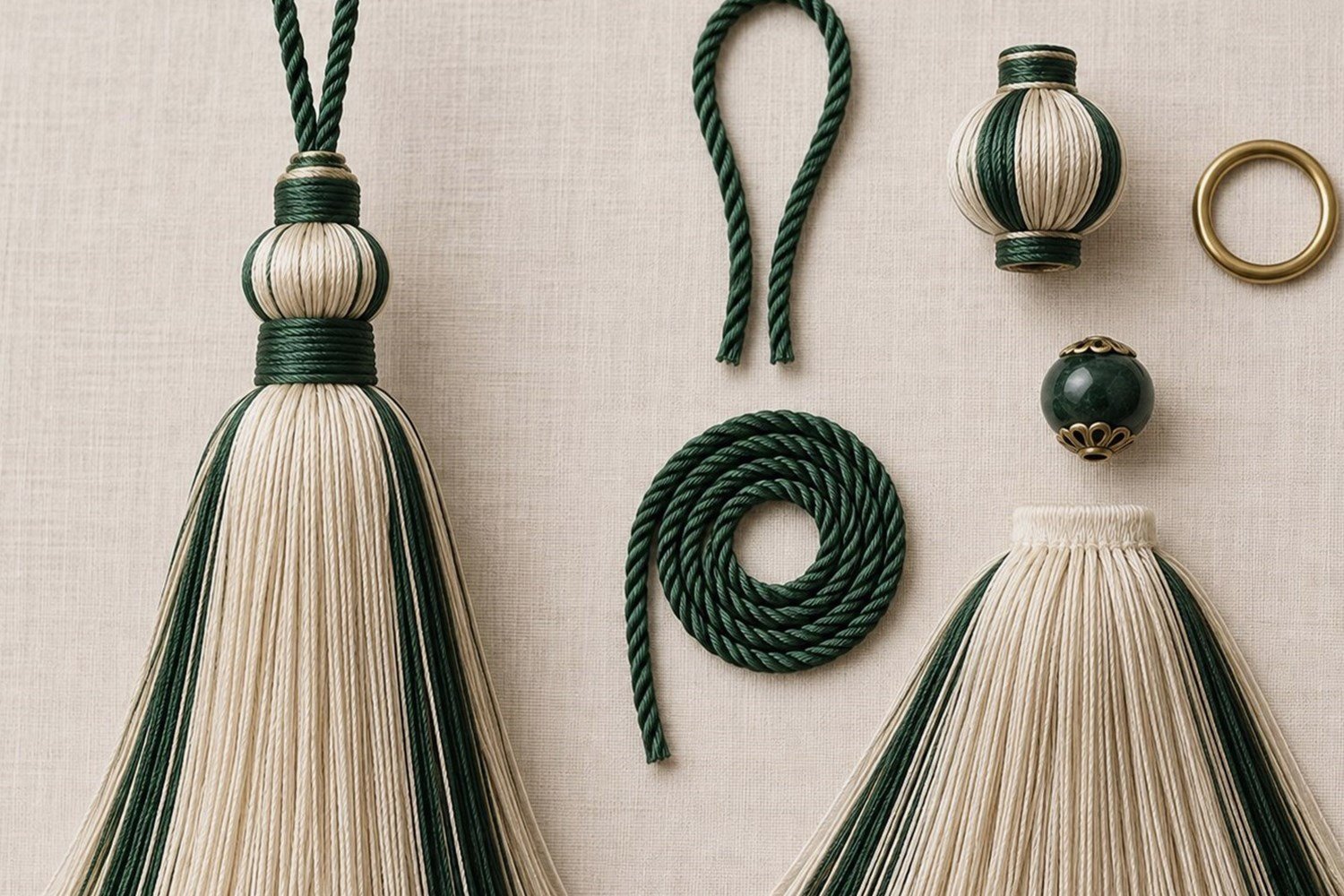
“Tassel length” is ambiguous unless its starting and ending points are named. It can mean the body only, the head plus skirt, the skirt only, or the complete hanging item including a cord or loop. A buyer should therefore describe the component, not just state a number.
| Unclear Specification | Clear Specification |
|---|---|
| 10 cm tassel | 10 cm tassel body, excluding hanging loop |
| 20 cm total | 20 cm from the top of the suspension loop to the trimmed skirt end |
| 5 cm fringe | 5 cm skirt from the lower neck edge to finished strand ends |
These are examples of measurement language, not recommended commercial sizes. Before sample approval, international buyers should also confirm whether the project uses inches, centimeters, or both.
What Are Body Length and Skirt Length?
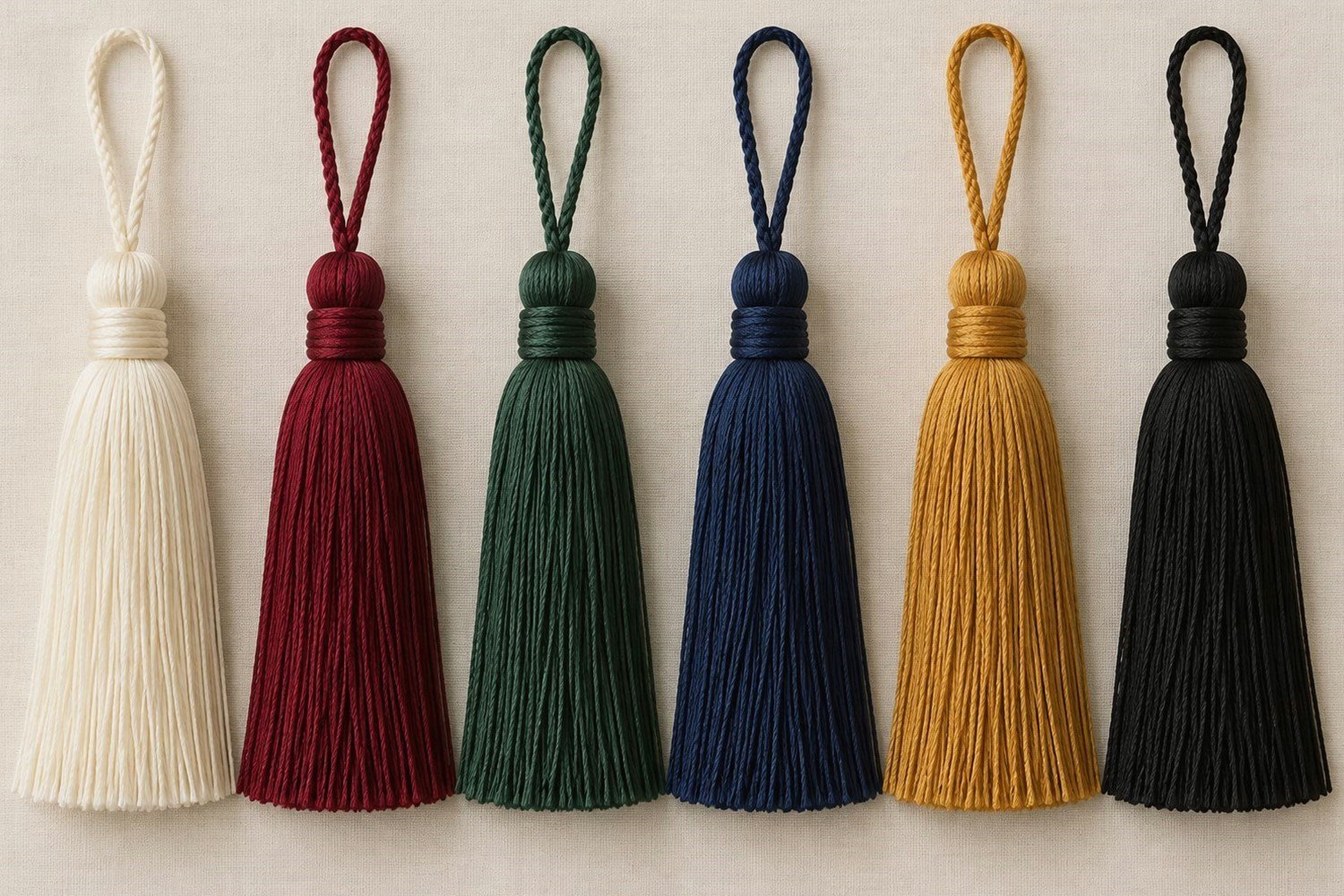
Body length describes the primary tassel structure, while skirt length describes the hanging strands below a defined head or neck point. They can be related, but they are not interchangeable. The body may include the head and skirt, while a separate cord or loop sits outside the body measurement.
Define body length before measuring
Confirm the starting point, ending point, whether the head is included, whether decorative caps count, and whether the loop is excluded. A body measurement without these notes can create a different interpretation between a drawing, sample, and finished product.
Measure the skirt at the finished edge
Skirt length normally runs from the defined lower head or neck reference point to the finished strand ends. It affects the silhouette, movement, apparent fullness, and perceived size. A short skirt with a large head, a balanced head and skirt, and a long skirt with a small head can all be appropriate for different designs.
| Proportion | Visual Direction | What to Review |
|---|---|---|
| Short skirt + larger head | More upper visual mass | Head scale and hanging space |
| Balanced head + skirt | Even visual division | End-product proportion |
| Long skirt + smaller head | More elongated appearance | Movement and total drop |
How Are Tassel Heads, Cords, and Loops Measured?
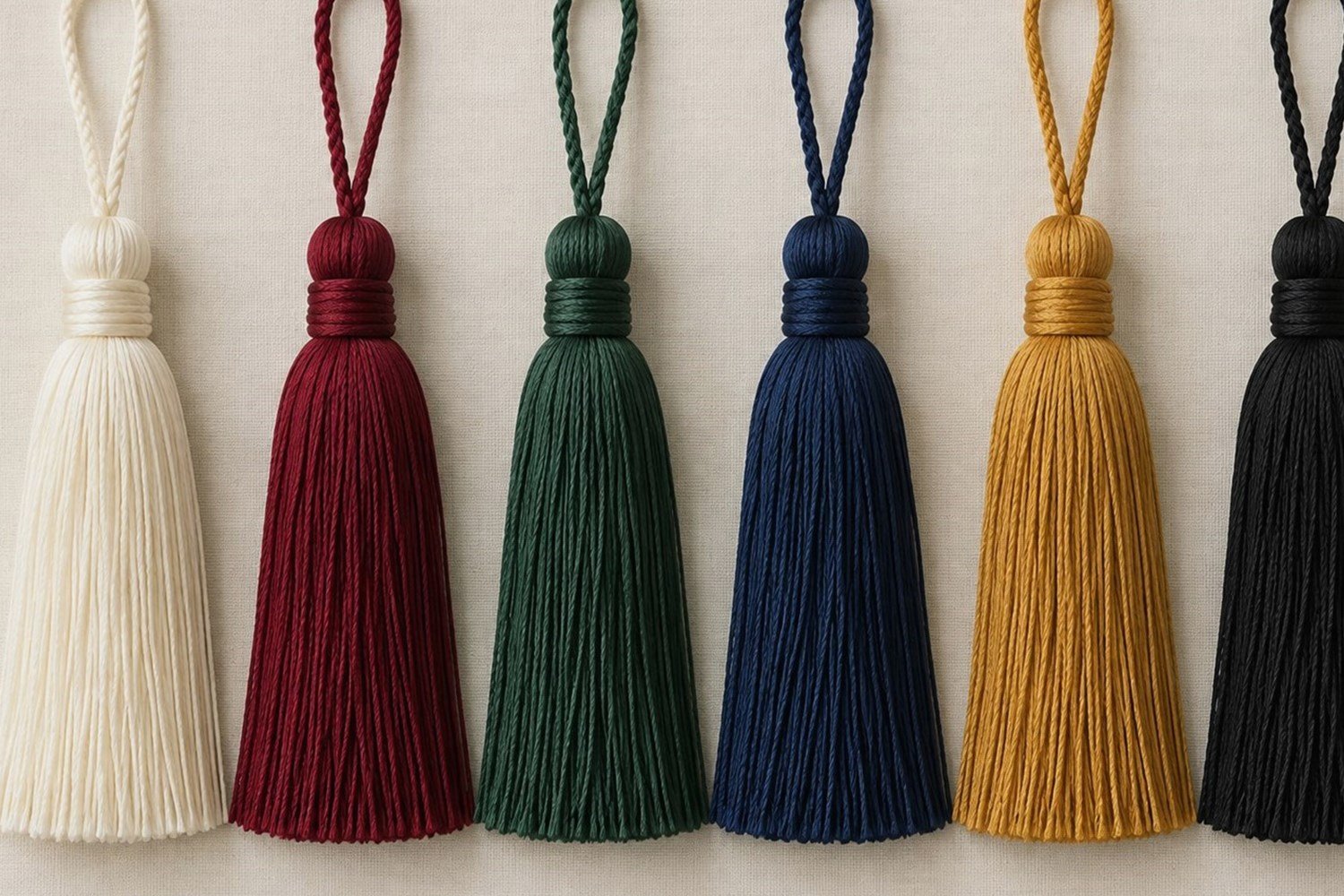
Decorative heads need a height plus a width or diameter, and cords or loops need their own agreed measurement method. These parts often create sourcing misunderstandings because their shapes and construction vary more than a straight skirt measurement.
| Head Shape | Useful Measurements | Reason |
|---|---|---|
| Round | Diameter and height | Describes the complete volume |
| Oval | Width and height | Shows its directional shape |
| Wrapped | Width, height, neck position | Clarifies the transition to skirt |
| Beaded | Bead diameter and assembled height | Separates components from the body |
| Complex decorative | Maximum width, height, components | Captures irregular outlines |
Loop length needs a defined method
A loop can be measured as its flat length, folded hanging drop, total cord used to form the loop, or circumference. Those values are not necessarily equal. Never specify only a “4-inch loop” without confirming which method produces the 4 inches. This matters particularly for Bookmark Tassels, Key Tassels, and hanging decorative styles.
Width, diameter, and fullness
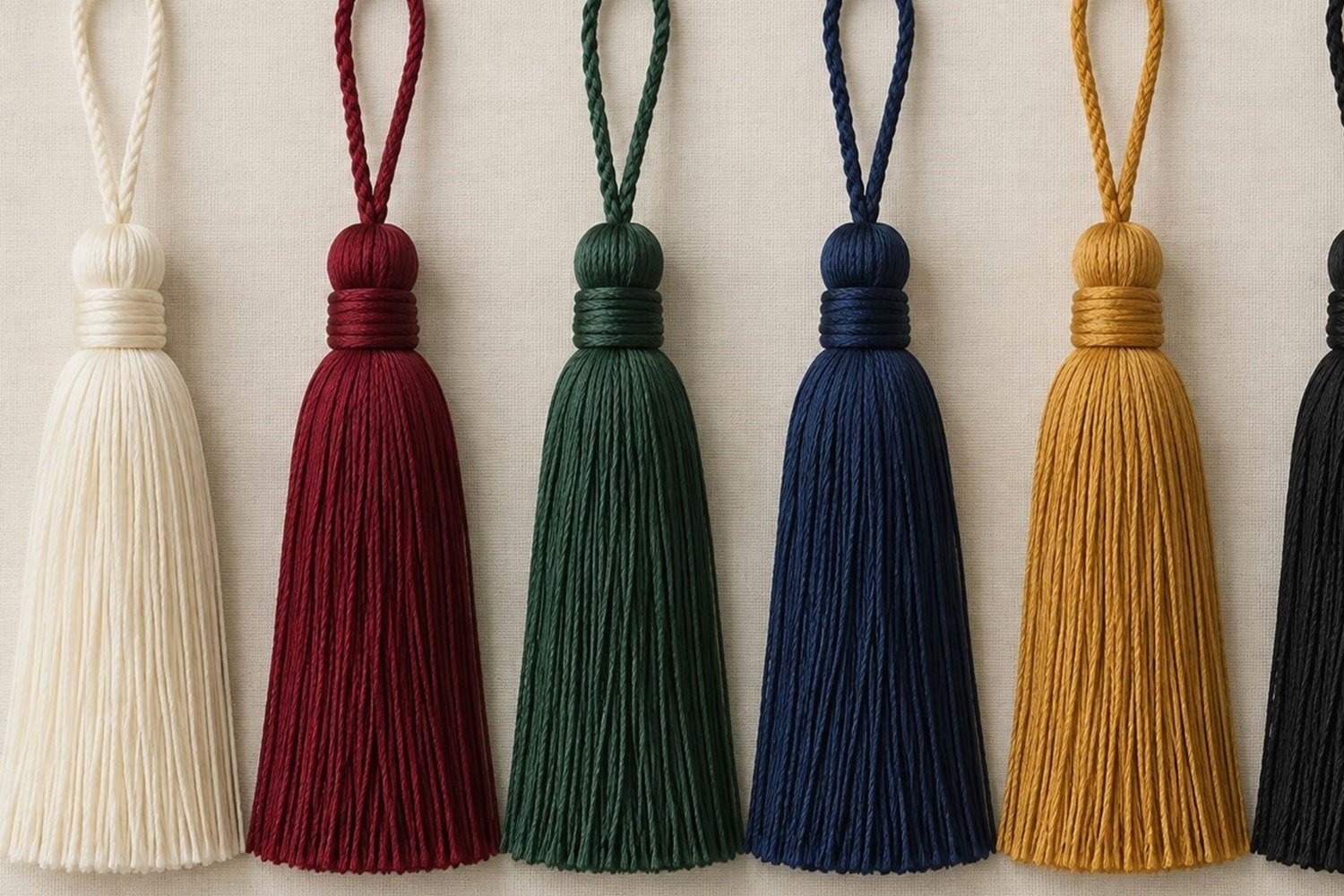
Width may refer to the head, maximum body width, skirt spread, skirt diameter, or a decorative component. Soft skirts change shape with fullness, material, arrangement, compression, and hanging position. Define a consistent condition for the measurement rather than treating a flexible skirt as a rigid circle.
Overall Length vs Body Length vs Skirt Length
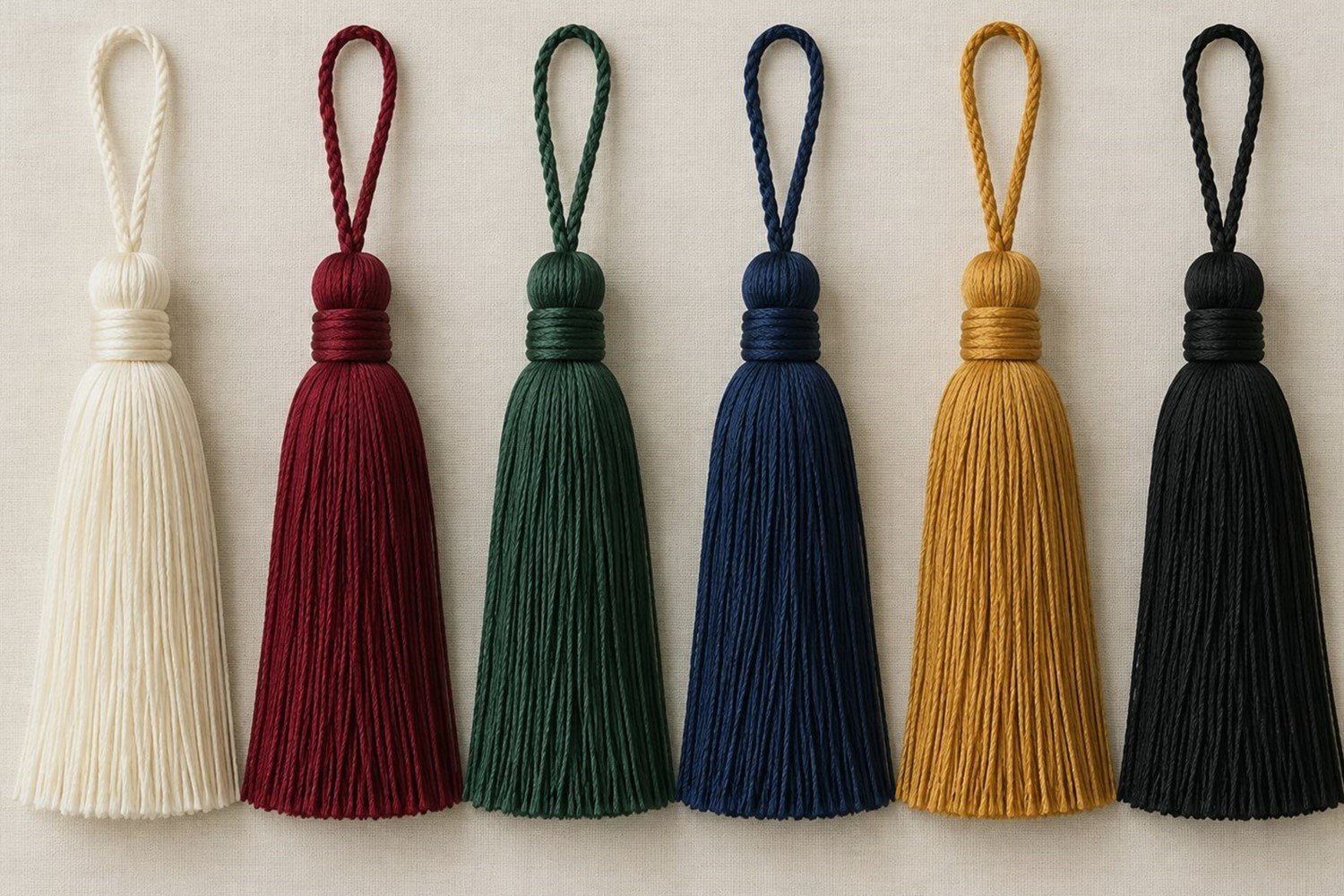
Overall length, body length, skirt length, cord length, and loop length describe different components and should not be added casually. A tassel may have a 5 cm skirt, a 2 cm head, and a separate 8 cm loop. The values only form a total when the agreed measurement method shows they align linearly.
| Measurement | Usually Includes | Usually Excludes | Why Buyers Need It |
|---|---|---|---|
| Overall length | Defined top-to-bottom hanging span | Parts outside named endpoints | Confirms available space |
| Body length | Main tassel form | Separate loop or cord | Sets visible scale |
| Skirt length | Hanging strands | Head and attachment | Controls proportion |
| Cord length | Connecting cord | Tassel body | Sets hanging position |
| Loop length | Defined loop measurement | Body unless named | Confirms attachment |
Component dimensions should not be mathematically combined without understanding how each dimension is measured.
Is There a Standard Tassel Size?

No single standard tassel size applies to all tassels. Dimensions vary by application, construction, material, attachment system, and desired visual effect. Commercial examples can show the range of possible products, but they should not be treated as universal industry requirements.
| Application | Typical Sizing Priority | Useful Dimensions |
|---|---|---|
| Graduation | Cap compatibility and hanging drop | Loop, cord, body, overall length |
| Bookmark | Small scale and attachment | Body, loop, overall hanging length |
| Key | Key and furniture scale | Body, head, skirt, loop |
| Decorative | Product proportion and impact | Body, width, fullness, components |
| Curtain | Drapery scale and complete assembly | Tassel, cord, spread, overall tieback |
Application examples are not standards
Bookmark tassels are commonly smaller than furnishing styles and often list their body and loop separately. Commonly seen commercial product examples include bodies around 1.5–2 inches with loops around 2.5–4 inches; this illustrates variation, not a required range. Key tassels can range from roughly 3.5 to 8 inches across decorative designs, again demonstrating variation rather than an industry standard.
Graduation Tassels should follow the cap and institutional specification. Decorative Tassels have a broad size range because they appear in home textiles, furniture, keys, lighting, gifts, and fashion. For curtain work, distinguish a tassel component from a complete curtain tassel tieback, which may also require cord length, spread, number of tassels, and attachment configuration.
How Do Size and Material Affect Appearance?
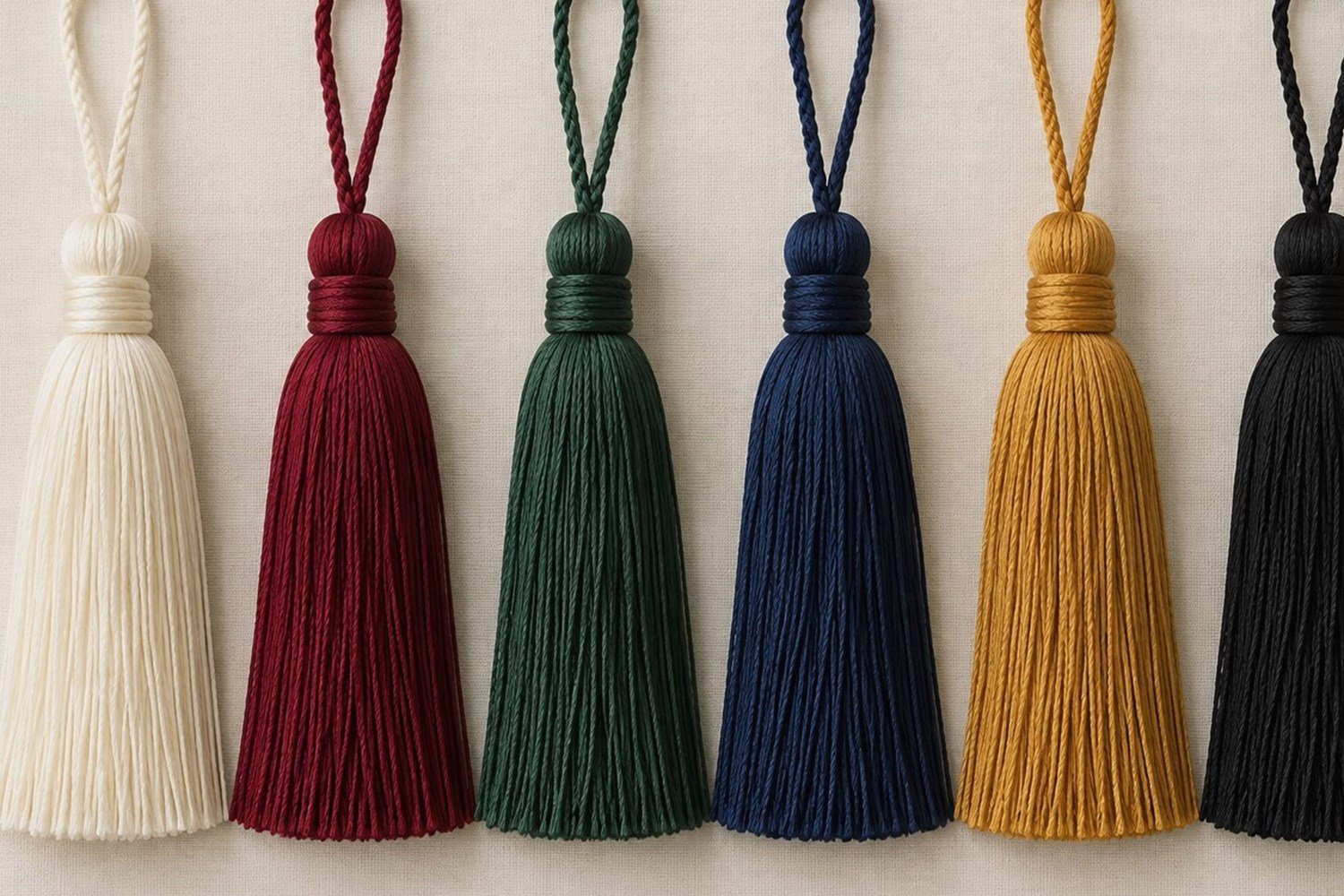
Two tassels with the same color and measured length can look different because of proportion, material, and fullness. A longer skirt can look more elongated; a wider or fuller skirt can add visual volume; a larger head creates more upper mass; and a longer cord changes the visible hanging drop.
| Dimension Change | Possible Visual Effect |
|---|---|
| Longer skirt | More elongated appearance |
| Larger head | Stronger upper visual mass |
| Greater fullness | More visual volume |
| Narrower body | Slimmer silhouette |
| Longer cord | Greater hanging drop |
| Larger beads | More prominent decorative detail |
Fine rayon-like yarn can appear slimmer than thicker textured yarn at the same measured 10 cm body length. Review both measured size and visual volume. For fiber comparisons, see Tassel Materials.
How Do You Choose and Measure the Right Tassel Size?

Choose size according to the end product first, then define individual dimensions and proportions. A good process begins with the available space and desired visual scale, then records body, skirt, head, cord, loop, and fullness information before a sample is reviewed.
- Identify the end application and attachment position.
- Measure the available hanging space on the finished product.
- Define the desired visual scale and overall hanging length.
- Specify body length, skirt length, and head dimensions separately.
- Define cord or loop length and the loop measurement method.
- Describe maximum width, fullness, beads, caps, or charms.
- Record the chosen unit system and reference points.
- Review the tassel with the actual product before approval.
How to measure a tassel step by step
- Place or hang the tassel in its normal orientation.
- Mark the exact start and end points for each requested dimension.
- Measure overall hanging length only if that value is required.
- Measure the body, skirt, head, cord, and loop separately.
- Measure width or diameter without excessive compression or stretching.
- Record the unit, method, and a photo or drawing of the reference points.

| Measurement | Value | Unit | Start Point | End Point | Notes |
|---|---|---|---|---|---|
| Overall length | |||||
| Body length | |||||
| Skirt length | |||||
| Head width | |||||
| Loop length |
Inches and centimeters
Both imperial and metric units appear in commercial tassel specifications; 1 inch equals 2.54 cm. Choose one primary unit system for the approved specification and confirm conversions before sampling or production. A quick reference is: 1 in = 2.54 cm, 2 in = 5.08 cm, 3 in = 7.62 cm, 4 in = 10.16 cm, 5 in = 12.70 cm, 6 in = 15.24 cm, and 8 in = 20.32 cm.
Common Tassel Sizing Mistakes
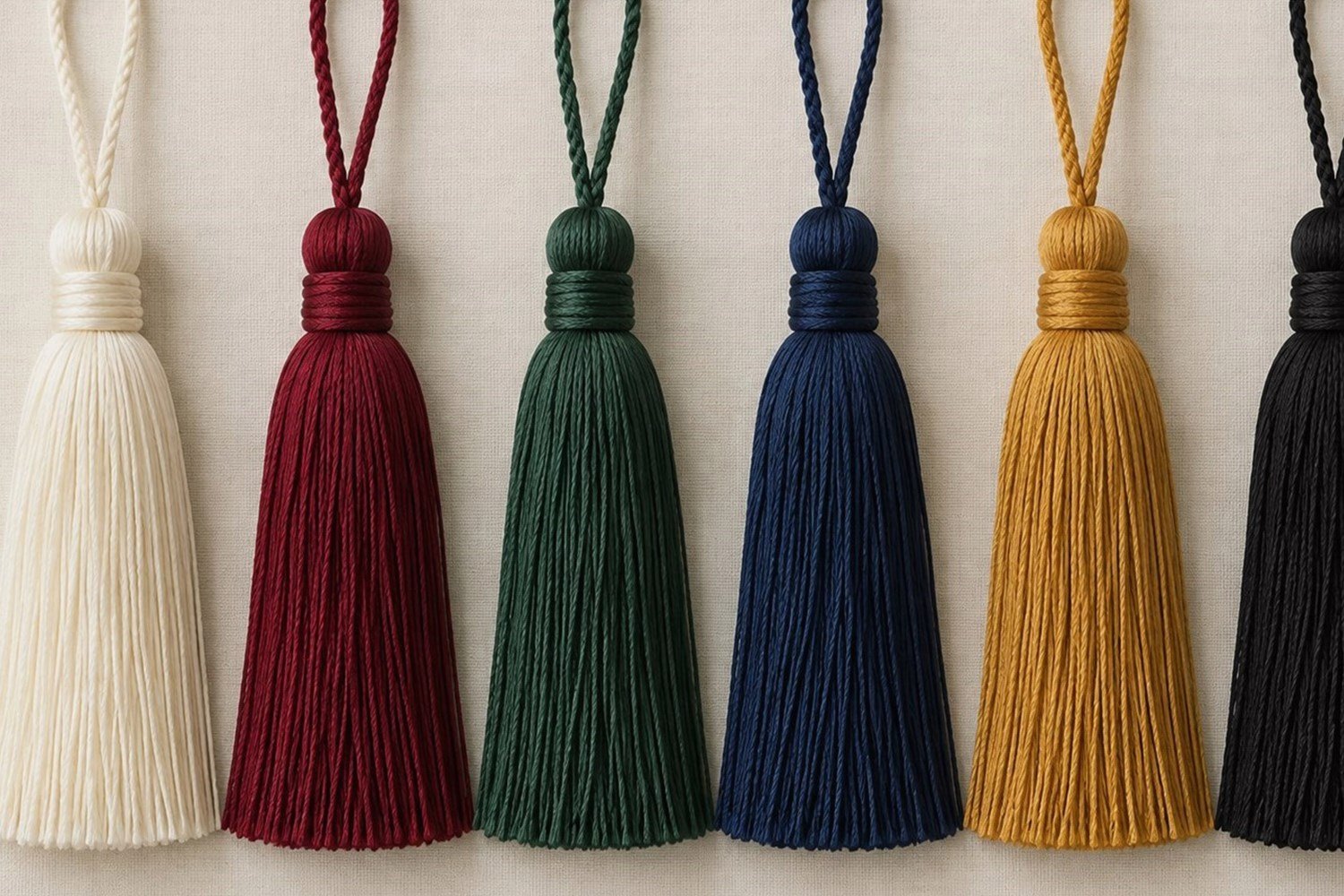
Most sizing mistakes come from an incomplete description, not from the measuring tool. A clear specification separates components, defines reference points, and relates the tassel to its intended product.
| Sizing Mistake | Possible Problem | Better Approach |
|---|---|---|
| Only “tassel length” | Ambiguous construction | Name body, skirt, or overall length |
| Body equals overall length | Loop or cord is missed | Record components separately |
| Loop is ignored | Incorrect attachment drop | Define loop method and length |
| Head is ignored | Unexpected proportion | List height and width |
| Market example becomes a rule | Wrong application fit | Use examples only as context |
| Material and fullness omitted | Different perceived volume | Review a representative sample |
What Should B2B Buyers Specify for a Custom Tassel?
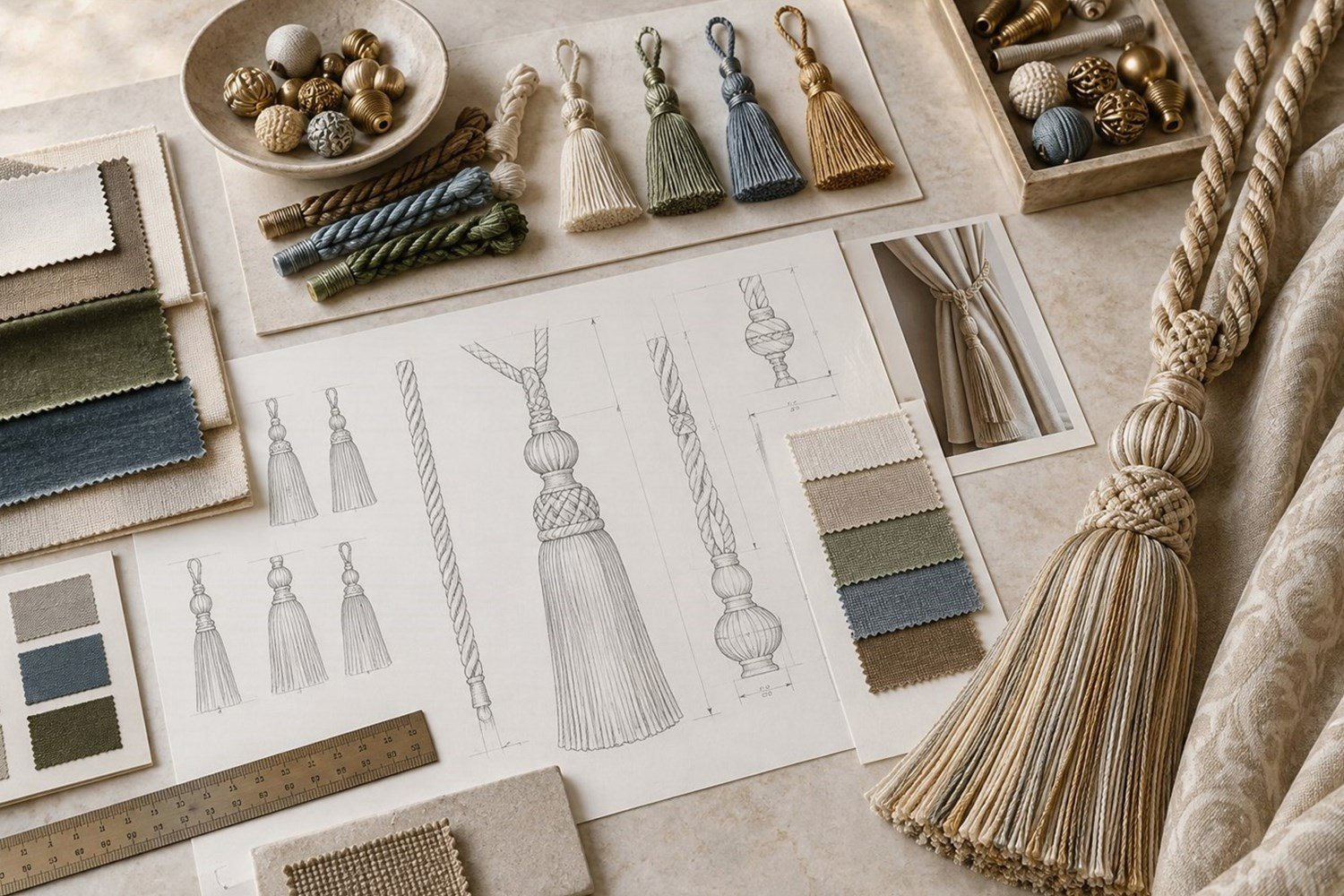
For custom B2B sourcing, define each important dimension separately instead of providing one general size. The initial brief should connect the requested tassel to its end application, reference image or sample, attachment, measurement points, unit system, and expected visual proportion.
| Specification | Required Value | Unit | Measurement Method |
|---|---|---|---|
| Overall length | |||
| Body length | |||
| Skirt length | |||
| Head height and width | |||
| Cord length | |||
| Loop length | |||
| Maximum width |
Minimum information for an initial size inquiry
- End application, reference image or physical sample, and main tassel length.
- Loop or cord requirement, approximate width or fullness, and unit system.
- Head, bead, charm, or attachment dimensions where relevant.
- Measurement drawing, sample notes, and estimated quantity for project context.
For a new design, an approved dimension sheet and representative sample help confirm proportion before bulk production. Acceptable tolerances should be defined by the project specification rather than invented as a general article rule. Explore Custom Tassels when preparing a custom brief.