
Main Content
How Are Tassels Classified?

Tassels are best classified by the feature being described: how they are built, what they are made from, what decorative elements they show, or what product they serve. No one list is universal. This is why one tassel can belong to several categories simultaneously without creating a contradiction.
| Classification Method | What It Describes | Examples |
|---|---|---|
| Construction | How the tassel is built | Thread, cord, knot-head, layered |
| Material | What forms its main visible body | Cotton, polyester, silk-like, metallic |
| Decoration | Added visible elements | Beaded, embellished, multi-color |
| Application | What product it is designed for | Graduation, bookmark, key, curtain |
A graduation tassel may also be a thread tassel. A beaded tassel may also be a curtain tassel. A metallic tassel may also be decorative. For search and sourcing discussions, state the classification dimension instead of treating one label as the whole product description.
Types of Tassels by Construction

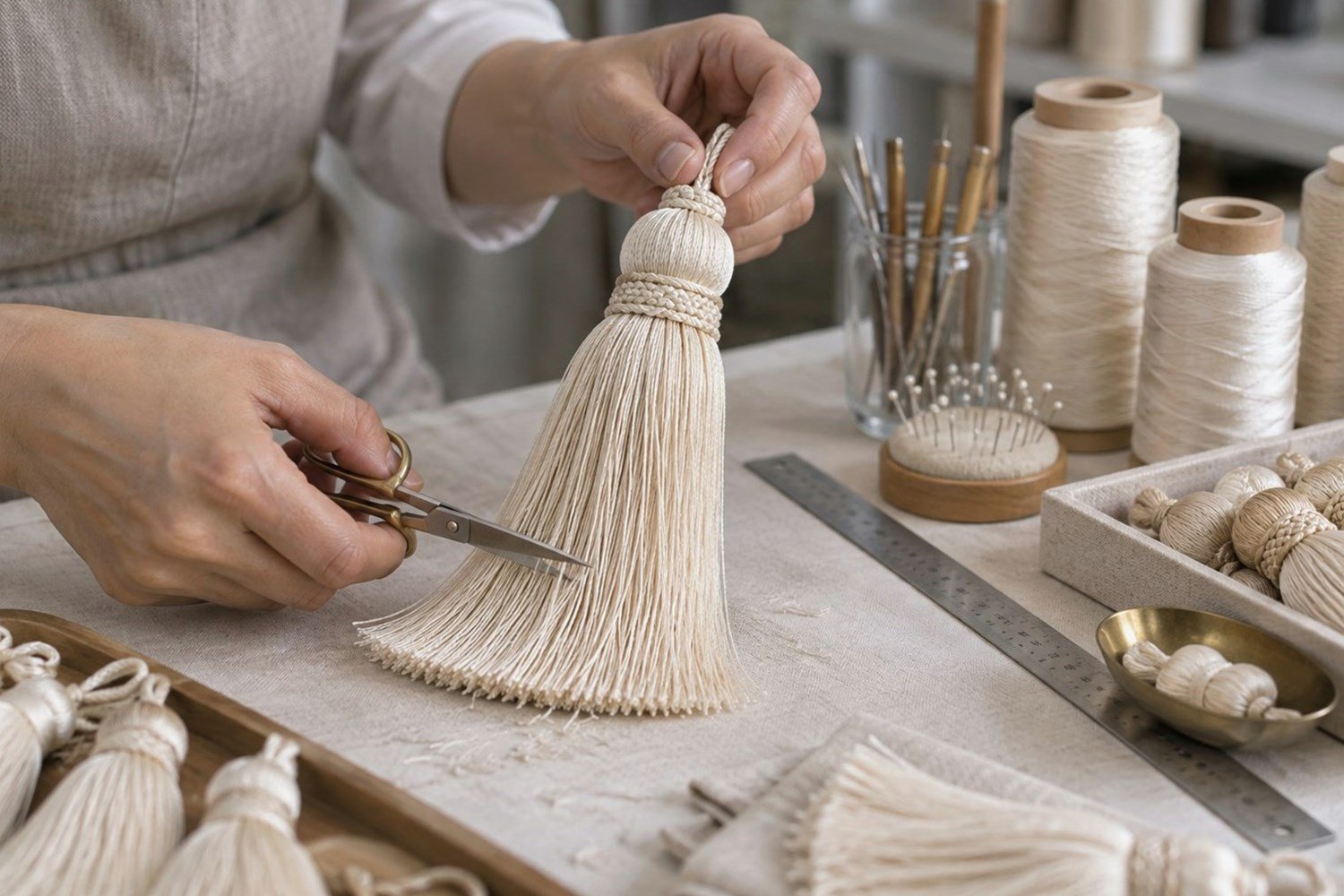
Construction types describe how a tassel body, head, cord, skirt, and decorative components are assembled. Construction influences the silhouette, visual weight, movement, attachment method, and level of detail, even before material or color is considered.
Thread Tassels
Thread tassels are formed primarily from grouped hanging threads or yarns. Their simple base structure can vary widely in thickness, fullness, length, and color. They are used in stationery, fashion accessories, gift products, graduation items, and home textiles because the same principle can be adapted to many scales.
Cord Tassels
Cord can form the suspension structure, decorative body, or part of a more complex tassel. Twisted and braided cord constructions can change thickness, shape, flexibility, and visual weight. Cord tassels are common in home textiles, accessories, and decorative hanging products.
Knot-Head Tassels
Knot-head tassels use a visible knot, wrap, or related structure to form or decorate the upper section. Not every tassel head is knotted. This approach is often selected for decorative products, textile accessories, fashion details, and handcrafted-style designs.
Layered and Compound Tassels
Layered tassels use multiple tiers, colors, or hanging sections to create a fuller silhouette and more visual movement. Compound tassels combine separately made parts such as cords, shaped heads, necks, skirts, beads, knots, or ornamental attachments. These directions are common in elaborate decorative trimming and furnishing applications.
| Type | Structure | Visual Character | Common Applications | Customization Focus |
|---|---|---|---|---|
| Thread | Grouped yarn or threads | Soft and adaptable | Stationery, gifts, regalia | Length, fullness, color |
| Cord | Cord with tassel body | Defined and weighted | Home textile, accessories | Twist, braid, diameter |
| Knot-head | Visible wrapped upper section | Textured and detailed | Decorative products | Head, knot, cord, finish |
| Layered | Multiple tiers or bodies | Full and complex | Ornamental decoration | Color sequence and proportion |
| Compound | Multiple constructed components | Elaborate | Furnishing and trims | Part assembly and components |
Types of Tassels by Material

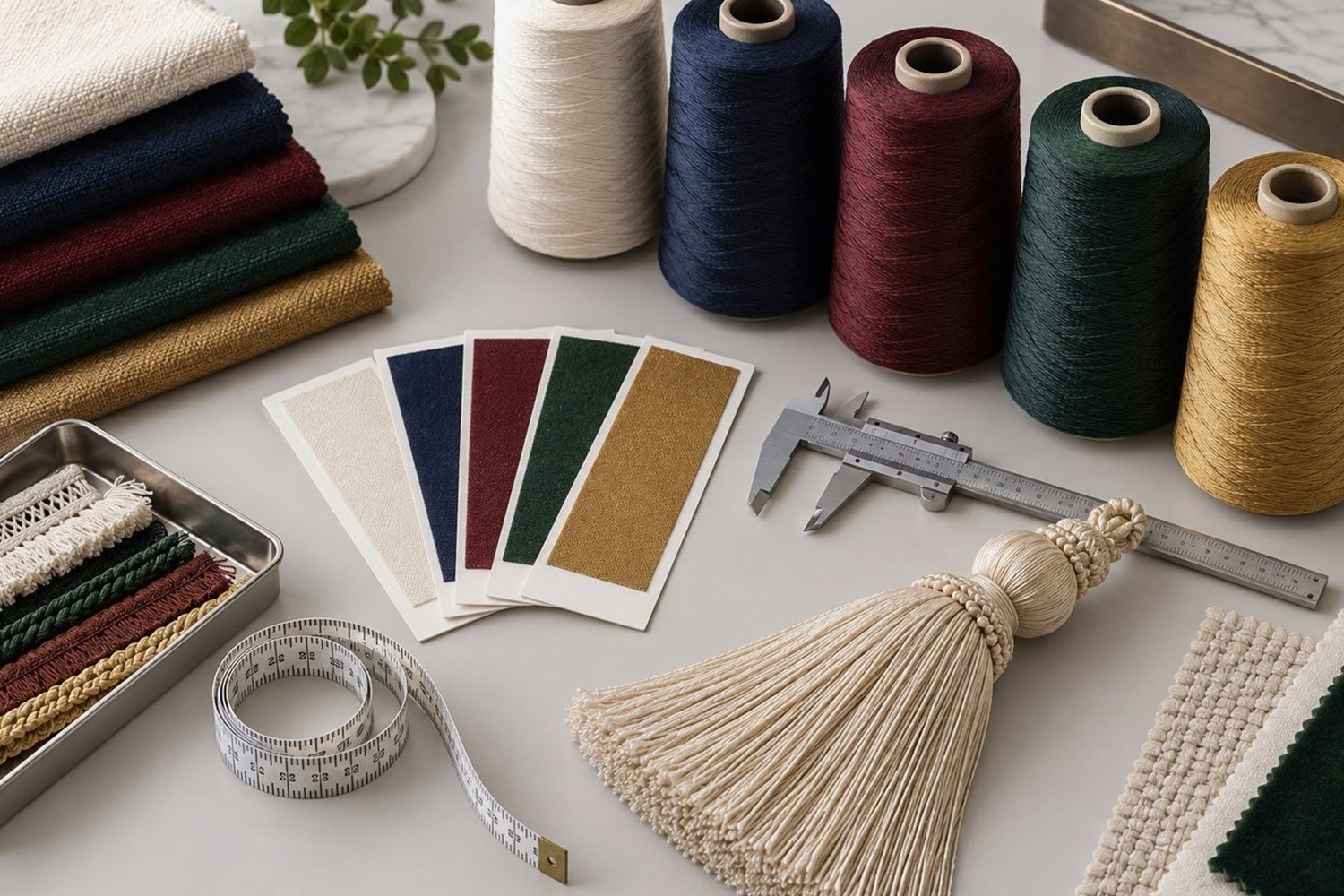
Material classification identifies the dominant fiber or visible decorative material, not the product's intended use. Material affects texture, sheen, drape, density, and color presentation, while the finished visual result also depends on yarn thickness, twist, construction, and components.
Polyester, Cotton, and Silk-Like Tassels
Polyester tassels are used across many decorative product designs because yarn selection and construction can produce different visual directions. Cotton tassels often create a softer, more natural textile character. Silk and silk-like tassels are associated with a smoother or more lustrous appearance, but a specific material should only be identified when confirmed by the product specification.
Metallic, Leather, and Mixed-Material Tassels
Metallic tassels use metallic-effect yarn or thread for reflective or ceremonial accents. Leather and faux-leather tassels commonly use strip-based construction in fashion accessories, bags, key accessories, and contemporary decoration. Mixed-material tassels can combine fibers, cords, beads, wood, resin, acrylic, metal components, or charms according to design.
| Material Type | Appearance | Typical Applications | Selection Considerations |
|---|---|---|---|
| Polyester | Broad visual range | Commercial decorative products | Yarn thickness, sheen, color |
| Cotton | Soft and natural | Home textile and casual decoration | Texture, density, fullness |
| Silk-like | Smooth or lustrous | Decorative and ceremonial products | Finish and visual direction |
| Metallic | Reflective accent | Regalia and festive decoration | Placement and component balance |
| Leather or faux leather | Strip-based, contemporary | Accessories and key products | Cut, attachment, and finish |
| Mixed material | Multi-texture | Specialty decorative products | Part combination and specification |
For buyers, material names are not enough. Compare samples for sheen, thickness, twist, skirt density, color match, head construction, and visible component placement before confirming the intended tassel type.
Types of Tassels by Decorative Features
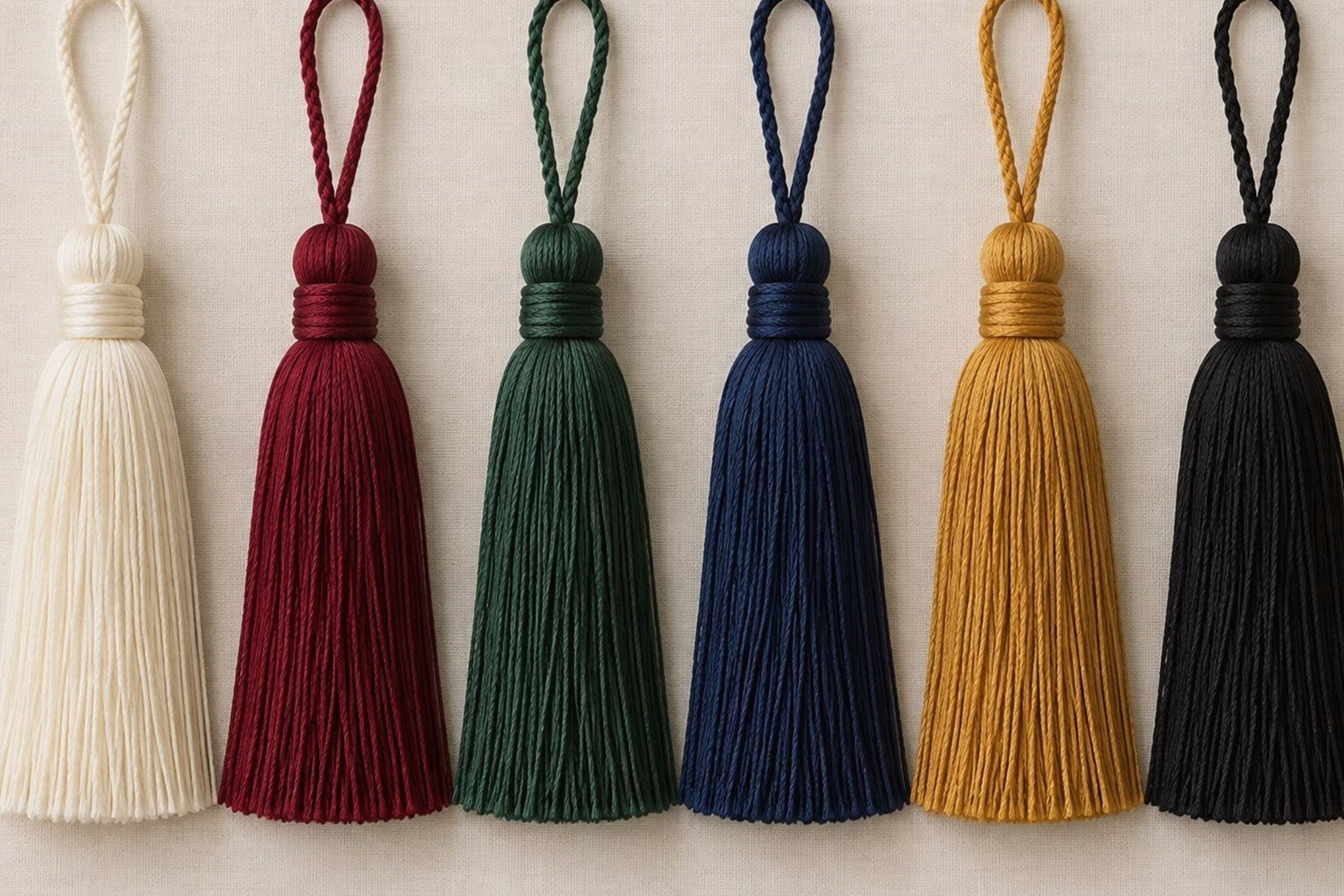
Decorative-feature names identify what is visibly added to a tassel rather than how its base body is made. Beads, caps, charms, knots, color arrangements, and related ornaments can be combined with thread, cord, or mixed-material constructions.
Beaded Tassels
Beaded tassels include visible beads on the head, between a cord and skirt, inside decorative sections, along hanging strands, or as part of a multi-component design. Bead material, size, shape, color, arrangement, and connection points can change the product substantially. See Beaded Tassels for a dedicated product category.
Embellished and Multi-Color Tassels
Embellished tassels may use decorative caps, charms, knots, sequins, metal components, or other attachments according to the product design. Multi-color tassels can use two-color combinations, contrasting heads and skirts, layered colors, or coordinated color programs. These features can overlap with material and construction classifications.
Decorative Tassels
Decorative tassel is a broad design category, not one precise construction. It can describe styles with detailed heads, cords, skirts, beads, knots, and ornamental components. The dedicated Decorative Tassels page covers a commercial category, while this guide explains how that label overlaps with other tassel types.
Types of Tassels by Application
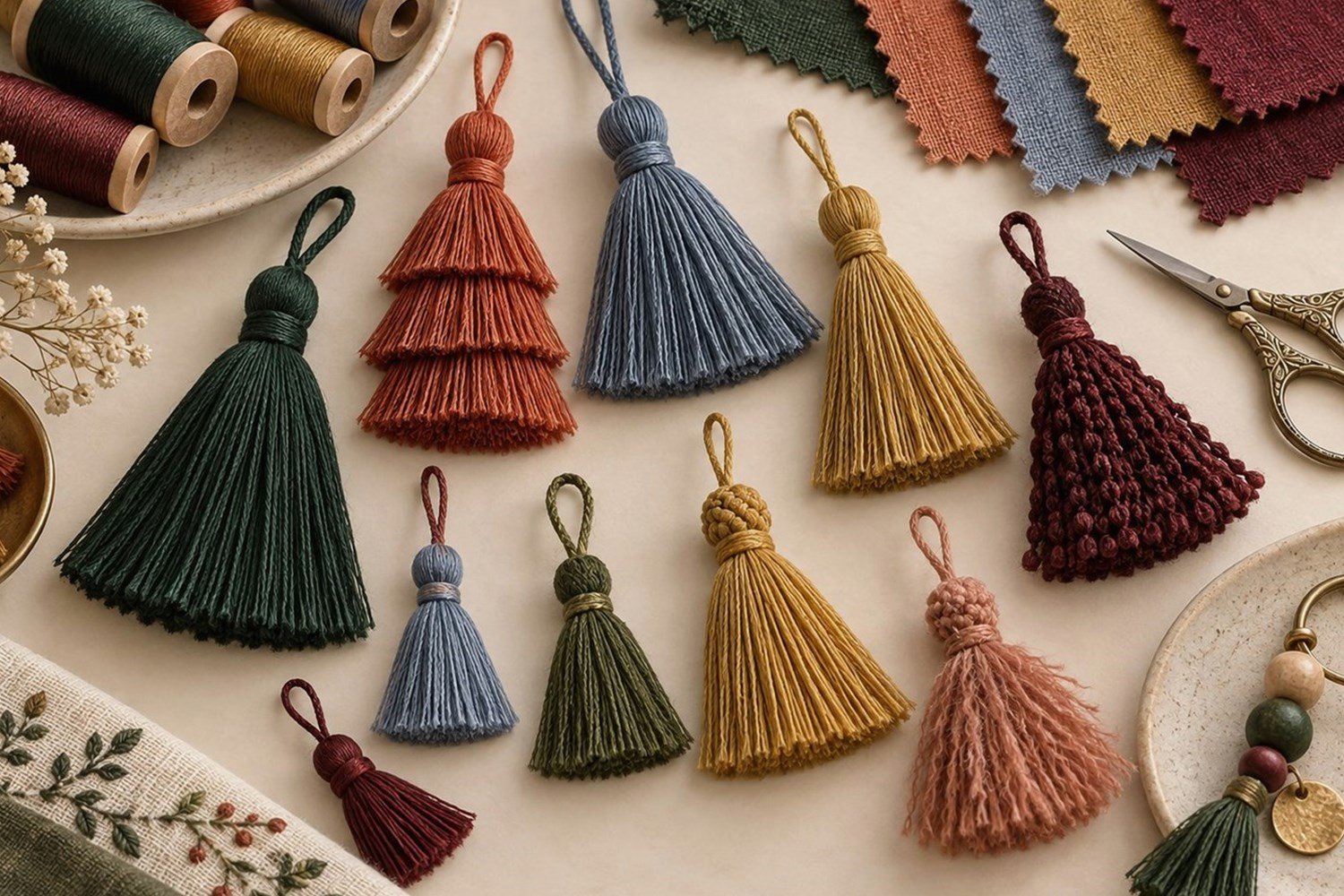
Application-based tassel types are especially useful for B2B sourcing because the end product determines scale, attachment, construction, color, packaging, and inspection needs. A shared tassel form becomes a different product when its use changes.
Graduation, Bookmark, and Key Tassels
Graduation Tassels are designed for academic caps and regalia, often with a loop, hanging cord, tassel body, and an optional identifier where required. Bookmark Tassels are usually smaller and lighter for books, stationery, journals, and gift products. Key Tassels use an attachment structure suitable for decorative keys, key rings, decorative hardware, or gift accessories.
Curtain, Home Textile, Gift, and Fashion Tassels
Curtain tassels may be decorative components, tassel tieback components, cord-and-tassel accessories, or interior hanging elements. A curtain tassel is not always a complete curtain tassel tieback. Gift and fashion tassels can prioritize scale, color, movement, and product-specific attachment, while home textile styles often need coordinated material and color direction.
| Application | Typical Scale | Important Features | Customization Variables |
|---|---|---|---|
| Graduation | Ceremonial scale | Loop, cord, body | Color, length, identifier |
| Bookmark | Small and light | Profile and attachment | Length, color, loop |
| Key | Compact hanging form | Attachment and identity | Loop, hardware, body |
| Home textile | Product-dependent | Texture and coordination | Material, color, fullness |
| Curtain | Larger decorative scale | Drape and visual weight | Head, skirt, cord, color |
| Gift or fashion | Varied | Movement and finish | Material, components, attachment |
Thread Tassels, Decorative Tassels, and Related Forms
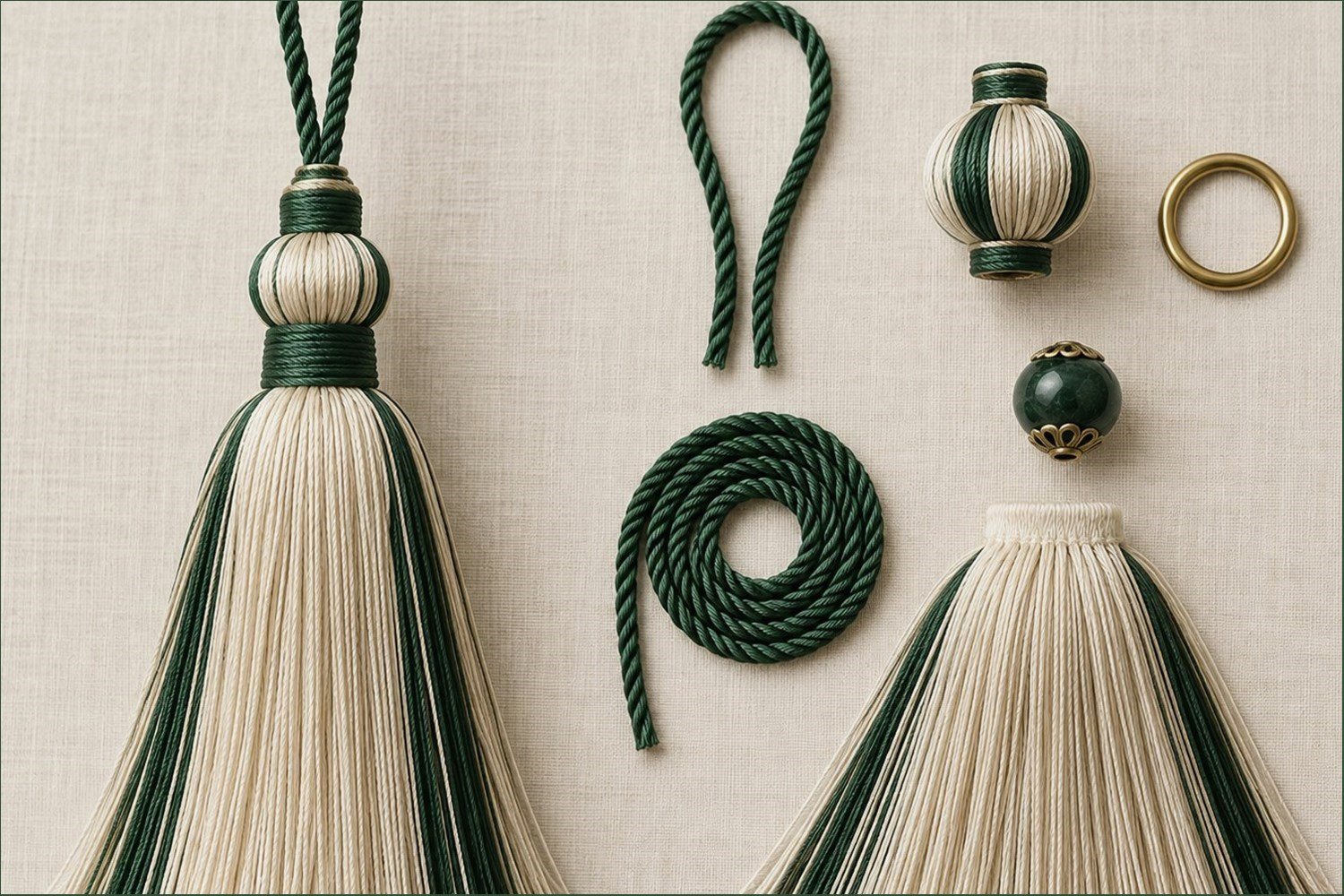
Thread tassels and beaded tassels are not always mutually exclusive because a beaded design may still use a thread tassel body. Simple and decorative describe the number and complexity of visible components, while material and application describe other dimensions of the same product.
| Feature | Thread Tassel | Beaded Tassel |
|---|---|---|
| Construction | Grouped threads or yarns | Threads or cords plus beads |
| Visual effect | Soft, direct, adaptable | Detailed, component-led |
| Weight | Depends on yarn and dimensions | Depends on the full bead and body design |
| Complexity | Can be simple or layered | Includes bead arrangement and connections |
| Customization | Length, fullness, color, cord | Beads, arrangement, color, body, cord |
Simple Tassels vs Decorative Tassels
Simple tassels typically use fewer structural and decorative elements. Decorative tassels may combine multiple materials, shaped heads, cords, beads, and components. Simple does not mean low quality; it describes a more direct construction and should still be assessed against the required specification.
Tassels vs Pom-Poms vs Fringe
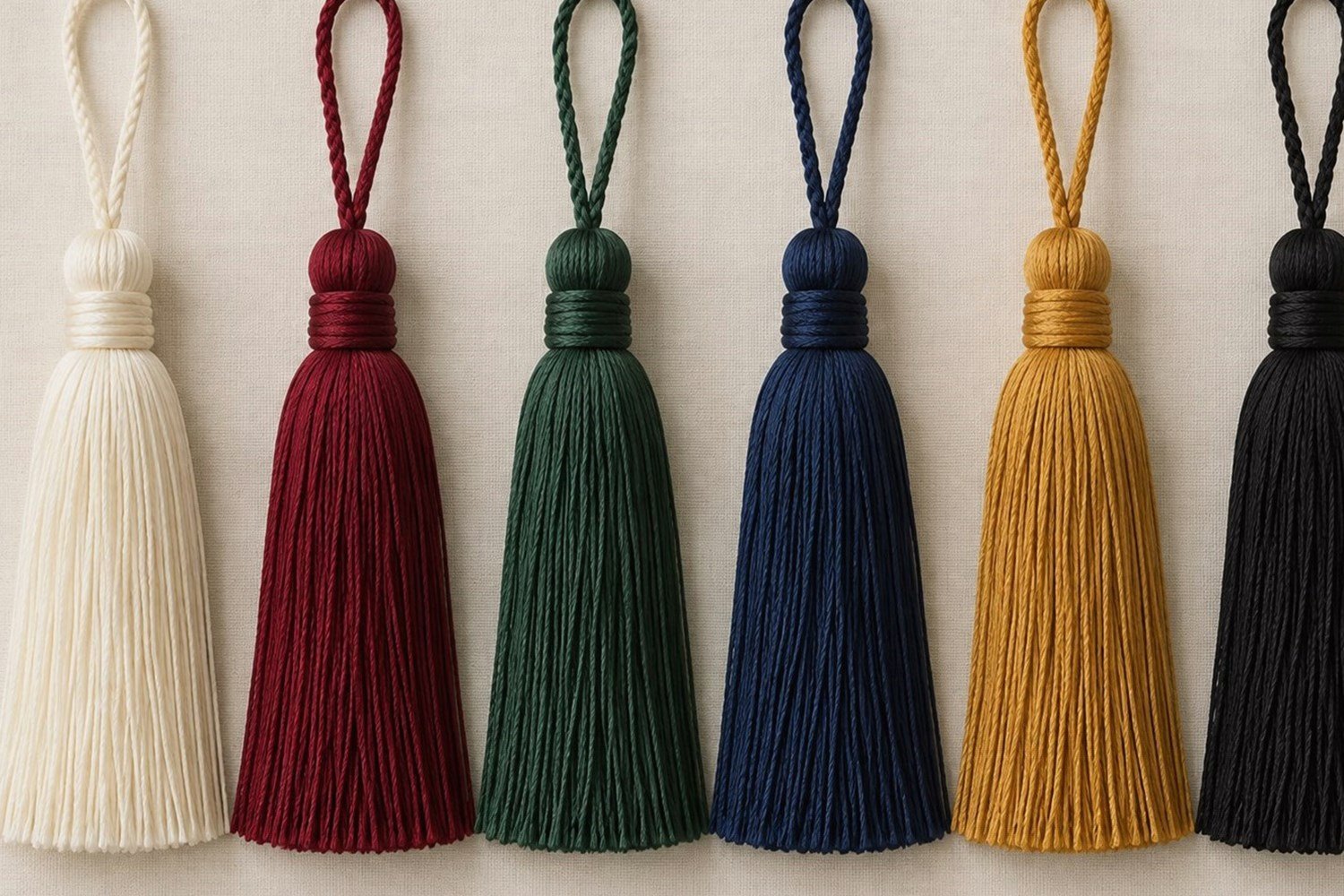
A tassel is a localized bundle of hanging strands secured at one end. A pom-pom is a rounded cluster of yarn or fibers. Fringe is a continuous line of repeated hanging strands along an edge. All can be decorative trimmings, but their construction, attachment, and movement differ.
| Feature | Tassel | Pom-Pom | Fringe |
|---|---|---|---|
| Shape | Hanging grouped strands | Rounded cluster | Continuous edge line |
| Attachment | Point, loop, or cord | Point or trim base | Along an edge |
| Movement | Hangs and swings | Bounces as a compact form | Moves along the border |
| Typical use | Accessories, regalia, interiors | Craft, fashion, decoration | Textile edges and furnishings |
How to Choose the Right Type of Tassel
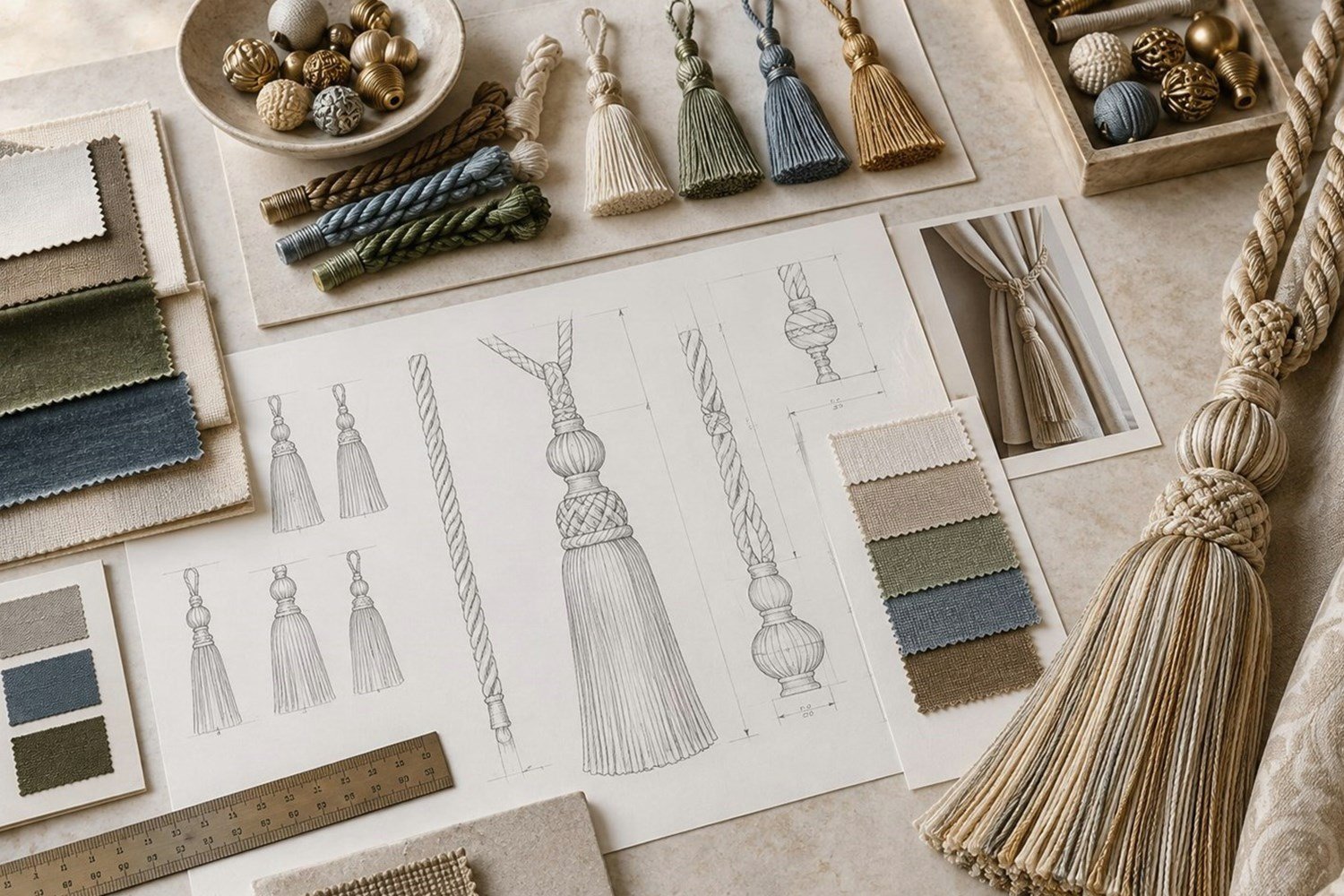
The right tassel type depends primarily on the end product, desired appearance, dimensions, material, attachment method, and decorative complexity. There is no universal best choice; the correct direction follows the actual project specification.
- Define the application.
- Choose the basic structure.
- Determine dimensions and visual fullness.
- Select material and color direction.
- Confirm loop, cord, or attachment method.
- Decide whether beads or components are needed.
- Consider the finished product environment and packaging.
- Confirm the design with a reference or sample where necessary.
| Application | Recommended Direction | Why |
|---|---|---|
| Academic regalia | Graduation-oriented thread or cord tassel | Supports ceremonial attachment and color direction |
| Books and stationery | Light bookmark tassel | Controls weight and page-marker profile |
| Interior products | Decorative or cord-based tassel | Supports textile scale and visible detail |
| Decorative gift product | Thread, beaded, or mixed-material tassel | Allows product-specific detail and color |
What Can Be Customized Across Tassel Types?
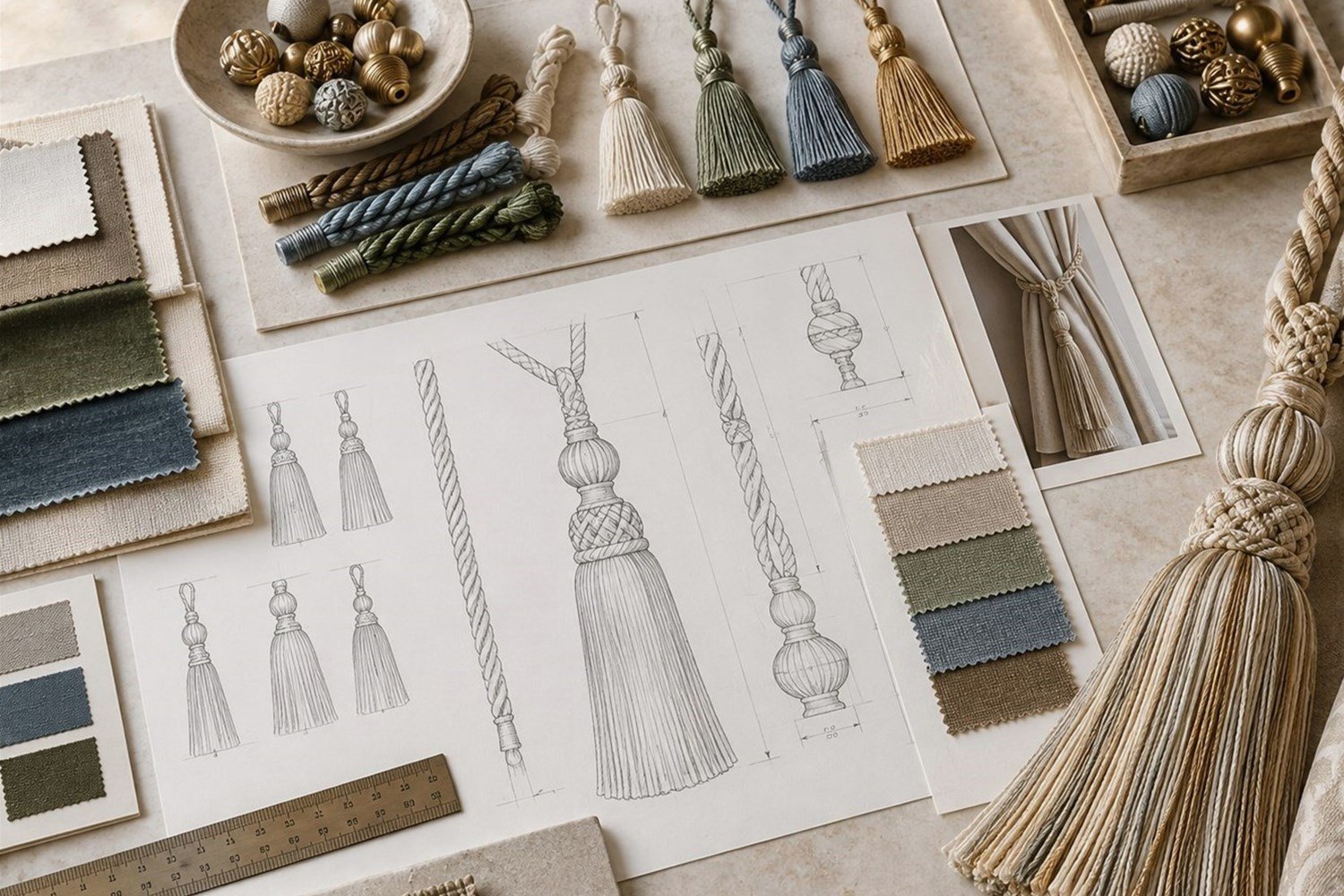
Customization can apply across many tassel categories, but the available options depend on the required product design and should be confirmed during sampling or specification review. A category name alone does not define the final material, dimensions, head, cord, or decorative components.
- Overall and skirt length, head size, loop size, and cord length
- Thread or yarn direction, fullness, color, and color combination
- Cord construction, attachment method, beads, charms, and components
- Packaging and application-specific details
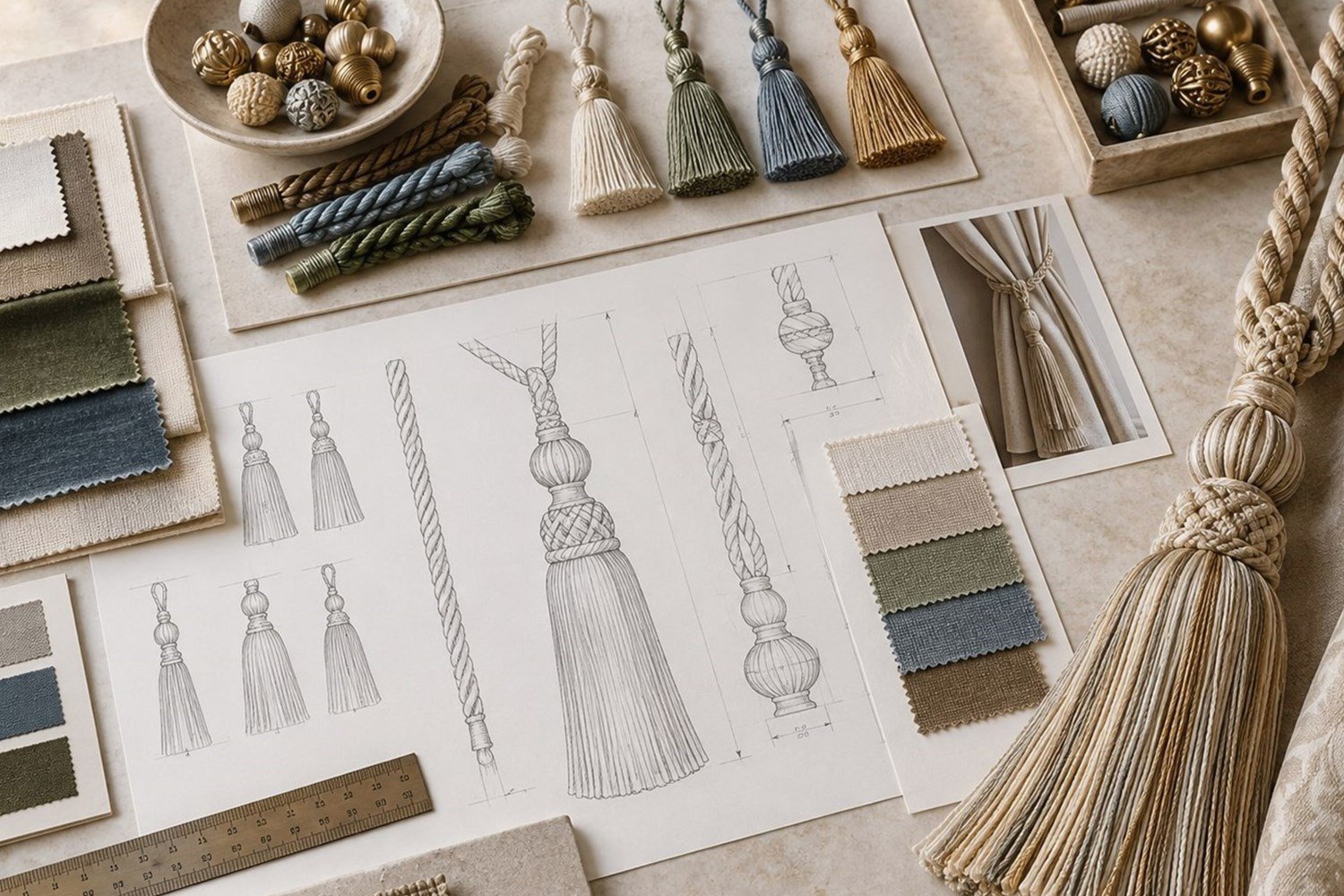
Common development starting points are a physical sample, a reference image or drawing, and a buyer specification or new product concept. A reference should be reviewed with measurements and visible construction details so that it becomes a clear product brief.
How to Compare Tassel Types for B2B Sourcing

B2B buyers should compare tassel types by their end application and specifications rather than by appearance alone. A clear reference sample, drawing, image, or specification helps define the intended construction more accurately and supports meaningful sample review.
| Specification | Why It Matters | What Buyers Should Confirm |
|---|---|---|
| End application | Defines scale and attachment | Product use and target appearance |
| Construction | Shapes silhouette and components | Thread, cord, head, skirt, and details |
| Material and color | Controls visual direction | References, yarn appearance, and components |
| Dimensions | Controls fit and proportion | Overall, skirt, head, cord, and loop |
| Packaging | Supports finished presentation | Set, pair, label, and protection needs |
Buyers should also state quantity context, color references, consistency requirements, decorative components, and any special inspection needs. This does not assume an MOQ, lead time, or tolerance; it simply makes the first technical discussion more precise.