
Main Content
What Do Graduation Tassel Colors Mean?

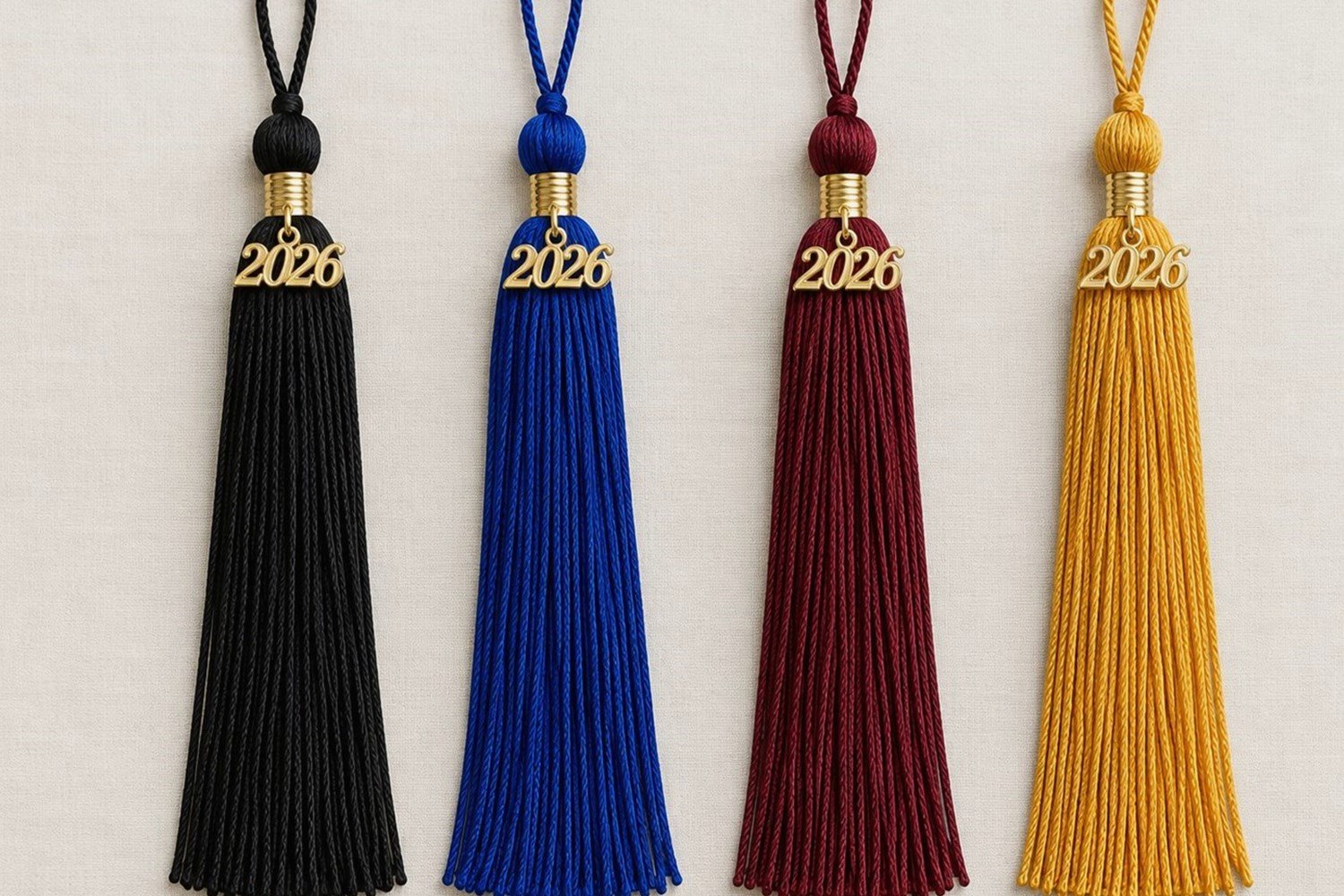
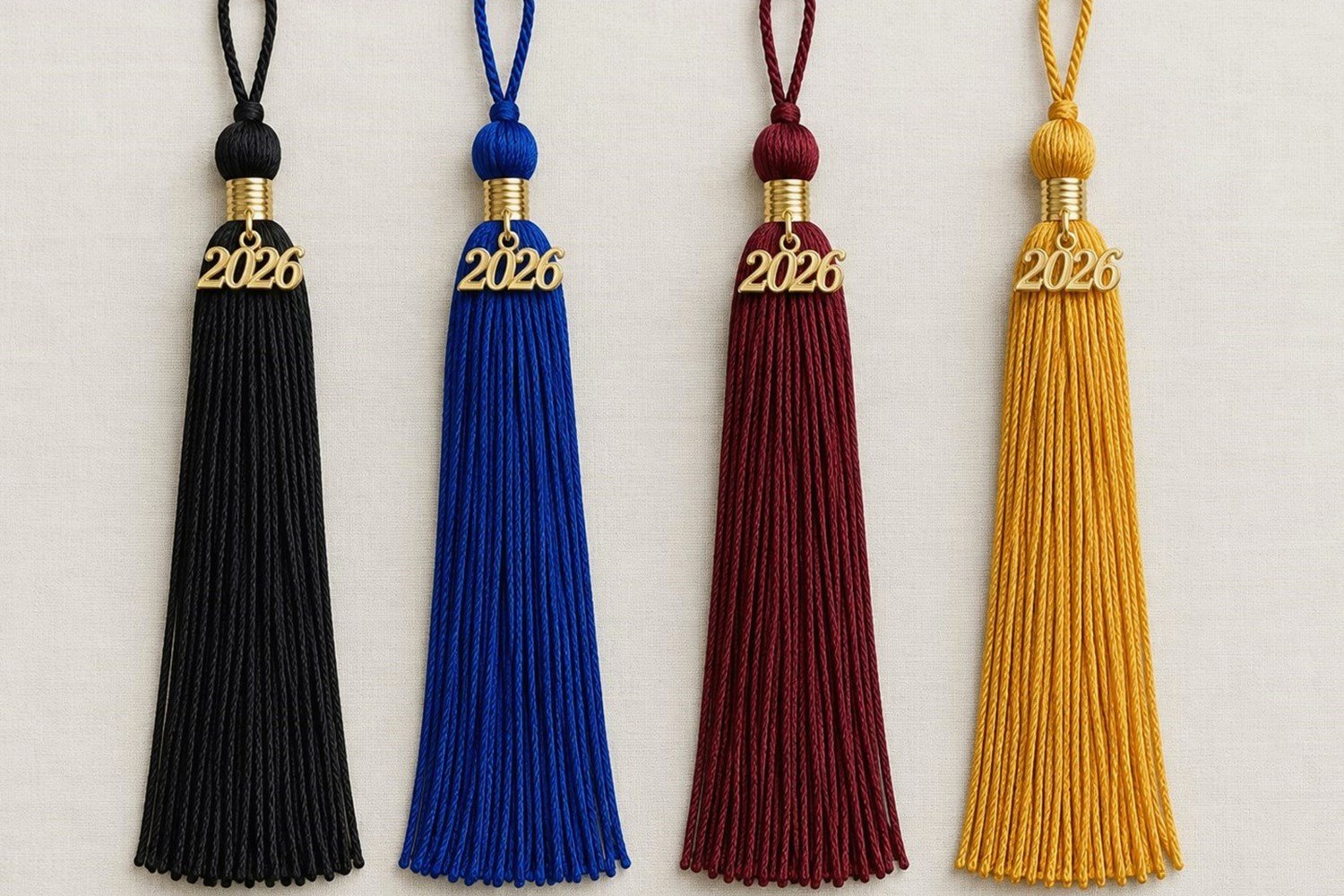
Graduation tassel colors can communicate academic, institutional, and ceremonial information, but their meaning depends on the school that assigns them. A tassel may refer to a discipline, college, school, degree, program, institution, school colors, graduating class, or a local ceremony requirement. The same color can identify different things at different institutions.
| Color Role | What It Identifies |
|---|---|
| Academic color | Field or discipline |
| College color | College within an institution |
| Institutional color | University or school identity |
| Degree color | Degree-level distinction |
| Program color | Specific academic program |
| Custom color | Event or buyer-defined requirement |
For the complete cap-and-regalia context, see What Are Graduation Tassels?. This page focuses on color interpretation, selection, and specification rather than the broader graduation tassel entity.
Are Graduation Tassel Colors Universal?

No. Graduation tassel colors are not universal across all schools and universities. Academic costume traditions provide useful common associations, yet institutions can organize tassels by discipline, college, school color, degree level, or a mixed system. Official institutional instructions always take priority over general online charts.
| Conceptual system | How it can work |
|---|---|
| Institution A | Uses discipline-based tassels |
| Institution B | Uses college-based tassels |
| Institution C | Uses school colors for bachelor’s, discipline colors for graduate degrees, and a gold tassel for doctoral regalia |
These are conceptual examples, not rules for other universities. They demonstrate why an online graduation tassel color chart cannot decide the appropriate color for a specific student, school, or bulk program. Confirm the exact ceremony and degree requirements before selecting a product.
Common Academic Tassel Color Associations

Academic color traditions provide a general reference for associating some colors with fields of study, but they do not create universal tassel requirements. The table below uses common U.S. academic-regalia associations. Institutions may modify them, choose another system, or use these colors differently for a particular degree or ceremony.
The following are general references rather than universal tassel requirements. Actual colors can vary by institution, college, degree, program, and ceremony. Always confirm the official requirements of the institution.
| Color | Common Academic Association | Example Fields |
|---|---|---|
| White | Arts, letters, humanities | English, history, languages |
| Drab | Commerce, accountancy, business | Business, accounting |
| Light blue | Education | Education programs |
| Orange | Engineering | Engineering disciplines |
| Brown | Fine arts | Art, theater |
| Crimson | Journalism | Journalism fields |
| Purple | Law | Law |
| Lemon | Library science | Information fields |
| Green | Medicine | Medicine |
| Pink | Music | Music |
| Apricot | Nursing | Nursing |
| Olive green | Pharmacy | Pharmacy |
| Peacock blue | Public administration | Public administration |
| Citron | Social work | Social work |
| Dark blue | Philosophy | Philosophy |
| Golden yellow | Science | Natural and physical sciences |
| Scarlet | Theology | Religious studies |
Common Discipline Colors in Context

White, drab, light blue, orange, purple, pink, and golden yellow are frequently cited academic references, but each should be verified against the institution’s own tassel system. White is commonly associated with arts, letters, and humanities; drab with commerce, accountancy, and business; light blue with education; orange with engineering; purple with law; pink with music; and golden yellow with science.
| Color | Common association | What to confirm |
|---|---|---|
| White | Arts, letters, humanities | Institutional program assignment |
| Drab | Business and commerce | Defined shade; do not substitute brown |
| Light blue | Education | Actual shade and program rule |
| Orange | Engineering | Institutional color system |
| Purple | Law | Degree and ceremony direction |
| Pink | Music | Actual material appearance |
| Golden yellow | Science | Difference from metallic gold |
These are academic associations rather than psychological color meanings. The correct question is not “what does this color symbolize emotionally?” but “what does this institution require this color to identify?”
Golden Yellow, Metallic Gold, and Gold Bullion
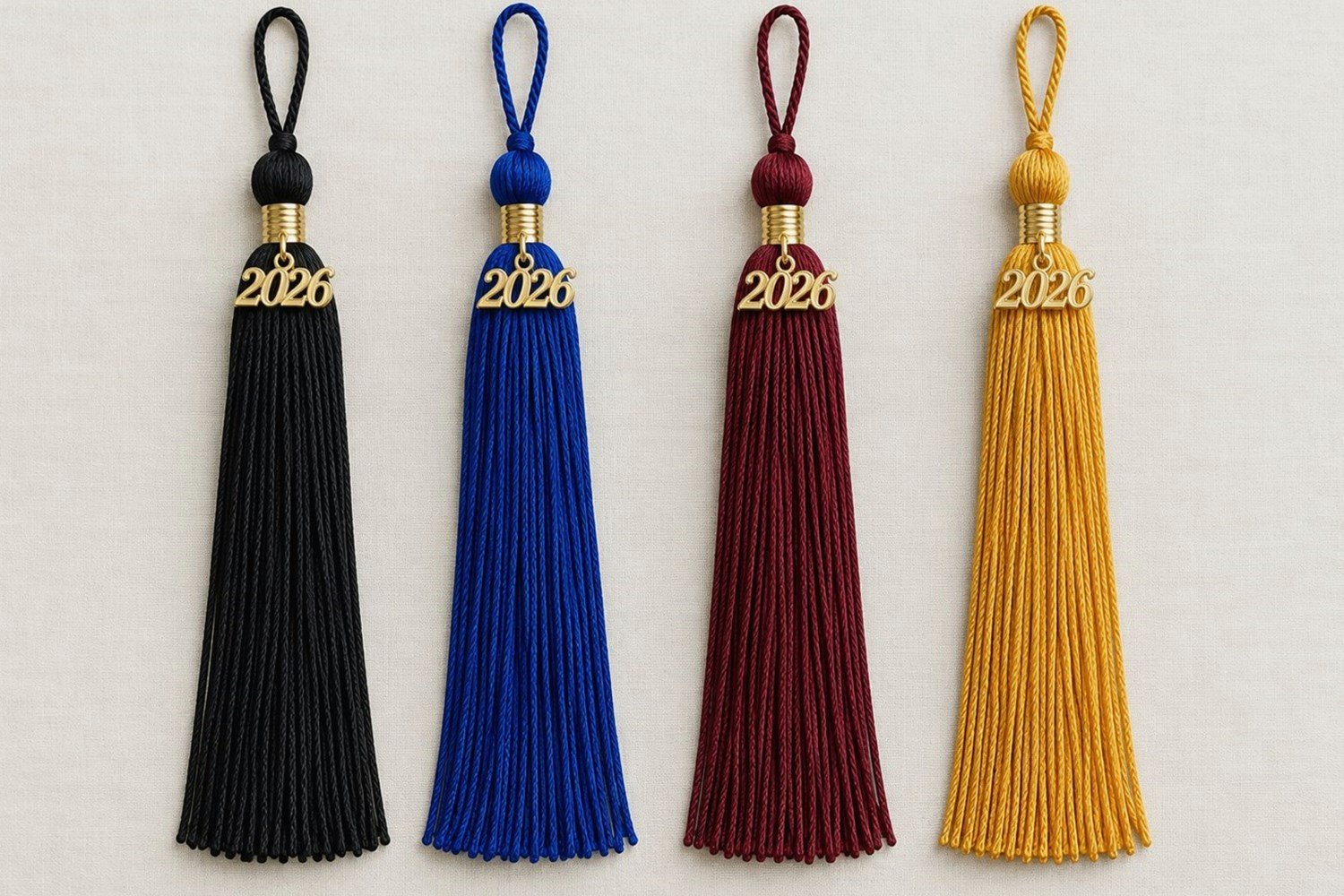
Golden yellow, metallic gold, and gold bullion describe different color or finish directions and should not automatically be treated as the same graduation tassel type. Golden yellow is commonly referenced for science. Metallic gold describes a reflective finish. Gold bullion can be used for formal academic regalia at some institutions, including some doctoral contexts, but this is not a universal rule.
| Term | What It Describes | What to confirm |
|---|---|---|
| Golden yellow | Academic color reference | Institutional field assignment |
| Metallic gold | Reflective or metallic finish | Material and sheen |
| Gold bullion | Formal bullion-like construction | Institution and degree rule |
“Gold tassel” is too broad for a technical request. A school or buyer should state whether the required direction is a yellow academic color, a metallic finish, a bullion construction, or another defined school color.
Degree, High-School, and University Color Systems
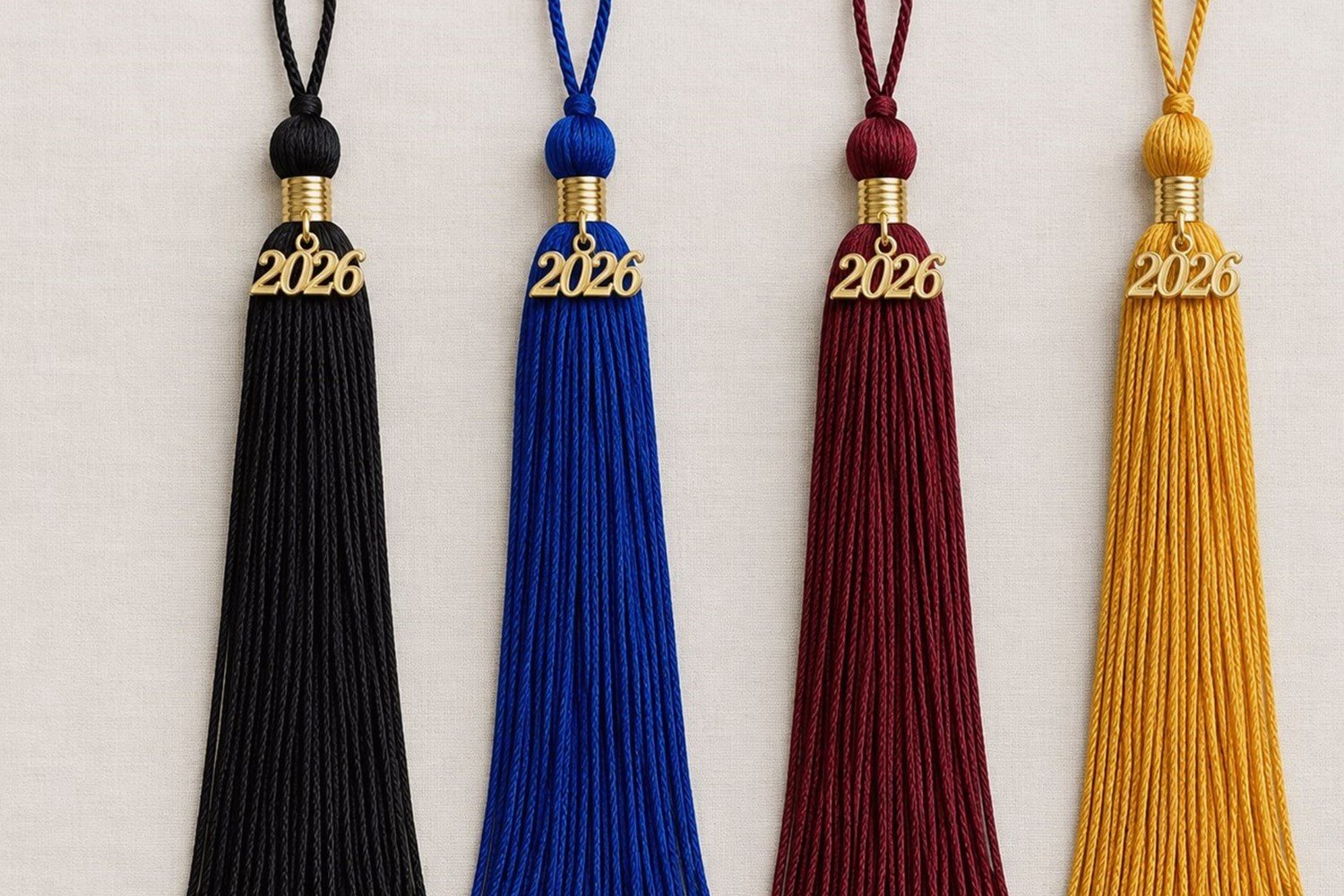
Bachelor’s, master’s, doctoral, high-school, college, and university tassel systems may use different color logic within the same region or even the same institution. One school may use its official colors for bachelor’s graduation while assigning discipline colors to graduate degrees. Another may organize all tassels by college. A doctoral direction can have separate regalia requirements.
| Context | Possible color approach |
|---|---|
| High school | School or ceremony colors |
| Bachelor’s | School, college, or discipline system |
| Master’s | Institution-specific degree or program direction |
| Doctoral | Institution-specific, sometimes formal gold direction |
| College or university | College, discipline, school, or mixed system |
Do not order the same tassel for every degree level without confirming the applicable rules. School colors and academic discipline colors are different concepts: a school color expresses institutional identity, while an academic color can express a field or program.
Single, Two-Color, and Multi-Color Graduation Tassels

Single-color tassels use one defined color, while two-color and multi-color tassels combine colors to represent school identity, a program, a ceremony, or another institutional requirement. Multi-color does not carry one universal meaning and should not be assumed to indicate a double major. The intended color distribution should be shown in a reference sample or specification.
| Design | Color Structure | Key Specification |
|---|---|---|
| Single color | One color | Exact shade and material |
| Two color | Two coordinated colors | Distribution and relationship |
| Multi-color | Three or more colors | Position, sequence, and cord direction |
Define the cord, head, skirt, secondary color, third color, metallic accent, and charm finish separately when they are visible. A phrase such as “school colors” may be useful context, but it does not fully describe how colors are constructed on the tassel.
Material, Lighting, and Perceived Color

Material, sheen, lighting, camera settings, and screens can change how a graduation tassel color appears, so a website image should not be treated as a perfect physical color reference. The same named color can appear different on a matte yarn, a shiny yarn, a metallic detail, or a screen. This matters for school-color coordination and custom approval.
| Reference | Useful For | Limitation |
|---|---|---|
| Website photo | General direction | Screen and lighting variation |
| Digital color | Communication | Physical textile may differ |
| Fabric swatch | Product coordination | Surface differs from yarn |
| Yarn sample | Material-specific color approval | Does not show full construction |
| Physical tassel | Finished appearance | Represents one construction |
Use a physical yarn sample, existing tassel, fabric swatch, approved product sample, or recognized color reference when accurate matching matters. See Tassel Materials for the role material plays in surface appearance.
How to Choose and Specify Custom Graduation Tassel Colors

A custom graduation tassel color specification should define more than a general color name: it should identify the institution, degree, material, visible components, color distribution, and approval reference. This helps a school, distributor, or sourcing team prevent confusion between an academic reference, a school color, a digital image, and the final tassel construction.
- Confirm institution, college, program, degree, and ceremony requirement.
- Confirm whether academic colors, school colors, or a custom direction applies.
- Specify main, secondary, and additional colors with physical or documented references.
- Specify material and surface appearance before approving the color.
- Define cord, head, skirt, charm, metallic accent, and multi-color distribution.
- Approve a representative sample and record the final reference.
| Component | Color Requirement | Reference |
|---|---|---|
| Cord | Defined main or secondary color | Approved sample |
| Head | Color and finish | Material reference |
| Skirt | Main, secondary, or sequence | Construction reference |
| Charm | Finish or color | Approved component |
| Metallic accent | Metallic direction | Visual reference |
Related pages include Graduation Tassels, Custom Tassels, and How to Customize Tassels.
How to Confirm Colors Before Bulk Production

Final color approval should compare an approved graduation tassel sample with the agreed physical or documented reference before bulk production. Review material, main color, secondary color, additional colors, cord, head, skirt, color distribution, charm finish, and complete appearance. For production, compare representative units with the approved direction for unwanted visual variation.
- Confirm that the intended material is being reviewed, not only a screen image.
- Check the complete assembled tassel, including cord, head, skirt, charm, and metallic components.
- Review multi-color placement, sequence, and proportion with the approved construction.
- Record the sample and color references used for the project.
- Agree any project-specific technical color requirement separately if one is needed.
Do not assume generic color tolerances, screen colors, or universal acceptance limits. Use the project’s approved sample and records. Read How to Check Tassel Quality for the related inspection approach.
Common Graduation Tassel Color Mistakes
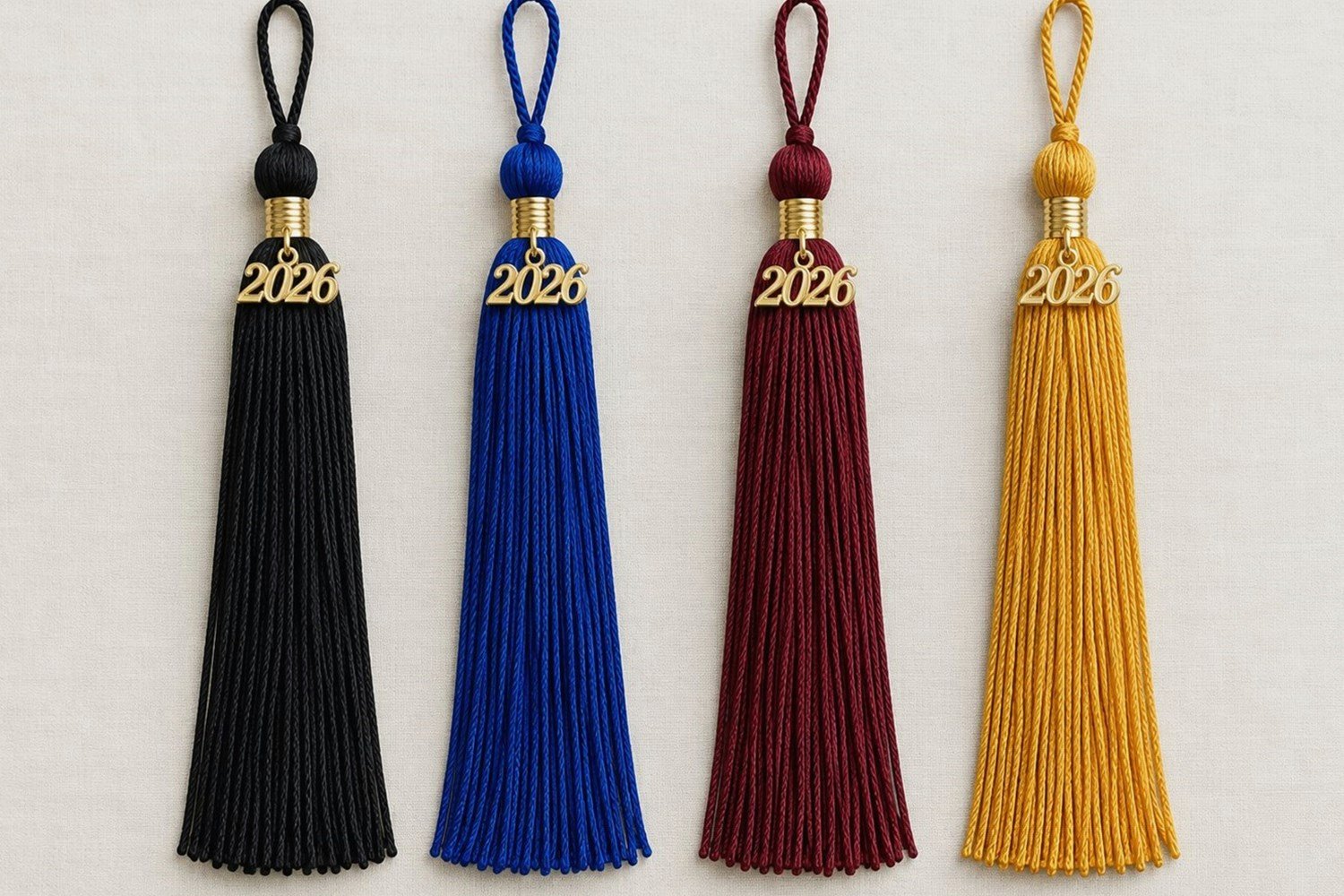
Most tassel color errors happen when a general chart, a screen photo, or a color name is treated as a complete specification without checking the institution, material, and finished construction. The better approach is to document local requirements and approve the complete tassel reference.
| Mistake | Possible Problem | Better Approach |
|---|---|---|
| Treating a general chart as universal | Wrong institution system | Confirm institution |
| Choosing by major alone | College system may differ | Check local policy |
| Assuming gold has one meaning | Wrong gold direction | Distinguish golden yellow, metallic, bullion |
| Confusing brown and drab | Wrong shade | Use defined reference |
| Assuming multi-color means double major | Incorrect meaning | Confirm institution |
| Using only screen color | Physical mismatch | Use physical reference |
| Ignoring material | Color appears different | Approve on intended material |
| Forgetting cord and head | Mismatched visible parts | Specify components |
| Using one color system for every degree | Regalia mismatch | Confirm degree requirements |
| Approving incomplete color view | Distribution error | Review complete sample |