
Main Content
What Are Custom Tassels?
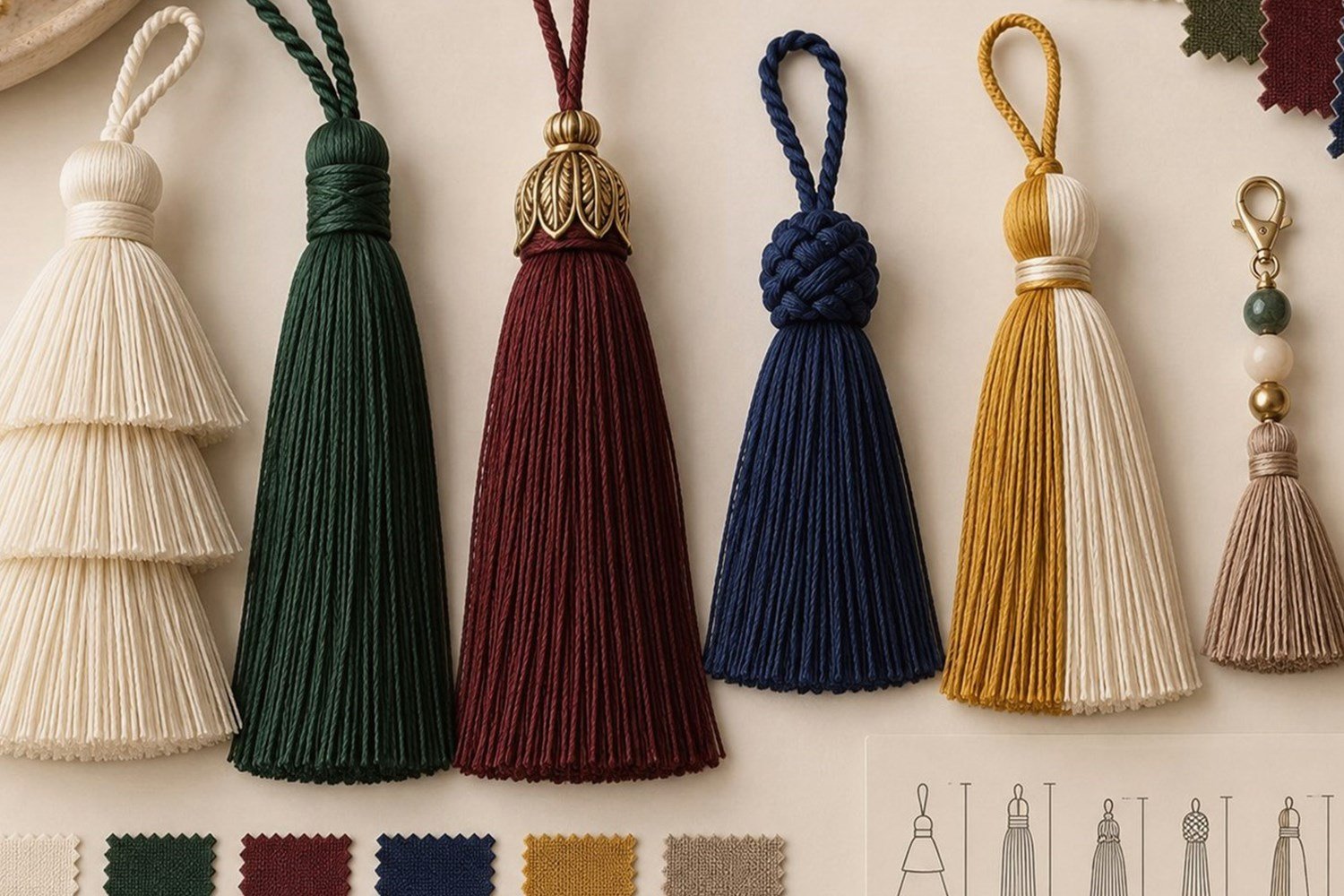
Custom tassels are developed or modified according to requirements for a product, brand, institution, collection, or project. Customization can adjust an existing tassel direction or combine buyer-defined dimensions, materials, colors, construction, attachments, and decorative components into a new specification.
| Type | Starting Point | Typical Changes | Best Used When |
|---|---|---|---|
| Stock tassel | Existing predefined specification | Limited selection from established direction | The existing design suits the product |
| Modified tassel | Existing design | Selected size, color, cord, or component changes | A known direction needs adaptation |
| Fully custom tassel | Buyer-defined or new combination | Multiple linked specifications | The project has its own requirements |
“Fully custom” does not automatically mean every element is created from scratch. It means the finished tassel follows a specific brief rather than only an unmodified predefined version.
Custom and personalized
A custom tassel may change size, material, color, construction, cord, loop, head, skirt, or components. A personalized tassel may add a name, logo, year, initials, school identity, or identifying charm. The terms can overlap: a graduation tassel may use custom school colors and also carry a personalized year charm.
What Can Be Customized on a Tassel?
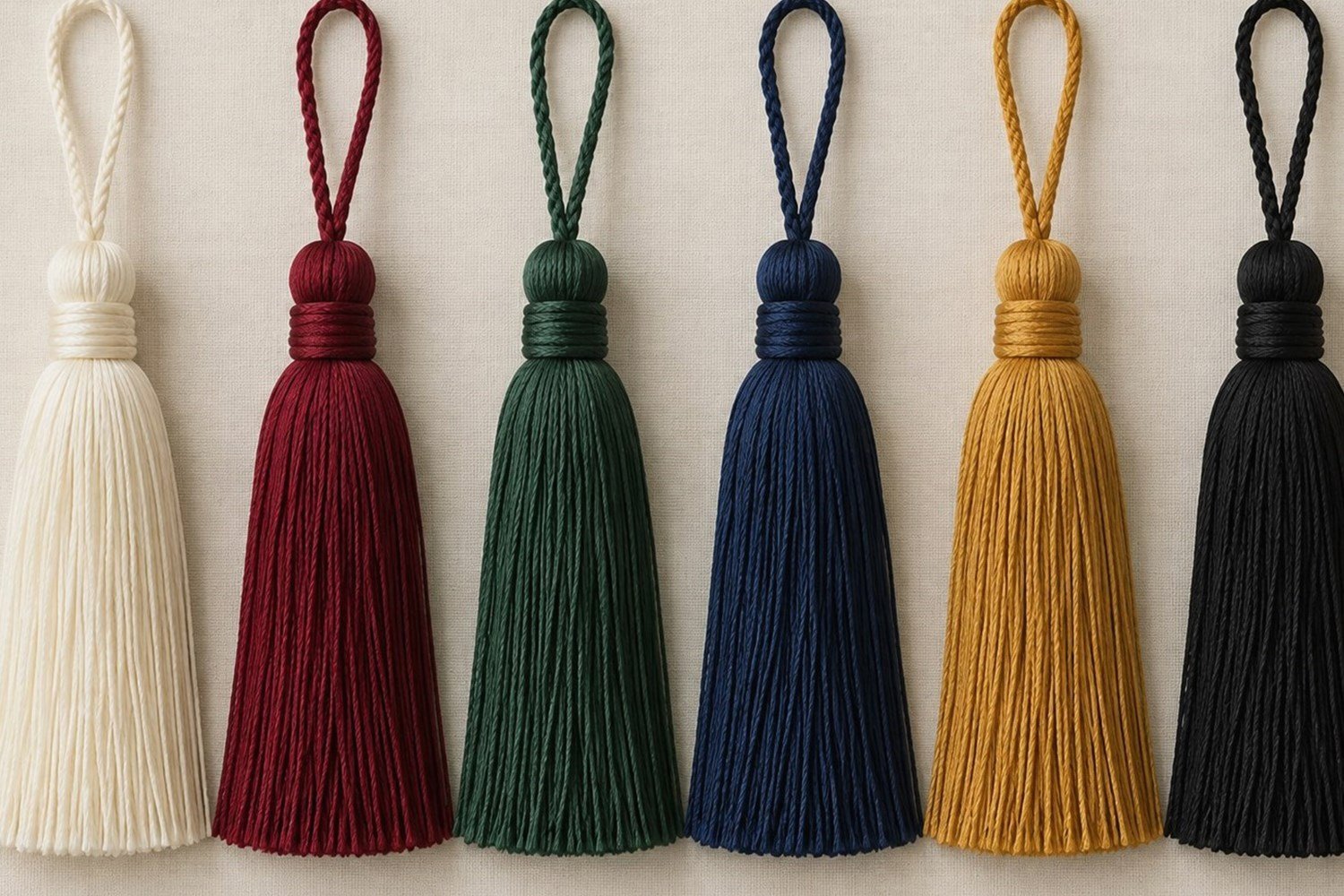
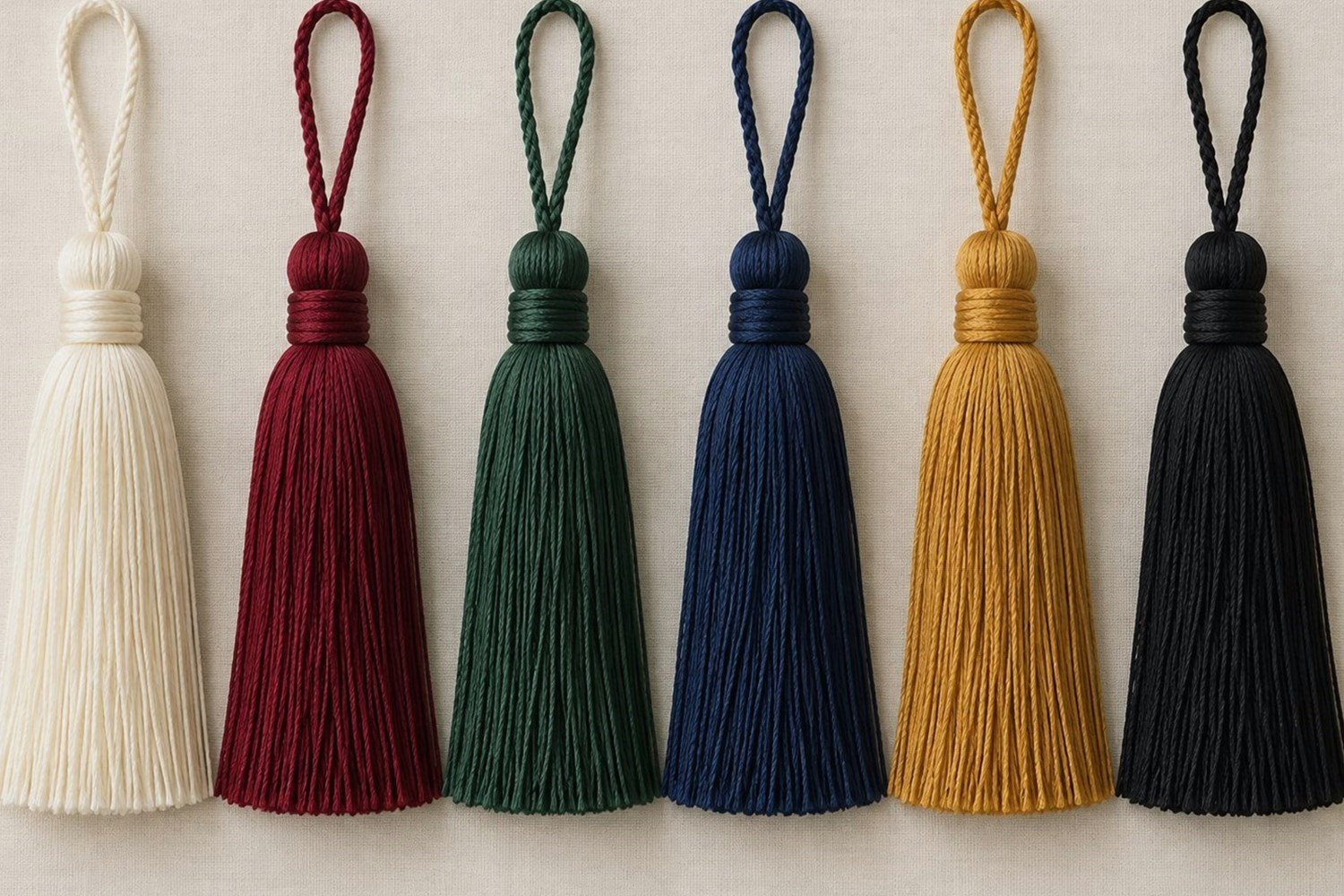
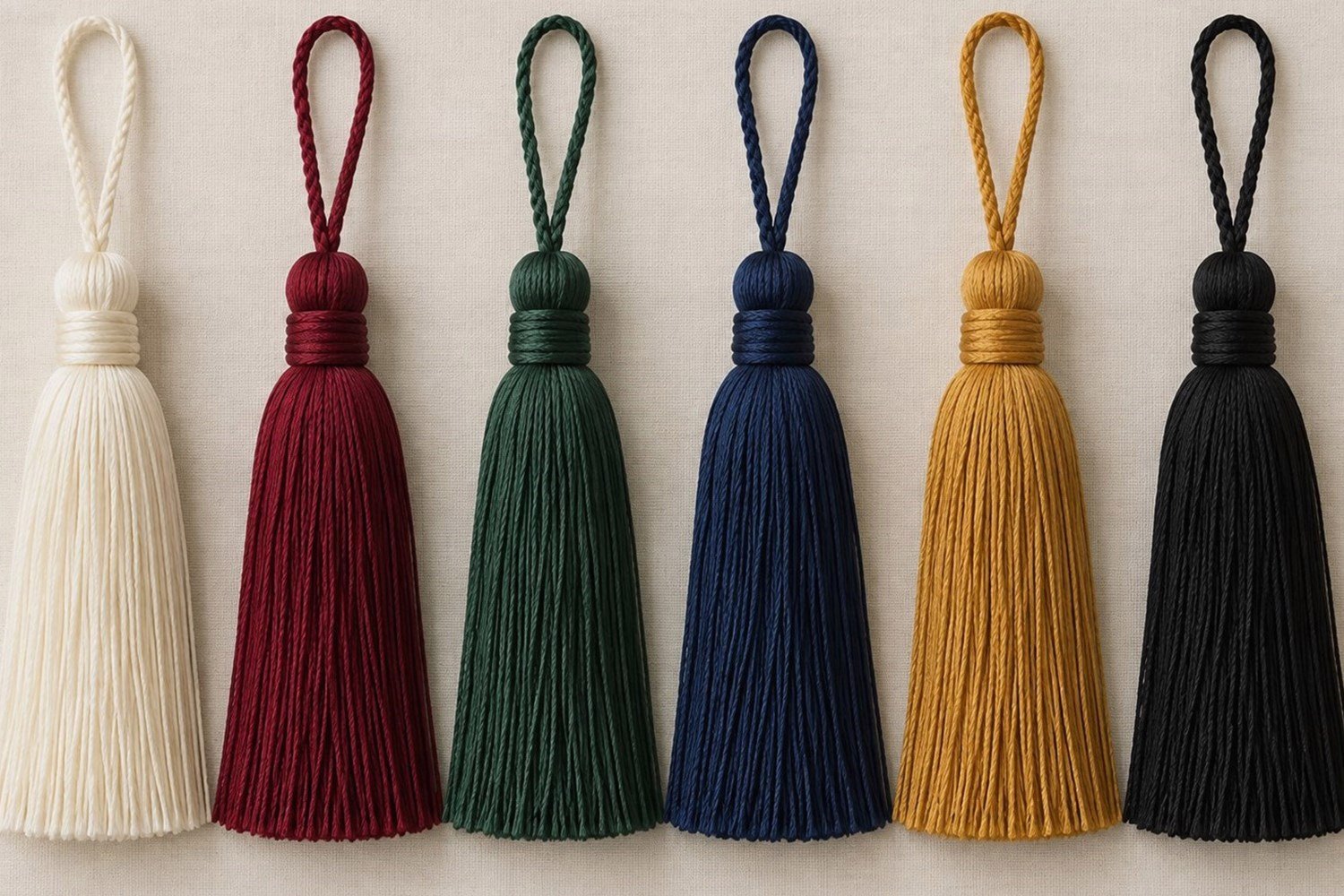
Depending on the design, a tassel can be customized through its size, material, color, head, skirt, cord, loop, attachment, beads, charms, and other decorative components. Every option is subject to material, construction, and application requirements; a simple tassel usually needs fewer defined variables than a complex decorative style.
| Customization | Possible Variables |
|---|---|
| Size | Overall length, body length, skirt length, width |
| Head | Height, width, shape, wrapping, decorative structure |
| Skirt | Length, fullness, material, color distribution |
| Material | Polyester, rayon or viscose, cotton, metallic-effect yarn, other suitable directions |
| Color | Single, two-color, multi-color, matched direction |
| Cord | Length, thickness, color, twisted or braided construction |
| Loop | Length, dimensions, color, attachment position |
| Beads | Material, size, shape, color, arrangement |
| Charm | Shape, year, logo, or other detail where applicable |
| Attachment | Loop, ring, cord, or product-specific connection |
Not every option applies to every construction. The practical question is whether each requested feature supports the intended product and can be clearly described in the shared specification.
How Are Custom Tassels Developed?

Custom development moves from the application and reference to a written specification, material and color direction, dimensions, components, a representative sample, review, and final production record. The exact sequence can vary with tassel type and project requirements, but each stage reduces ambiguity before the next stage begins.
- Define the application. Identify the product, attachment, scale, and visual objective.
- Provide a reference. Use a sample, photo, drawing, fabric swatch, product, or written brief.
- Confirm dimensions. Name body, skirt, head, cord, loop, and overall measurements where relevant.
- Select material and color. Specify appearance, fiber direction, shade, and surface finish.
- Confirm construction. Define head, skirt, fullness, cord, loop, attachment, and components.
- Develop and review a sample. Compare it with the required specification and intended product.
- Record the final specification. Keep the approved values, reference points, and sample direction together.
Step 1: Define the Tassel Application

Customization should begin with the end application because it determines the tassel’s scale, attachment, material direction, cord requirement, decorative complexity, and visual style. A tassel designed for a bookmark is evaluated differently from one used with a curtain, key, graduation cap, furniture item, bag, or gift product.
| Application | Important Customization Priorities |
|---|---|
| Graduation | Color, length, loop, charm, institutional requirements |
| Bookmark | Small scale, cord, attachment, color |
| Key | Attachment, size, decorative style |
| Curtain | Scale, cord, fullness, textile coordination |
| Home textile | Material, texture, color, proportion |
| Gift product | Branding, color, attachment, presentation |
Relevant category pages include Graduation Tassels, Bookmark Tassels, Key Tassels, and Decorative Tassels.
Step 2: Provide a Reference

A clear reference reduces ambiguity during custom development, but each reference type communicates different information. An image can show a general direction, while a physical sample, drawing, fabric swatch, existing product, and written specification can communicate more specific construction, material, dimension, or color details.
| Reference Type | What It Communicates |
|---|---|
| Physical sample | Size, material, construction, and appearance |
| Photo | General visual direction |
| Technical drawing | Dimensions and structure |
| Fabric swatch | Color and textile coordination |
| Existing product | Scale and application context |
| Written specification | Required variables and priorities |
A reference image alone may not show accurate dimensions, material composition, or physical color. If a sample exists, list what should stay the same, what should change, and what still needs to be confirmed.
Step 3: Define Size, Material, and Color
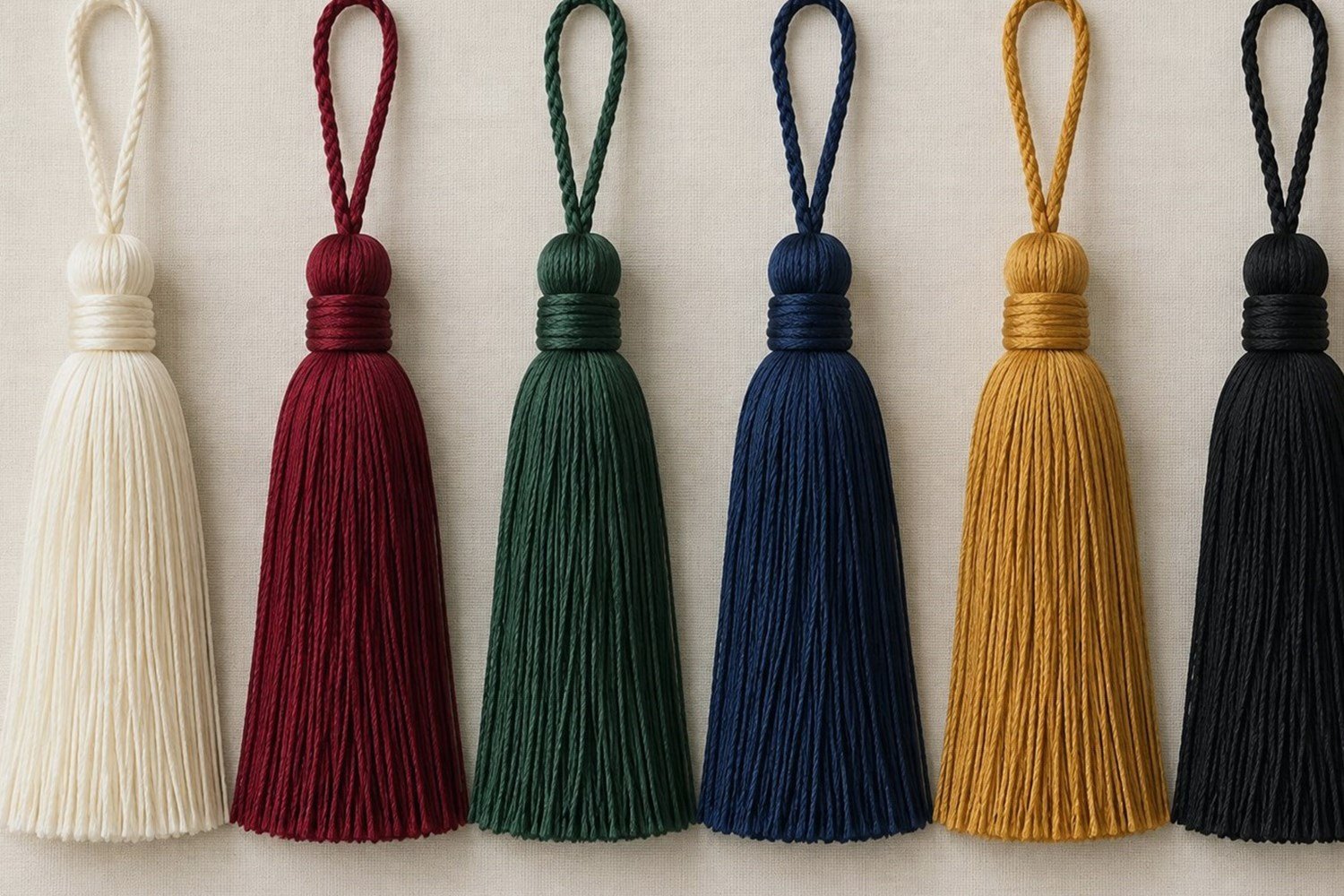
Custom size should be divided into named dimensions, while material and color should be evaluated together on the intended construction. A request such as “10 cm tassel” leaves room for interpretation unless it states whether that number refers to body length, skirt length, or complete hanging length.
| Dimension | Required Value | Unit | Measurement Method |
|---|---|---|---|
| Overall length | |||
| Body length | |||
| Skirt length | |||
| Head height and width | |||
| Cord and loop length |
Material affects texture, sheen, drape, movement, fullness, color appearance, and overall style. Directions may include polyester, rayon or viscose, cotton, silk, metallic-effect yarn, textured yarn, leather or faux leather, and mixed materials, depending on the construction. A buyer can describe a required appearance such as matte, smooth, lustrous, textured, metallic, soft-looking, or structured before confirming a fiber direction.
Use Tassel Size and Length, Tassel Materials, and Tassel Colors for the focused dimension, material, and color references.
How Are Heads, Skirts, Cords, Loops, and Components Customized?

Heads, skirts, cords, loops, beads, and charms make the main tassel body usable and visually distinct, so they should be specified as connected components rather than isolated decorations. Their relevant options depend on the selected construction and intended attachment.
Head and skirt
The head may be wrapped, knotted, beaded, covered, decorative, or simply bound. Define height, width, shape, material, color, wrapping, and connection to the cord where relevant. The skirt can be defined by length, fullness, material, color distribution, strand direction, layering, shape, and finishing. More fullness is not automatically better; the suitable visual volume depends on scale, material, application, and desired weight.
| Skirt Direction | Visual Character | What to Review |
|---|---|---|
| Light skirt | More delicate appearance | Scale and movement |
| Medium skirt | Balanced appearance | Product proportion |
| Full skirt | Stronger decorative volume | Visual weight and space |
Cord and loop
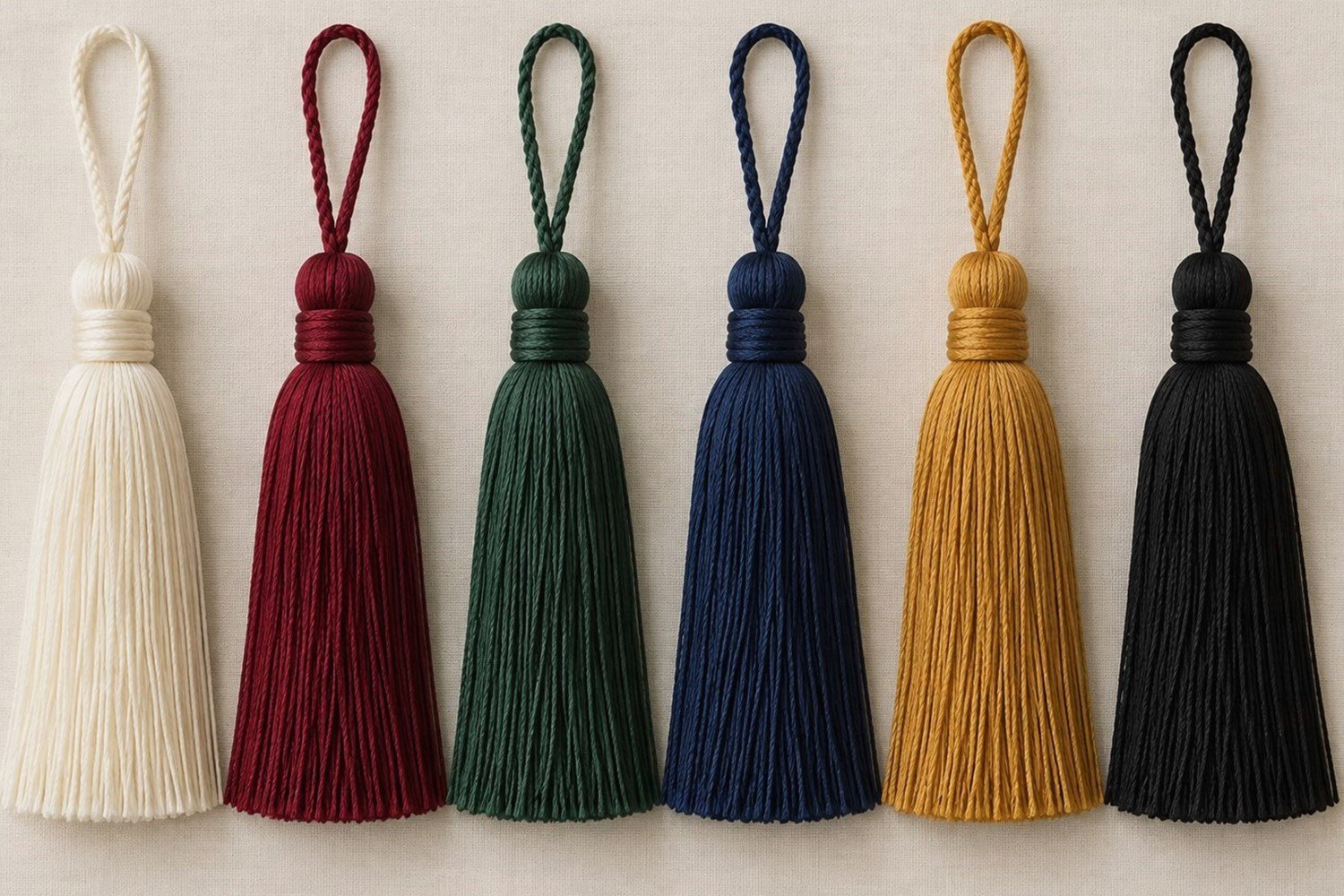
Cords can vary in length, thickness, color, color count, twist, braid, and connection method. Loops can vary in length, opening, material, color, and attachment position. Loop length must use a defined method; flat loop length, folded drop, and circumference do not necessarily describe the same value. Graduation styles often need a suspension loop and hanging cord, bookmarks need a compact attachment, keys need a loop or ring-compatible connection, and curtain designs may need a longer cord or full tieback arrangement.
Beads, caps, and charms
Beads, wood, acrylic, resin, metal components, decorative caps, metallic accents, and decorative knots can be added where appropriate. Define component material, size, shape, color, quantity, position, arrangement, finish, and connection. Components affect appearance, weight, proportion, and construction. See Beaded Tassels for a related product direction.
Charms are especially relevant to graduation, promotional, commemorative, branded, and gift products. A charm brief may include shape, size, color or finish, year, logo, symbol, text, and attachment position. If custom artwork is needed, provide suitable reference artwork and confirm feasibility; do not assume every logo or shape works with every tassel structure.
Custom Tassels by Application
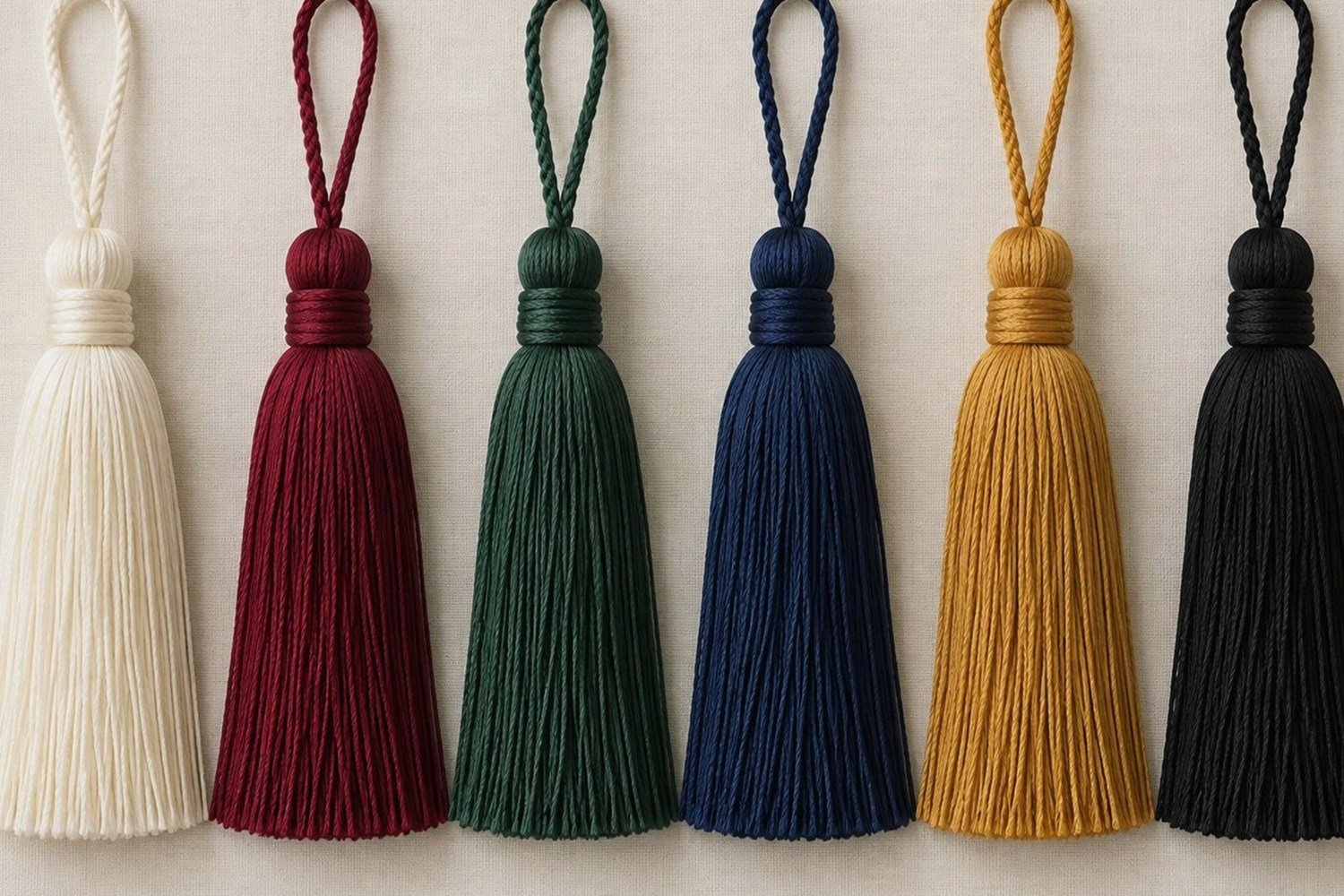
Different tassel applications use the same customization framework, but they prioritize different details. The correct specification links every modification to how the tassel will attach, hang, coordinate, and be viewed in its actual product setting.
| Application | Custom Priorities | Review Context |
|---|---|---|
| Graduation | School colors, loop, length, cord, year charm | Current institutional requirements |
| Bookmark | Small body, loop, cord, color, book relation | Bookmark and book scale |
| Key | Attachment, head, skirt, decorative components | Key, cabinet, or furniture scale |
| Decorative | Material, fullness, components, color direction | Interior or accessory design |
| Curtain | Cord, tassel scale, spread, textile coordination | Fabric, tieback position, drapery effect |
For graduation work, confirm the institution, degree level, program or college, official color system, charm requirement, and any single- or multi-color direction. Do not rely only on a generic online color chart. For curtains and home textiles, compare the tassel with the actual fabric where coordination matters.
How Are Custom Tassel Samples Reviewed?

A custom sample should be compared with the agreed specification and the intended product, not judged only as an isolated tassel. The review checks whether dimensions, material, color, construction, attachment, components, and visible proportion correspond with the requirements recorded for the project.
| Review Point | What to Compare | Why It Matters |
|---|---|---|
| Dimensions | Named lengths, widths, and reference points | Confirms intended scale |
| Material | Texture, sheen, visual volume | Matches the requested direction |
| Color | Shade, distribution, surface appearance | Coordinates with references |
| Construction | Head, skirt, cord, loop, attachment | Confirms design structure |
| Components | Beads, caps, charms, accents | Checks proportion and placement |
| End product | Hanging, connection, and visual context | Confirms practical fit |
Sample review checklist
- Application and attachment are confirmed against the intended product.
- Overall, body, skirt, cord, and loop dimensions use the agreed measurement points.
- Material, color, sheen, fullness, and construction match the specified direction.
- Beads, charms, caps, and decorative components are in the agreed position.
- The sample is viewed with the relevant fabric, product, or color reference where needed.
- The approved values, reference image, and final notes are recorded together.
When a main element changes, such as yarn thickness, head form, bead placement, cord construction, or skirt fullness, review the complete combination again. One matching dimension does not guarantee that the whole tassel still has the intended proportion.
What Should B2B Buyers Include in a Custom Tassel Inquiry?

A useful B2B custom tassel inquiry explains the end application, required appearance, key dimensions, material and color direction, attachment, components, reference materials, and quantity context. This does not require a perfect technical drawing at the first conversation, but it provides a clearer basis for evaluating a project direction.
| Information | Why It Helps |
|---|---|
| Application and tassel type | Sets design and attachment context |
| Reference sample, image, or drawing | Communicates the target direction |
| Dimensions and unit system | Defines scale and measurement method |
| Material and appearance | Clarifies texture, sheen, and volume |
| Color and references | Clarifies shade and distribution |
| Cord, loop, and attachment | Defines how the tassel connects |
| Beads, charms, and components | Defines decorative construction |
| Packaging and quantity context | Provides project context |
Before bulk production
Confirm the final documented specification, including the approved reference direction, key dimensions, measurement points, material, color, construction, cord and loop method, attachment, components, and packaging requirement. Avoid inventing numerical tolerances as a general rule; project-specific acceptance details should be defined in the actual specification.