Main Content
What Is the Basic Principle of Tassel Making?

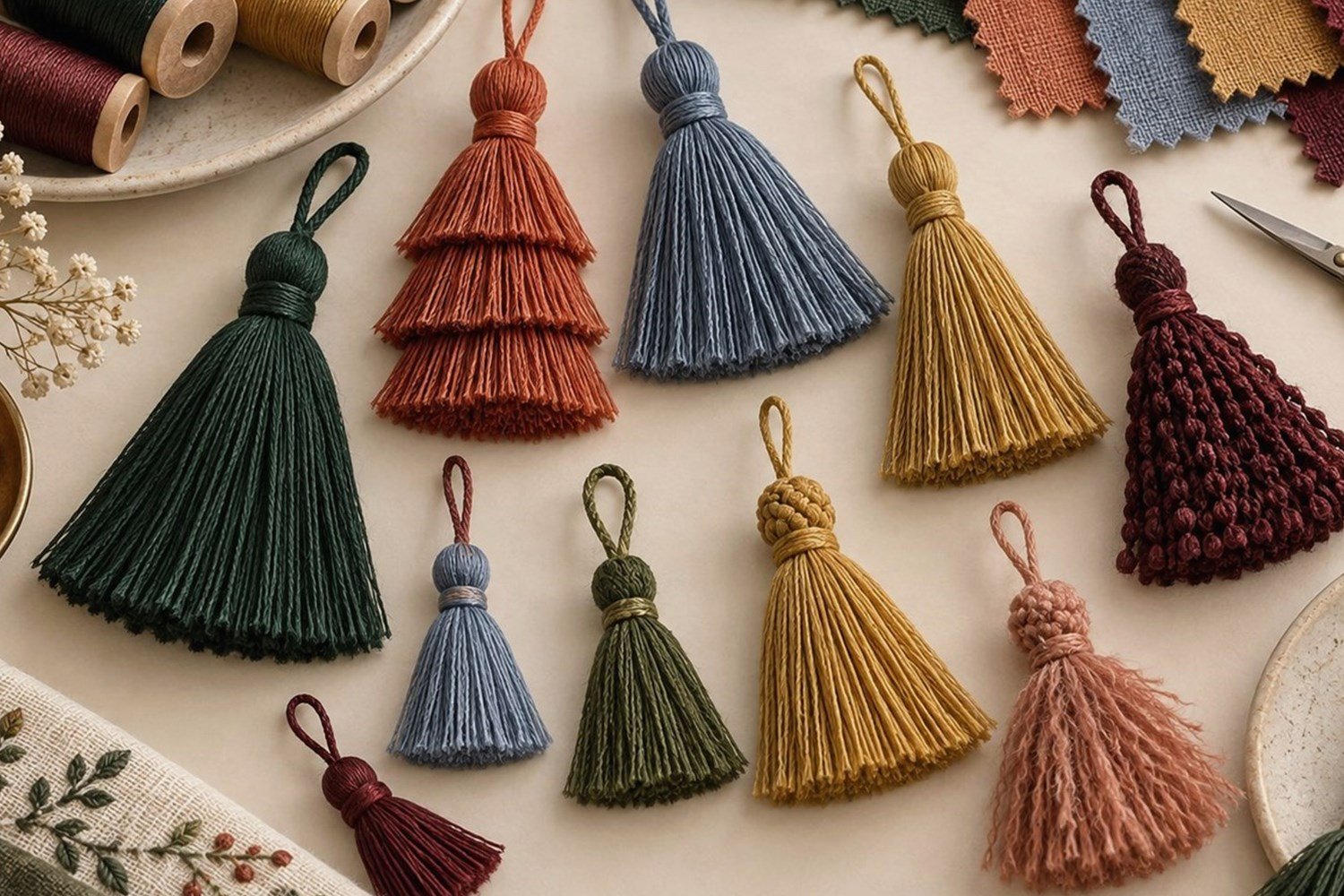
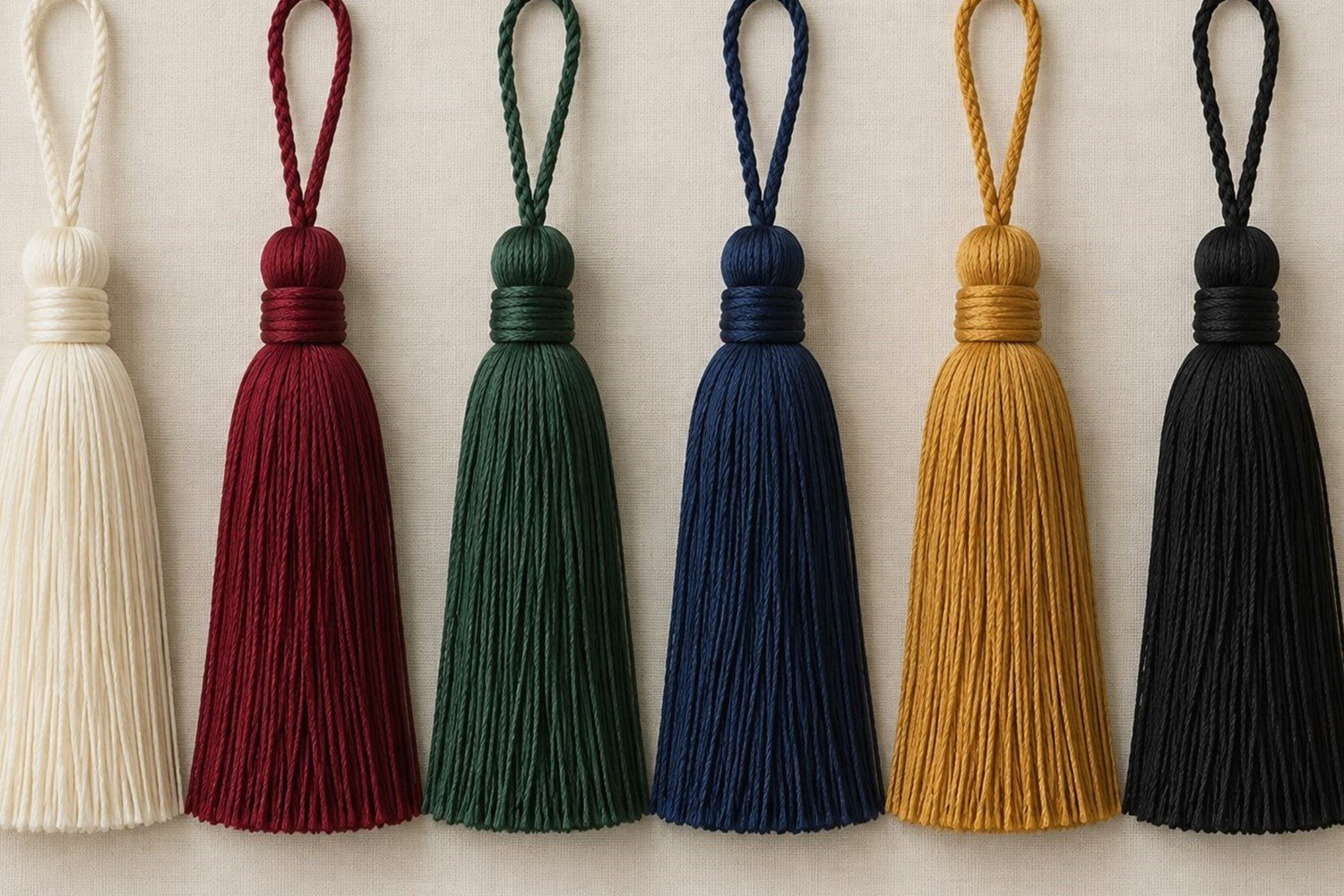
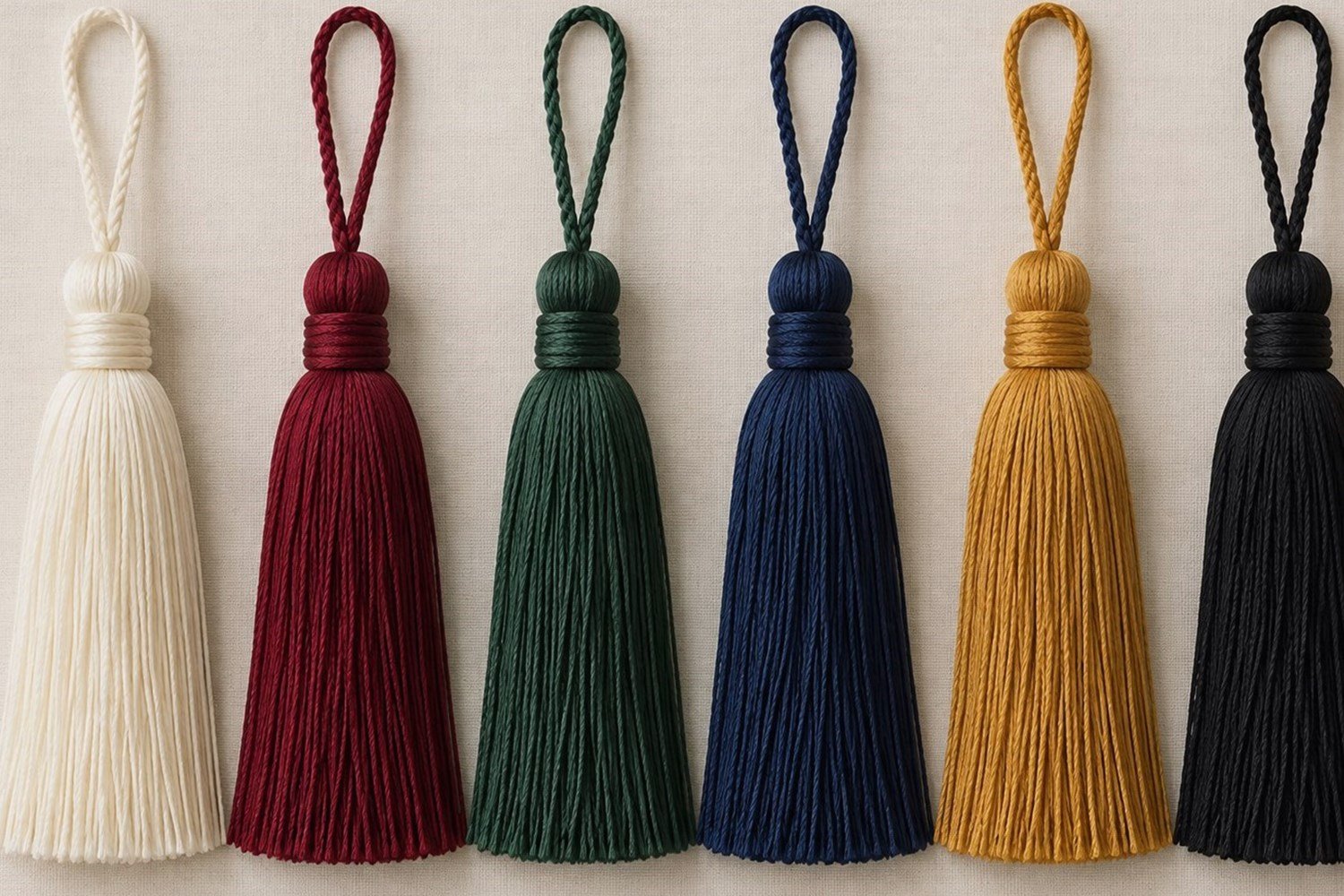
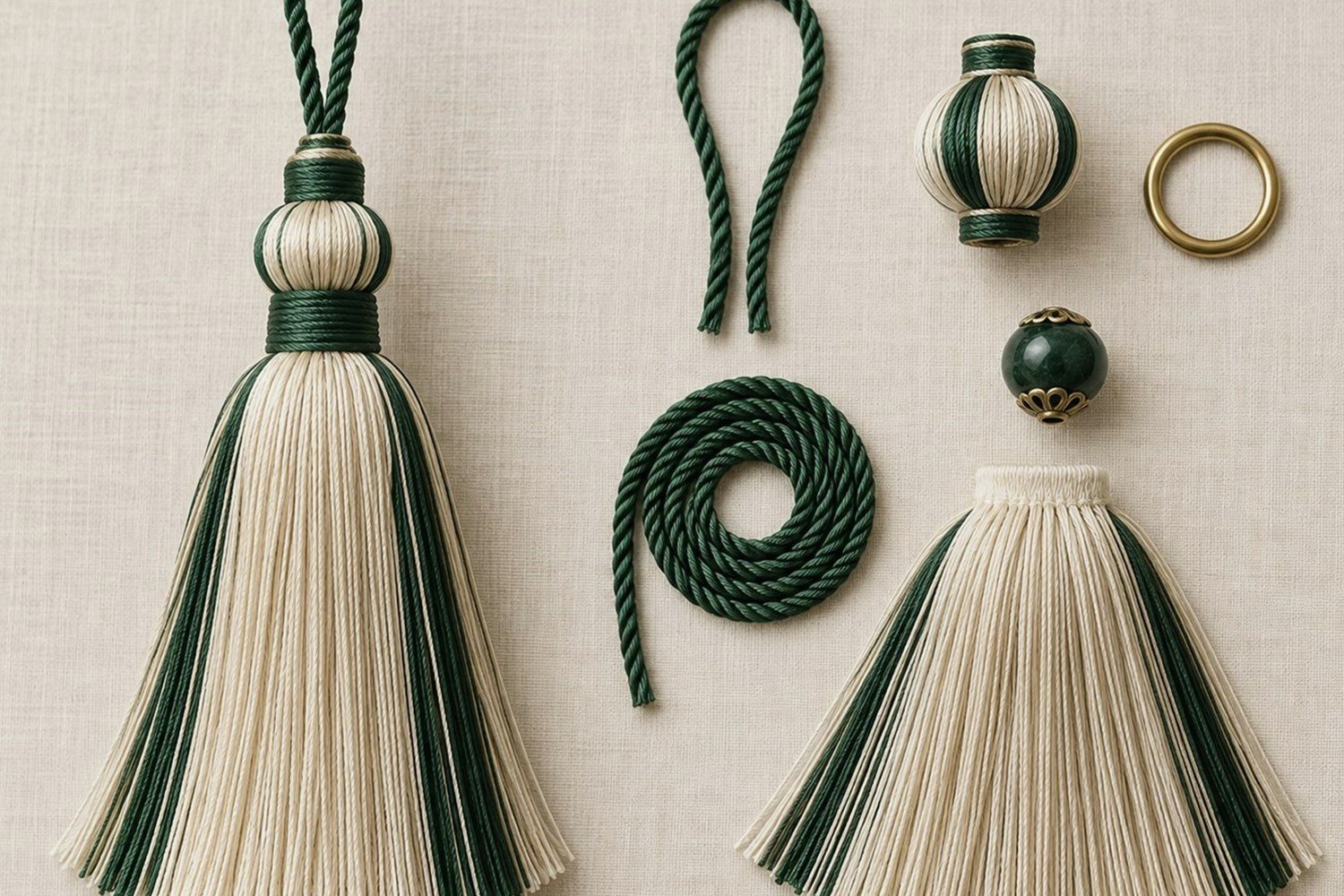
Most traditional thread tassels use the same basic principle: flexible strands are gathered, secured near one end, and allowed to hang freely below the secured area. The strands create the skirt, binding or wrapping creates the neck, and the upper bundle forms or connects to the head. A loop or cord provides attachment when required.
| Part | Manufacturing Function |
|---|---|
| Loop or cord | Provides suspension or connection |
| Head | Forms upper structure or decorative body |
| Neck | Secures head and skirt transition |
| Skirt | Creates the hanging tassel form |
Not every tassel contains all of these parts. A small bookmark tassel may use a simpler body, while an elaborate furnishing tassel can include several separately made elements.
The General Tassel Manufacturing Process
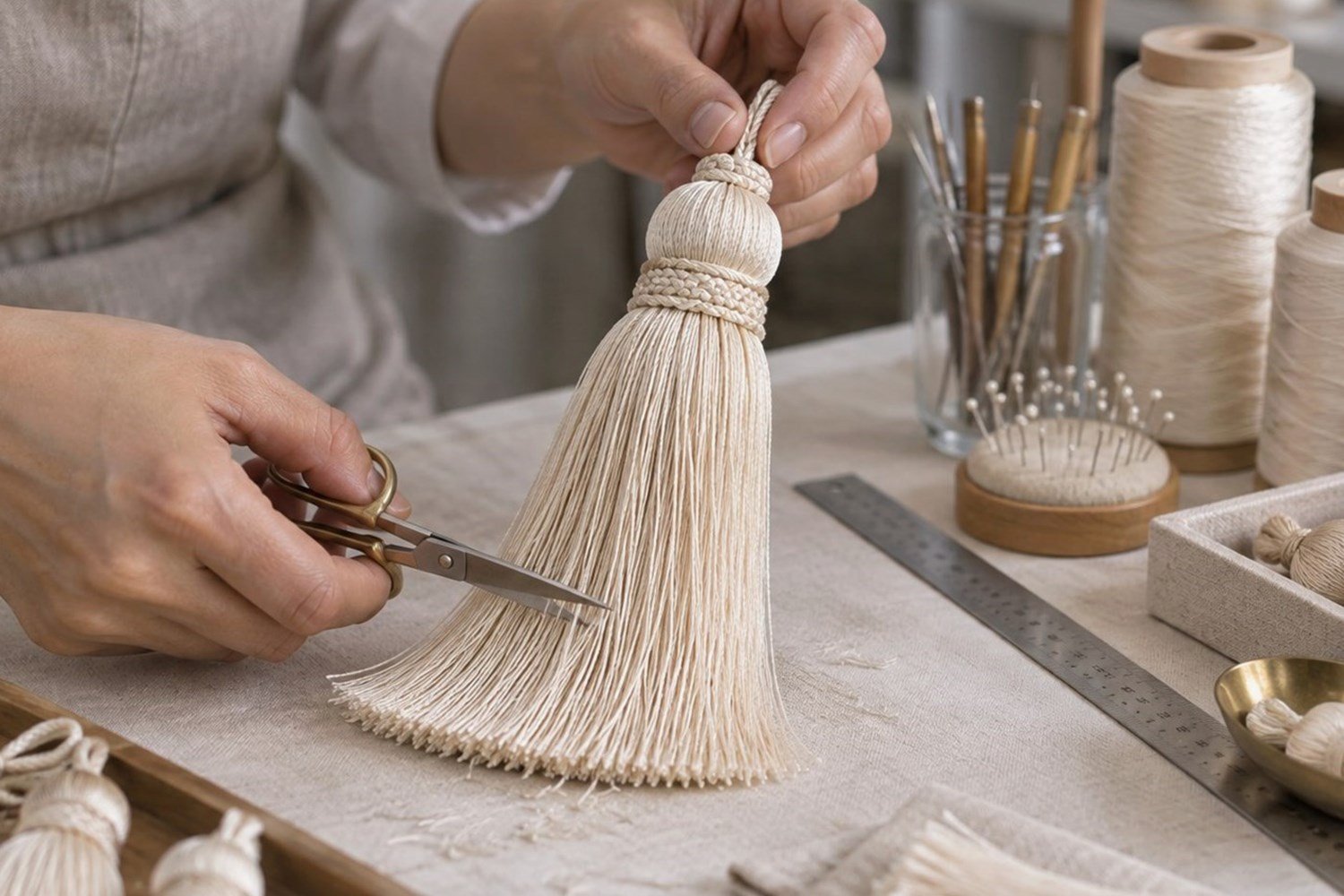
A general production sequence starts with an approved product requirement and progresses through material preparation, bundle formation, securing, head and skirt shaping, component assembly, finishing, and inspection. The order can change for a particular design, so the sequence is a practical framework rather than a universal factory method.
1. Define the specification
Before yarn is wound or cut, define tassel type, end application, overall and skirt length, head size, cord and loop dimensions, material, color, fullness, components, attachment, and packaging. A physical sample, reference image, drawing, existing product, or new concept can begin this conversation. A bookmark tassel and a large curtain tassel should not be made from one generic specification.
2. Select and prepare materials
Prepare the approved yarn, cord, beads, caps, charms, or other parts. Material preparation includes color direction, component sorting, cord preparation, and checking intended combinations. See Tassel Materials for fiber and component comparisons.
3. Prepare cord and loop
Some designs use a simple thread loop, twisted cord, braided cord, or application-specific attachment. Its length, thickness, color, twist, braid, and connection position should be defined. A basic tassel may not need a separate decorative cord, while a graduation or curtain item often uses one as part of the finished construction.
4. Form the yarn bundle
Yarn may be wound around a form, gathered with a jig, prepared as measured strands, or handled with machine-assisted preparation. Required skirt length, fullness, yarn thickness, color sequence, and desired diameter influence the bundle. More yarn does not automatically mean better quality; the intended quantity is the one that matches the approved visual specification.
5. Secure and fold the bundle
The prepared bundle is tied, bound, folded, wrapped, integrated around a cord, or secured around a head component according to the construction. Centering, symmetry, tension, strand alignment, and attachment position establish the relationship between the head and skirt.
6. Form head, neck, and skirt
The head is the upper structural or decorative section; the neck separates it from the hanging skirt. Heads can be wrapped, knotted, covered, beaded, shaped, or multi-component. For many thread tassels, folded loops are cut to release the skirt, then the strands are opened, aligned, and shaped. Other designs use pre-cut strands, layered skirts, or mixed yarns instead.
7. Add components, finish, and inspect
Beads, decorative caps, charms, wood, acrylic, resin, metal parts, knots, or metallic accents are fitted only when the design needs them. Finishing can include aligning strands, trimming uneven ends, checking wrapping, straightening cords, removing loose fibers, and confirming components. Manual or tool-assisted finishing may be used according to the product method.
| Control During Formation | What It Supports |
|---|---|
| Length and yarn quantity | Skirt proportion and fullness |
| Color sequence | Required visual arrangement |
| Head and neck alignment | Shape and symmetry |
| Cord and loop position | Attachment function |
| Trim and components | Finished appearance |
How Manufacturing Changes by Tassel Type

Manufacturing changes because each tassel type has a different scale, attachment, component set, and finished purpose. A simple thread tassel may focus on yarn formation and trim; a graduation tassel adds a suspension loop and cord; a beaded or decorative tassel needs separate component assembly.
Simple thread tassels
Select yarn, define length and fullness, form a bundle, secure the upper section, form the neck, cut strands where required, trim the skirt, add an attachment if needed, and inspect. Commercial production can use specialized tools, fixtures, or process controls for consistency without changing the basic construction principle.
Graduation, bookmark, and key tassels
Graduation tassels may combine a suspension loop, long cord, tassel body, binding or clasp, and year charm where required. Bookmark tassels are usually smaller and lighter, with proportions suited to books and stationery. Key tassels need an attachment direction appropriate for the intended key or decorative hardware. See Graduation Tassels, Bookmark Tassels, and Key Tassels.
Beaded and decorative tassels
Beaded tassels add bead preparation, position, color, shape, arrangement, connection points, and symmetry to the underlying yarn process. Decorative tassels can combine cord, head, neck, skirt, knots, covered forms, braids, metallic details, and ornaments. Such products are related to decorative trimming traditions often called passementerie, but modern production methods vary by actual design. Explore Beaded Tassels and Decorative Tassels.
Handmade vs Machine-Made Tassels
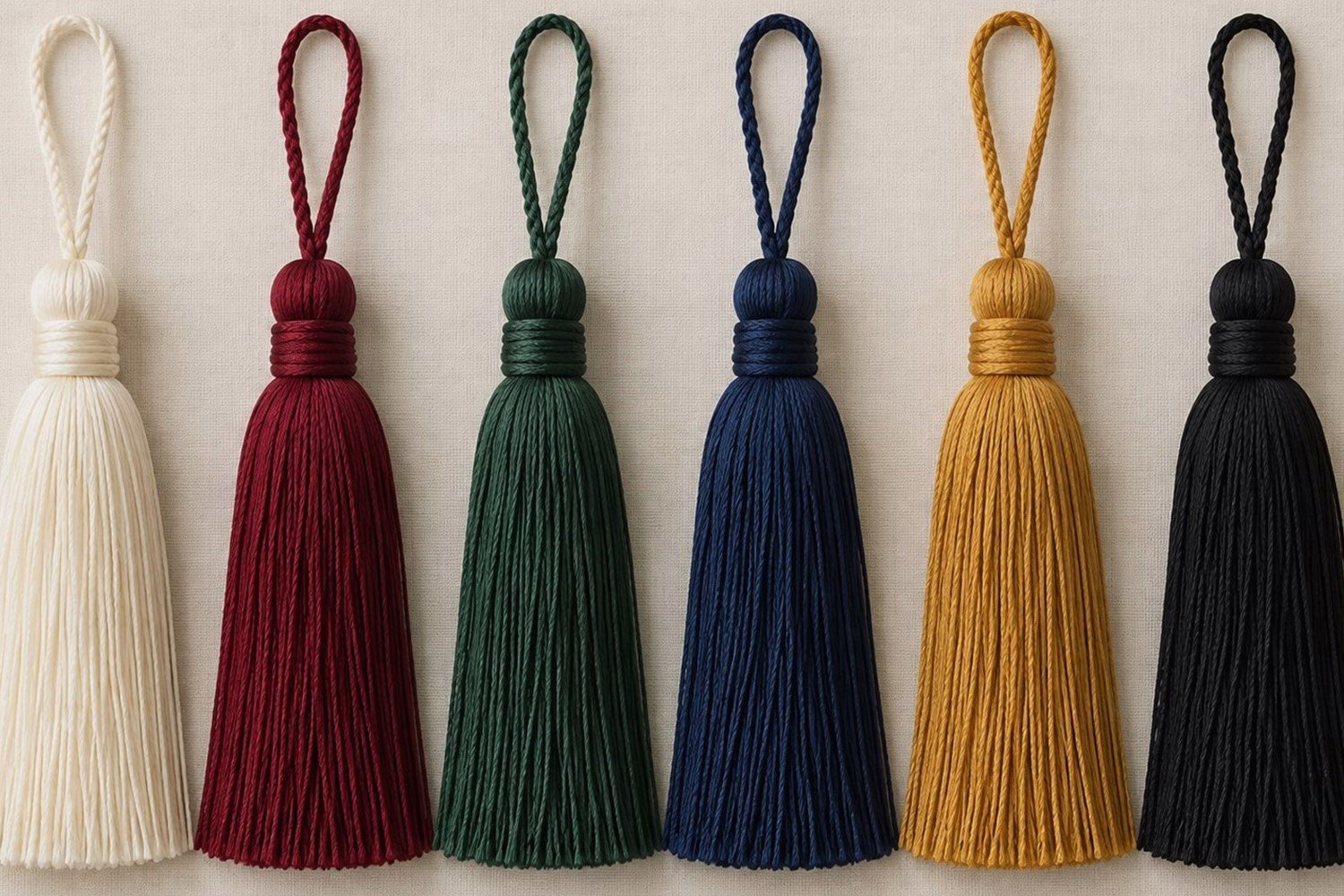
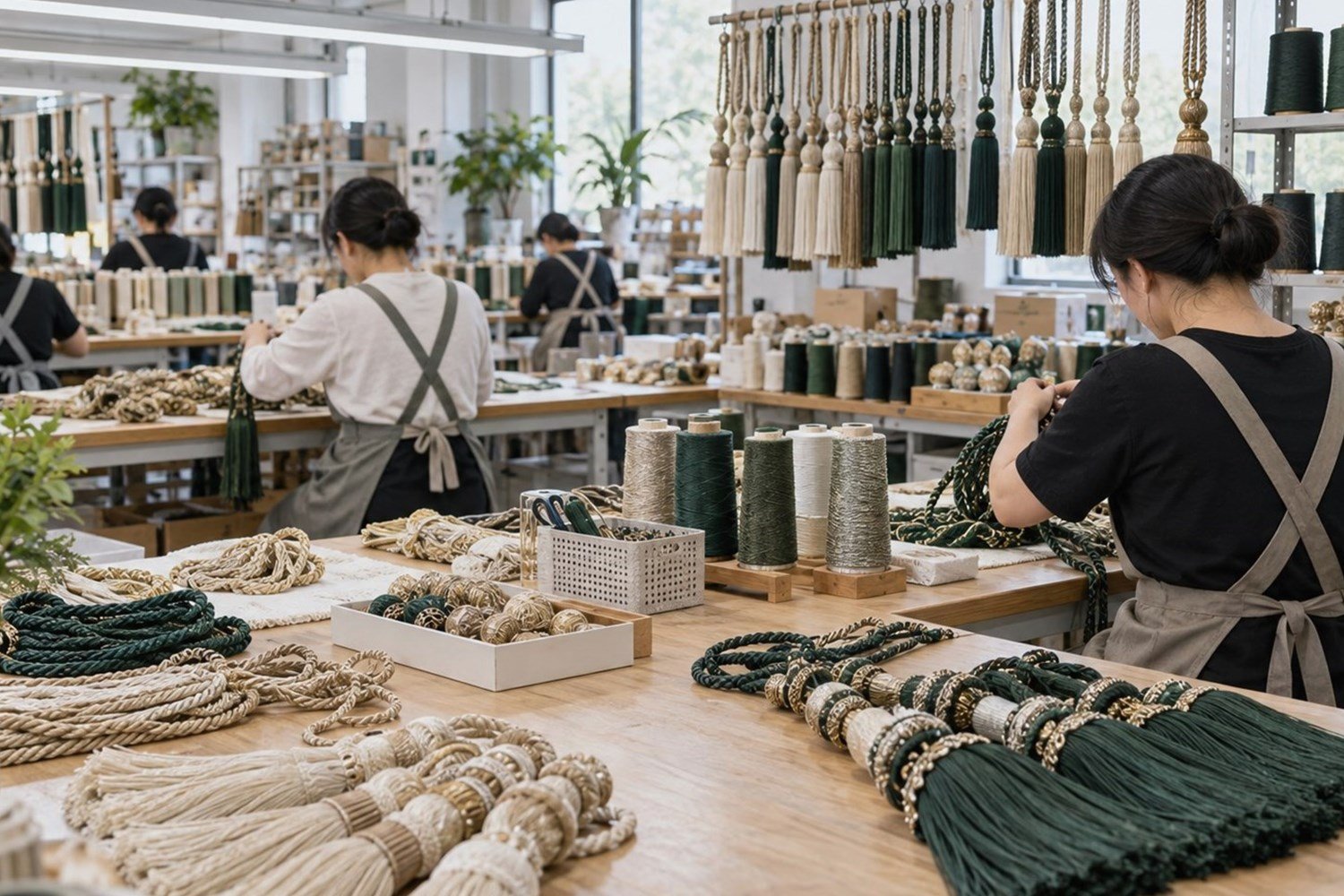
Tassel production is not always purely handmade or purely machine-made. Commercial products may combine machine-assisted yarn preparation, cord production, winding, cutting, and other repeated operations with hand assembly, component positioning, trimming, sample development, and inspection.
| Production Approach | Typical Role | Important Consideration |
|---|---|---|
| Hand processes | Assembly, positioning, trim, components | Follow the approved construction |
| Machine-assisted processes | Preparation, winding, cord or cutting operations | Depend on the actual product method |
| Combined production | Uses both according to design | Process control and inspection matter most |
Quality depends on material consistency, defined construction, approved samples, and inspection rather than simply calling a tassel handmade or machine-made.
How Are Custom Tassels Developed?

Custom tassel development begins by defining the required product before bulk production begins. A reference sample, image, drawing, existing product, or new design requirement is converted into a clearer brief covering material, color, dimensions, construction, attachment, and decorative details.
- Review the requirement and end application.
- Define material, color, dimensions, head, skirt, cord, loop, and components.
- Develop and review a representative sample.
- Confirm the specification and approved reference.
- Produce, inspect, and package according to the confirmed project requirement.
Available customization can include length, fullness, color, head construction, beads, cords, attachment, and packaging. Details should be confirmed during sampling or specification review. See Custom Tassels.
How Is Consistency Maintained in Bulk Production?

Bulk consistency is supported by an approved reference sample, clear material and color direction, documented dimensions, defined construction, and agreed inspection criteria. The relevant controls vary with material and design, and acceptable variation should be established by the project specification rather than invented in a general article.
| Control Point | What Should Remain Consistent |
|---|---|
| Color | Approved color reference |
| Dimensions | Approved overall, skirt, head, cord, and loop direction |
| Fullness | Approved sample appearance |
| Head and skirt | Shape, proportion, length, and finishing |
| Decoration | Position and arrangement of components |
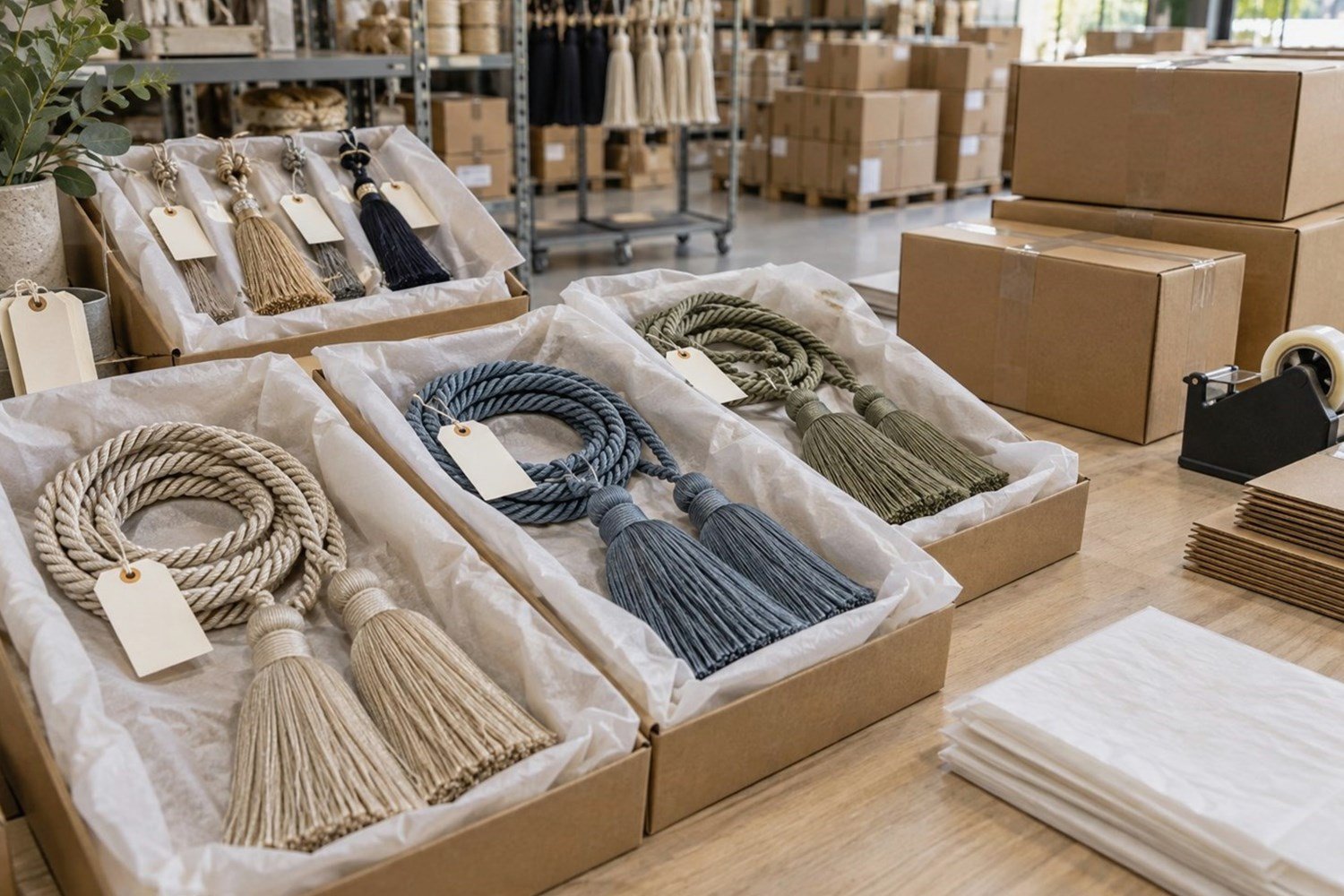
| Packaging | Confirmed project requirement |
What Should B2B Buyers Confirm Before Tassel Production?

Buyers should confirm the product type, end application, reference material, construction, color, dimensions, components, attachment, and packaging before bulk production. Clear specifications explain why particular yarn quantities, cords, head proportions, and trimming decisions matter.
- Product type, application, physical sample or image, and material
- Color reference, overall and skirt length, head size, cord and loop dimensions
- Fullness, construction, beads, decorative components, and attachment method
- Packaging, estimated quantity context, and special project requirements
Before bulk production: review the sample; confirm dimensions, colors, materials, construction, components, and packaging; and retain the approved reference as the production comparison point.