Main Content
What Should You Consider When Choosing Tassels?
The most important selection factors are application, function, size, material, color, construction, attachment, decorative details, quality, and customization requirements. Do not select a tassel based on color or appearance alone. The right choice is the option that matches the product specification and the finished use.
| Question | Decision |
|---|---|
| Where will it be used? | Application and function |
| How large should it appear? | Size and proportion |
| What texture is needed? | Material direction |
| Should it match or contrast? | Color strategy |
| How will it connect? | Attachment and construction |
| What must remain consistent? | Quality specification and sample |
Step 1: Choose Tassels by Application
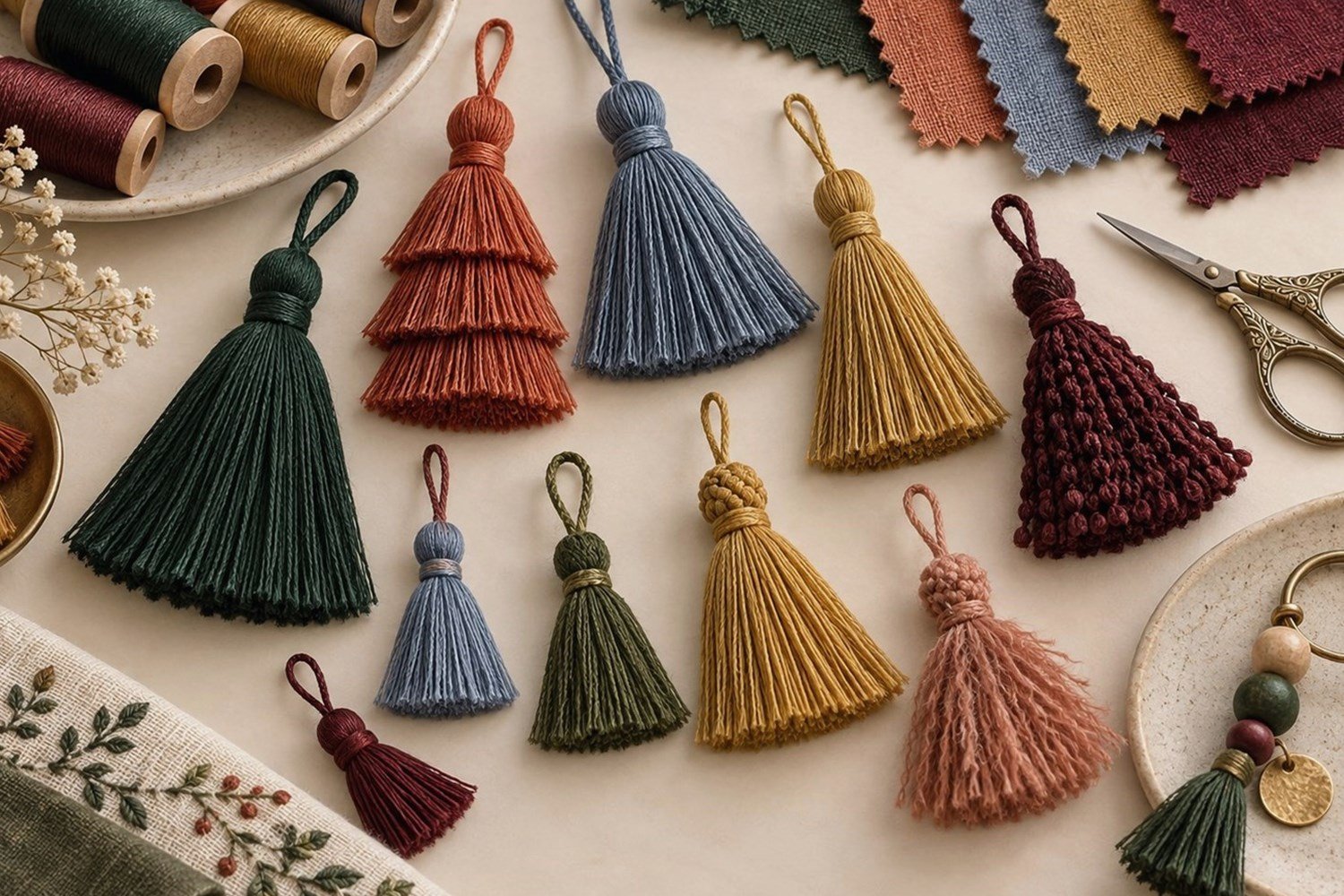
Application is the first selection factor because it determines many of the remaining decisions. The end product sets the acceptable scale, attachment, visual weight, material direction, color coordination, and decorative complexity. These directions are general rather than universal specifications.
| Application | Typical Priorities |
|---|---|
| Graduation | Ceremony requirements, color, cap compatibility, charm if required |
| Bookmark | Small scale, light visual weight, cord or loop, book fit |
| Key | Attachment, visibility, proportion, decorative style |
| Curtain | Scale, fullness, cord, textile coordination |
| Home textile | Texture, softness, color, proportion |
| Fashion or bag | Movement, weight, material, connection |
| Gift packaging | Small scale, color, presentation, attachment |
For application context, read What Are Tassels Used For?.
Step 2: Choose Tassel Size, Length, and Proportion

Choose tassel size by evaluating several dimensions rather than one number. Overall length, skirt length, head height and width, cord length, loop length, and visual diameter or fullness work together to determine proportion. Two tassels with the same overall length can look very different when their head-to-skirt proportions differ.
| Proportion Direction | Visual Result | Selection Context |
|---|---|---|
| Long skirt and small head | More elongated appearance | When a hanging emphasis is required |
| Larger head and shorter skirt | More structured appearance | Decorative focal point |
| Long cord and tassel | Additional hanging length | Cord-led accessory |
| Compact construction | Lower visual footprint | Books, keys, small products |
A bookmark usually needs a smaller tassel than a curtain accessory. A large furnishing tassel may need more visual volume than a key tassel. Graduation tassels must coordinate with the intended cap. Compare the sample beside the finished product whenever possible.
Step 3: Choose the Tassel Material
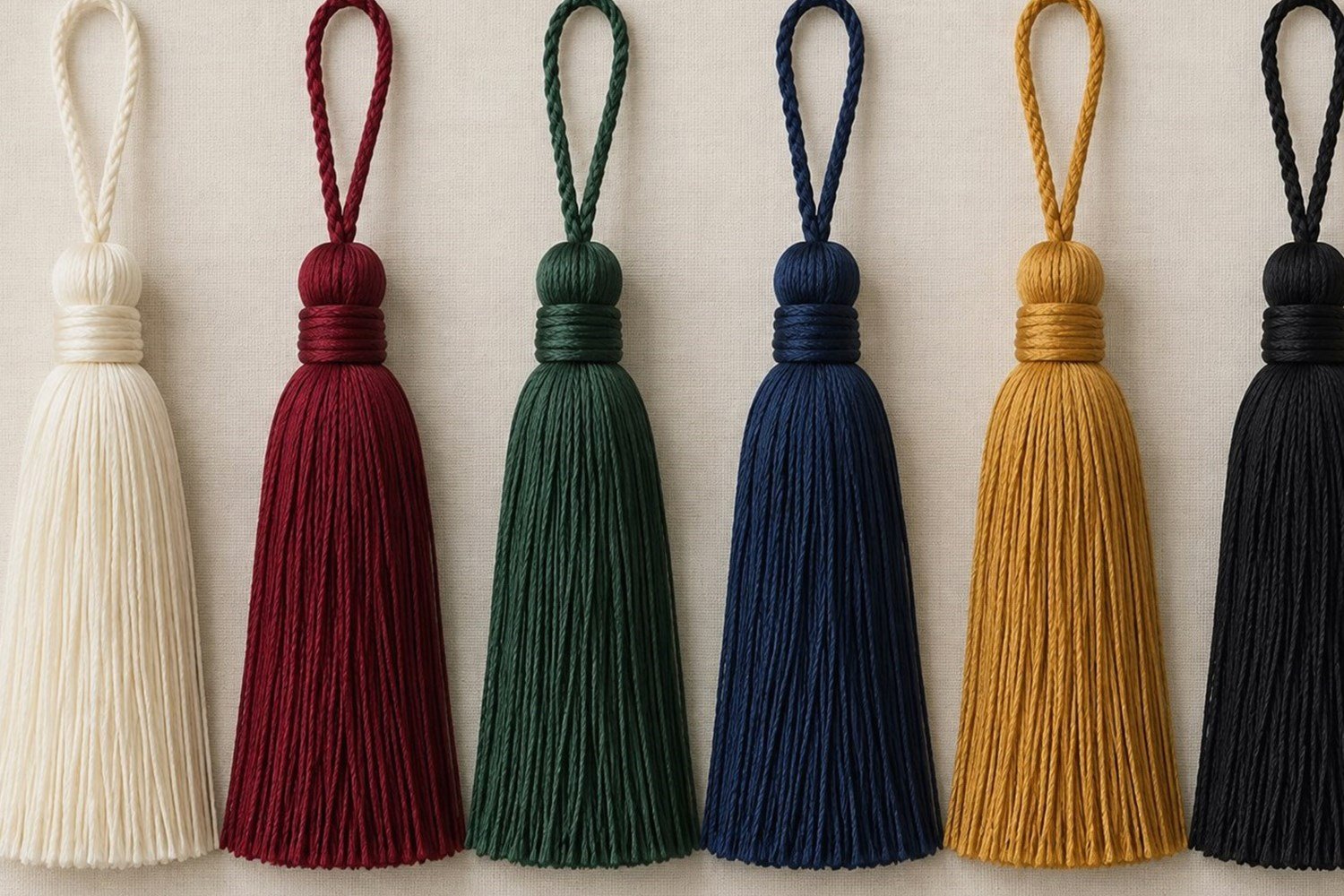
Choose tassel material according to required appearance, texture, drape, construction, and application. There is no universally best fiber. The final result also depends on yarn thickness, twist, density, finish, cord construction, and decorative components.
| Material Direction | Typical Visual Character | When to Consider It |
|---|---|---|
| Polyester | Wide range of finishes | Versatile product development |
| Rayon/viscose | Smooth, often lustrous | Silk-like visual effect |
| Cotton | Softer, generally matte | Natural-looking textile design |
| Silk | Fine natural luster | When genuine silk is required |
| Metallic-effect yarn | Reflective accent | Ceremonial or decorative detail |
| Textured yarn | Fuller surface texture | Home textiles and decoration |
| Leather/faux leather | Strip-based form | Bags, keys, fashion accessories |
| Mixed materials | Multi-component appearance | Decorative tassels |
Rayon or viscose is not natural silk. For detailed material choices, see Tassel Materials.
Step 4: Choose the Tassel Color
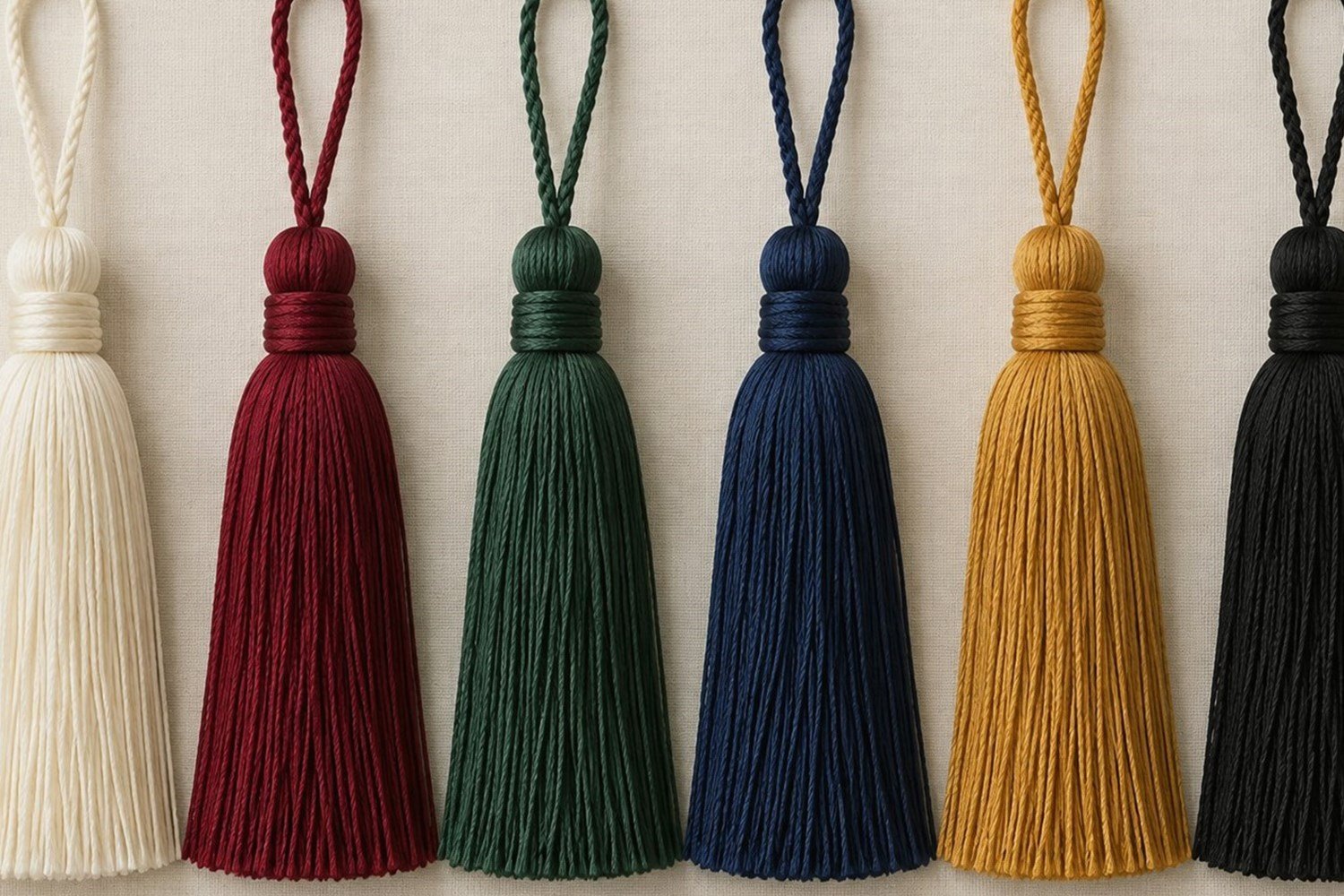
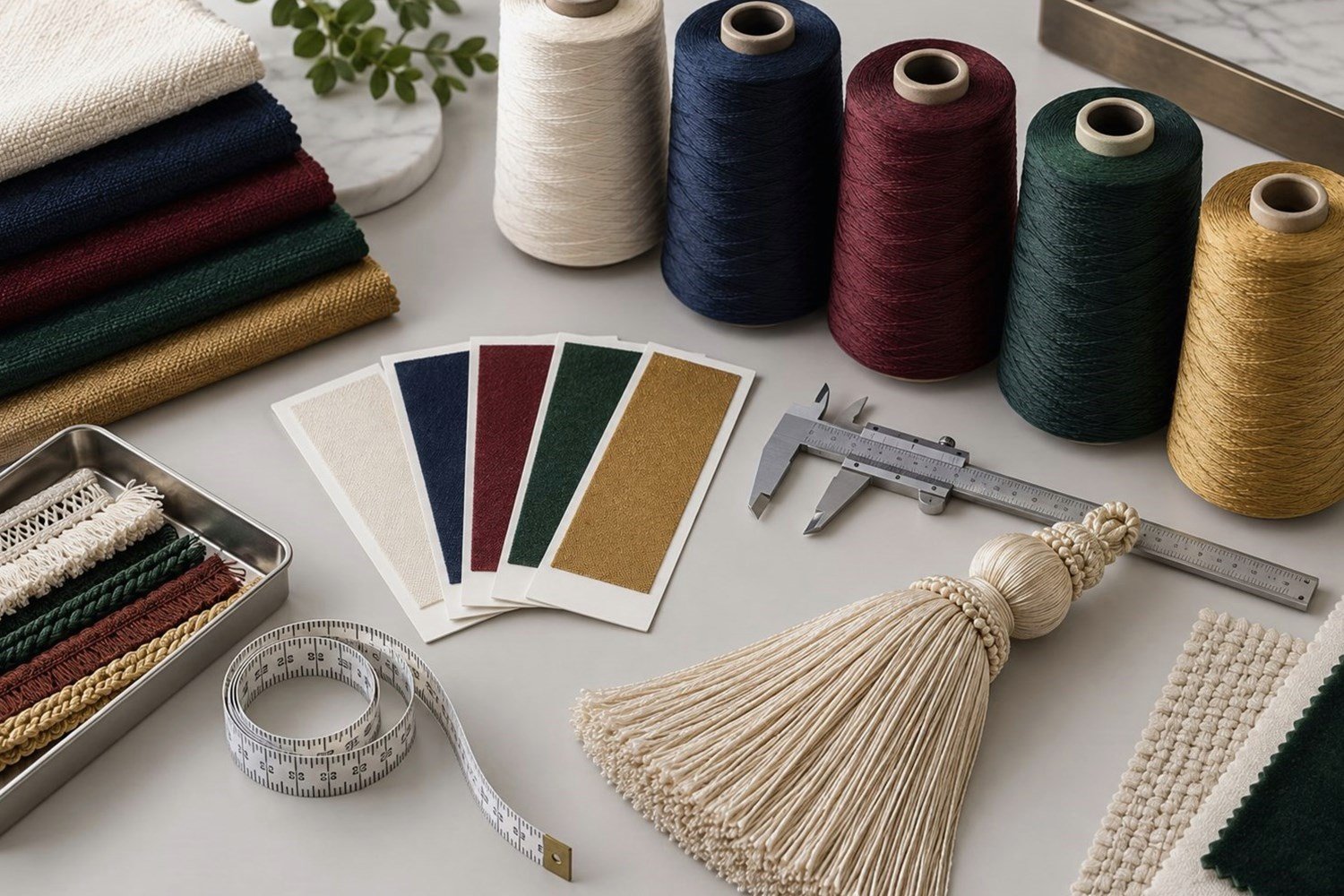
Choose color around the end product, collection, brand palette, fabric or product color, and any institutional requirements. Color can create continuity, contrast, identification, or a multi-color visual program. It should be reviewed with the material because sheen and surface texture change how a color appears.
| Color Strategy | Purpose | Example Application |
|---|---|---|
| Matching | Visual continuity | Home textile collection |
| Contrast | Visible focal point | Decorative accessory |
| Brand color | Product identity | Gift or branded item |
| Institutional color | Follows a defined requirement | Graduation product |
| Multi-color | Combines required colors | School or decorative collection |
For graduation products, do not select tassel color from appearance alone. Institutions may have their own requirements for school colors, degree levels, or disciplines; confirm the relevant rule before choosing.
Step 5: Choose Construction and Decorative Details

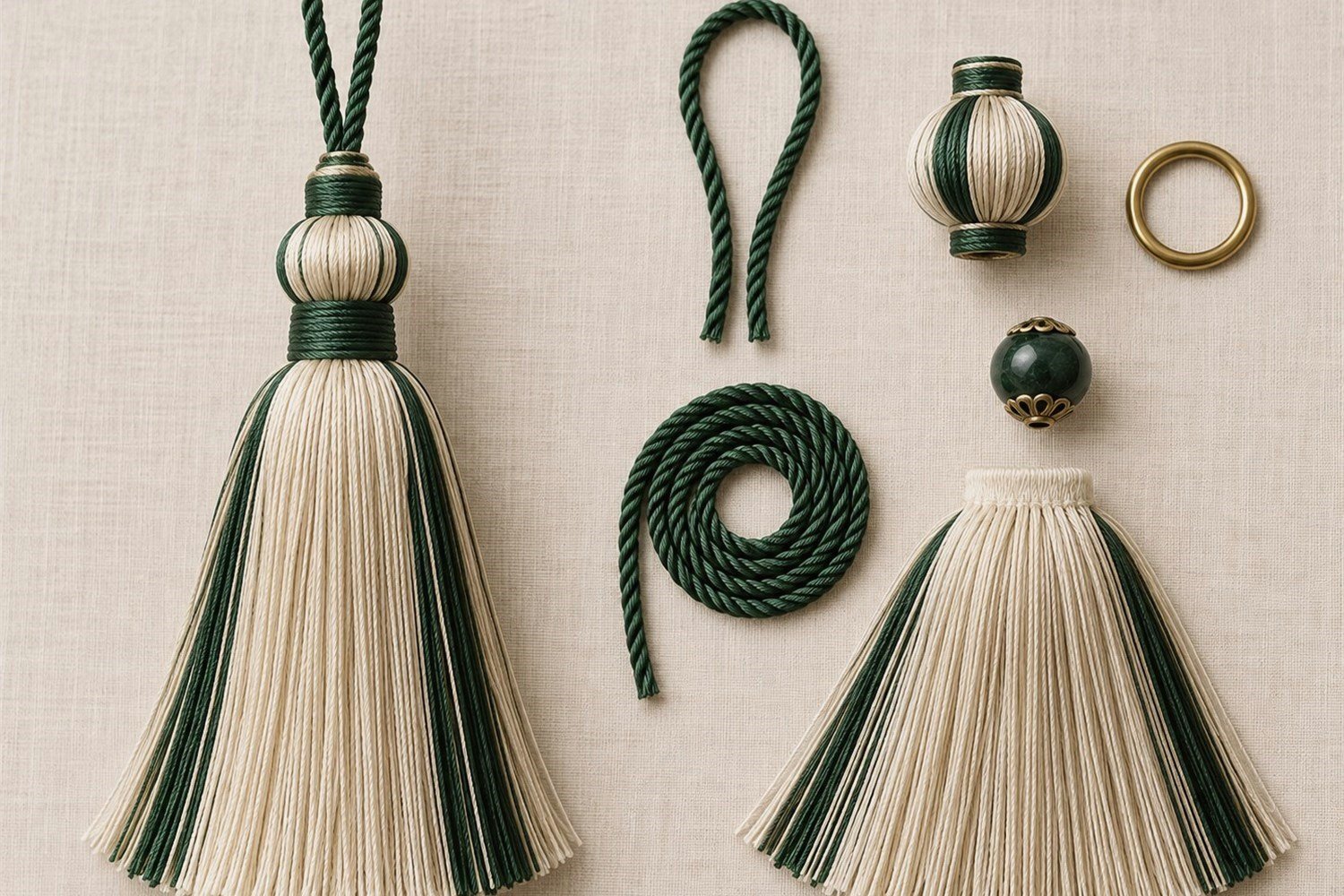
Construction determines the tassel’s structure, silhouette, movement, and decorative character. Thread, cord, beaded, layered, knot-head, and multi-component directions can overlap: a beaded tassel can be a curtain tassel, and a thread tassel can be a graduation tassel.
| Construction | Visual Character | Selection Consideration |
|---|---|---|
| Thread | Adaptable hanging strands | Length, density, color |
| Cord | Defined, weighted structure | Twist, braid, attachment |
| Beaded | Component-led detail | Weight, arrangement, position |
| Layered | Fuller silhouette | Color and proportion |
| Decorative | Multiple visible details | Head, cord, components |
Beads, knots, metallic yarn, caps, charms, wood, acrylic, resin, or metal accents should support the finished product rather than simply add complexity. See Types of Tassels and Beaded Tassels.
Step 6: Choose Attachment, Fullness, and Quality
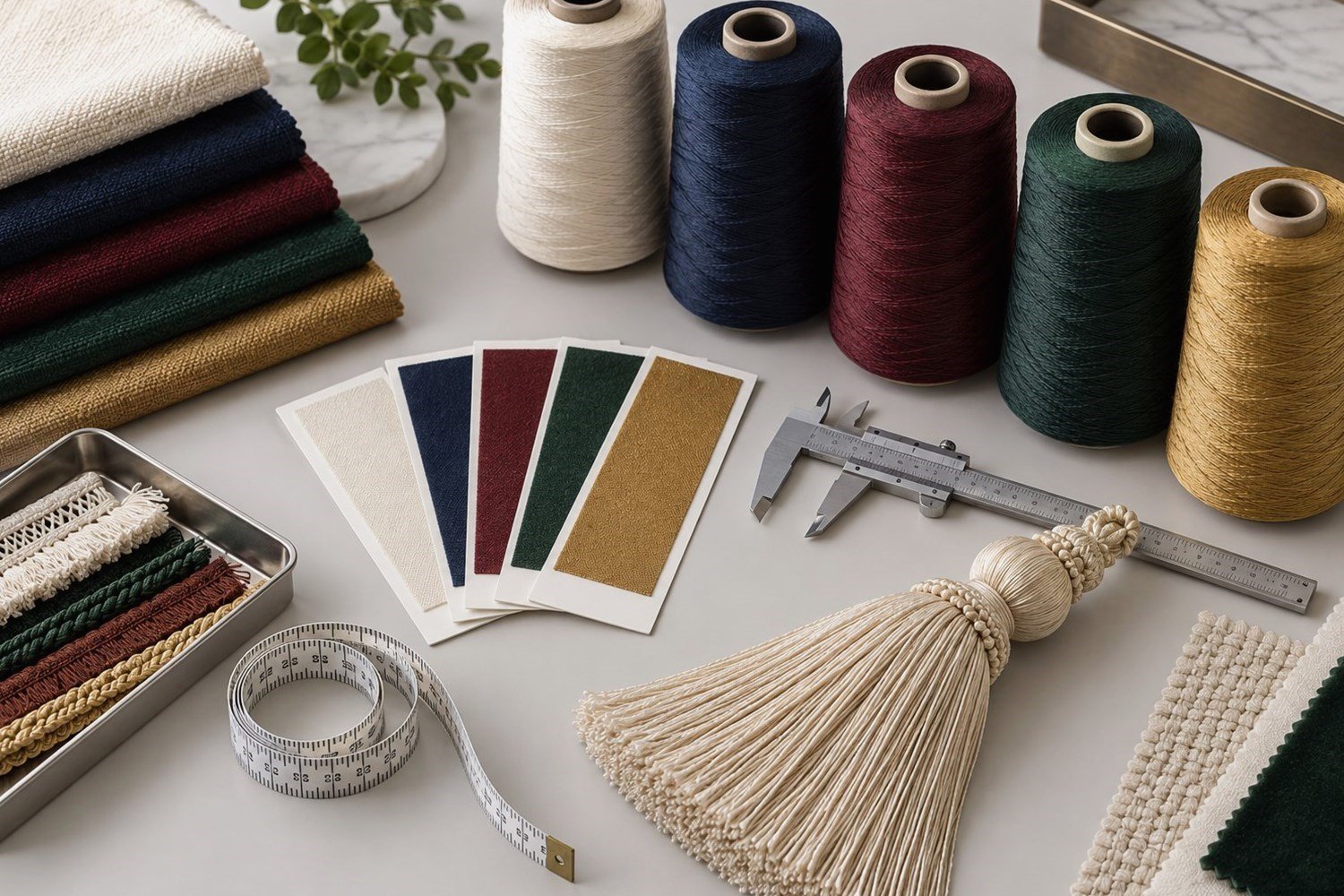
A tassel must connect correctly to its intended product, and its fullness must support the product’s scale without overpowering it. Attachment should be defined during development, not added as an afterthought. More fullness or decoration does not automatically mean better quality.
| Application | Attachment Consideration | Fullness Direction |
|---|---|---|
| Graduation cap | Suspension loop and cap compatibility | Ceremonial product proportion |
| Bookmark | Cord or loop connection | Light, compact body |
| Key | Loop, ring, or key-compatible connection | Visible but proportionate |
| Curtain | Cord or complete tieback structure | Textile-scale visual volume |
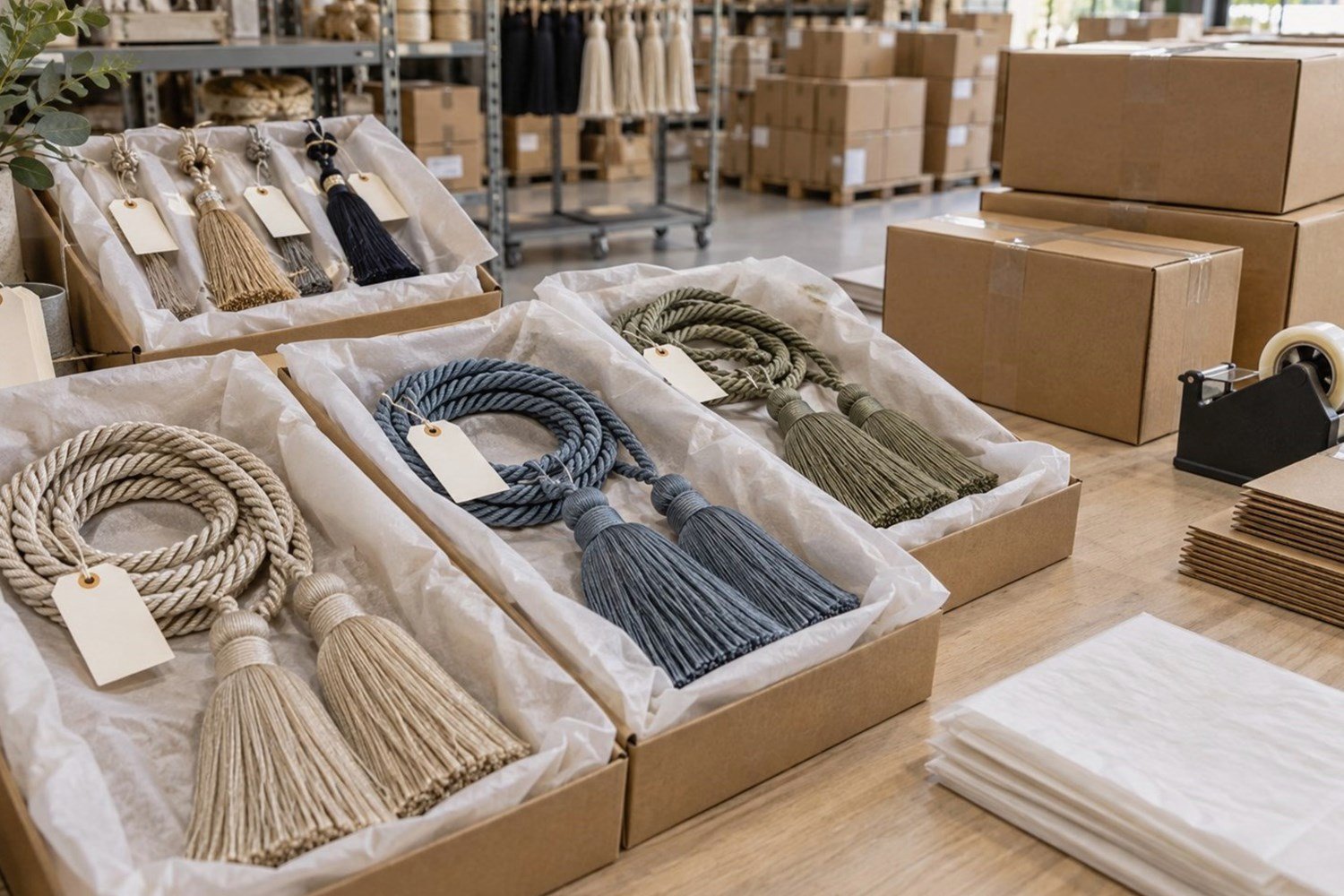
| Bag or gift | Secure product-specific attachment | Matched to surface and movement |
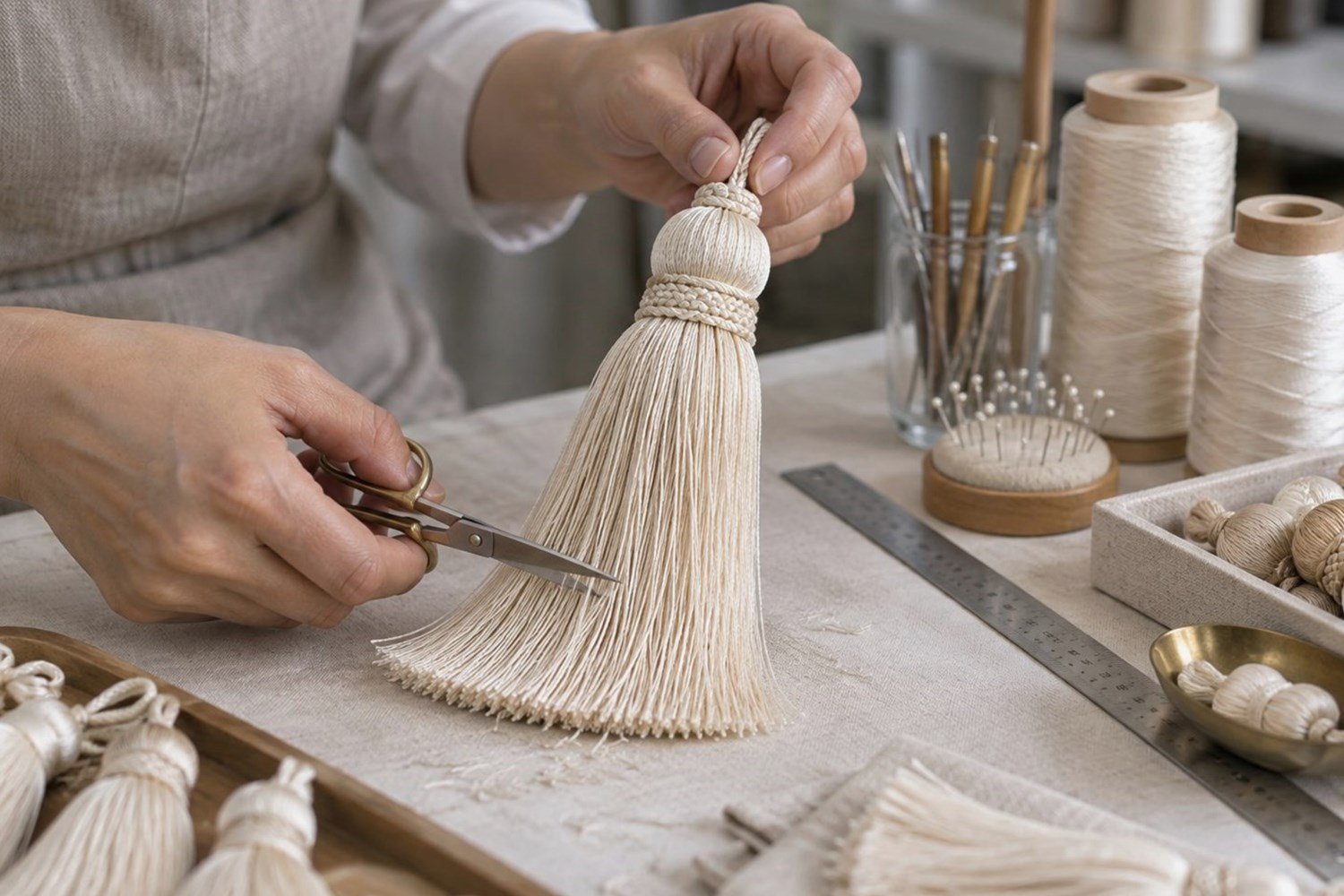
Quality review should include color consistency, dimensions, skirt length, head shape, fullness, alignment, trimming, loose fibers, cord and loop construction, component placement, attachment, and pair or set consistency. Evaluate these points against the intended application and approved specification, not invented numerical tolerances.
How to Choose Custom Tassels for B2B Orders
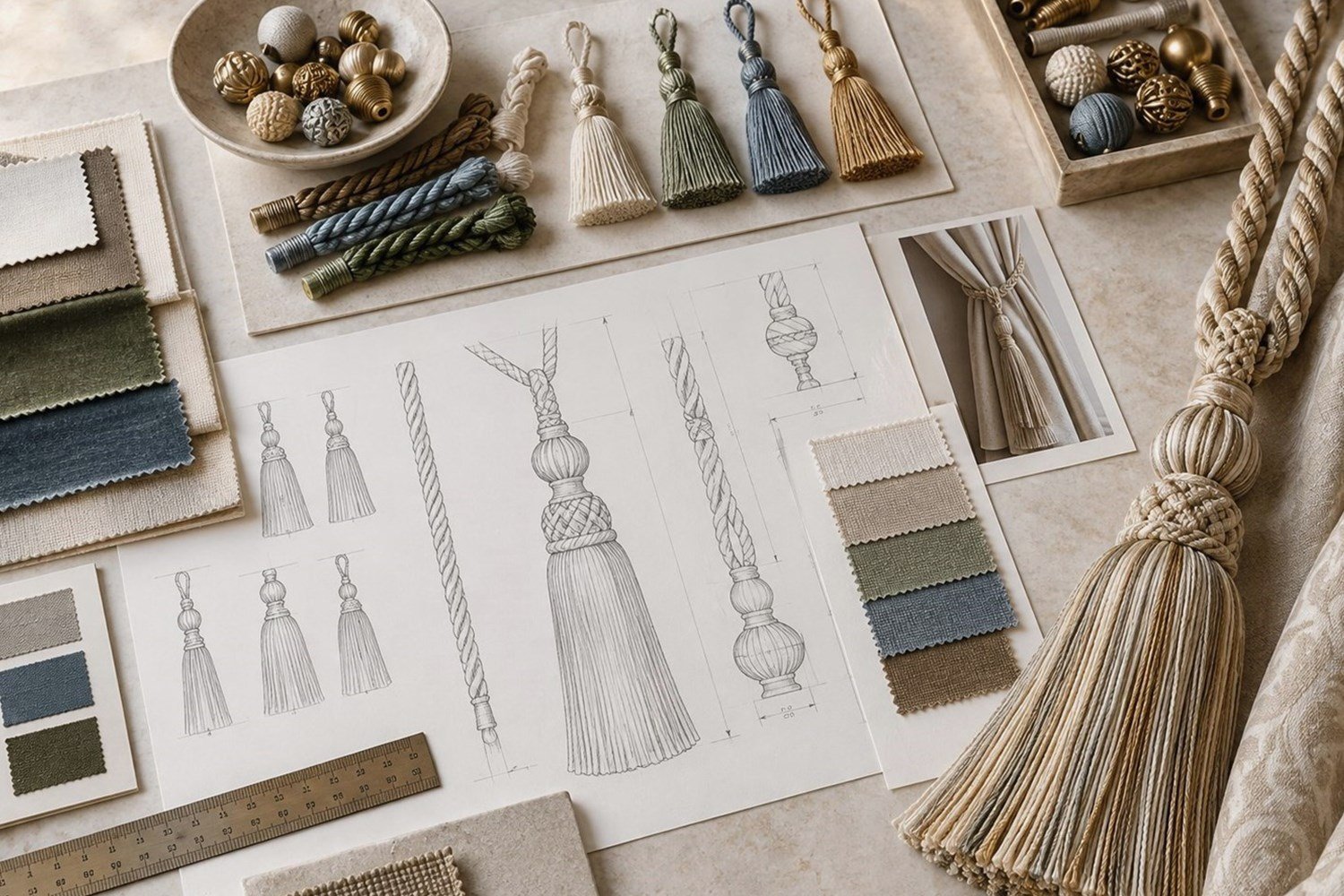
For custom B2B sourcing, choose the tassel by defining the product specification first and comparing samples against that specification. A more complex or fuller sample is not necessarily the better one; the right sample is the one that fits the required application, appearance, construction, and connection.
Minimum information for an initial inquiry
- End application and tassel type
- Reference image, drawing, or physical sample if available
- Overall, skirt, head, cord, and loop dimensions
- Material or desired appearance, color reference, and fullness
- Construction, beads, decorative components, attachment, and packaging
- Estimated quantity context and any special project requirements
Final Tassel Selection Checklist
- Application, function, size, skirt, head, cord, loop, material, and color confirmed
- Construction, fullness, attachment, components, quality requirements, and reference sample reviewed
- Packaging requirement confirmed where applicable
For custom development, see Custom Tassels, Graduation Tassels, Bookmark Tassels, Key Tassels, and Decorative Tassels.