Main Content
What Is the Main Purpose of a Tassel?

The main purpose of a tassel is to provide a decorative finishing detail, although its role changes with the product that carries it. A tassel can create texture, color, contrast, and movement. In a complete accessory, it may also support a functional purpose, signal a ceremonial context, or help visually differentiate a product group.
Decoration
Tassels add a deliberate ending or focal point. Their hanging strands introduce softness and movement to cushions, garments, pouches, gifts, and textile trims. Color, sheen, fullness, and the relationship between head, cord, and skirt define the visual effect.
Functional Decoration
Some tassels accompany a usable object without being the object’s primary mechanism. A tassel on a curtain tieback is decorative while the tieback gathers the curtain. A tassel on a pull, cord, or zipper can make a small attachment easier to notice while supplying visual detail.
Ceremonial and Identifying Use
Graduation tassels are part of academic regalia. Elsewhere, color and coordinated decorative details can help differentiate a collection, a program, or a product variation. Not every tassel performs every role; the intended application determines which function matters.
| Purpose | How Tassels Are Used | Examples |
|---|---|---|
| Decoration | Finishes and accents a product | Cushions, bags, gifts |
| Functional decoration | Accompanies a practical item | Tiebacks, pulls, cords |
| Ceremony | Signals a formal occasion | Graduation caps |
| Identification | Coordinates colors or product identity | Academic and branded collections |
What Are Tassels Used For in Home Decor?
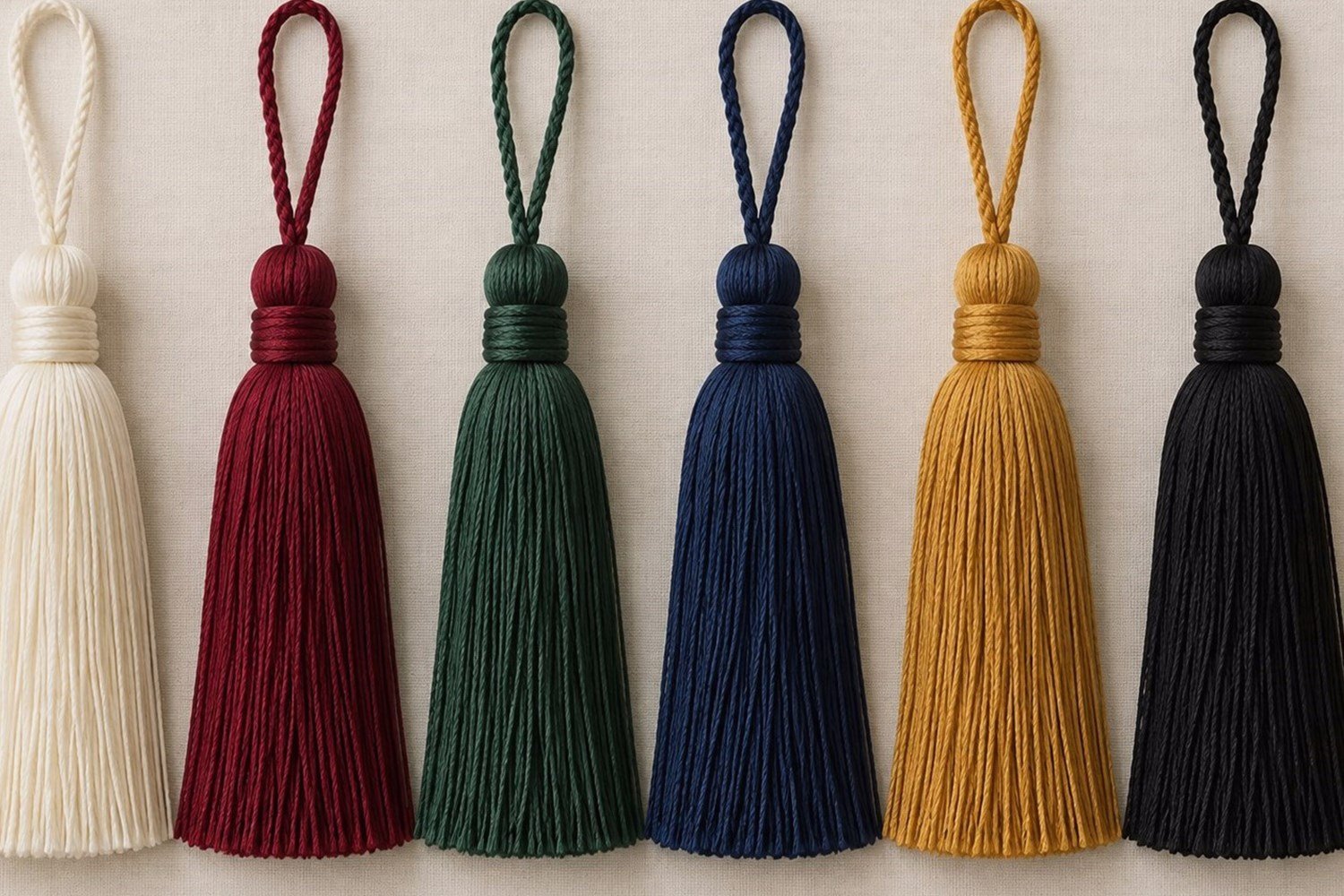
In home decor, tassels add texture, movement, color, and visual finishing to textiles, furniture, window treatments, and decorative accessories. They can be placed at cushion corners, on throw edges, on cords, keys, pulls, and selected interior ornaments. The intended interior scale and surrounding materials guide the appropriate construction.
Tassels belong to the broader family of decorative textile trimmings called passementerie, which also includes cords, braids, fringes, and related ornaments. In a modern product, this term is useful for understanding how tassels coordinate with other decorative trimming elements rather than as a historical style claim.
| Product | How Tassels Are Used | Important Selection Factors |
|---|---|---|
| Cushions | Corner decoration | Size, softness, color |
| Throws | Edge or corner finishing | Weight, movement, material |
| Furniture | Decorative accent | Scale, style, attachment |
| Keys | Hanging decoration | Loop, size, visual detail |
| Lighting | Pull or hanging detail | Length, weight, attachment |
What Are Tassels Used For on Curtains?
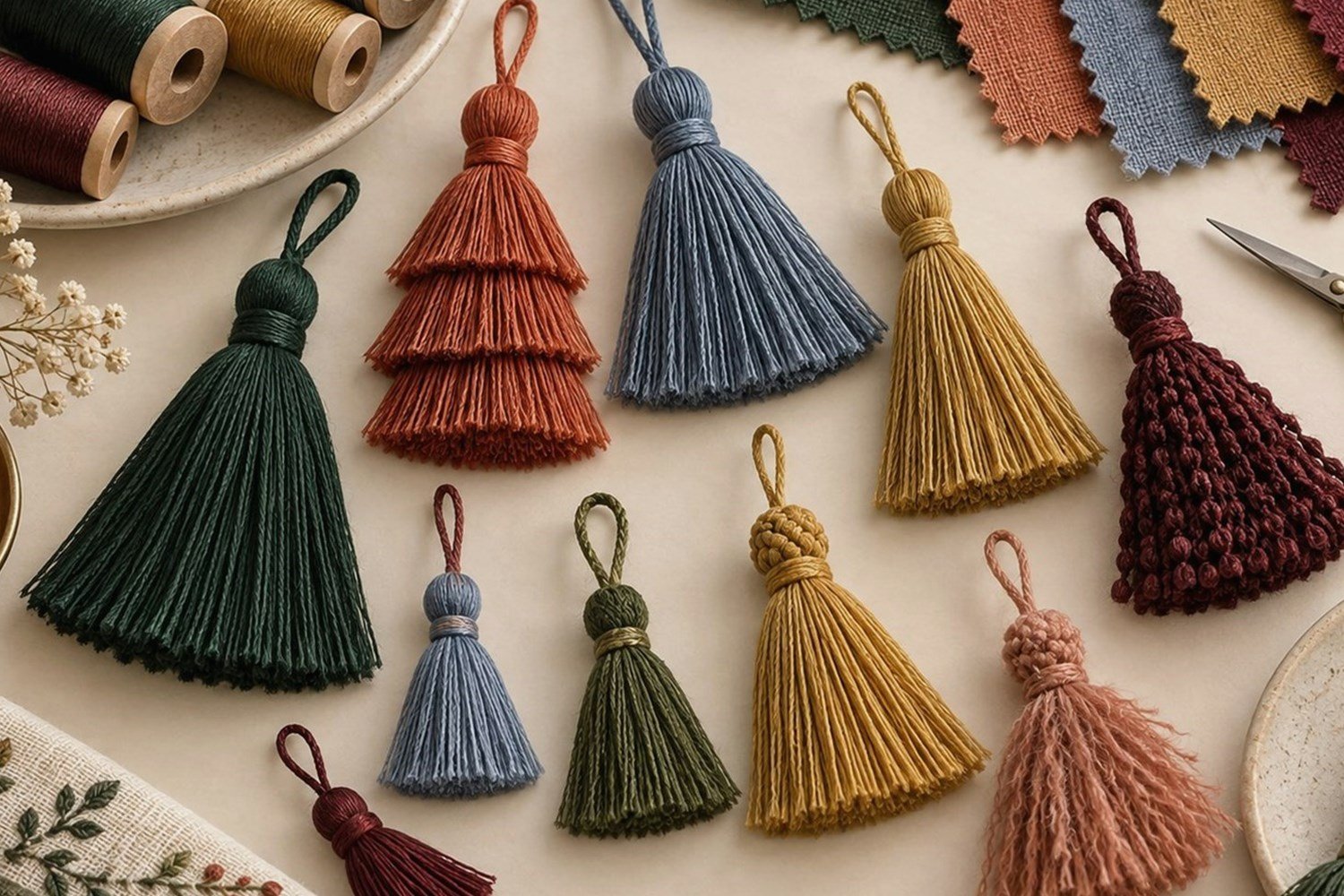
On curtains, tassels are used as decorative elements, cord-and-tassel accessories, and components of complete curtain tiebacks. They can add visible detail to drapery, coordinate accessory colors with fabric, and form a focal point when curtains are gathered at the side of a window.
A curtain tassel is an individual decorative tassel associated with drapery. A curtain tassel tieback is a complete flexible accessory that may incorporate one or more tassels with a cord or other connecting structure. A single decorative tassel should not be assumed to hold every curtain; the complete tieback and the curtain’s weight and volume determine the practical arrangement.
| Curtain Accessory | Primary Role | Typical Structure |
|---|---|---|
| Curtain tassel | Decorative detail | Head, skirt, loop, or cord |
| Curtain tassel tieback | Gathers curtains with decoration | Cord plus tassel components |
| Rope tieback | Flexible gathering accessory | Rope or cord-based form |
| Curtain holdback | Fixed support point | Wall-mounted hardware |
For a dedicated commercial category, see Curtain Tassel Tiebacks. Key considerations include tassel scale, cord and overall tieback length, fullness, material, color, decorative style, and how the finished accessory relates to the curtain.
What Are Tassels Used For on Graduation Caps?
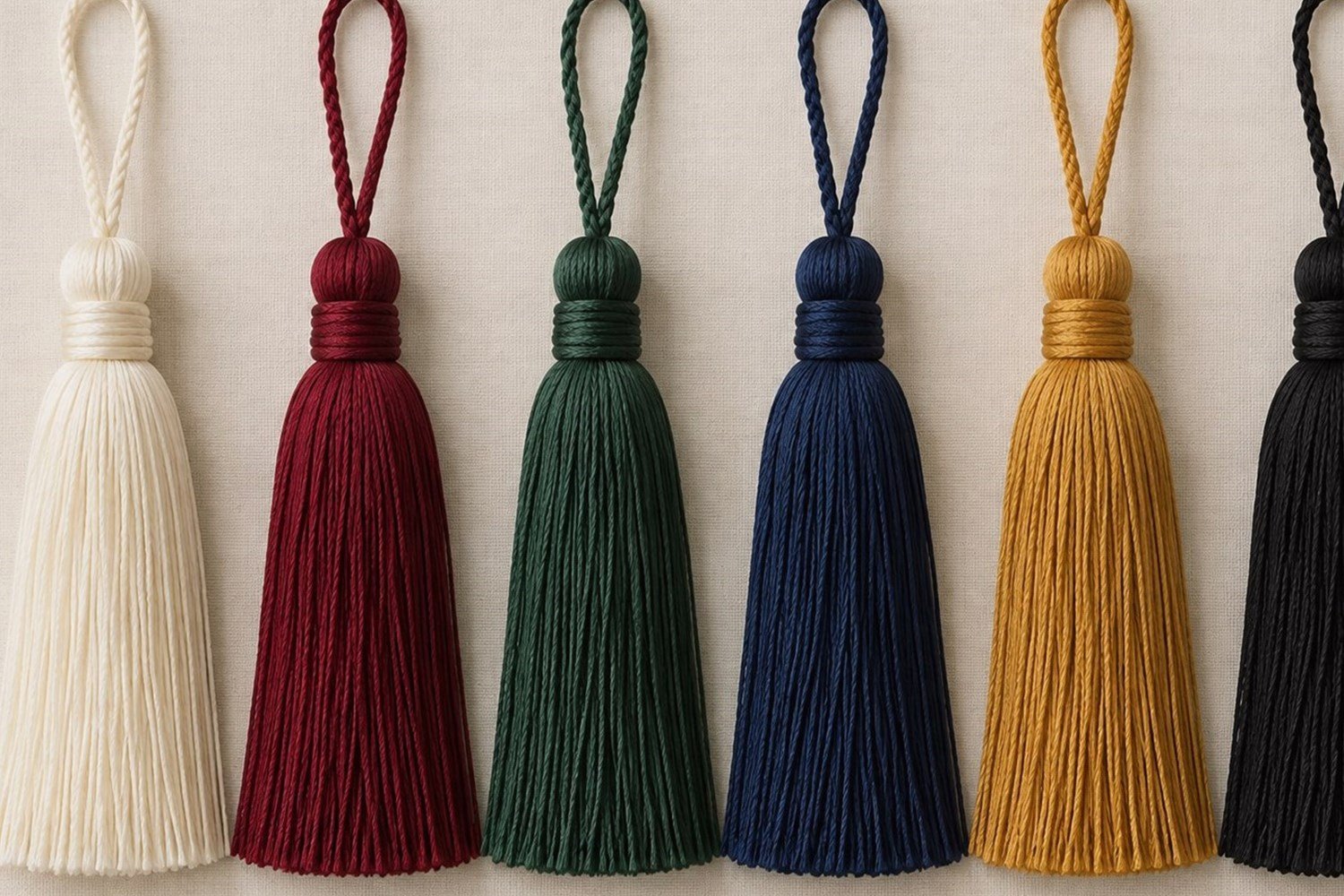
Graduation tassels are attached to academic caps as ceremonial elements associated with commencement and academic regalia. They are a visible part of the cap’s finished appearance and may coordinate with school, program, discipline, or ceremony requirements.
In many United States graduation ceremonies, moving the tassel from one side of the mortarboard to the other marks the transition from candidate to graduate. Practices vary by institution and event. Tassel placement, color direction, charms, and packaging should therefore be confirmed against the intended academic requirements before an order is finalized.
- Ceremonial symbol and academic-dress component
- Color identification or school and program coordination
- Commemorative graduation keepsake
- Visible finishing detail for the mortarboard cap
Explore the dedicated Graduation Tassels page for application-specific product information.
What Are Tassels Used For on Bookmarks?
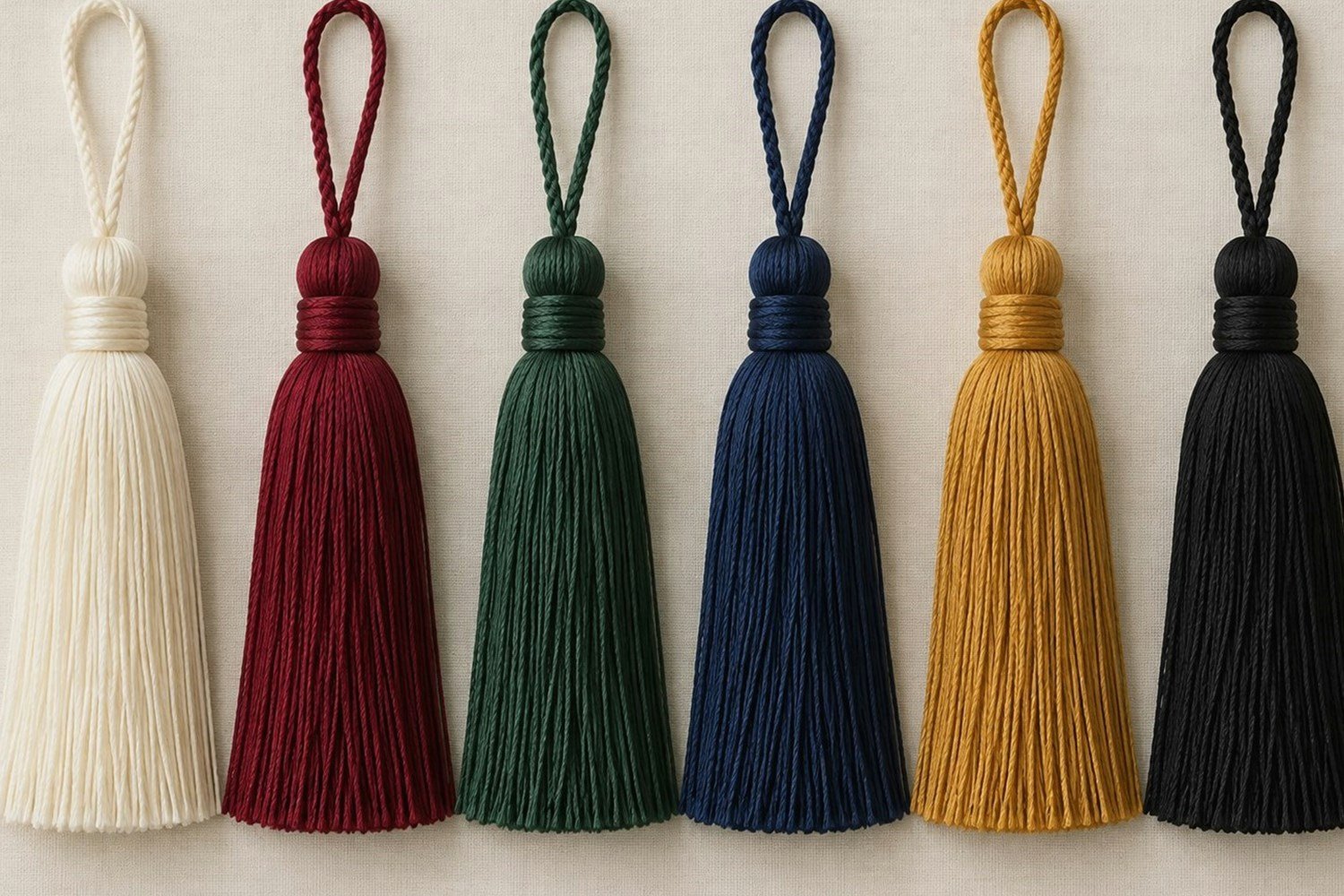
Bookmark tassels provide a decorative finishing element at the end of a bookmark and make the bookmark easier to notice when it extends from a closed book. Their role is mainly decorative and identifying, while their compact size and light weight suit books, journals, stationery, and gift products.
Common uses include books, Bibles and religious books, journals, premium stationery, gift books, promotional items, and souvenir products. A bookmark tassel is generally lighter and narrower than a furnishing or curtain tassel. Buyers should consider overall length, strand fullness, attachment loop or cord, weight, color, material, and any caps or bead details in relation to the bookmark itself.
See Bookmark Tassels for the related product category.
Why Are Tassels Used on Keys?
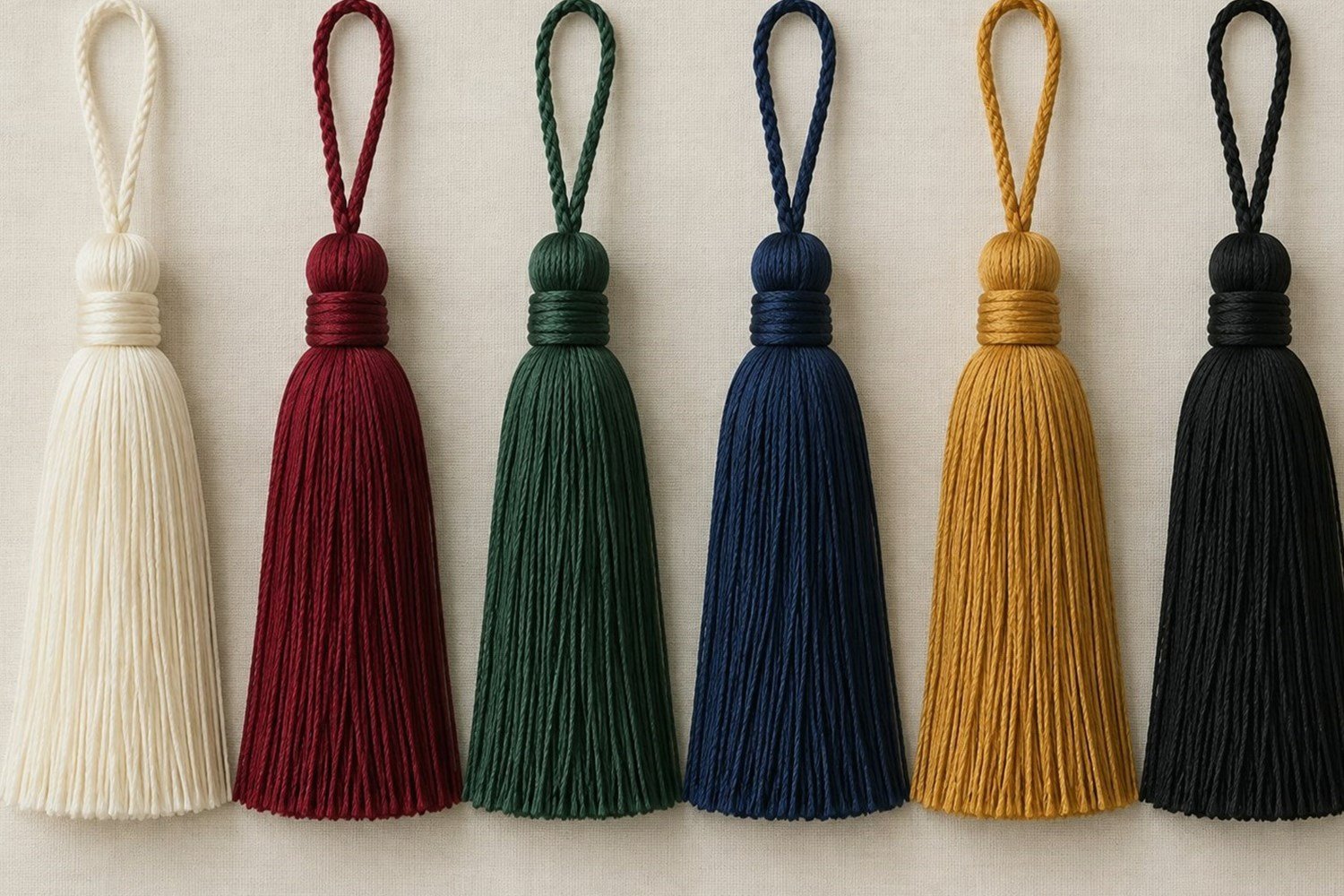
Tassels are used on keys as decorative ornaments that can also make a small key easier to notice and visually connect it with furniture or interior style. They are associated with cabinet keys, wardrobe keys, furniture keys, decorative hardware, and key accessories.
A key tassel can support color coordination and product identification without turning the key into a keychain. The attachment method, loop size, tassel length, head size, weight, and visible components should suit the key and its surrounding hardware. A keychain tassel is usually designed around a separate key-ring or accessory construction, while a furniture key tassel is often selected as an interior detail.
Read more about Key Tassels and their application-specific structure.
What Are Tassels Used For in Clothing and Fashion?
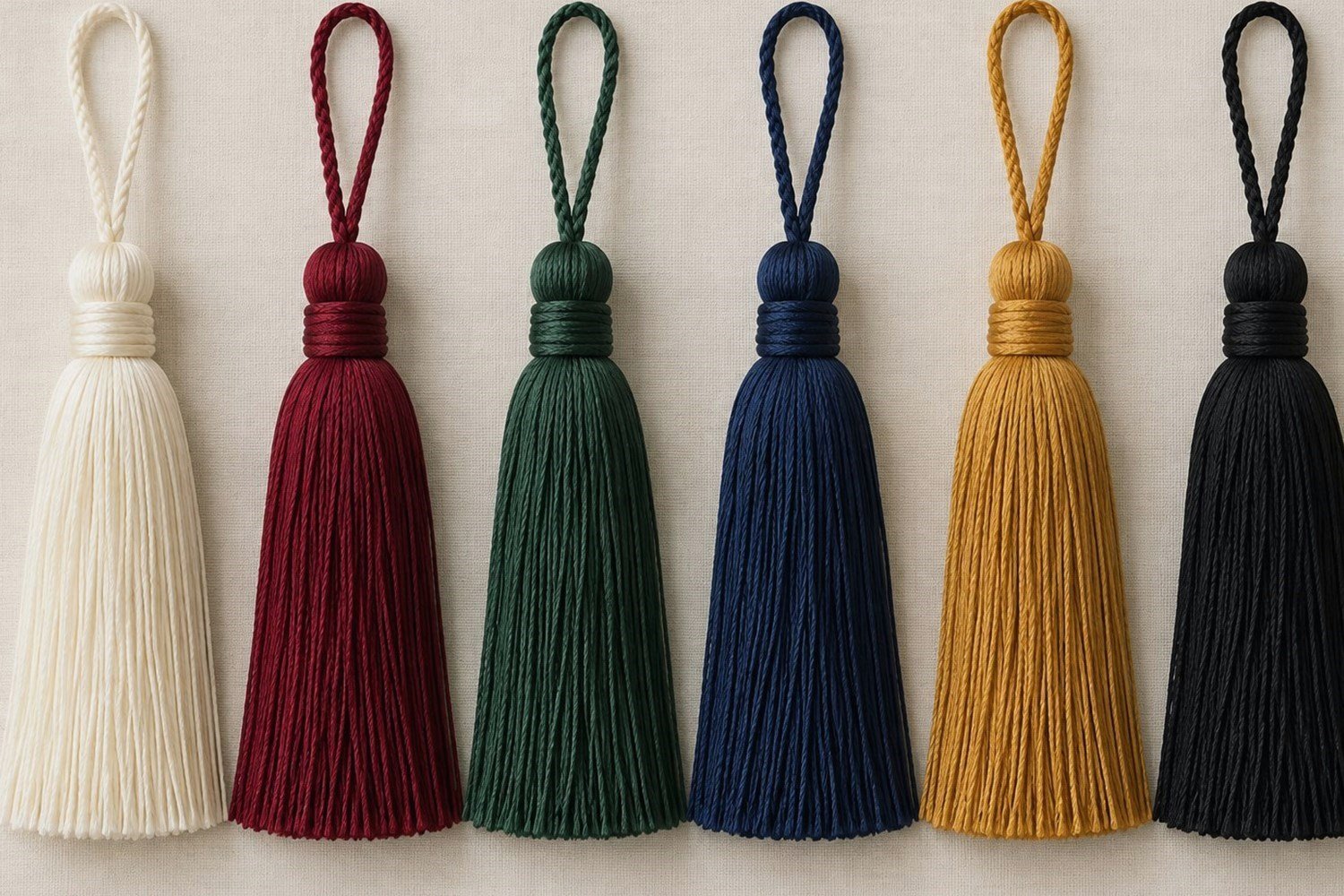
In clothing and fashion, tassels are decorative accents that add movement, texture, color, contrast, and focal detail. They may appear on garment hems, drawstrings, belts, scarves, shoes, jewelry, handbags, clutches, and accessory trims.
Fashion use changes the balance between visual detail and attachment. A small jewelry tassel and a larger textile tassel can both be decorative, but they require different weight, movement, materials, and connection methods. A fashion design may use thread or yarn for softness, cord for defined structure, leather or faux leather for strip-based detail, or mixed materials where the design calls for a more complex appearance.
| Fashion Product | Tassel Role | Important Factors |
|---|---|---|
| Garment | Hem or drawstring detail | Movement, attachment, weight |
| Jewelry | Fine hanging ornament | Scale, material, components |
| Bag | Decorative focal point | Surface, size, connection |
| Scarf or belt | Finishing detail | Length, softness, color |
What Are Tassels Used For on Bags and Accessories?
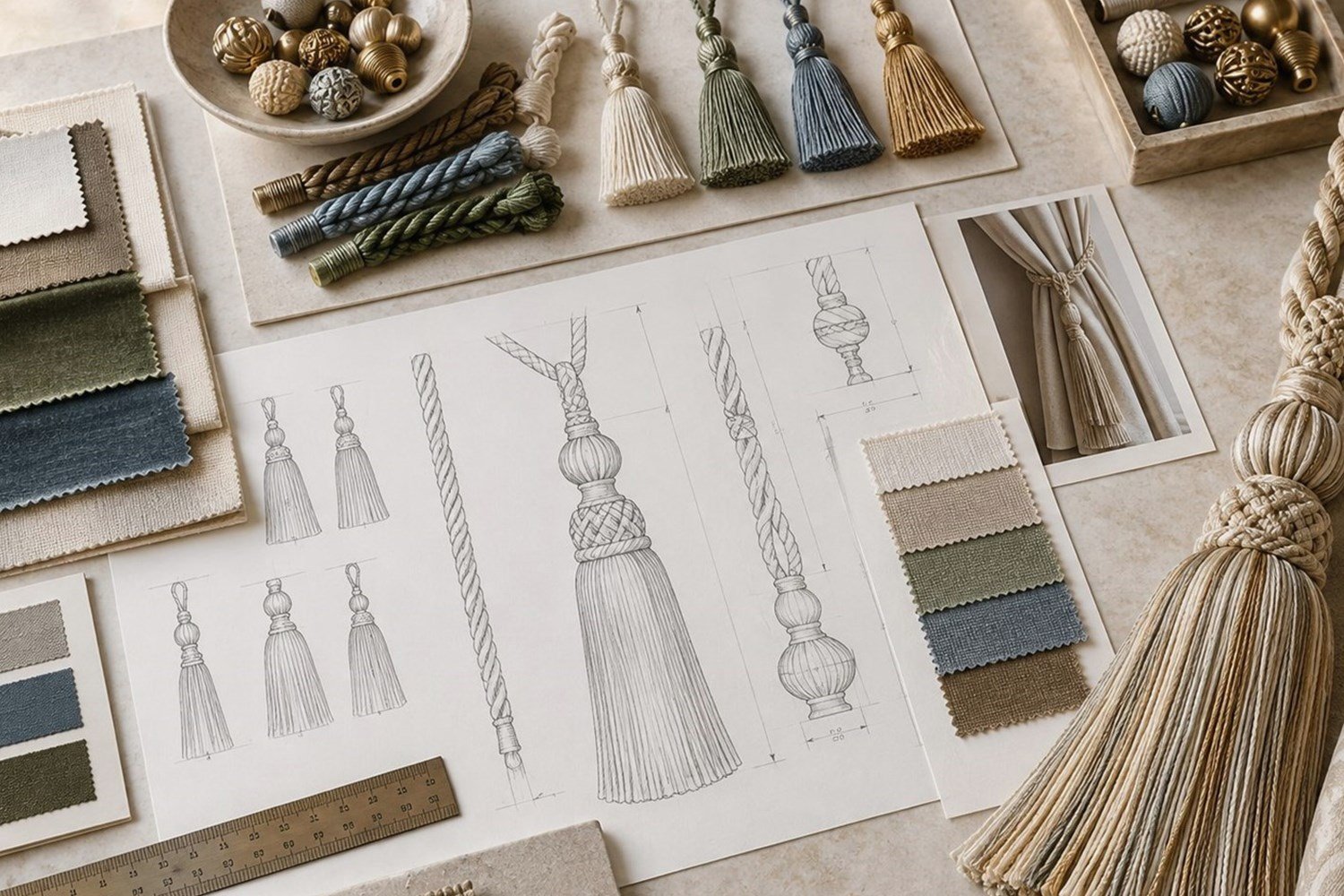
On bags and accessories, tassels are used as zipper pulls, bag charms, decorative attachments, handle details, pouch accents, and key accessories. This bag-specific role focuses on how the tassel sits, moves, and connects to the finished product.
A bag tassel may use thread or yarn, cord, leather or faux leather, mixed materials, or a beaded construction according to the approved design. Available materials and combinations depend on the actual product specification. Review attachment security, size, weight, movement, color, material, surface finish, and compatibility with the bag design before confirming a sample.
- Check the attachment point and visible connection.
- Match the tassel’s scale and movement to the bag.
- Confirm color and material direction against the finished surface.
- Specify beads, caps, charms, or mixed components when required.
What Are Tassels Used For on Cushions and Soft Furnishings?
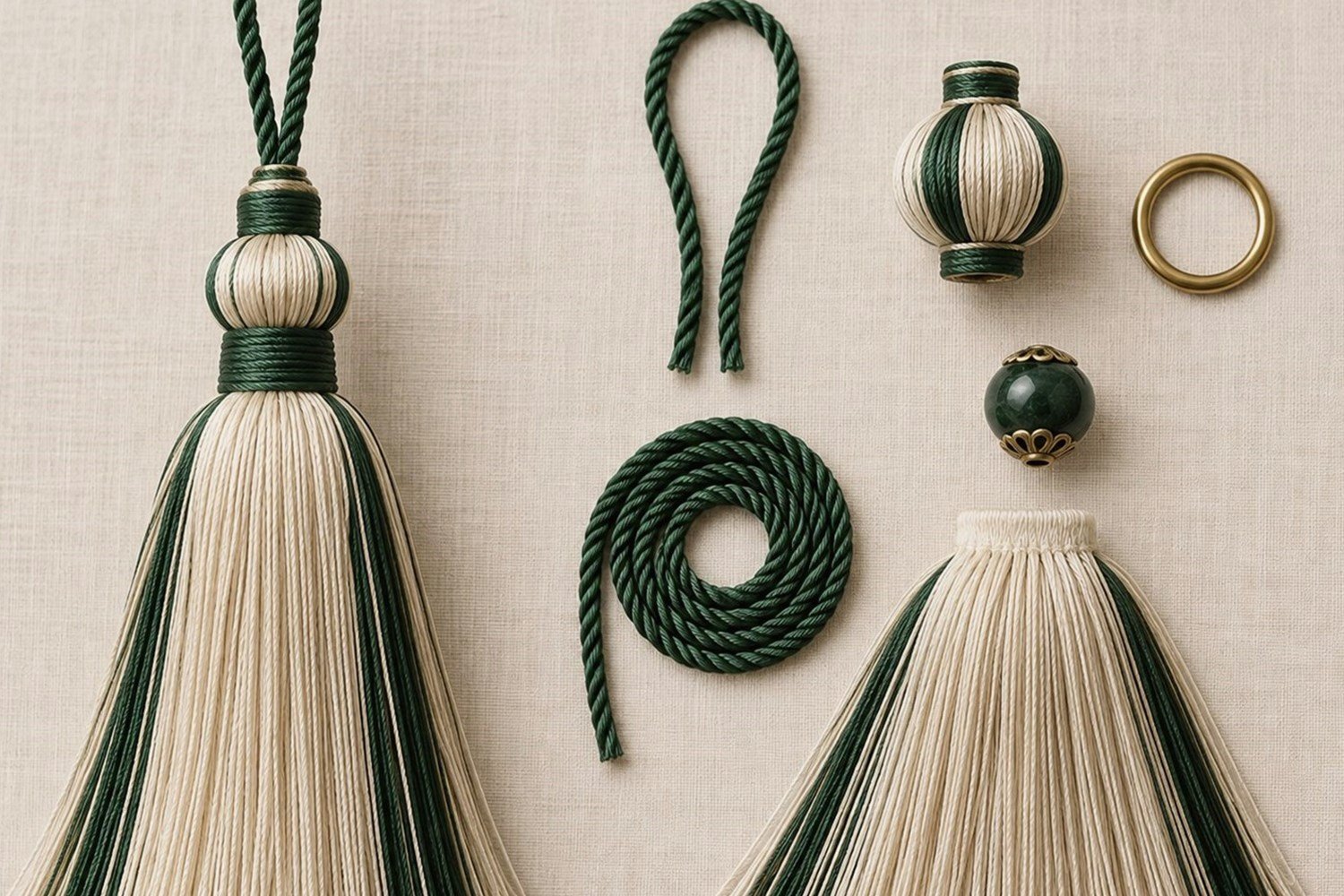
On cushions and soft furnishings, tassels are placed at corners, edges, bedding details, and selected textile points to add movement, texture, color, and decorative finishing. The tassel’s scale should correspond with the product so that it reads as an intentional accent rather than an unrelated component.
| Product | Tassel Requirement | Priority |
|---|---|---|
| Small cushion | Compact, soft corner detail | Proportion and color |
| Large cushion | More visible corner form | Fullness and scale |
| Throw | Edge or corner movement | Weight and material |
| Bedding | Coordinated decorative detail | Softness and attachment |
Size, weight, softness, material, color, attachment, and desired fullness all influence the result. A furnishing tassel is usually assessed with the textile, not in isolation.
What Are Tassels Used For in Furniture and Interior Accessories?

Beyond soft furnishings, tassels are used with cabinet and wardrobe keys, drawer pulls, decorative cords, lighting pulls, handles, and interior ornaments. They can visually connect textile and hard-surface elements within an interior collection by repeating color, texture, or decorative style.
Interior accessories need selection by context. A tassel should relate to the furniture scale, attachment point, surrounding finish, and intended visual style. Key or drawer applications typically need a loop or connection that fits the hardware; lighting and cord applications require the overall arrangement to be considered as one product. The tassel itself remains mainly decorative while the larger accessory may provide the practical function.
What Are Tassels Used For in Gifts and Packaging?

In gifts and packaging, tassels are decorative finishing elements attached to boxes, bags, pouches, wedding favors, souvenir products, promotional gifts, and branded presentations. They can introduce brand or seasonal colors, tactile texture, and a differentiated visual detail without changing the product’s core purpose.
For B2B development, define attachment, tassel size, packaging dimensions, color consistency, color-matching direction, quantity context, and the desired product position. A tassel does not automatically make packaging premium; its value depends on how its material, proportion, and finishing relate to the full package design.
What Are Beaded Tassels Used For?

Beaded tassels are used where a tassel needs additional visible decorative detail through incorporated beads. They can be applied to home decor, curtains, fashion accessories, gifts, key accessories, and decorative textile products. The beads may sit at the head, on a cord, between components, or within the hanging design.
A beaded tassel can also belong to another application category: it may be a beaded curtain tassel, a beaded key tassel, or a beaded decorative accessory. Bead material, size, shape, color, arrangement, and position should be specified as part of the complete design. Visit Beaded Tassels for a commercial category overview.
Are Tassels Decorative or Functional?

Tassels can be decorative, functional-decorative, ceremonial, symbolic, or identifying depending on the application. The physical tassel is often primarily ornamental, while the larger product incorporating it may perform a practical task. This distinction is especially important for curtain accessories and pulls.
| Role | Description | Examples |
|---|---|---|
| Decorative | Visual finishing and texture | Cushions, bags, gifts |
| Functional-decorative | Decorative component of a practical accessory | Tiebacks, pulls |
| Ceremonial | Part of an established formal use | Graduation caps |
| Identification | Coordinates a color, group, or design | Academic and product applications |
How Does Tassel Design Change by Application?
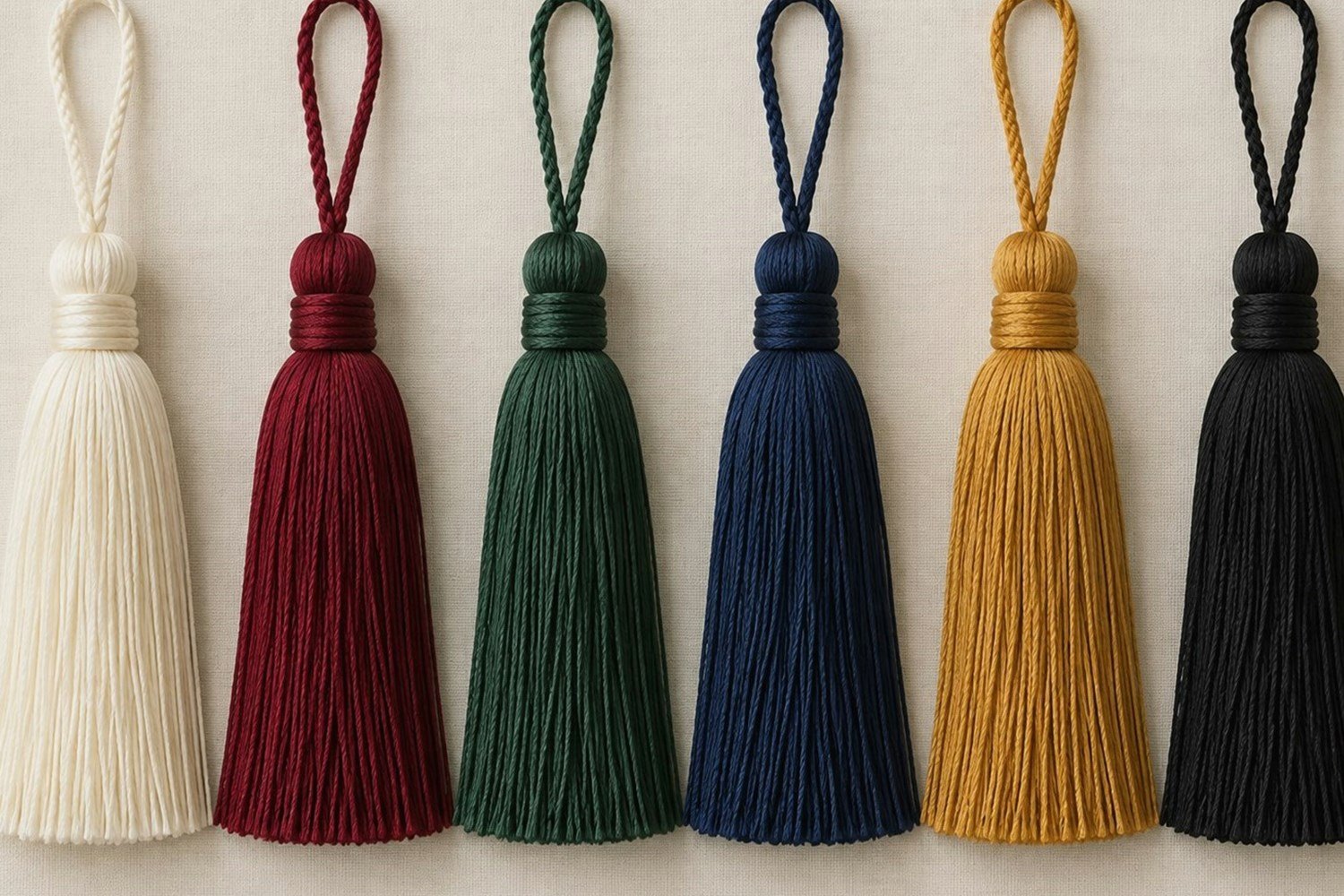
Tassels should not be treated as one standardized product because their design changes with the end application. Overall length, skirt length, head size, cord length, loop size, weight, fullness, material, color, attachment method, and decorative components all need to match the finished product.
| Application | Typical Scale | Important Structure | Key Factors |
|---|---|---|---|
| Graduation | Ceremonial cap scale | Loop, cord, skirt | Institutional requirements |
| Bookmark | Small and light | Fine loop or cord | Length and book fit |
| Key | Compact hanging form | Attachment suited to key | Loop and visual detail |
| Curtain | Larger decorative scale | Head, skirt, cord | Volume and coordination |
| Cushion | Product-dependent | Soft corner attachment | Proportion and softness |
| Fashion or bag | Varied | Visible connection | Weight and movement |
| Gift packaging | Compact presentation detail | Loop or tied attachment | Package proportion |
A bookmark tassel usually needs a lighter structure than a furnishing tassel. A curtain tassel may need more visual volume. A key tassel needs a suitable attachment, while a graduation tassel must work with the intended cap and ceremony direction.
How to Choose Tassels for Different Products

Choose a tassel based first on the end product, then determine the appropriate construction, size, material, color, attachment, and decorative details. This approach prevents a broad category name from substituting for an application-specific product brief.
- Define the end application.
- Determine whether the tassel is decorative, functional-decorative, ceremonial, or identifying.
- Choose the appropriate scale and overall proportion.
- Confirm the attachment method.
- Select material and visual texture.
- Choose color or color combination.
- Define required fullness and movement.
- Add beads or other components where needed.
- Confirm compatibility with the finished product.
- Approve the intended specification or sample.
Questions to Ask Before Choosing a Tassel
- What product will the tassel attach to?
- What size, visual style, and color direction are required?
- Does it need a cord, loop, beads, or other components?
- How must it attach and move on the finished product?
- Is there a reference sample, image, or drawing?
What Should B2B Buyers Specify for Application-Specific Tassels?
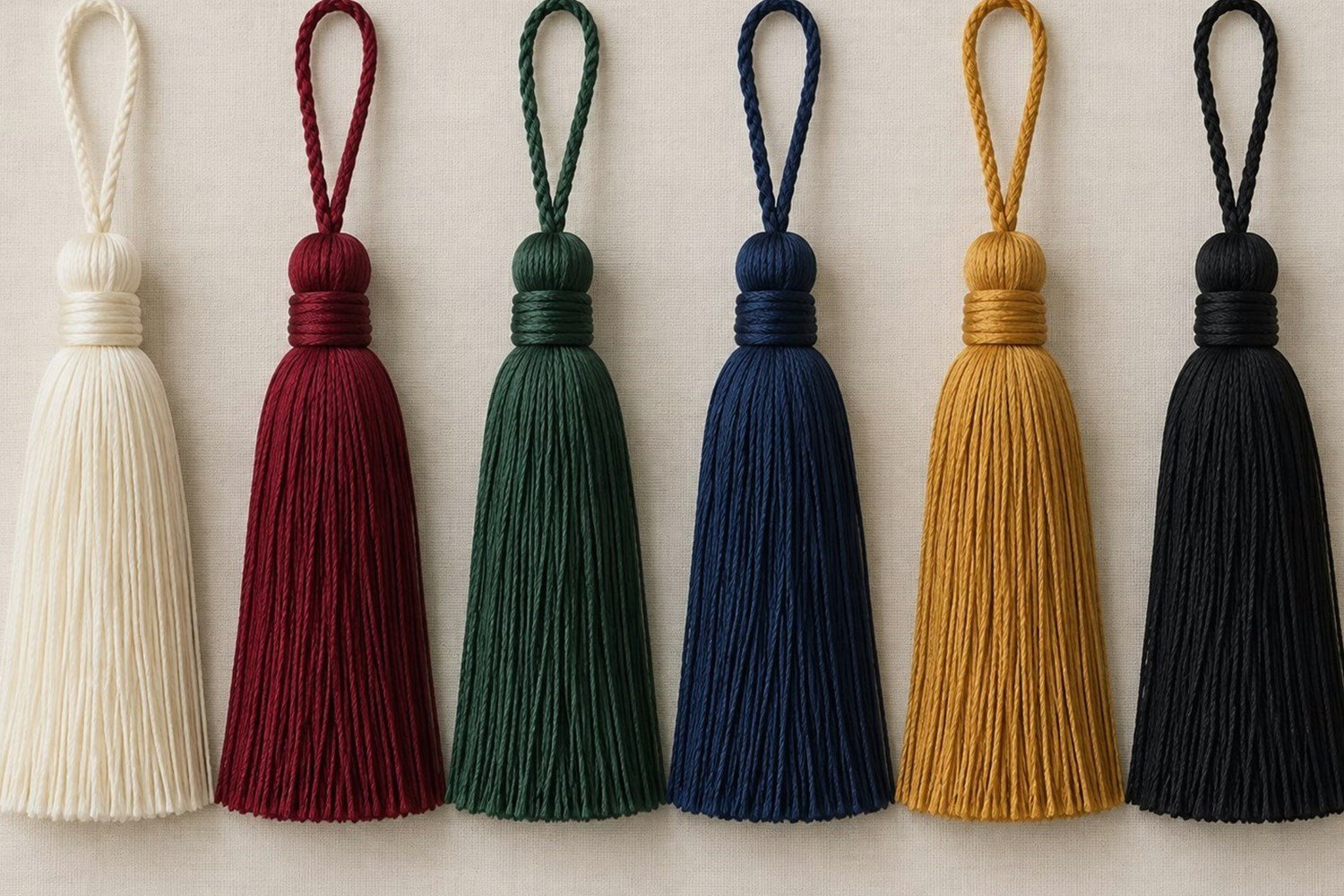
B2B buyers should state the intended application because it explains why specific dimensions, structures, materials, and attachment details matter. A clear application brief helps turn a visual reference into a more useful specification for sample review and product comparison.
| Information | Why It Matters |
|---|---|
| Application and tassel type | Helps define an appropriate structure |
| Reference sample or image | Communicates the intended visual direction |
| Overall, skirt, head, cord, and loop dimensions | Defines scale and proportion |
| Material and color reference | Guides appearance and texture |
| Components and attachment | Defines design complexity and connection |
| Quantity context and packaging | Provides sourcing and presentation information |
Available customization depends on the actual design and should be confirmed during specification review or sampling. A useful inquiry may also state single- or multi-color direction, decorative components, packaging requirements, and special project considerations without assuming an MOQ, capacity, lead time, or tolerance.