Main Content
What Are Handmade Tassels?
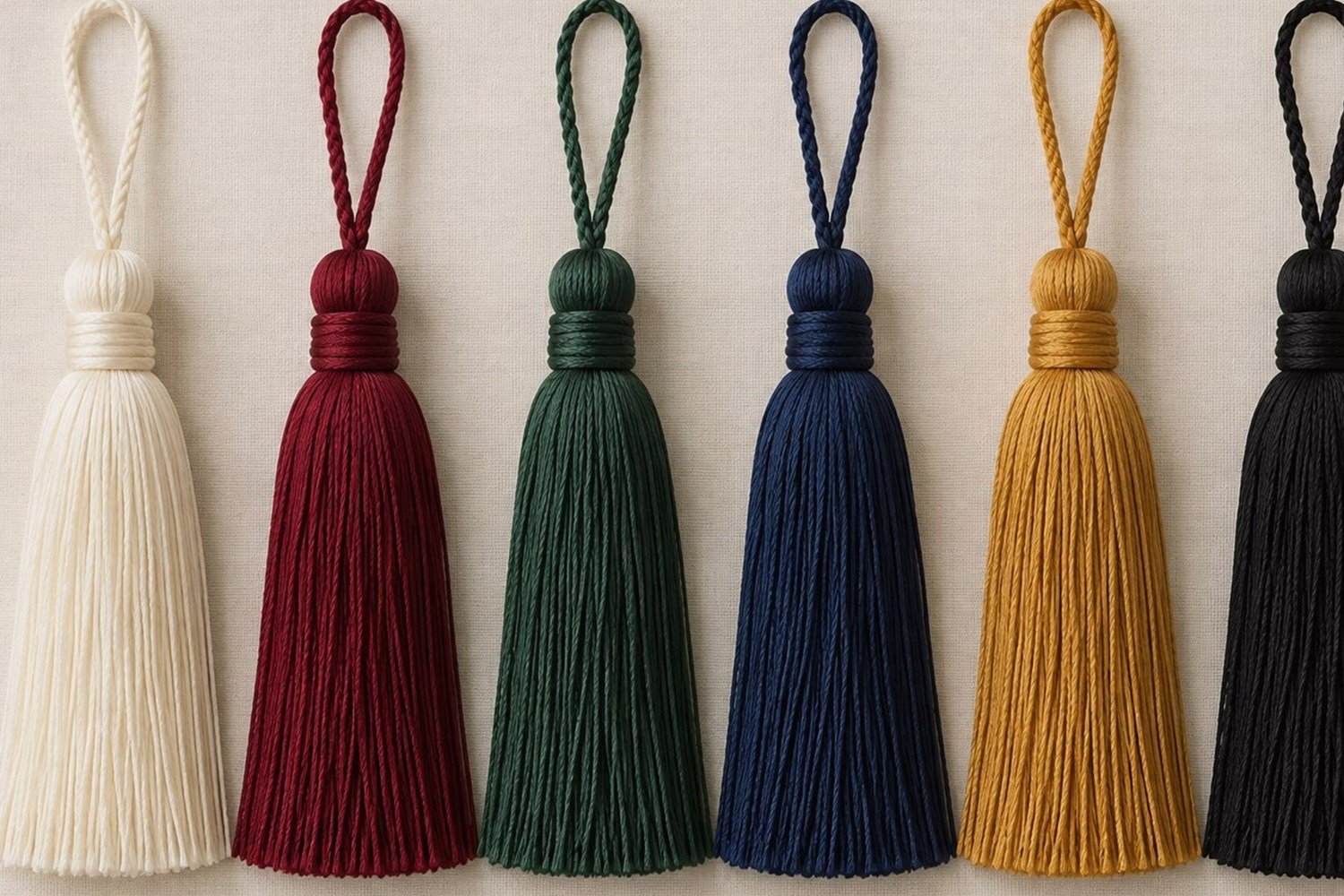
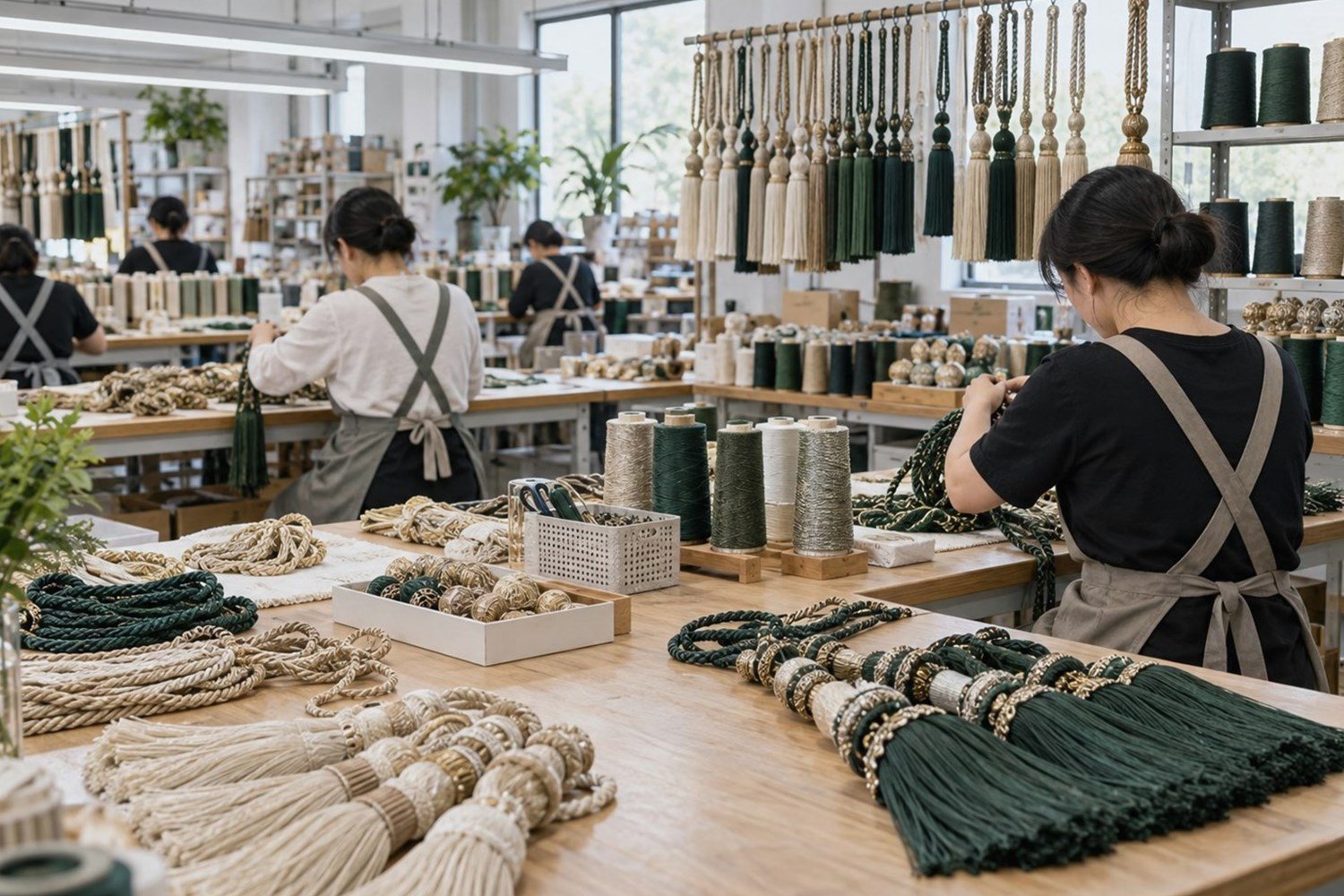
Handmade tassels are tassels in which manual work forms a substantial part of forming, assembling, decorating, or finishing the product. Depending on the design, manual work may include winding, tying, wrapping, knotting, assembly, beading, component placement, trimming, or finishing. A handmade label does not mean yarn was spun by hand, every component was made manually, or no machine or tool appeared anywhere in the supply chain.
| Manual process | What it can affect |
|---|---|
| Winding | Body formation and visual volume |
| Tying | Head, neck, or knot structure |
| Assembly | Combination of tassel components |
| Beading | Decorative arrangement and placement |
| Trimming | Skirt outline and finish |
| Finishing | Final appearance and presentation |
Handcrafted is a broad description of substantial manual work. Hand-tied describes a particular hand-made connection or knot. Neither term automatically confirms every production stage. Buyers should ask which stages are manual when the production method matters to the product direction.
What Are Machine-Made Tassels?
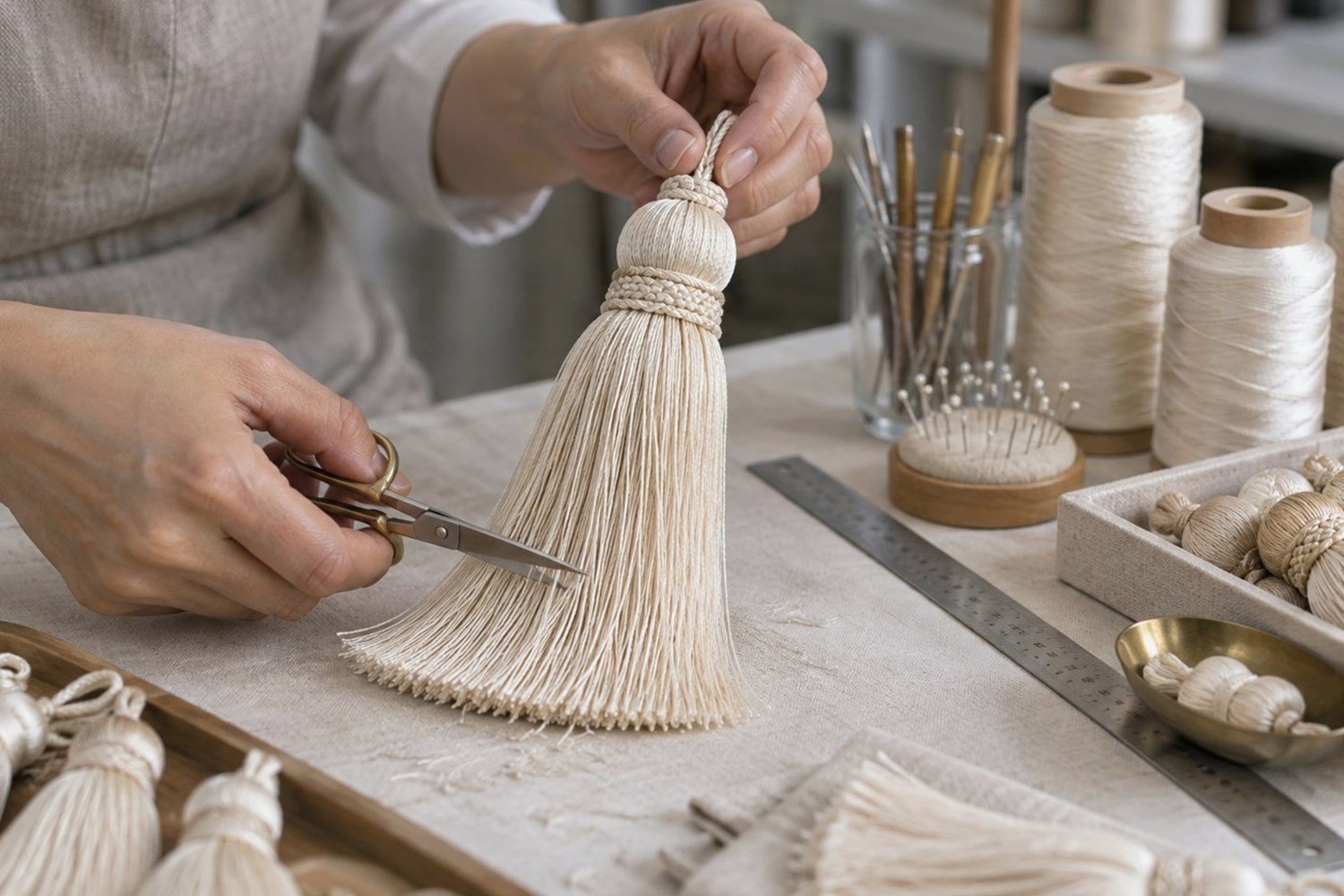
Machine-made tassels are tassels in which machinery performs important repeatable production operations. Depending on the product, machinery may assist with yarn preparation, winding, cord production, fringe formation, cutting, repeated forming, or other standardized operations. Actual equipment and methods vary by tassel type, material, construction, and supplier.
| Machine-assisted operation | Possible purpose |
|---|---|
| Yarn preparation | Repeated material preparation |
| Cord production | Consistent cord construction |
| Winding | Repeated strand formation |
| Cutting | Repeated dimension control |
| Fringe formation | Repeated decorative trim construction |
Machine-made does not mean no people are involved, no manual inspection occurs, no hand-finishing is used, or the product is automatically lower quality. A machine-assisted tassel can still need manual assembly, component placement, trimming, and final review.
What Are Hybrid-Production Tassels?

Hybrid-production tassels combine machine-assisted operations with manual assembly, decoration, finishing, or inspection. This is common in decorative products because some operations are repeatable while beads, knots, charms, layered parts, and visual finishing may need flexible handling. Hybrid does not identify one fixed factory sequence; it describes a combined approach selected for the product.
Example workflow only: machine-assisted yarn preparation → machine-assisted cord production → manual assembly → manual bead placement → manual trimming → manual quality inspection. Actual processes vary by product.
| Production stage | Machine-assisted option | Manual option |
|---|---|---|
| Material preparation | Prepare repeated yarn or trim | Select and combine materials |
| Cord | Produce repeated cord | Attach or arrange cord |
| Body formation | Repeat forming operations | Shape or wrap product-specific parts |
| Assembly | Use prepared components | Combine flexible components |
| Decoration | Prepare standard elements | Place beads, knots, or charms |
| Trimming and inspection | Support repeated reference points | Review final appearance |
Handmade vs Hand-Finished Tassels
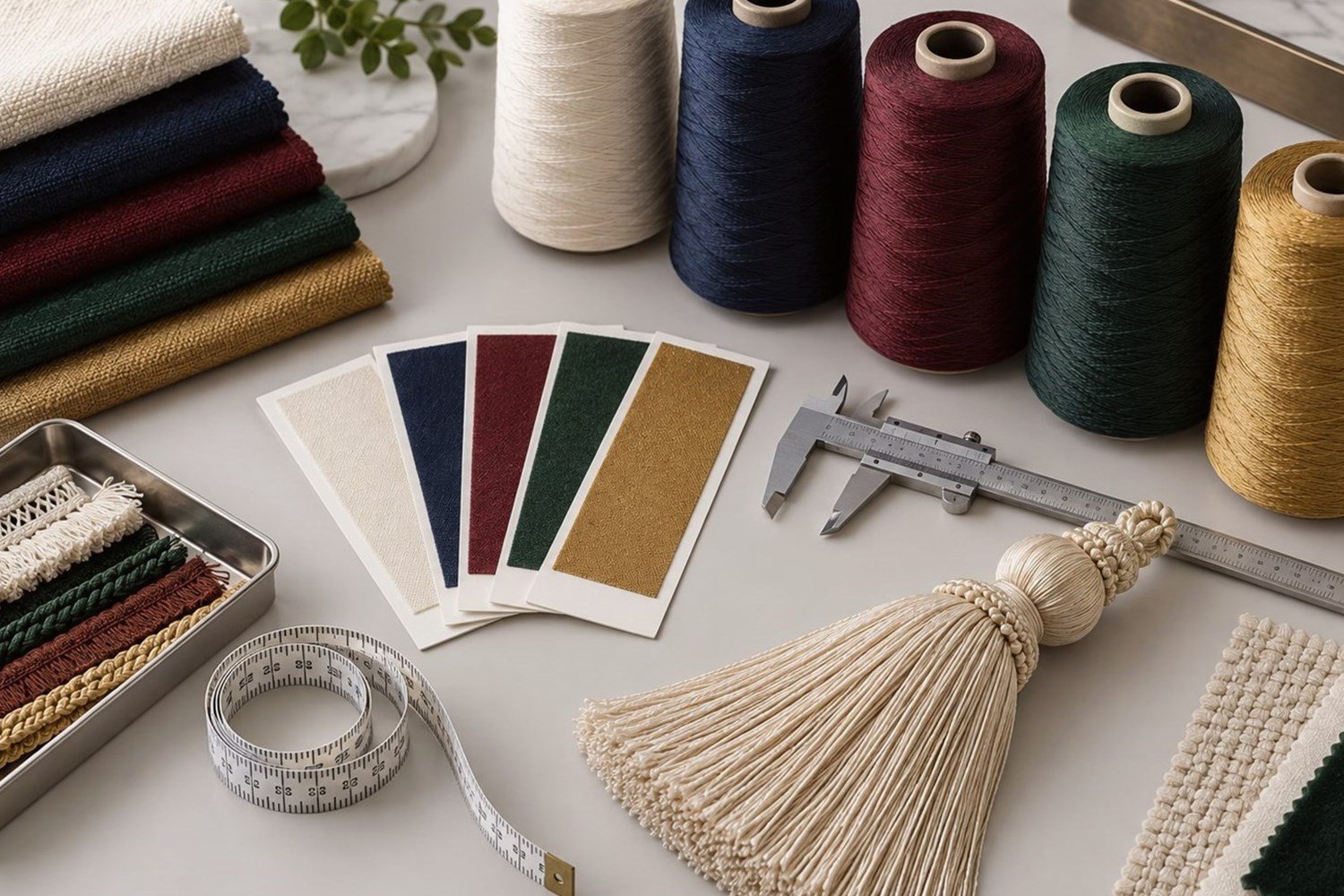
Handmade and hand-finished are related descriptions, but they do not mean the same thing. Handmade indicates substantial manual involvement in construction. Hand-finished means that final operations may be completed manually after machine-produced yarn, cord, trim, or components have been prepared. Hand-finishing can include strand arrangement, trimming, attaching decorative parts, removing loose threads, and final inspection.
| Term | What it usually indicates | What it does not automatically mean |
|---|---|---|
| Handmade | Substantial manual construction | Every input was made by hand |
| Hand-finished | Manual final operations | Fully handmade construction |
| Hand-tied | A manually tied element | All stages are manual |
| Machine-assisted | Machinery supports key operations | No manual assembly or inspection |
Appearance and Consistency
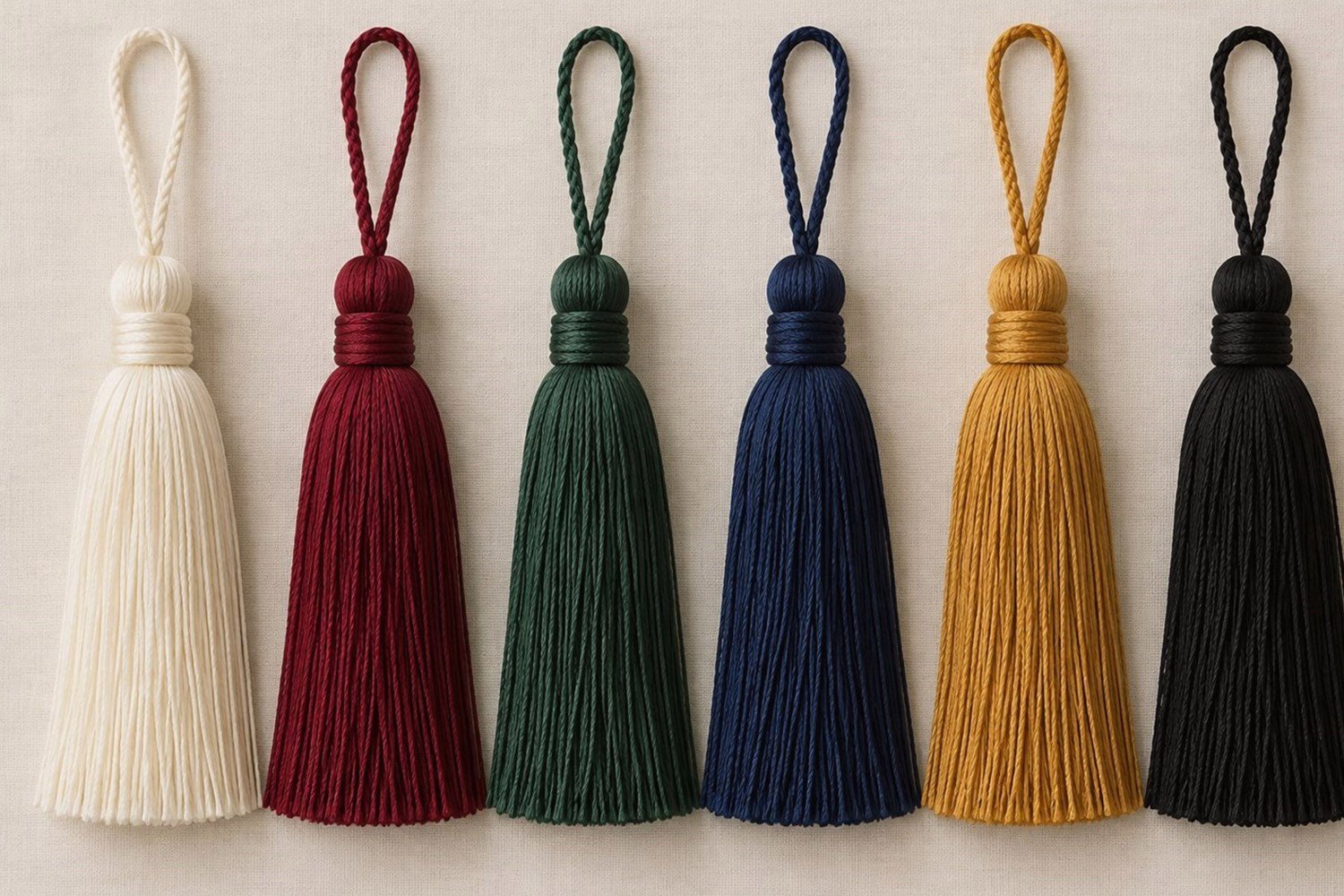
Production method can influence appearance and repeatability, but material, design, setup, worker skill, and inspection are equally important. Handmade tassels may show small differences in strand arrangement, wrapping, or decorative placement. Machine-assisted tassels may show more repeated dimensions, construction, and shape. Variation is not automatically a defect, and uniformity is not automatically proof of quality.
| Appearance factor | Handmade | Machine-made | What buyers should check |
|---|---|---|---|
| Shape | May show natural variation | May repeat more closely | Approved silhouette |
| Head | Manual wrapping or assembly | Repeated forming may be used | Size, shape, placement |
| Skirt | Manual arrangement may vary | Repeated preparation may help | Fullness, outline, drape |
| Cord | Manual attachment may vary | Repeated cord construction may help | Length and connection |
| Decoration | Flexible placement | Standard positioning may be used | Scale and alignment |
For consistency, compare overall length, head size, skirt length, fullness, color, cord, loop, bead position, and charm position against an approved sample. Machine assistance can improve repeatability in standardized operations, but material variation, setup, finishing, and quality control still matter. Handmade production is not inconsistent by definition when workers, references, tools, and inspection are managed carefully.
Customization and Production Scale

Handmade and hybrid approaches can be useful for detailed custom assembly, while machine-assisted work can be effective when a stable operation repeats. Customization can involve size, material, color, head, skirt, cord, loop, beads, charms, and decorative components. Order quantity should inform the discussion, but it should not decide the production method on its own.
| Customization requirement | Handmade | Machine-made | Hybrid |
|---|---|---|---|
| Simple color change | Often suitable | Often suitable | Often suitable |
| Dimension change | Depends on design | Depends on process | Often suitable |
| Complex bead placement | Often suitable | Project-specific | Highly suitable |
| Custom charm | Often suitable | Project-specific | Often suitable |
| Decorative assembly | Often suitable | Depends on design | Often suitable |
| Repeated standard design | Depends on assembly | Often suitable | Often suitable |
For Custom Tassels, discuss the part that actually changes. A repeated standard body with a custom bead arrangement may suit a hybrid solution. A stable standard design can benefit from machine-assisted preparation. See How to Customize Tassels for the development sequence.
Scale, Cost Factors, Quality, and Durability
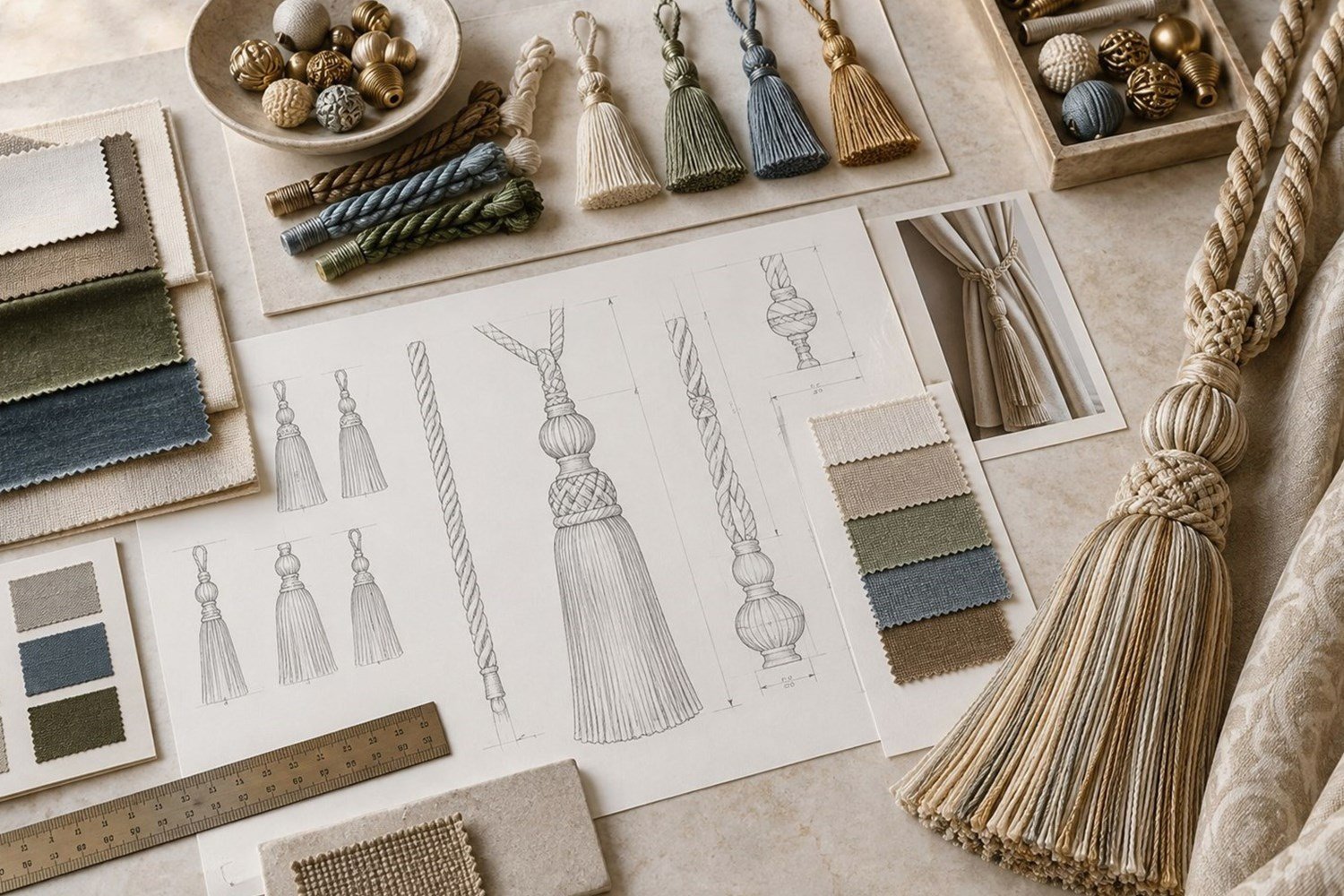
Production scale, cost structure, quality, and durability should be discussed as project factors rather than assumed from a handmade or machine-made label. Complex manual assembly may change labor requirements. Stable repeated operations may change equipment, setup, or process needs. Cost also depends on materials, construction, components, finishing, quantity, tooling, inspection, packaging, and commercial requirements.
- Quality: evaluate specification, material, construction, workmanship, finishing, functional suitability, consistency, and approved sample.
- Durability: evaluate material, construction, attachment, finishing, application, and use conditions.
- Scale: consider stable operations, variant control, component handling, and inspection.
- Cost factors: discuss actual material, complexity, assembly, finishing, and project requirements without assuming a universal price ratio.
A well-made handmade tassel can be high quality. A poorly controlled handmade tassel can have problems. A well-controlled machine-made tassel can be high quality, and a poorly controlled machine-made tassel can also have problems. Production method does not determine quality by itself.
Design Complexity and Visual Identification

Complexity does not automatically mean a tassel is handmade, and appearance alone does not reliably prove the complete production method. Knots, beads, layered skirts, mixed materials, decorative heads, and multiple cords may require flexible manual assembly, but specialized machinery or fixtures can support some complex repeated structures. Modern machine-assisted products can also receive hand-finishing.
| Visual clue | Possible interpretation | Why it is not proof |
|---|---|---|
| Minor dimensional variation | Manual involvement may be present | Variation can also reflect process control |
| Different wrapping | Manual construction may be involved | A designed variation may be intentional |
| Bead placement variation | Manual placement may be involved | Manual finishing can follow machine preparation |
| Hand-trimmed look | Manual finishing may be present | It does not show every prior stage |
Do not identify a tassel as fully handmade merely because it looks irregular. Likewise, highly skilled manual work can be very consistent. Ask the supplier to describe production stages and review a representative sample instead of relying on visual assumptions.
Graduation and Decorative Tassels
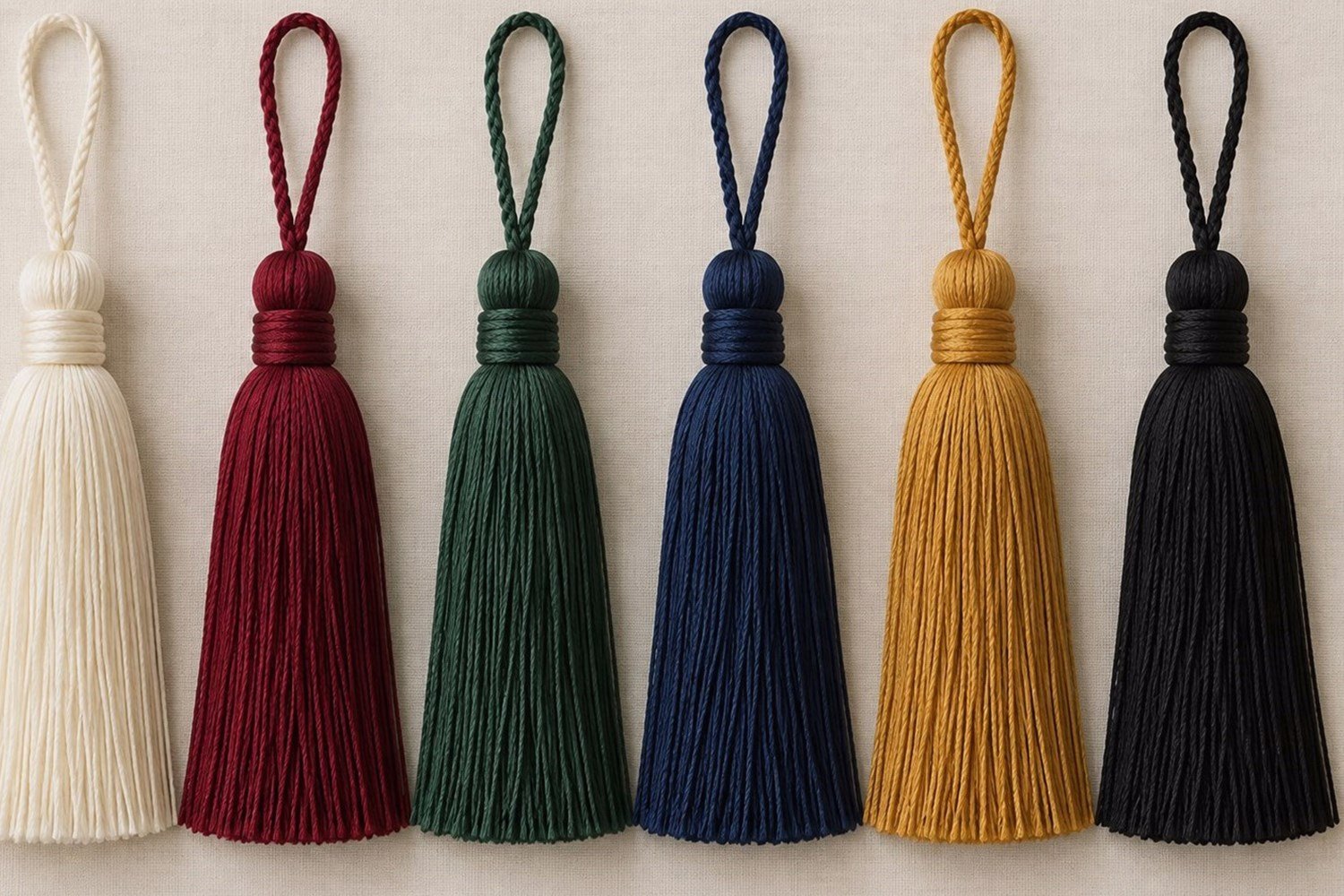
Graduation tassels and decorative tassels can both combine standard repeated elements with manual assembly or finishing, depending on the design. Graduation designs may have a stable color, length, cord, loop, and charm direction, while custom school colors or attached year charms can introduce additional assembly steps. See Graduation Tassels for the related product type.
Decorative tassels may contain mixed materials, beads, knots, decorative heads, layered skirts, multiple cords, metal components, and complex color combinations. These features can increase manual assembly requirements, while machine-prepared yarns, cords, or components may still be used. Decorative products are therefore often useful examples of hybrid production. Explore Decorative Tassels and Beaded Tassels for related forms.
Common Misconceptions
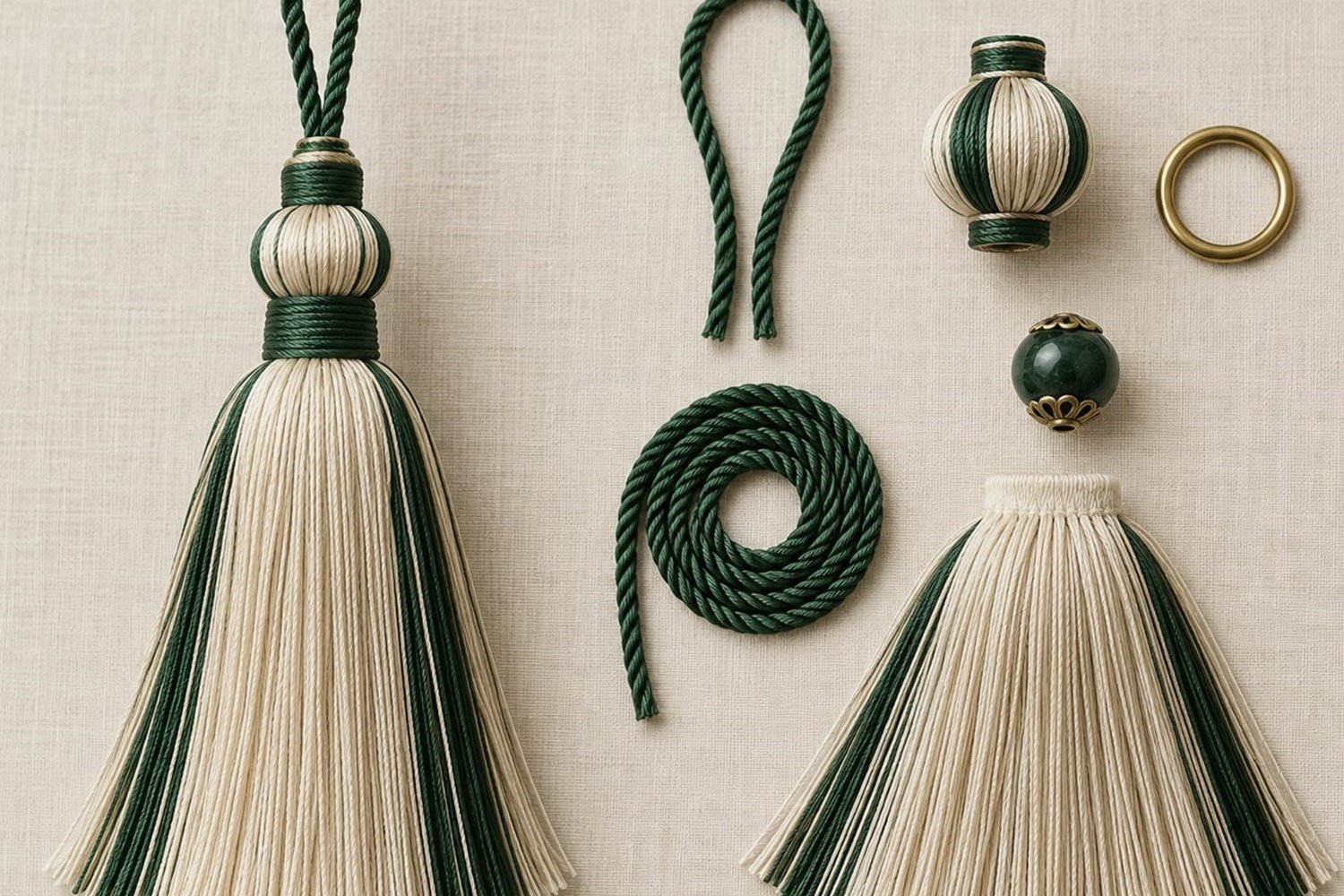
Common production-method labels describe how work is involved; they are not automatic grades for quality, cost, durability, or authenticity. Use the construction and approved reference to evaluate the actual product. This prevents a sourcing discussion from relying on assumptions instead of the required finished result.
| Myth | Reality |
|---|---|
| Handmade always means better quality | Quality depends on specification and execution. |
| Machine-made means no human work | Manual assembly, finishing, or inspection may still occur. |
| Handmade tassels cannot be consistent | References, skills, tools, and control can improve consistency. |
| Machine-made tassels cannot be customized | Customization depends on construction and process. |
| Irregularity proves authentic handwork | Appearance alone may not prove a production method. |
| Machine-made tassels are always cheaper | Cost depends on material, complexity, quantity, and finishing. |
| Handmade tassels are always more durable | Durability depends on material, construction, and use. |
| A tassel is fully handmade or fully machine-made | Hybrid production is common in decorative manufacturing. |
How Should B2B Buyers Choose a Production Method?

Do not begin by asking “handmade or machine-made?” Begin by asking what the finished tassel needs to achieve. A practical sourcing process defines the application, design, materials, dimensions, decorative components, consistency requirements, expected scale, and quality direction before reviewing a supplier’s proposed production method.
- Define the application and end product.
- Define the design, materials, colors, and dimensions.
- Define customization and decorative component requirements.
- Define consistency and quality expectations.
- Discuss expected order scale and variants.
- Review the supplier’s proposed production approach.
- Approve a representative sample.
- Inspect production against the approved reference.
| Buyer priority | Production approach to discuss |
|---|---|
| Complex customization | Handmade or hybrid |
| High repeatability | Machine-assisted or hybrid |
| Decorative assembly | Handmade or hybrid |
| Standardized bulk product | Machine-assisted or hybrid |
| Natural hand-finished character | Handmade or hand-finished |
| Scale with custom detail | Hybrid |
Which Method Is Better for Custom Tassels?
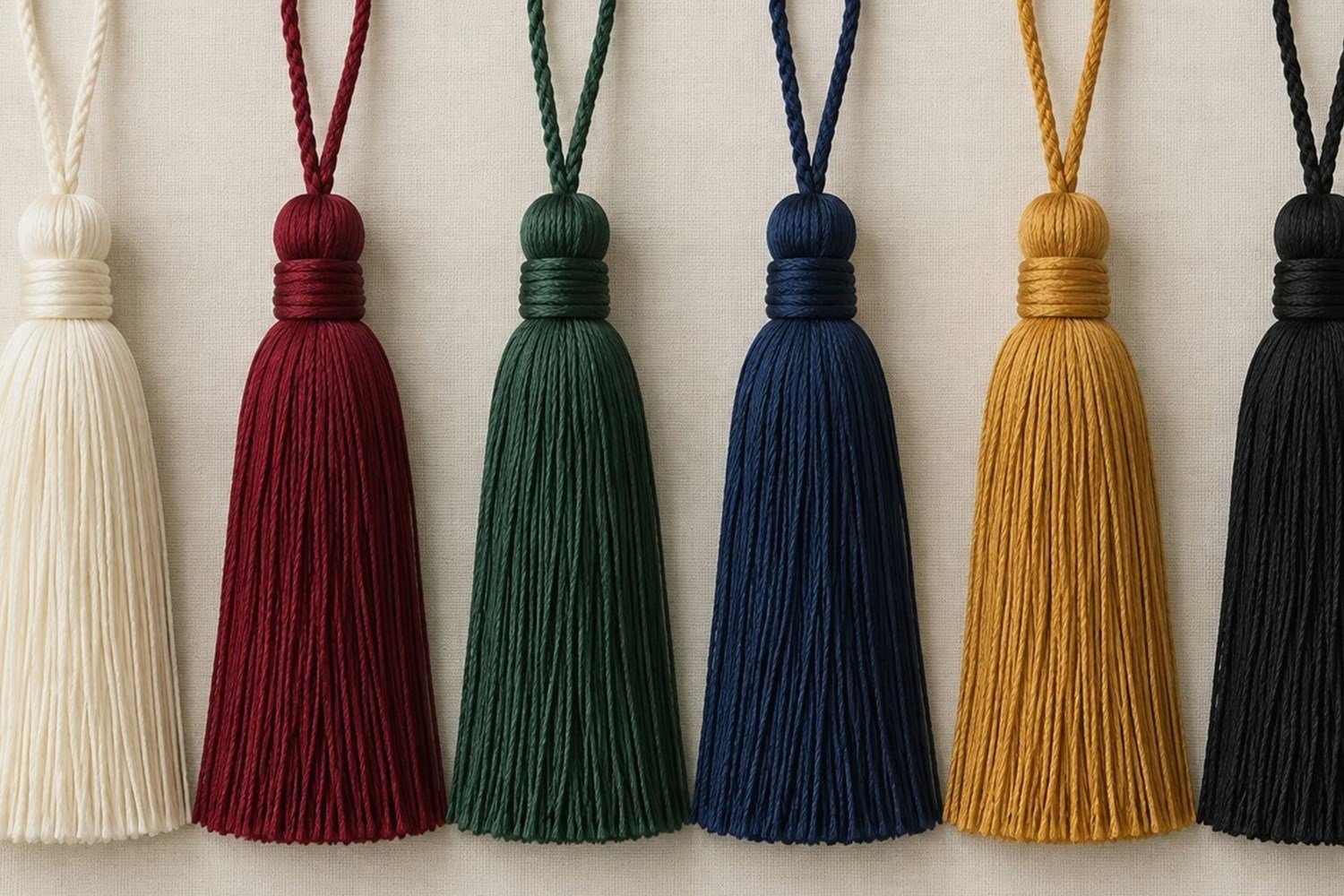
The best production method for custom tassels depends on what is being customized, how frequently it changes, and how the finished components must work together. A label alone cannot answer the question. Complex manual placement, a decorative head, or a mixed-material combination may make handmade or hybrid work appropriate. A repeated stable form may make machine-assisted operations useful.
| Customization need | Possible best-fit approach | Why to discuss it |
|---|---|---|
| Complex bead arrangement | Handmade or hybrid | Flexible component placement |
| Repeated standard tassel | Machine-assisted or hybrid | Repeatable operations |
| Custom decorative head | Handmade or hybrid | Flexible assembly |
| Large standard color order | Machine-assisted or hybrid | Repeated construction |
| Mixed-material tassel | Handmade or hybrid | Multiple component handling |
| Simple standardized design | Machine-assisted | Efficient repeatability may be suitable |
These are possible directions, not universal rules. A custom project may use machine-prepared cords or fringe, then manual construction and inspection. Buyers can make the supplier discussion more precise by sharing reference images, intended application, dimensions, material direction, colors, and any required beads, charms, loops, or attachments.
Which Method Is Better for Bulk Tassel Orders?
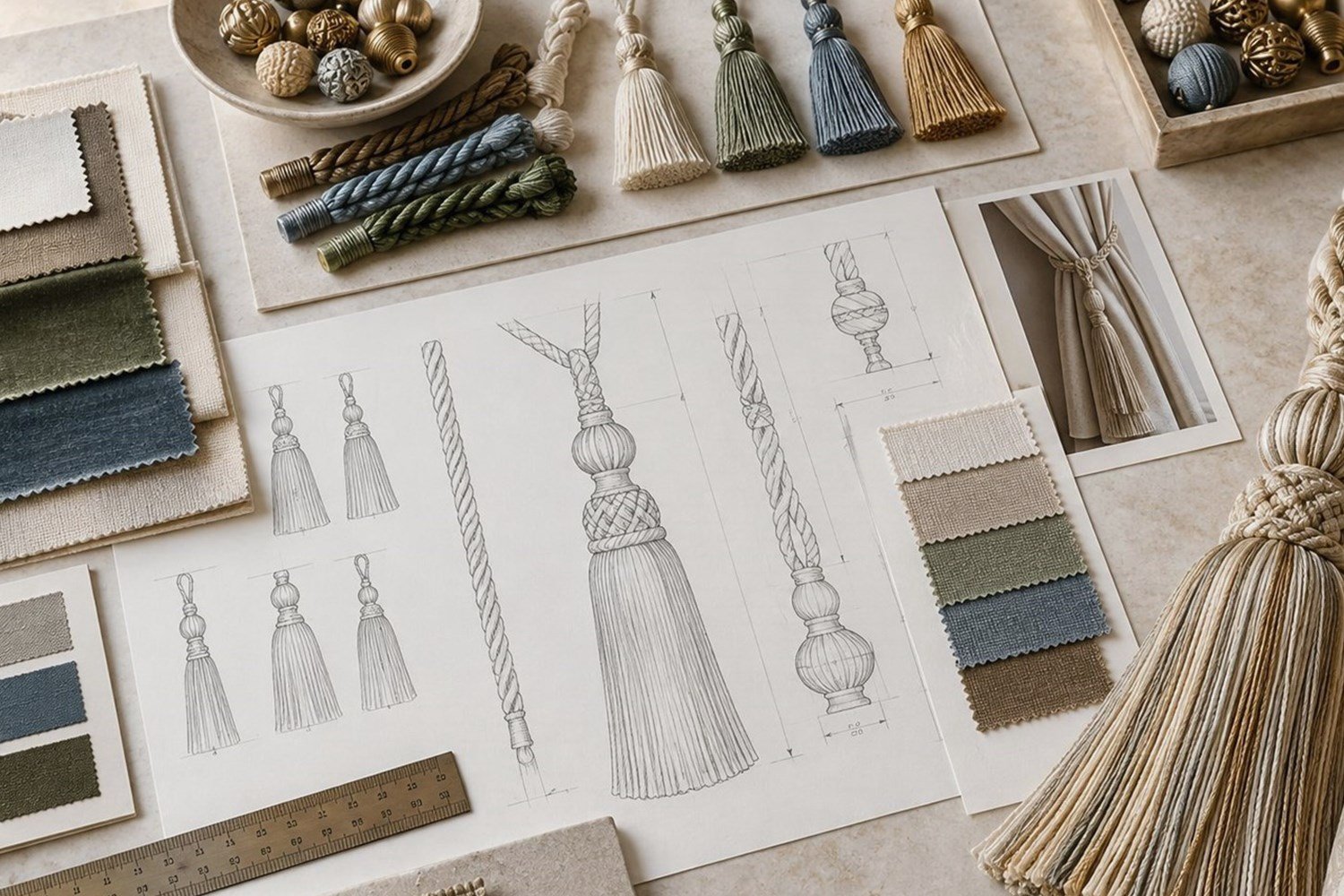
Bulk orders often benefit from repeatable processes, but a bulk tassel order does not require every operation to be automated. A hybrid system can be appropriate when a larger order still includes manually assembled decorative components. The starting point is a stable approved sample and a clear specification that describes the required result for every relevant variant.
| Bulk requirement | What matters most |
|---|---|
| Repeated dimensions | Clear measurement method and process control |
| Color direction | Approved material or color reference |
| Decorative components | Correct placement and component identification |
| Finishing | Consistent workmanship relative to the sample |
| Multiple variants | Correct separation, labeling, and reference control |
| Quality review | Inspection against the approved sample |
For bulk tassels, buyers should agree how the sample is used throughout production, what visual and dimensional points are important, and how variants are identified. This is more useful than assuming machine assistance will create perfect consistency or assuming manual work will prevent a repeatable result. See How to Check Tassel Quality for a practical sample-comparison framework.
What Should Buyers Ask a Tassel Manufacturer?
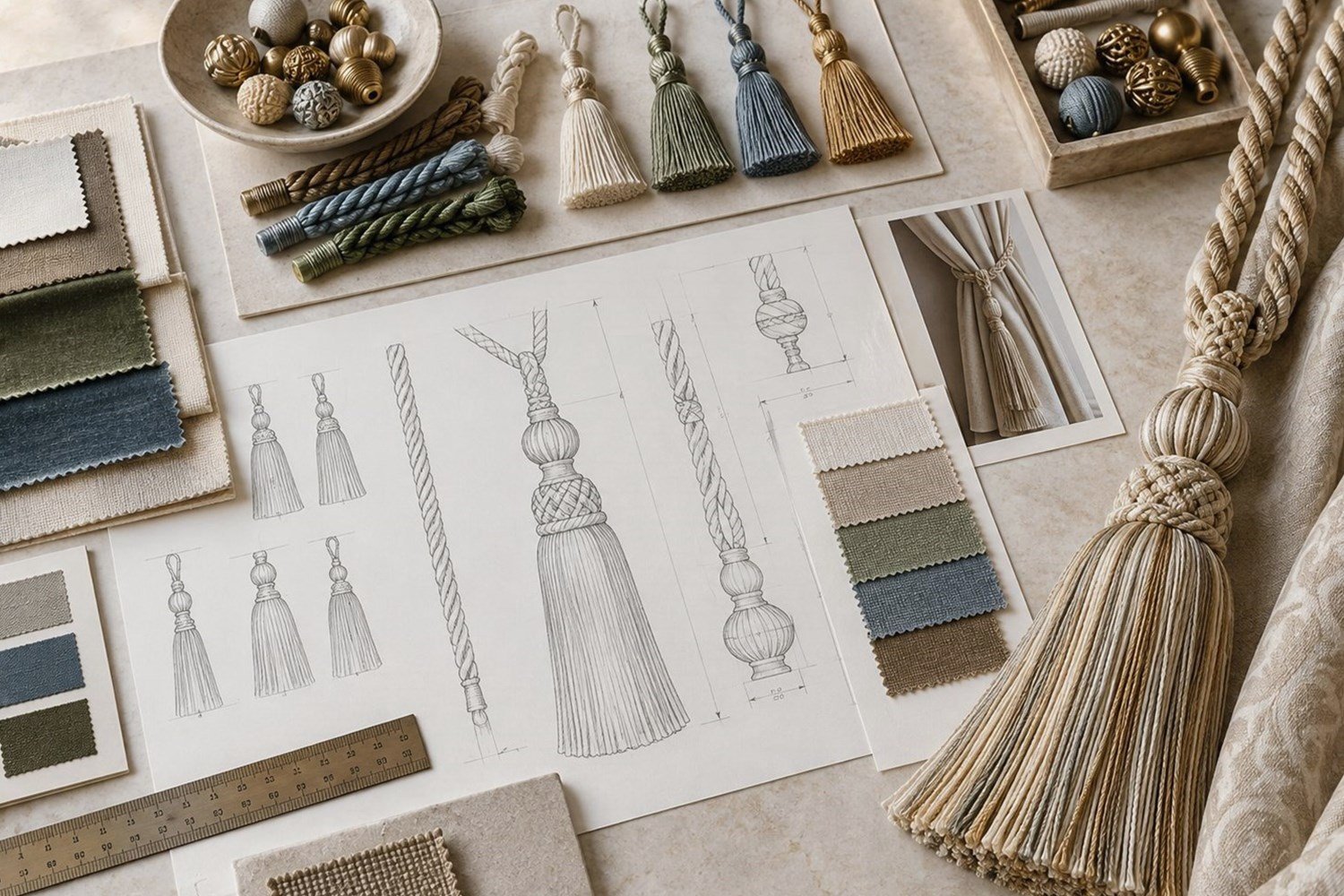
Buyers should ask which stages are manual or machine-assisted and how the proposed method supports the required design, consistency, and inspection standard. No one answer is automatically better. The value of the discussion is to align the method with the approved product direction and identify any design points that may need adjustment.
- Which production stages are manual, and which are machine-assisted?
- Is the tassel fully handmade, hand-finished, or hybrid-produced?
- How are dimensions, color direction, cords, loops, and decorative components controlled?
- How are tassels trimmed and inspected against the approved sample?
- Can the proposed process support the required customization and variants?
- Which parts of the design may require adjustment for production?
- How is batch consistency reviewed for the relevant project?