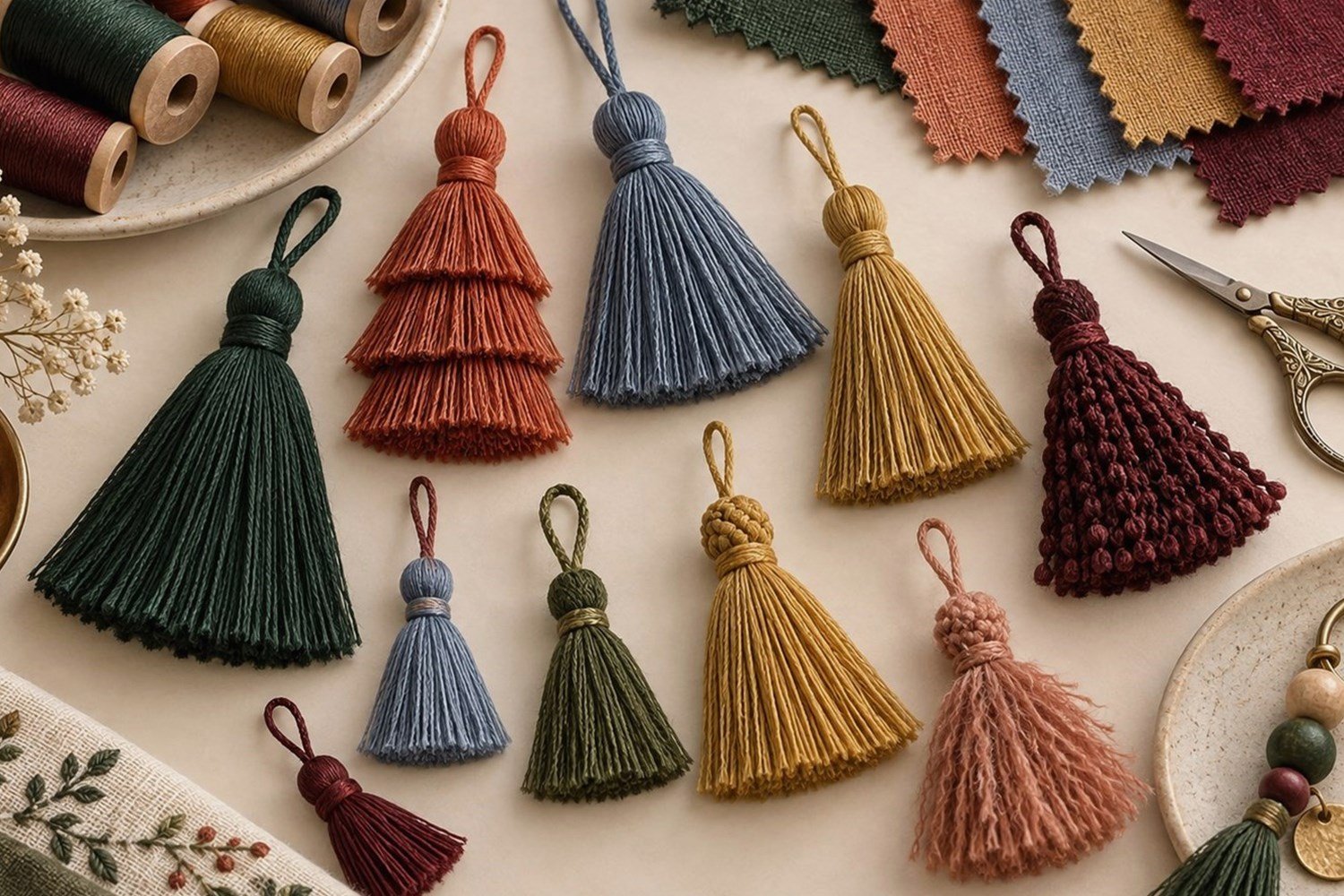
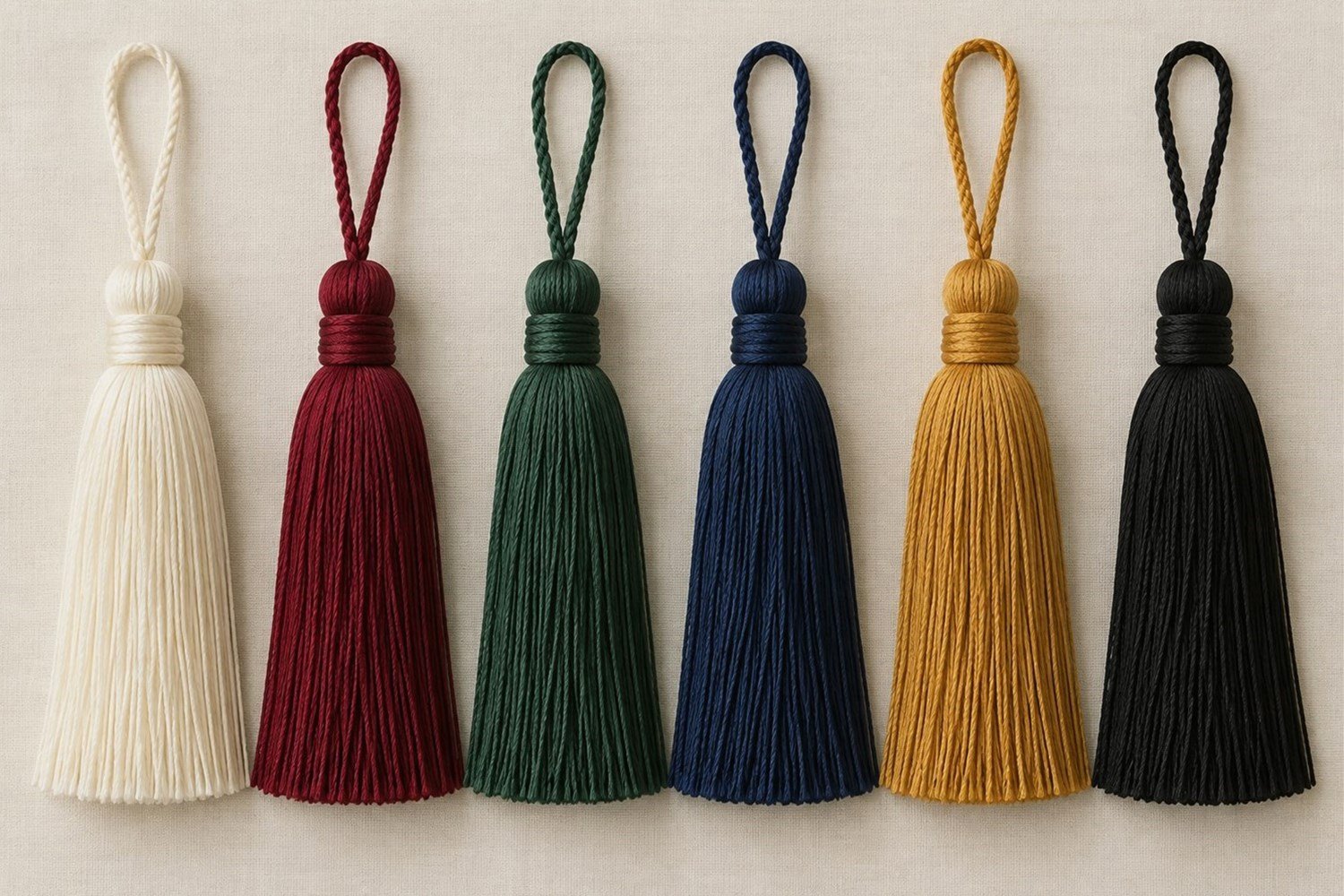
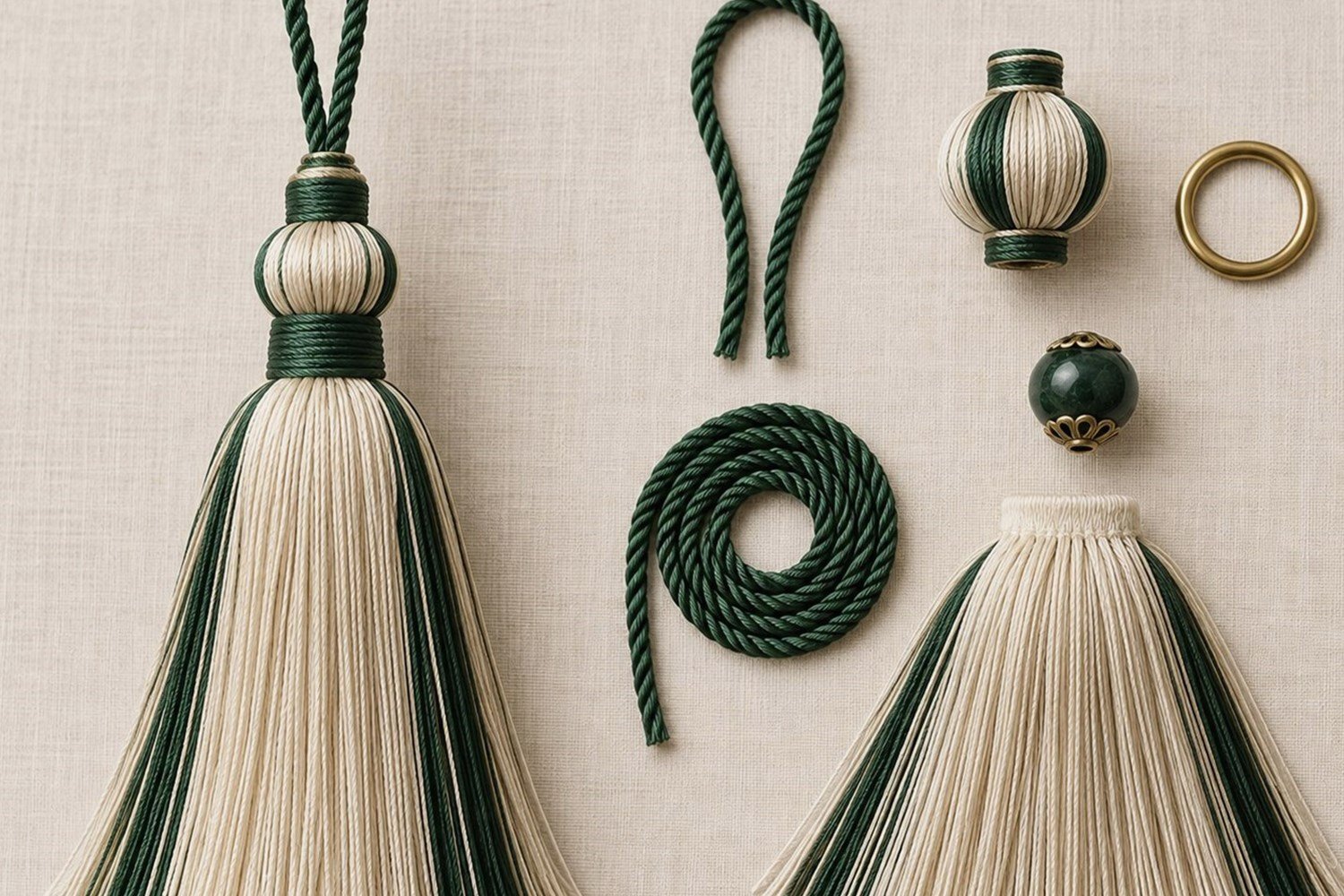
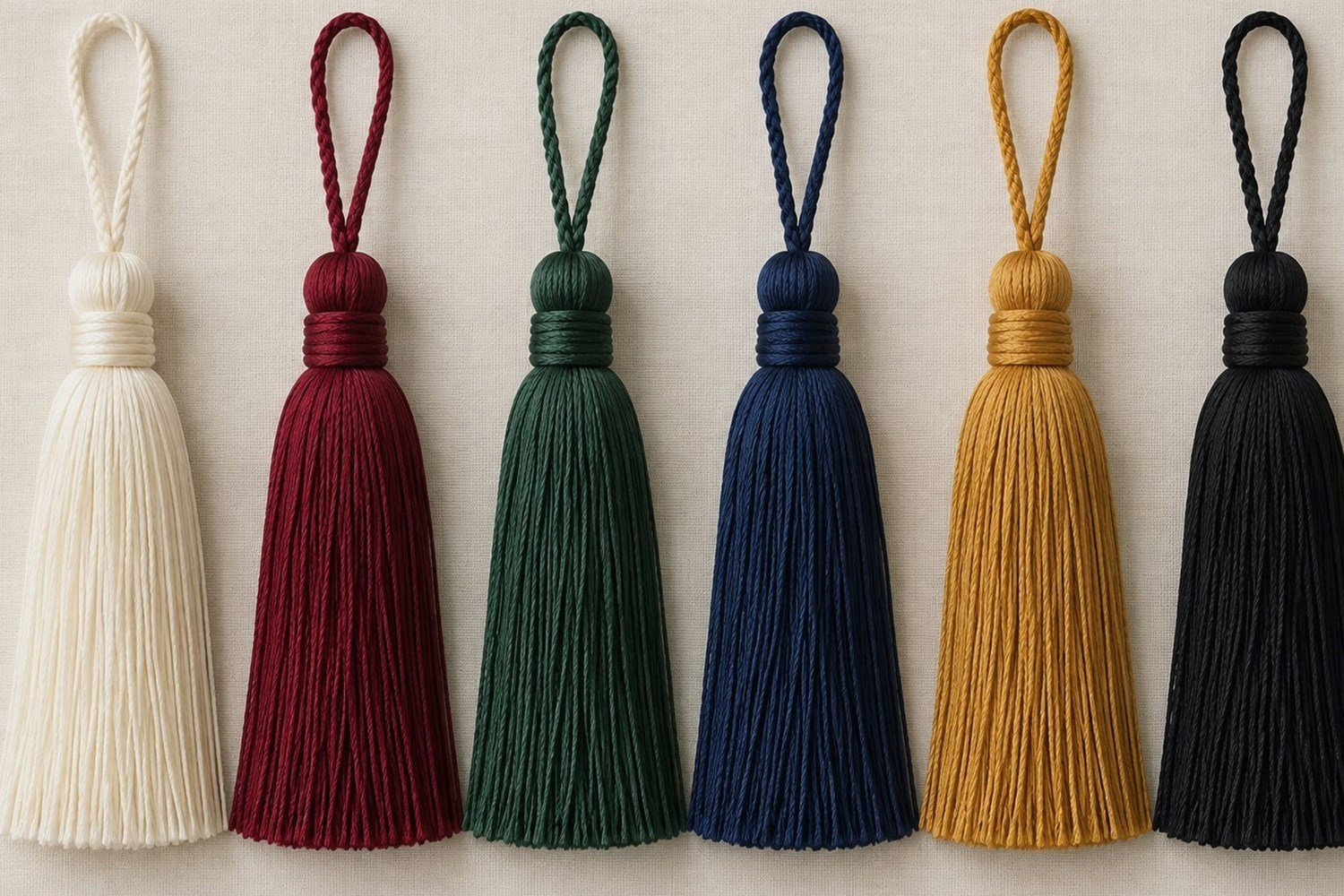
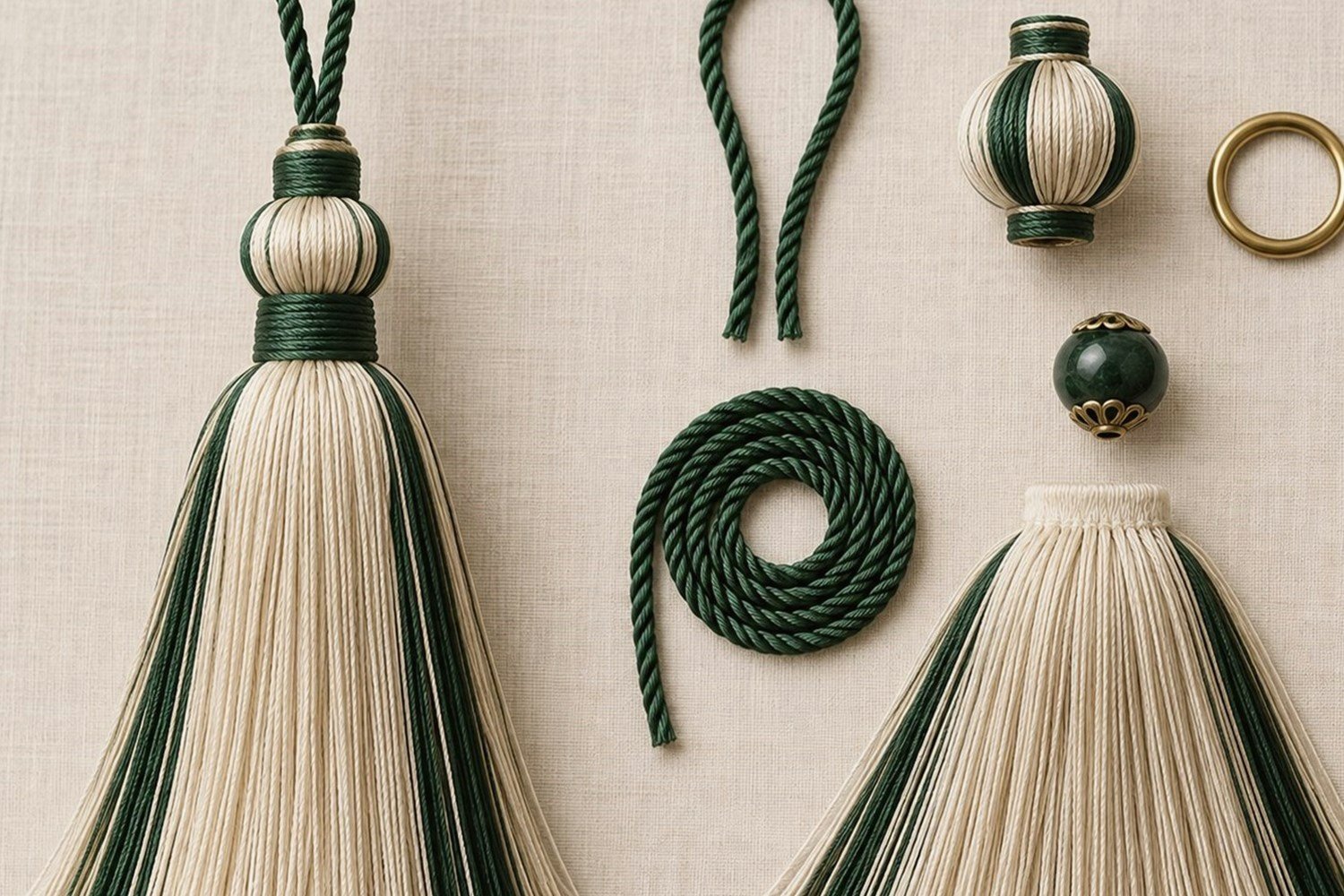
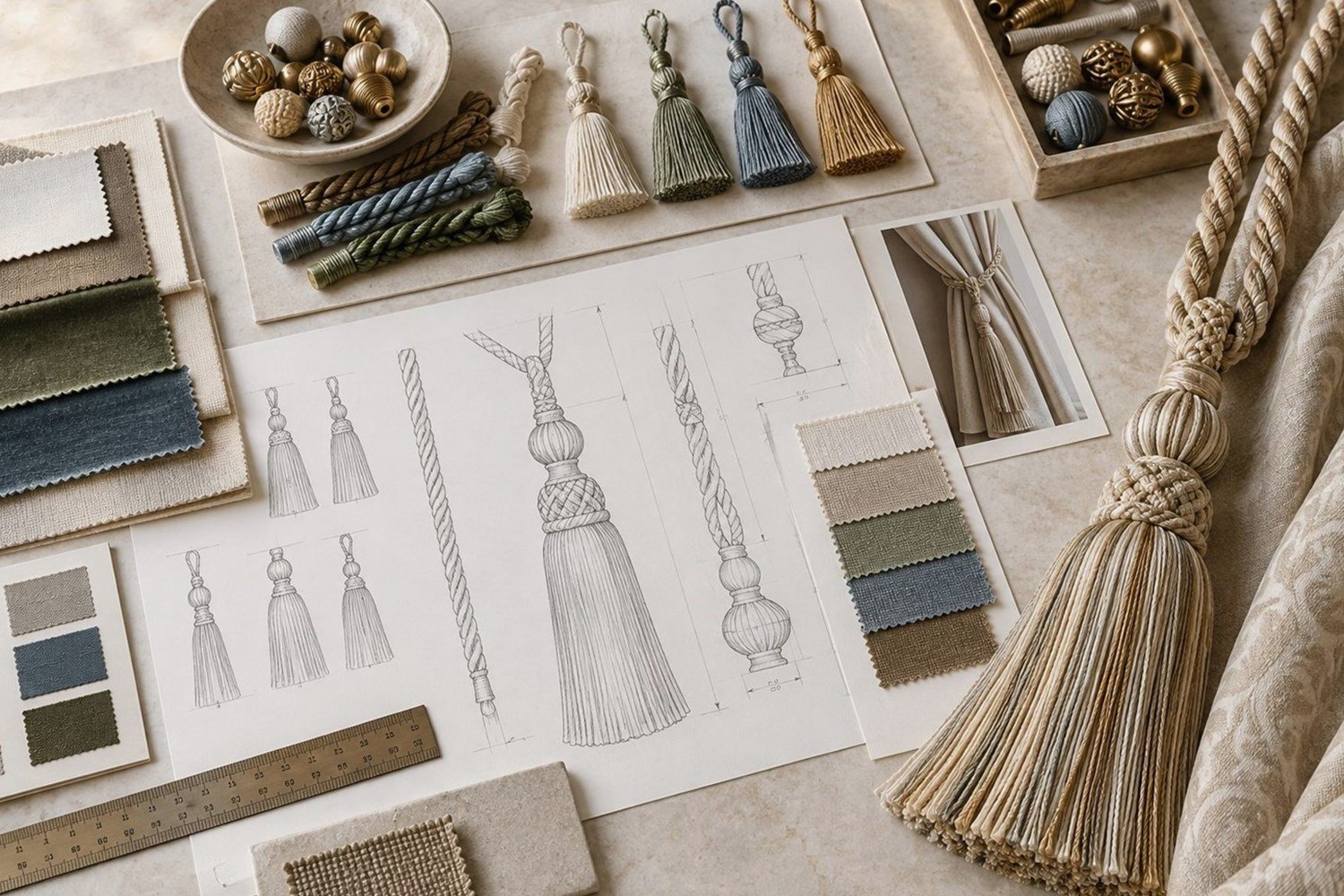
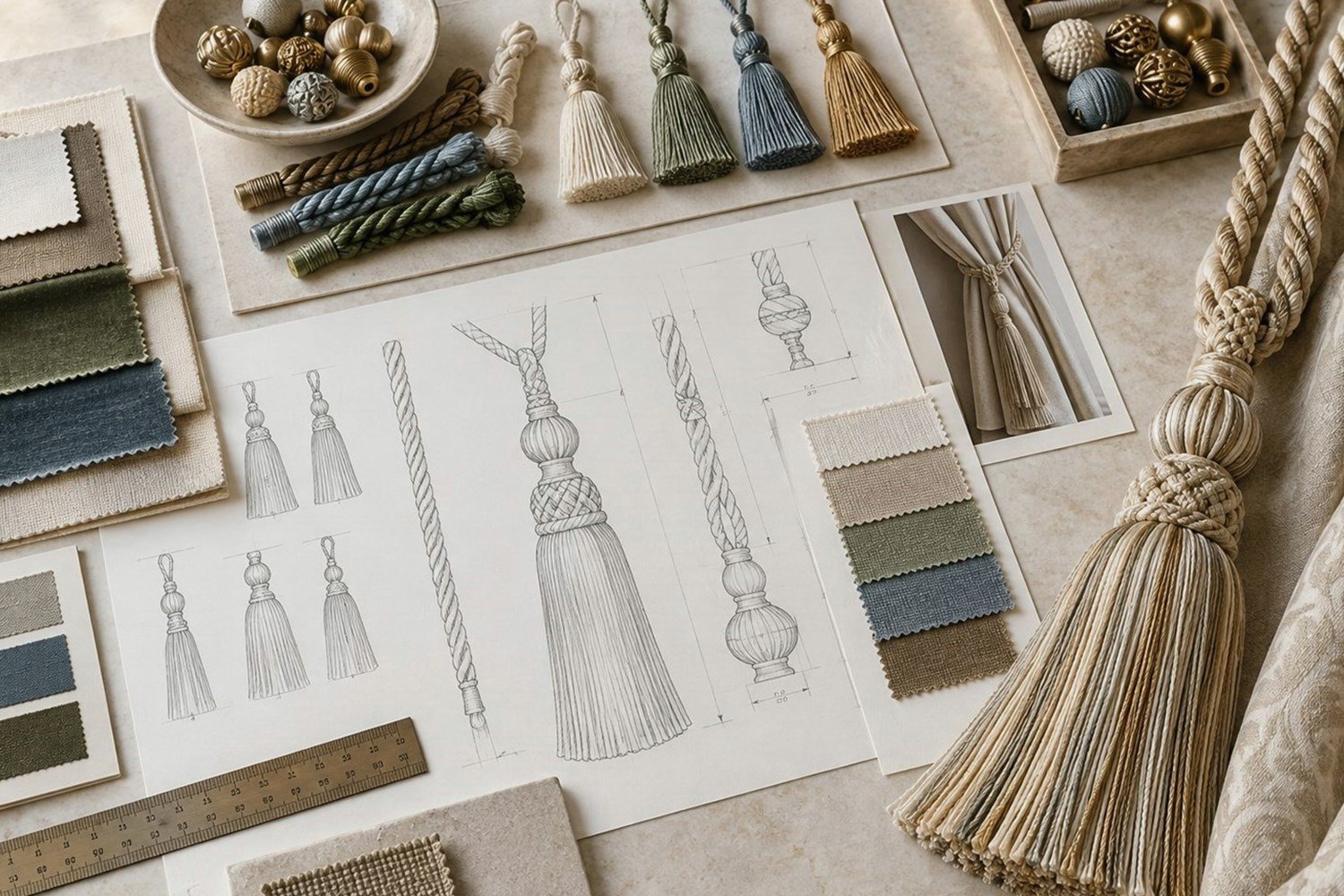
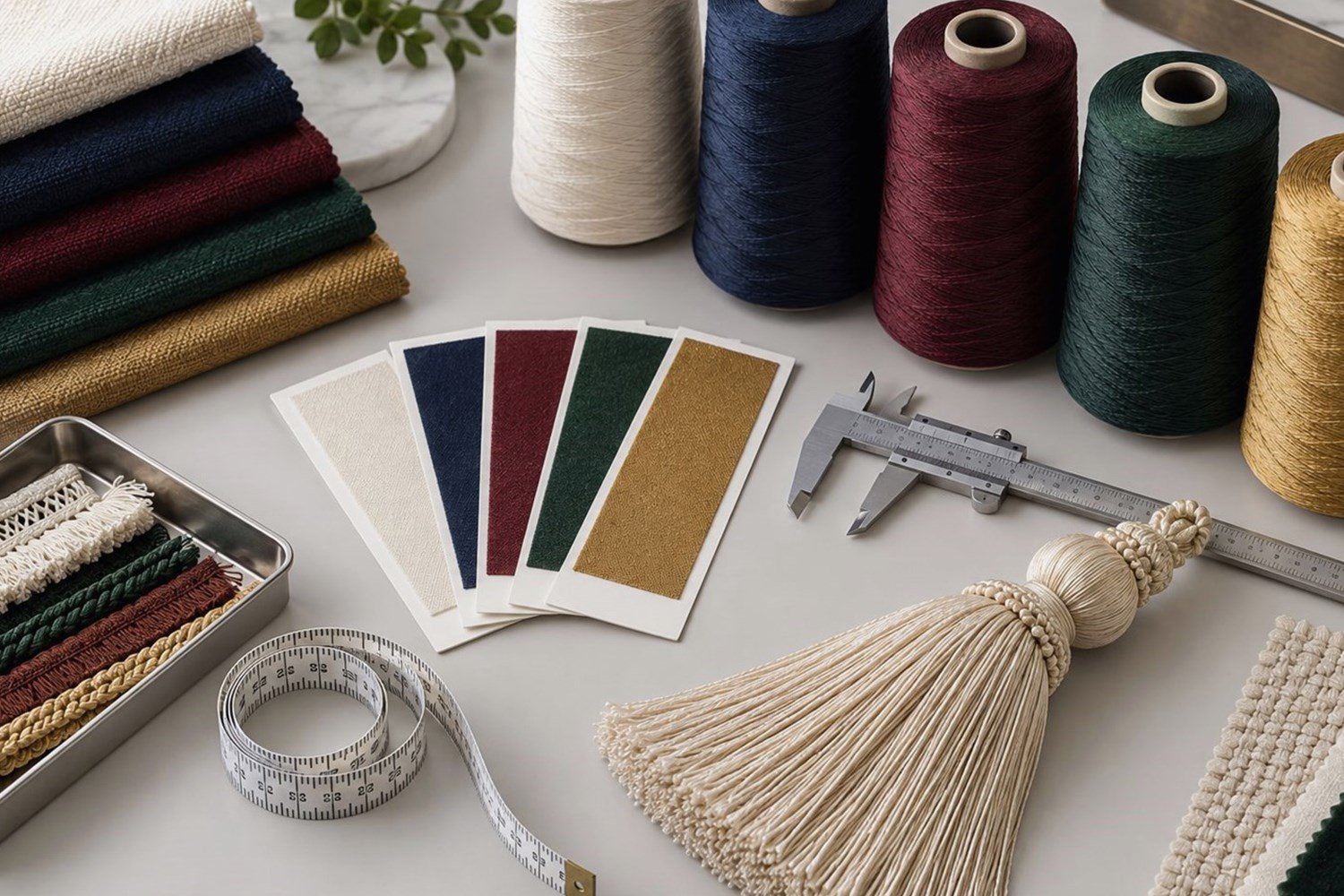
Single and double tassel tiebacks differ primarily by the number and arrangement of visible tassel components. A single tassel tieback uses one main tassel component, while a double tassel tieback uses two. This changes the decorative composition, visual balance, body relationship, component specification, and the finished appearance with the gathered curtain.
Quick Reference
Tassel Count
Single
One main tassel component.
Double
Two main tassel components.
Body
Rope, cord, braid, or fabric.
Fit
Defined by gathered curtain.
Selection
Choose from full product direction.
Overview
One or Two Visible Tassels
Single and double tassel tiebacks are flexible curtain-gathering accessories distinguished by one or two main tassel components in their finished decorative composition. Both can use rope, cord, braid, fabric, beads, caps, loops, rings, hooks, magnets, and mixed materials. Tassel count is one specification point within a complete body, fastening, fit, and curtain relationship.
Feature
Single Tassel
Double Tassel
Tassel count
One main tassel component
Two main tassel components
Decorative composition
One tassel-led visible element
Two tassel-led visible elements
Body relation
Defined rope, cord, braid, or fabric connection
Defined rope, cord, braid, or fabric connection
Components
May include beads, caps, loops, and closures
May include beads, caps, loops, and closures
Fit
Based on gathered curtain and fastening
Based on gathered curtain and fastening
Main Content
What Is the Difference Between Single and Double Tassel Tiebacks?
A single tassel tieback uses one main tassel component, while a double tassel tieback uses two main tassel components. The difference changes the visible arrangement of decorative elements, yet neither configuration is universally better. The correct choice depends on the curtain, rope or fabric body, fastening, intended proportion, material system, and approved project direction.
Both configurations can use tassel heads, skirts, cords, caps, beads, loops, rings, hooks, magnetic closures, connectors, and related details. Define which components appear at each end or position and how they relate to the main body and gathered curtain.
Tassel Count, Arrangement, and Visible Proportion
Compare single and double tassel tiebacks through the actual decorative arrangement and complete body construction, rather than treating tassel count as a universal quality or style ranking. Tassel count affects the visible composition but does not establish materials, fit, fastening, or suitability by itself.
Comparison point
Single tassel
Double tassel
Visible arrangement
One main tassel focus
Two main tassel elements
Body construction
Review rope, cord, braid, fabric, or mixed body
Review rope, cord, braid, fabric, or mixed body
Component specification
Define head, skirt, cap, bead, and connection
Define both tassel components and their relation
Color direction
Review body and single tassel material system
Review body and two tassel material systems
Finished sample
Check proportion with curtain
Check balance and proportion with curtain
Do not assume double tassels are automatically more luxurious, single tassels are always more modern, more decoration means better quality, or one arrangement suits every interior. Use the approved product reference and complete curtain treatment to define the visible direction.
Body, Fastening, Materials, and Fit
Single and double tassel configurations must be reviewed as complete tiebacks that include the required body, usable wrap, fastening, materials, colors, and decorative parts. A rope or braided body can have one or two tassel ends, beads, caps, loops, rings, hooks, magnets, or fabric components. These details affect the total finished proportion.
Feature
What to check
Gathered curtain
Fabric, fullness, layers, volume, intended open position
Body and usable wrap
Rope, cord, braid, fabric, overall and relevant usable dimensions
Fastening
Loop, hook, ring, magnetic, self-tied, or integrated closure
Beads, connectors, loops, hardware, surface, and finish
There is no universal tieback length or tassel scale. Define the product from the actual gathered curtain. It should fit securely without unnecessarily compressing or distorting the fabric, while retaining the intended fold shape and visible proportions.
Selection
How to Choose Single or Double Tassel Tiebacks
Choose single or double tassel tiebacks after defining the curtain, gathered volume, body construction, fastening, usable fit, intended decorative arrangement, and approved reference. The number of tassels should coordinate with the complete tieback, not replace basic fit or construction decisions.
Confirm the curtain application, fabric, fullness, layers, and intended open position.
Choose rope, cord, braid, fabric, or mixed-material body construction.
Define single or double tassel arrangement and the relevant head, skirt, cap, and bead details.
Set fastening and measure the actual gathered curtain for usable fit.
Review materials, colors, components, balance, and complete sample with the curtain.
Screen images and loose tassels can communicate direction, but a complete sample is needed to review body scale, tassel proportion, component placement, color relation, fastening, and curtain fit.
B2B Specification
What Should Buyers Specify?
B2B buyers should state the required single or double tassel configuration and then specify the complete body, tassel anatomy, materials, dimensions, fastening, components, and approved reference. The product name alone does not define tassel head, skirt, cord, caps, beads, rope body, usable wrap, or complete curtain relation.
Requirement
Buyer Reference
Approved Specification
Curtain context
Application, fabric, fullness, gathered volume, open position
Body and tassel count
Rope, cord, braid, fabric; single or double tassel layout
Comparison becomes unclear when tassel count is treated as the whole product definition instead of one part of the complete tieback construction. Use a finished representative sample to judge the full product.
Mistake
Better approach
Specifying only single or double
Define body, tassel anatomy, materials, fit, fastening, and components.
Assuming two tassels are higher quality
Review conformity to the approved construction and sample.
Choosing tassel count before fit
Confirm gathered curtain and usable wrap first.
Ignoring component balance
Review tassels, beads, caps, loops, and body together.
Using universal size
Measure the actual gathered curtain and relevant components.
Approving loose tassels
Approve the complete finished tieback with curtain.
FAQ
Frequently Asked Questions
What is the difference between single and double tassel tiebacks?
Single tassel tiebacks use one main tassel component, while double tassel tiebacks use two. This changes the visible decorative composition but does not by itself define materials, fit, fastening, or quality.
Are double tassel tiebacks better?
No. Neither configuration is universally better. Choose according to the curtain, body construction, fastening, intended proportion, materials, components, and approved product reference.
Can both use rope, braid, beads, and loops?
Yes. Single and double tassel designs can use rope, cord, braid, fabric, beads, caps, loops, rings, hooks, magnetic closures, and mixed materials.
How should tassel tieback size be selected?
Use the actual gathered curtain, body construction, fastening, intended fit, and decorative components. There is no universal tieback length or tassel size.
What should B2B buyers specify?
Specify curtain context, body, single or double layout, tassel head and skirt, materials, colors, dimensions, components, fastening, packaging, representative sample, and final specification.
Conclusion
Single vs Double Tassel Tiebacks: Key Takeaways
Single and double tassel tiebacks differ in their visible tassel count and decorative composition, but both require a complete body, fastening, fit, material, component, and curtain specification. Choose the arrangement from the intended product direction, then approve the complete representative sample.
Single designs use one main tassel component; double designs use two.
Tassel count is not a universal quality or style ranking.
Use the gathered curtain to define body fit and decorative proportion.
Specify all components and approve a complete B2B sample.
Describe the curtain, body construction, single or double tassel layout, tassel head and skirt, fit, fastening, dimensions, materials, colors, beads, components, packaging, and other requirements in one request.