Main Content
What Are Curtain Tassel Tiebacks?

Curtain tassel tiebacks are flexible accessories that wrap around or gather a curtain panel and use tassel elements as visible decorative ends or components. Their body can use rope, cord, braid, fabric, or mixed materials, while loops, hooks, rings, beads, caps, magnets, and connectors can establish fastening and detail.
A tassel tieback is not defined by one universal size, material, color, or interior style. A rope body with tassel ends can be designed in many directions. Select the complete product from curtain fabric, fullness, gathered volume, intended open position, fastening, scale, and approved reference.
Tassel Anatomy, Rope, Cord, and Braid
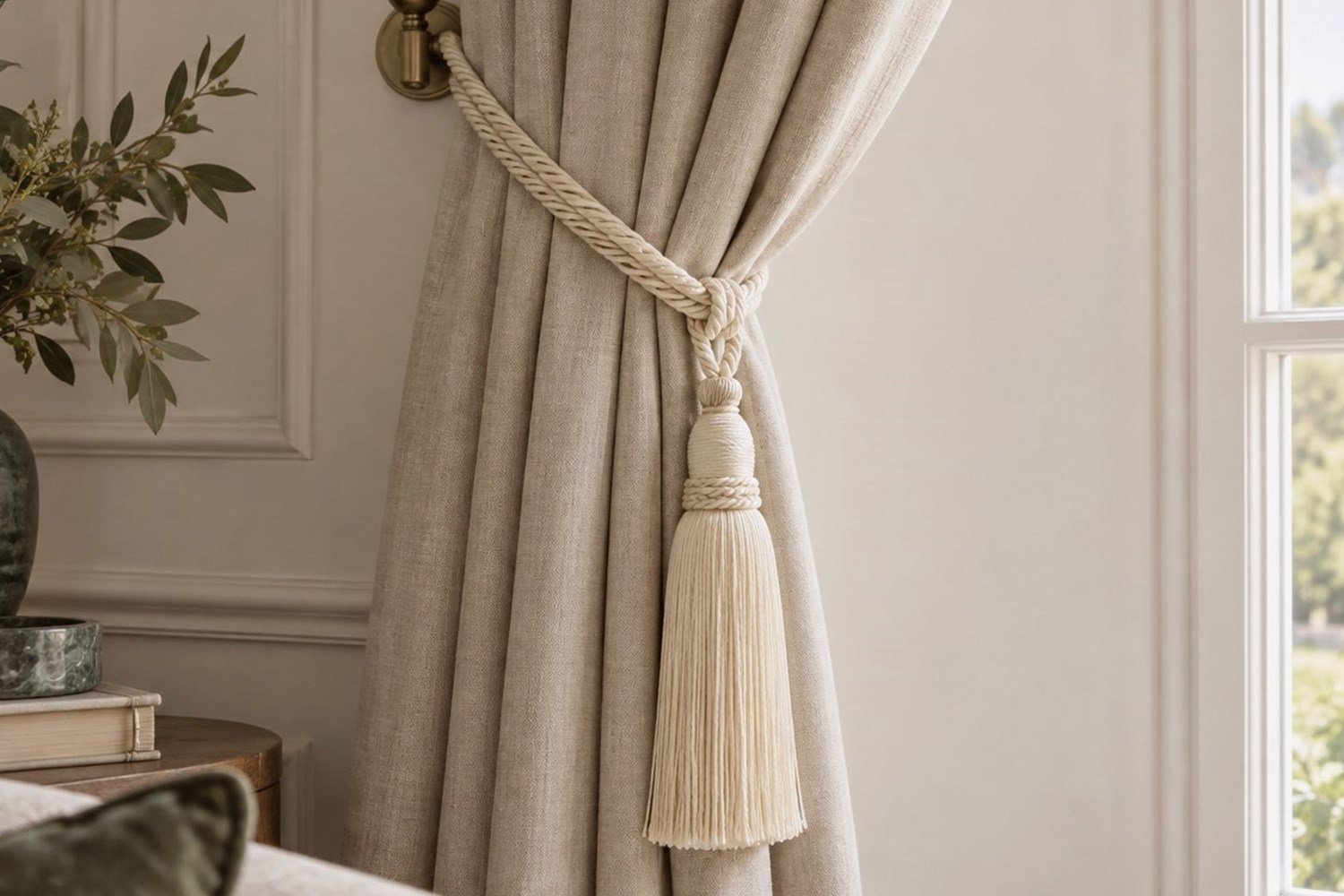
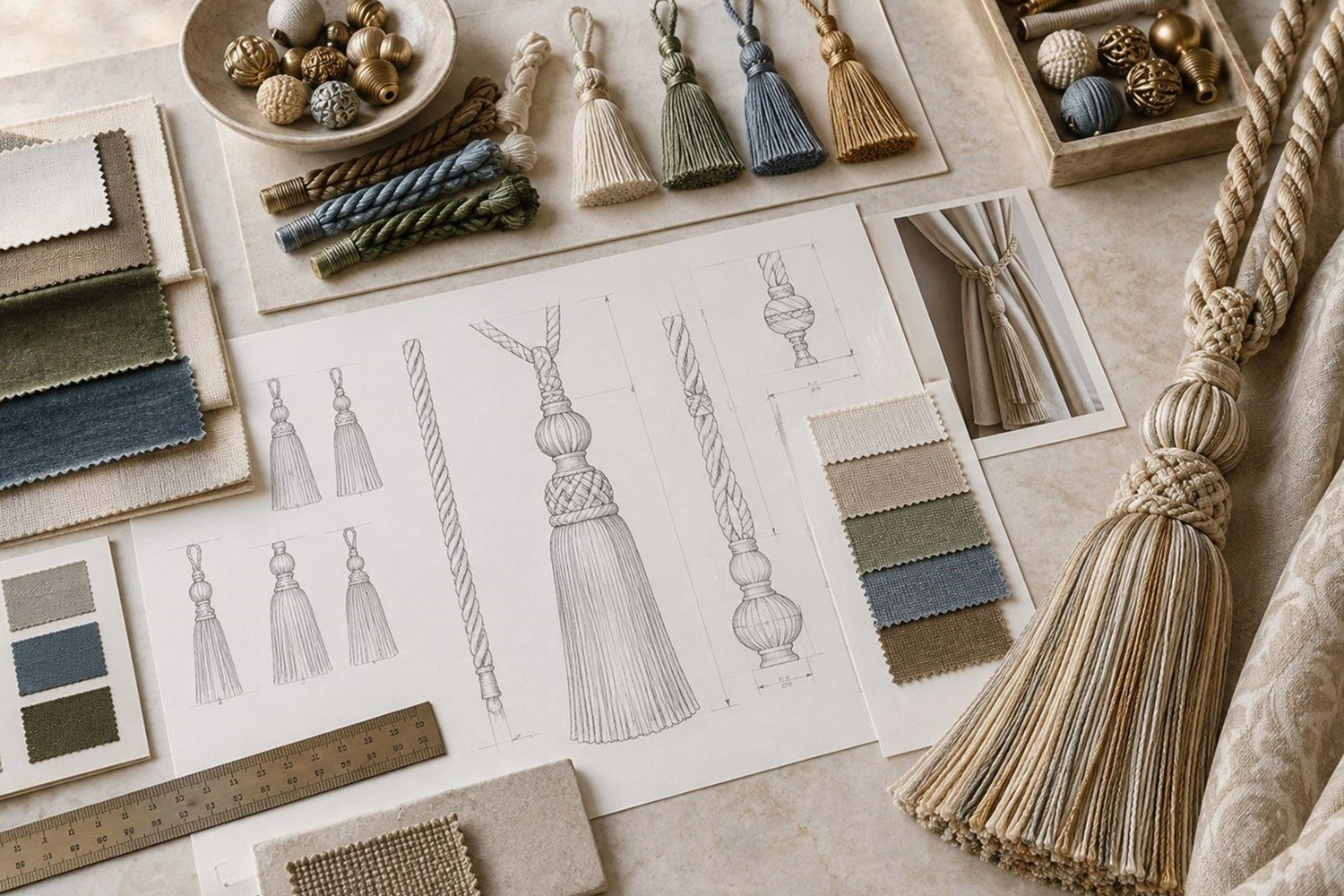
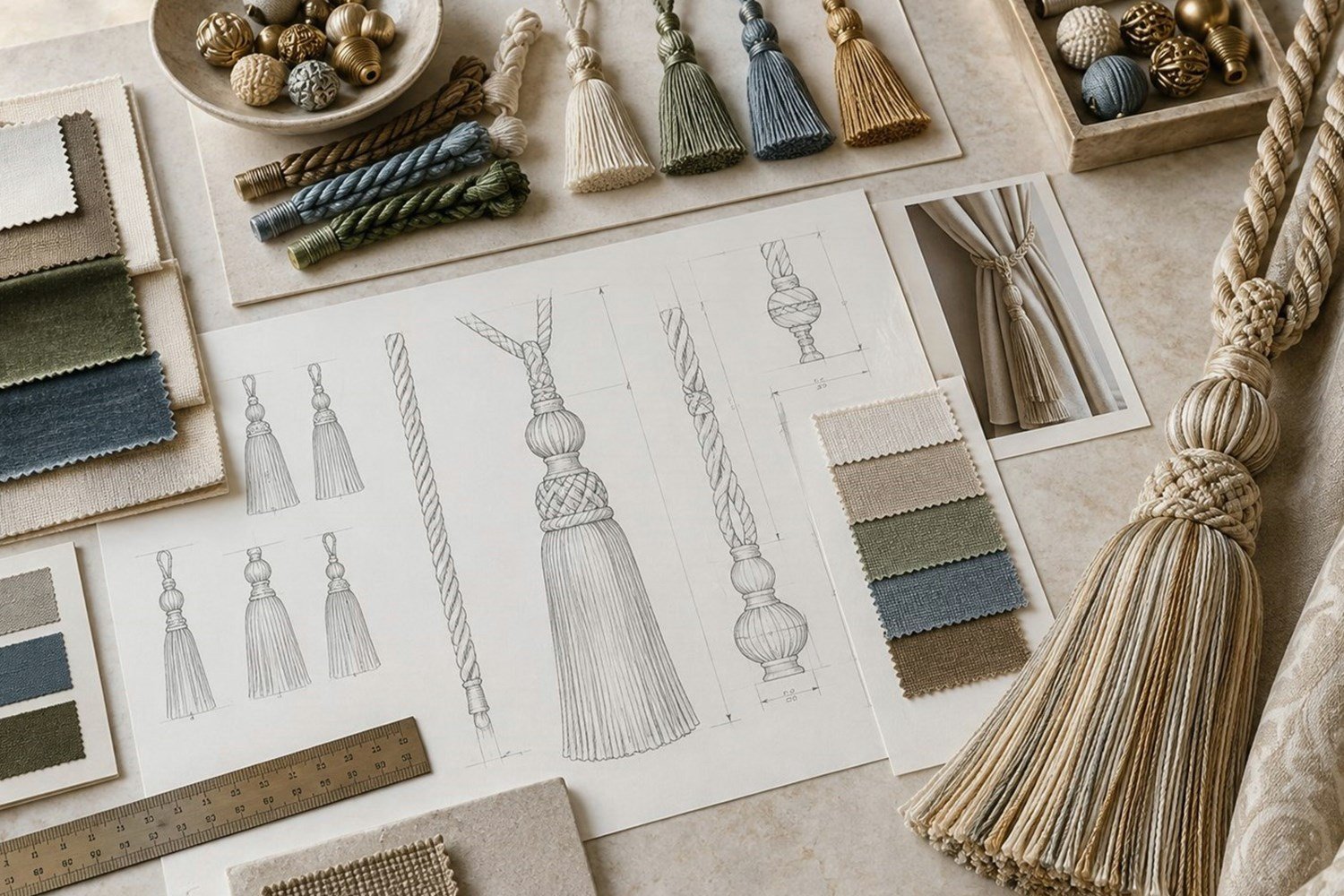
The tassel anatomy and body construction should be defined together because head, skirt, cord, cap, beads, and attachment determine the finished tieback’s total proportion. A tassel component can be part of a twisted or braided rope body, a fabric construction, or another mixed-material arrangement.
| Element | What to define | Sample review |
|---|---|---|
| Rope, cord, or braid | Material, construction, visible scale, body, ends | Texture, fit, color, proportion |
| Tassel head | Shape, material, color, cap, connection | Scale and alignment |
| Tassel skirt | Yarn or fiber, length, fullness, finish | Hanging direction and visual balance |
| Beads and caps | Material, shape, surface, placement | Component relation and finishing |
| Loops and closures | Attachment, length, material, finish | Fastening and curtain relation |
Rope and tassel are not opposite categories. Rope describes a body construction; tassel describes a decorative component. One tieback can also include beads, fabric, magnetic closure, caps, rings, and other parts. Describe every visible and functional element in the project specification.
Materials, Colors, and Curtain Applications

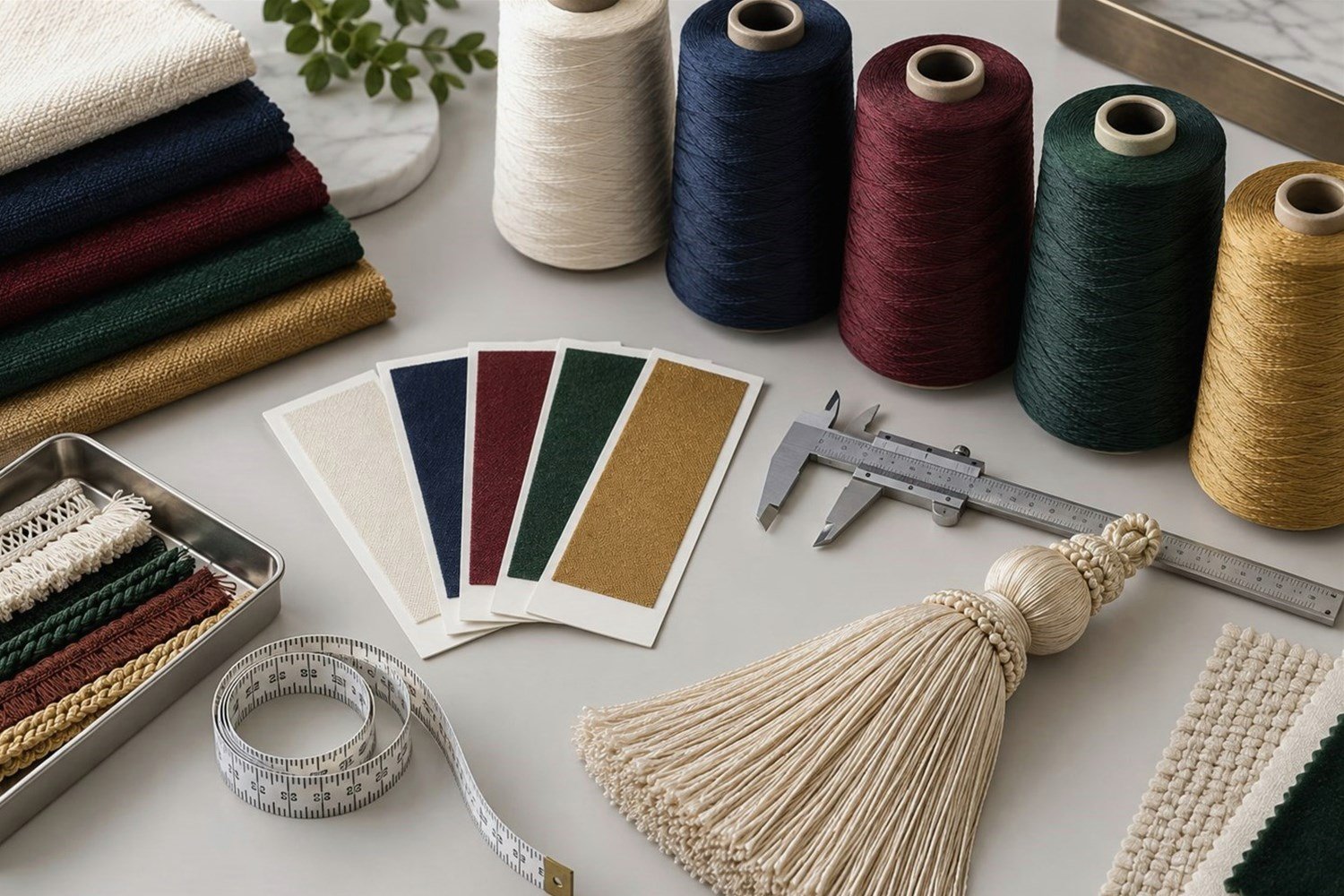
Curtain tassel tiebacks can use textile yarns, rope, fabric, beads, caps, loops, rings, and other elements selected for the complete window treatment and product specification. Material affects surface, color, sheen, tassel texture, body construction, and visible scale. The appropriate arrangement depends on the curtain and intended furnishing direction.
| Application context | What to consider |
|---|---|
| Home textiles | Curtain fabric, color direction, gathered volume, decorative scale |
| Hospitality interiors | Reference room, repeated appearance, finished consistency |
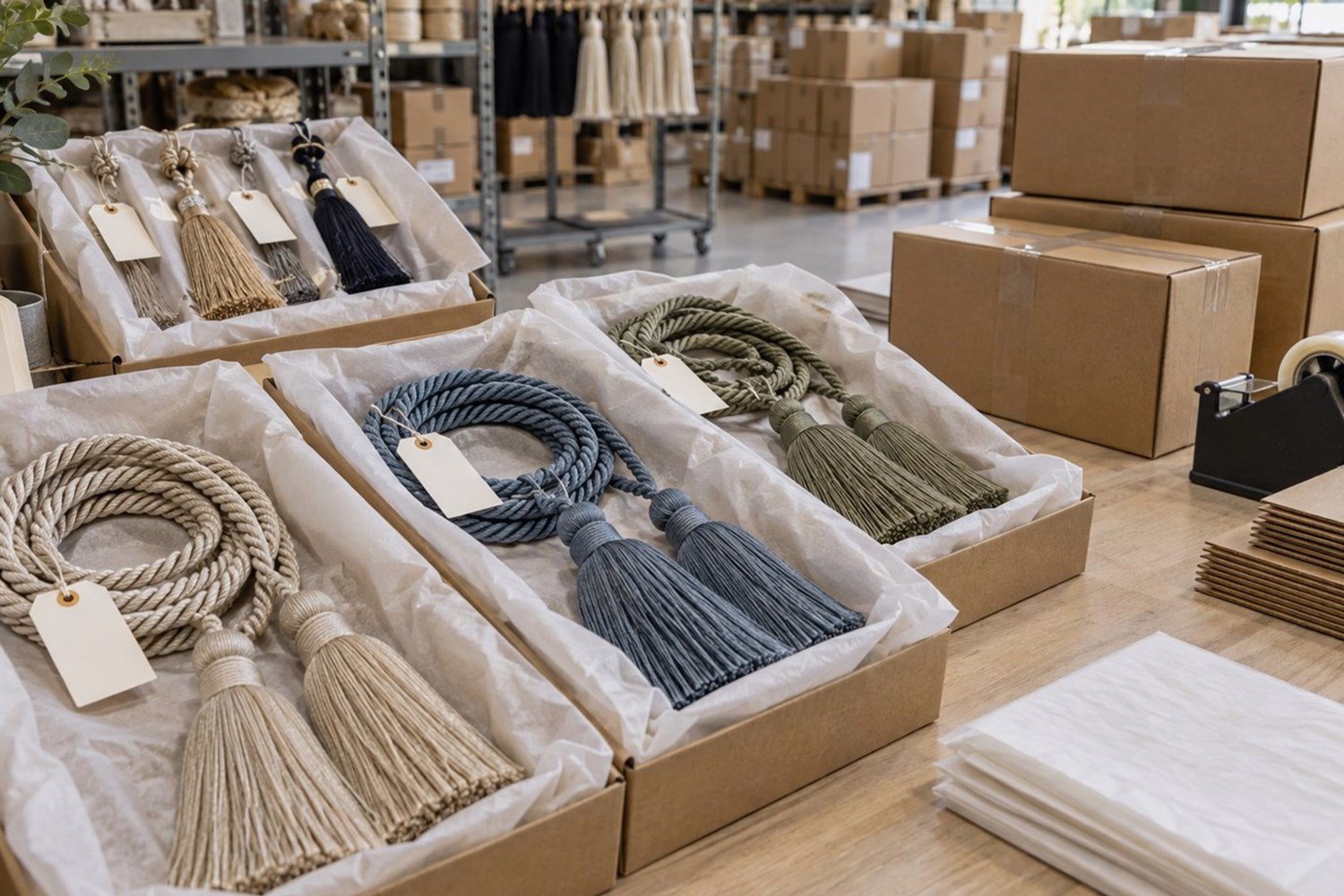
| Window treatment collection | Body construction, components, color palette, packaging |
| Decorative drapery | Fold shape, visible tassel proportion, fastening, curtain relation |
Tassel tiebacks can match, coordinate, contrast, or follow a project palette; they do not need to exactly match curtain color or hardware. Review the actual rope, tassel yarn, bead, cap, and component surfaces with the intended curtain reference.
How to Choose Curtain Tassel Tiebacks
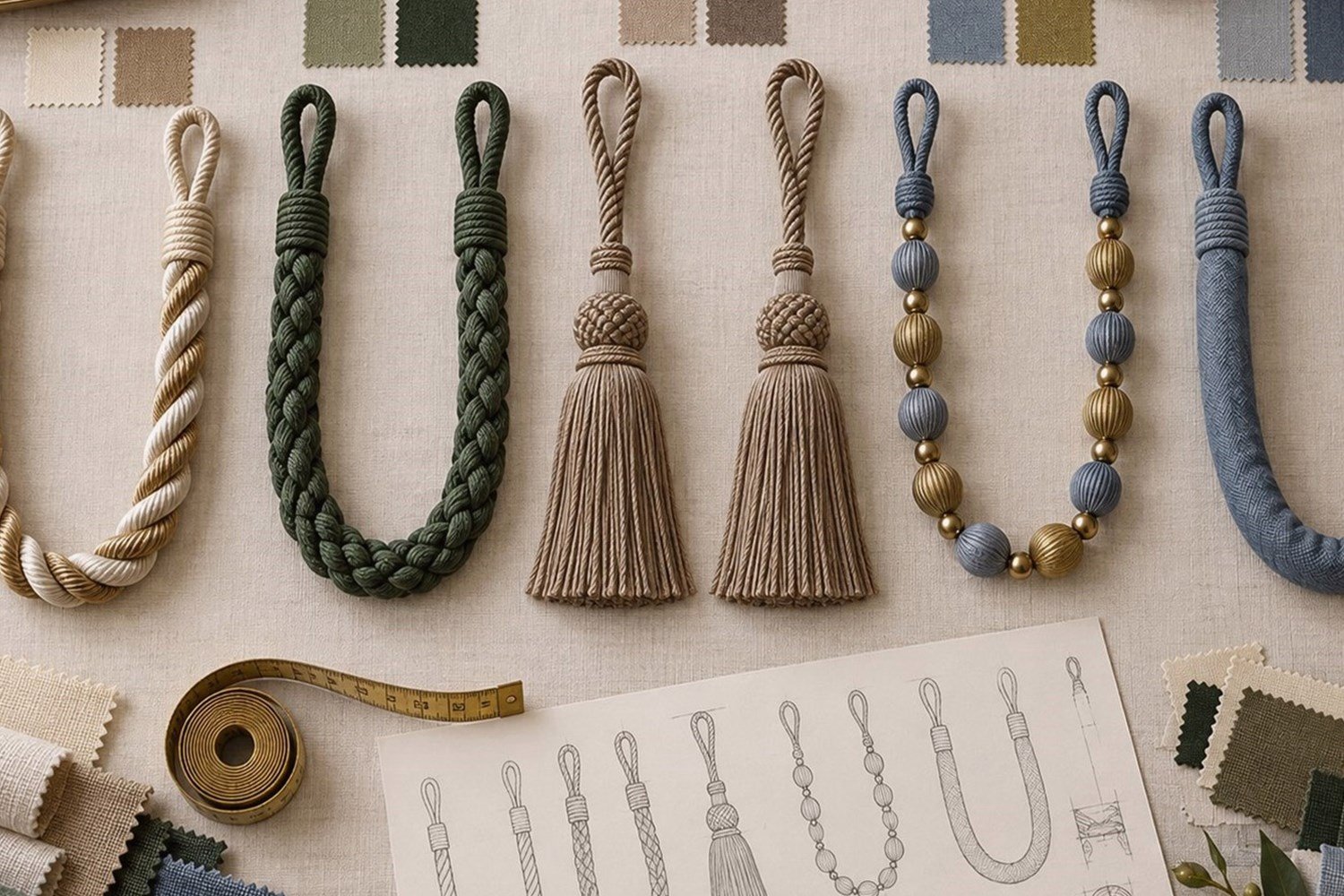
Choose curtain tassel tiebacks by starting with the curtain and gathered volume, then defining the body construction, fastening, usable fit, tassel proportion, materials, colors, and components. Curtain weight is not the same as gathered volume, and there is no universal tieback length or tassel size.
- Confirm curtain application, fabric, fullness, layers, and intended open position.
- Choose rope, cord, braid, fabric, or mixed-material body construction.
- Define loop, hook, ring, magnetic, self-tied, or other fastening method.
- Measure the actual gathered curtain and separate usable wrap from decorative ends.
- Select tassel head, skirt, beads, caps, colors, and other details after basic fit is confirmed.
The complete sample should fit securely without unnecessarily compressing the curtain. Review fold shape, visible window area, body and tassel relation, fastening, material, color, component placement, and complete decorative appearance together.