Curtain knowledge base

What Are Rope Tiebacks?

Rope tiebacks are flexible curtain accessories made with rope, cord, or related textile constructions that gather and hold drapery in an open position. They can use twisted, braided, wrapped, single-cord, multiple-cord, tassel-ended, beaded, magnetic, or mixed-material designs. The appropriate construction depends on the curtain, intended fastening, visible proportion, and complete project specification.

Rope curtain tiebacks with twisted and braided cords, tassels, beads, loops, magnetic closures, and gathered drapery

Quick Reference

Rope Tiebacks

Body
Rope or cord construction.
Function
Flexible curtain gathering.
Construction
Twisted, braided, wrapped, or multiple cord.
Details
Tassels, beads, loops, caps, closures.
Fit
Defined by gathered curtain.
Rope tiebacks compared by twisted cord, braided cord, single rope, multiple cord, tassel ends, beads, and curtain gathering

Overview

Rope Is the Main Body Construction

Rope tiebacks are defined by a rope or cord body that gathers curtain fabric, while their ends, closures, and decorations can vary widely. A rope construction can be plain or decorative, single or multiple cord, twisted, braided, wrapped, tasseled, beaded, magnetic, or mixed material. Rope describes the core body concept rather than every feature of the finished product.

FeatureWhat It DescribesSelection Focus
Rope or cord bodyMain flexible textile constructionSurface, body, visible proportion
Twisted or braidedRope construction directionSpecified texture and appearance
Single or multiple cordNumber and arrangement of visible cordsBody relation and design direction
Ends and componentsTassels, beads, caps, loops, rings, closuresDecoration and fastening
FitRelation to gathered curtainUsable wrap and intended position

Main Content

What Are Rope Tiebacks?

Rope tieback gathering a curtain panel with cord body, loop, tassel end, cap, and decorative components

Rope tiebacks are flexible drapery accessories that use a rope or cord body to gather curtains into an intended open or decorative position. They can be secured with loops, hooks, rings, magnetic closures, self-tied arrangements, or integrated connection designs. A finished rope tieback may also include tassels, beads, caps, knots, connectors, or fabric elements.

Rope tiebacks can be used where a flexible body and textile or cord-led appearance are relevant to the window treatment. They are not defined by one universal length, diameter, material ranking, or curtain weight category. Evaluate the actual curtain fabric, fullness, gathered volume, intended position, fastening, and product direction.

Twisted, Braided, Single, and Multiple Cord Construction
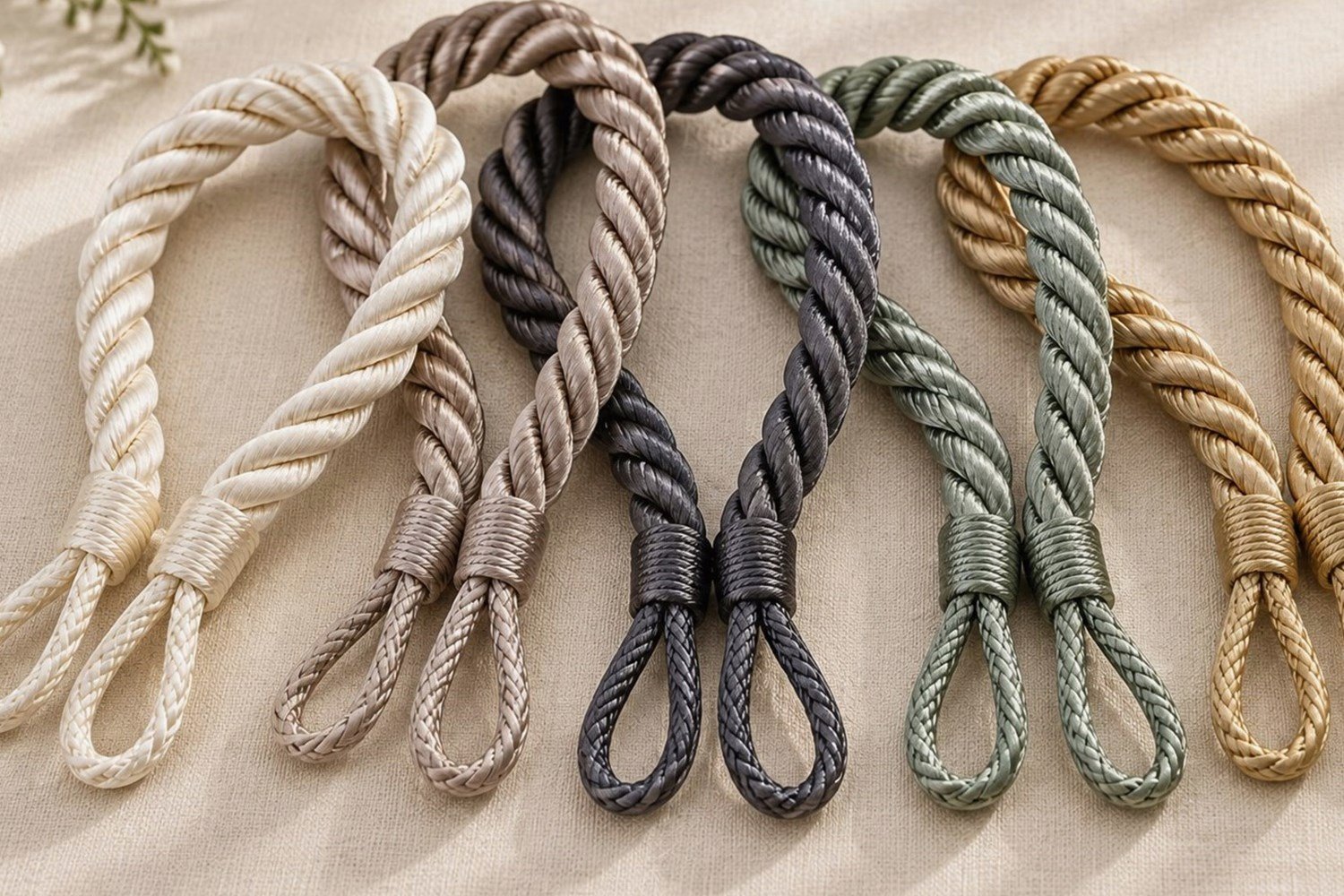
Twisted rope, braided rope, single cord, multiple cord, wrapped rope, tassel-ended, and beaded rope curtain tieback constructions

Rope tieback construction describes how the visible cord body is formed and combined, and this construction contributes to surface texture, scale, decoration, and the complete product direction. Twisted, braided, wrapped, single-cord, and multiple-cord designs should be identified accurately in the specification.

ConstructionWhat It MeansWhat to Review
Twisted ropeVisible twist-led cord constructionSurface, body, color direction, ends
Braided ropeVisible braid-led cord constructionPattern, surface, body relation, components
Single cordOne main visible rope or cordScale, usable wrap, fastening, end details
Multiple cordTwo or more visible cords combinedArrangement, color relation, component balance
Wrapped or mixed bodyCombined textile or decorative constructionMaterial relationship and finishing

Do not claim braided rope is always stronger or twisted rope is always more flexible. These labels describe construction and visible direction; product suitability depends on the selected materials, body, attachment, curtain relationship, and approved sample.

Materials, Colors, and Main Components
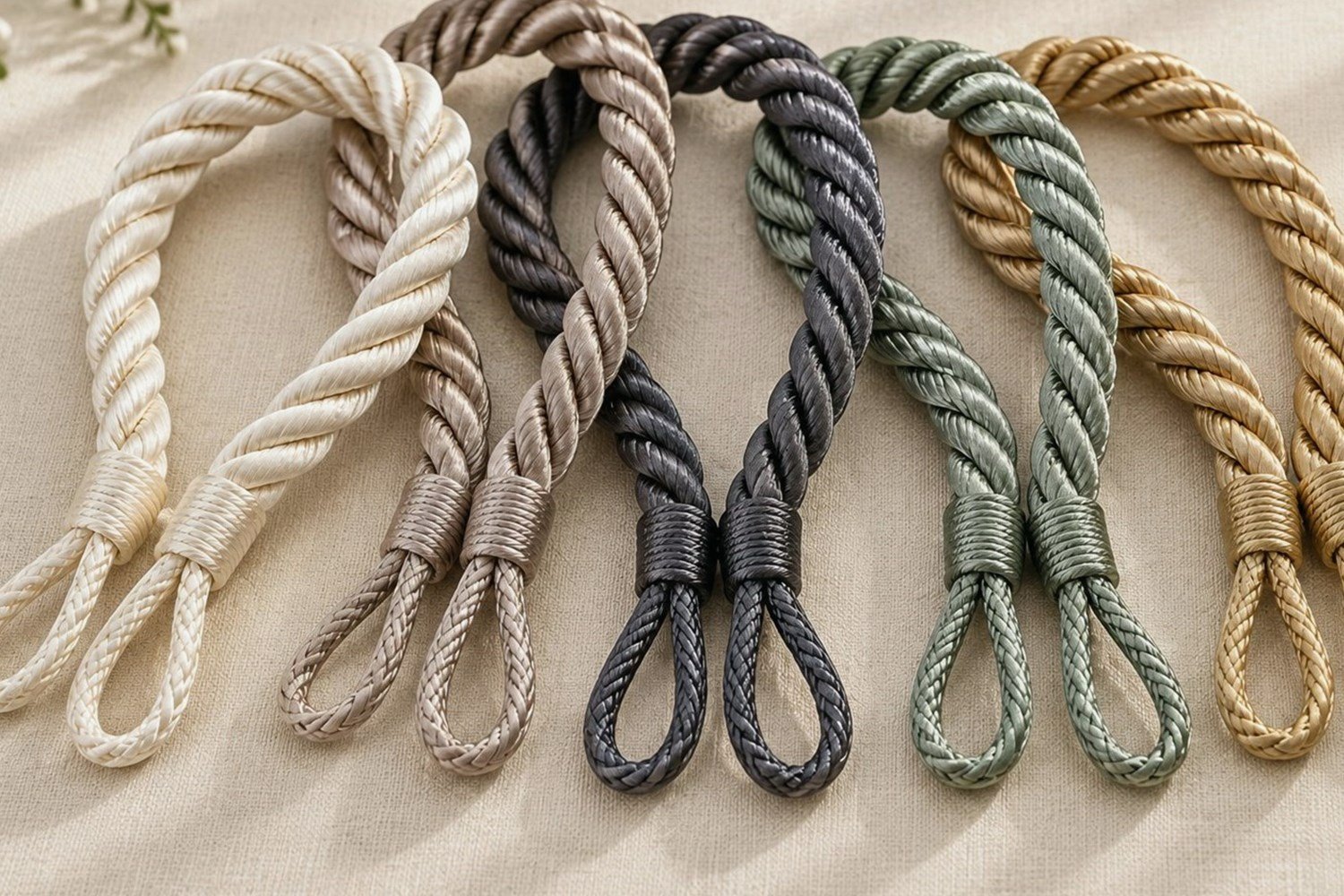
Rope tieback materials and components including textile cord, tassels, beads, caps, loops, rings, magnetic closure, and fabric details

Rope tiebacks can combine textile yarns, cord, fabric, tassels, beads, caps, loops, rings, hooks, magnets, and other decorative or fastening parts. Each component affects the finished tieback’s appearance, construction, and relation to the curtain. The full material system should be specified rather than only the general word “rope.”

ComponentWhat to defineSample review
Rope or cordMaterial, construction, visible scale, body, and endsTexture, color, proportion, fit
TasselsHead, skirt, cords, caps, materials, placementFullness, alignment, visible relation
Beads and capsMaterial, shape, surface, color, connectorsBalance and component finish
Loops and ringsMaterial, dimensions, attachment, finishFastening relation and product appearance
Magnetic closureComplete body, closure, connection, positionFit with intended curtain arrangement

Colors can match, coordinate, contrast, or follow a brand or project reference. A rope tieback does not have to exactly match the curtain or hardware. Confirm color on the actual rope, tassel, bead, and hardware materials because their surfaces can create different visible results.

How to Choose Rope Tiebacks

Rope tiebacks selected for sheer, lined, full, decorative, and layered curtains with different gathered volume and fastening needs

Choose rope tiebacks by starting with the curtain, its gathered volume, and the intended open position, then define the rope construction, fastening, usable fit, materials, colors, and decorative components. Curtain weight is not the same as gathered volume. A lightweight but very full curtain can form a large bundle, while a denser panel with less fullness can create a different fit requirement.

  • Confirm the curtain application, fabric, fullness, layers, and intended gathered position.
  • Choose twisted, braided, single, multiple, wrapped, or mixed rope construction as appropriate.
  • Define loop, hook, ring, magnetic, self-tied, or other fastening method.
  • Measure the actual gathered curtain and separate overall length from usable wrap where required.
  • Select tassels, beads, caps, colors, and other details after basic fit is confirmed.

There is no universal rope tieback length or rope diameter. The appropriate tieback fits securely without unnecessarily compressing or distorting the curtain. Test the complete tieback with the intended curtain or representative sample before approval.
B2B Specification

What Should Buyers Specify for Rope Tiebacks?

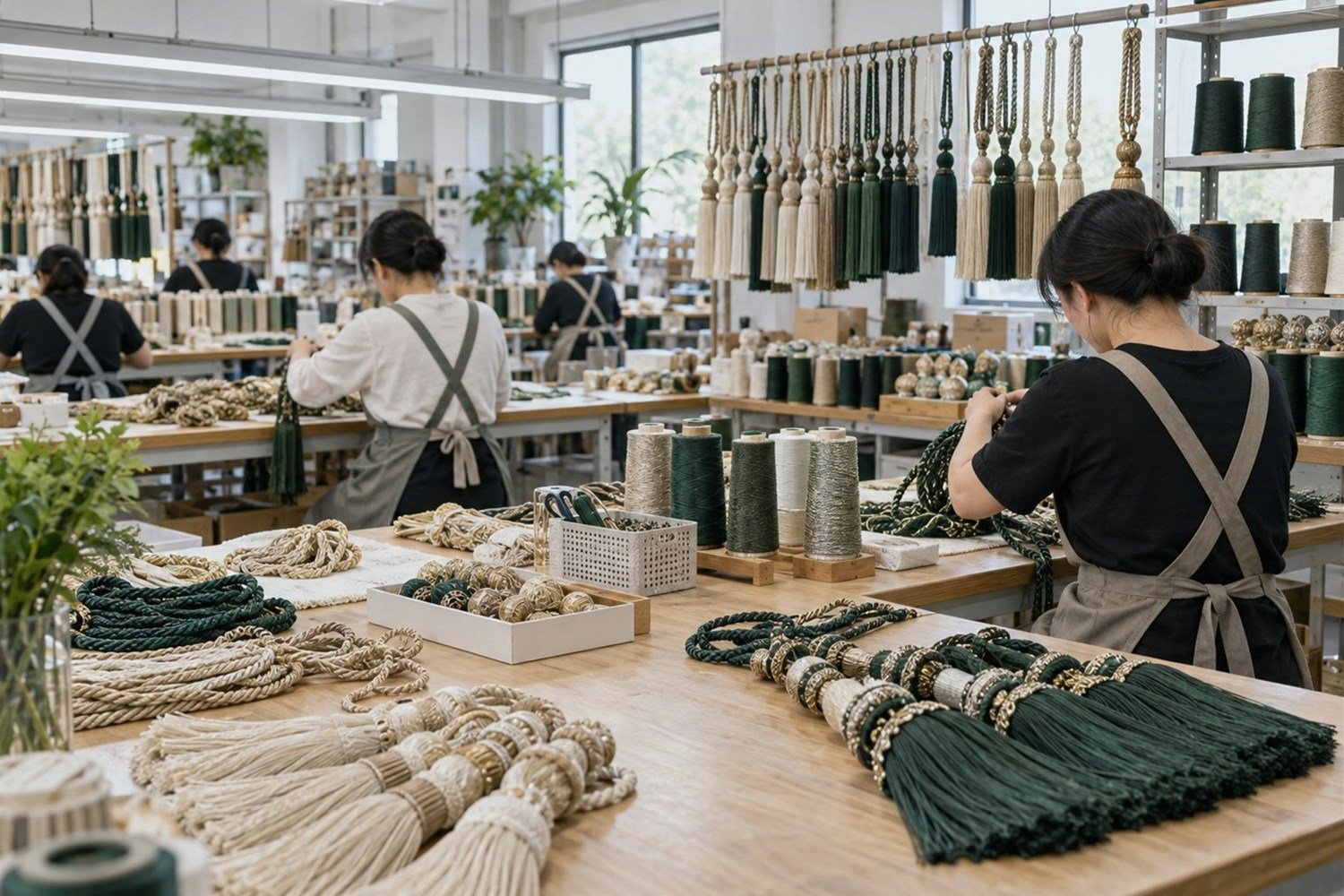
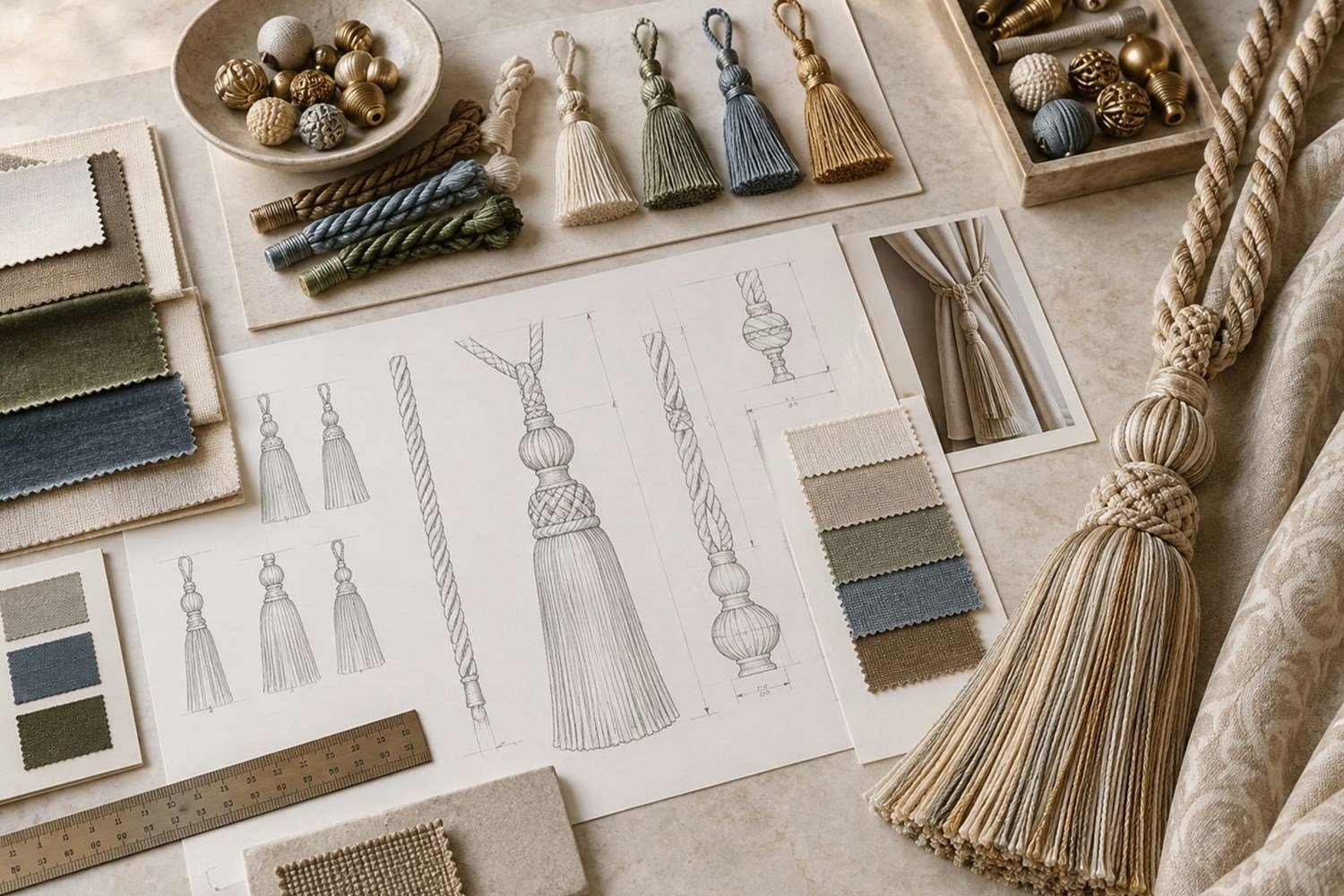
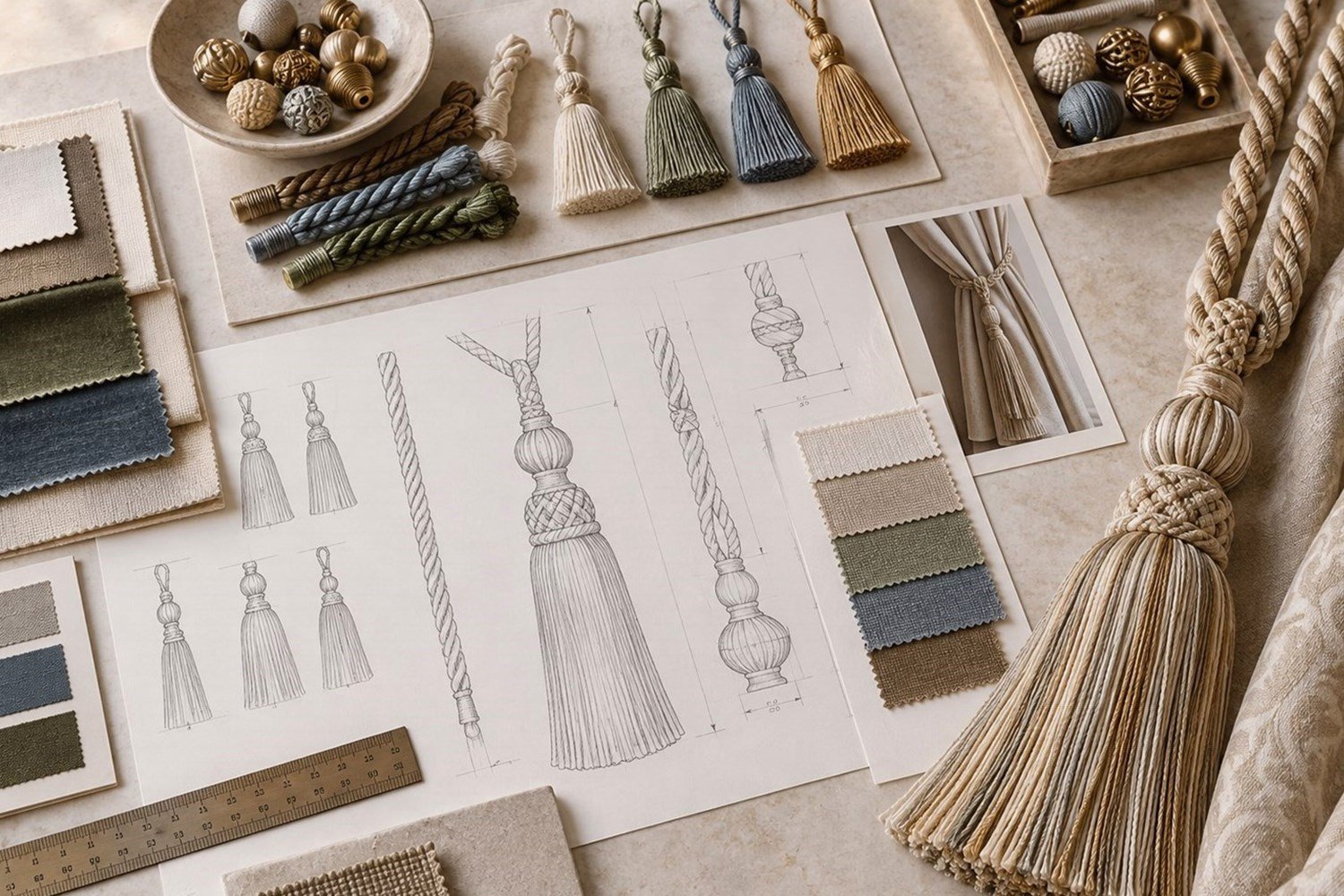
B2B rope tieback specification with twisted and braided cord, tassels, beads, loops, magnetic closure, curtain fabric, and color references

B2B buyers should specify the complete rope tieback construction, not only the phrase “rope tieback,” before sample approval or bulk production. Record the curtain context, rope material and construction, body and usable dimensions, end details, fastening, colors, components, packaging, representative sample, and final approved specification.

RequirementBuyer ReferenceApproved Specification
Curtain contextApplication, fabric, fullness, gathered volume, open position
Rope bodyTwisted, braided, single, multiple, wrapped, or mixed
Dimensions and fasteningOverall, usable wrap, visible scale, loops, rings, closure
ComponentsTassels, beads, caps, connectors, materials, colors
ApprovalRepresentative sample, packaging, final product reference

Review Rope Tiebacks, Curtain Tieback Materials, Curtain Tieback Size and Length, How to Choose Curtain Tiebacks, and Curtain Tiebacks vs Holdbacks for related context.

Common Rope Tieback Mistakes

Rope tieback checklist for twisted and braided construction, material, size, tassels, beads, loops, fastening, and curtain sample approval

Rope tieback selection becomes unreliable when the rope label replaces a complete construction and curtain-fit specification. Review the finished tieback rather than one isolated cord or component.

MistakeBetter approach
Specifying “rope” onlyDefine material, twist or braid, body, ends, components, and fastening.
Using universal lengthMeasure the actual gathered curtain and usable wrap.
Assuming one rope construction is bestChoose from the approved curtain and product context.
Starting with tassels or beadsConfirm basic rope body and fit first.
Approving color on screenReview rope and components on the approved material reference.
Testing a loose rope onlyReview the complete finished tieback with curtain.
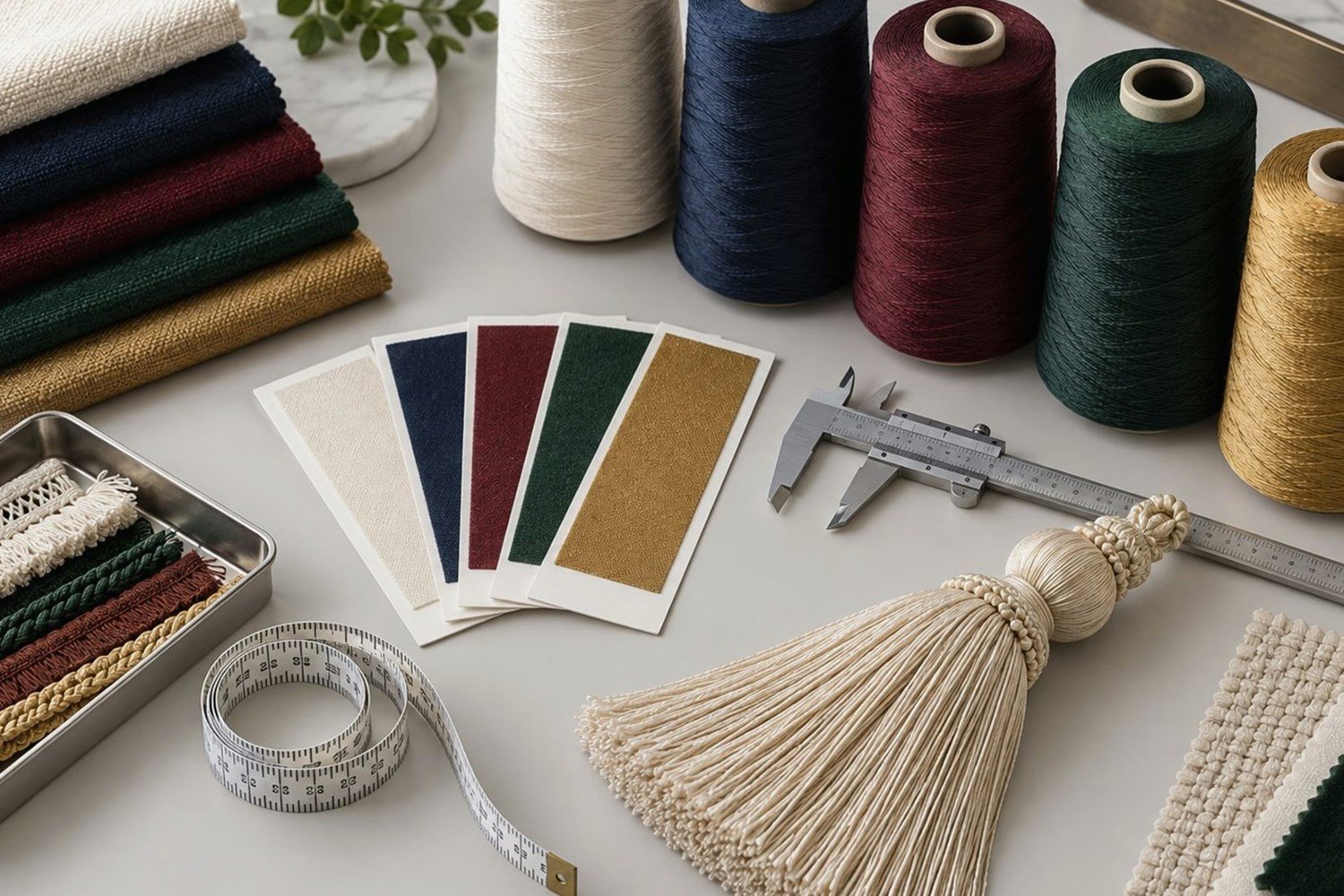
Rope curtain tieback samples showing twisted and braided cords, tassels, beads, loops, magnetic closure, curtain fit, and finishing

FAQ

Frequently Asked Questions

What are rope tiebacks?

Rope tiebacks are flexible curtain accessories with a rope or cord body that gathers curtains into an open or decorative position. They can include twisted or braided construction, tassels, beads, loops, caps, magnets, and other components.

What is the difference between twisted and braided rope tiebacks?

Twisted and braided describe different visible rope construction directions. Select the construction according to the desired surface, body, components, curtain relation, and approved product reference rather than an assumed universal performance rule.

Can rope tiebacks include tassels and beads?

Yes. Rope describes the main body; tassels, beads, caps, loops, rings, and closures can be part of the same finished tieback design.

How long should rope tiebacks be?

There is no universal length. Define overall and usable wrap dimensions from the actual gathered curtain, rope construction, fastening, desired fit, and decorative components.

How should rope tiebacks fit curtains?

They should fit securely without unnecessarily compressing or distorting the curtain. Review fabric, fullness, layers, gathered volume, intended fold shape, and fastening with the complete sample.

Do rope tiebacks have to match curtain color?

No. They can match, coordinate, contrast, or follow a project palette. Review actual rope, tassel, bead, and hardware materials with the curtain reference.

What should B2B buyers specify?

Specify curtain context, rope material and construction, body and usable size, fastening, tassels, beads, components, colors, packaging, representative sample, and final approved specification.

Rope curtain tiebacks matched with curtain fabric, twisted and braided cord, tassels, beads, loops, fastening, and decorative requirements

Conclusion

What Are Rope Tiebacks? Key Takeaways

Rope tiebacks use flexible rope or cord bodies to gather curtains, and their finished design can combine many constructions, materials, closures, and decorative components. The rope body, fastening, fit, color, tassels, beads, and visible proportion should be selected from the actual curtain and approved project direction.

  • Rope can be twisted, braided, single, multiple, wrapped, or mixed material.
  • Rope tiebacks can include tassels, beads, caps, loops, rings, magnets, and other components.
  • Choose size and fastening from the gathered curtain rather than universal rules.
  • Approve a complete representative sample for B2B development.
Discuss a rope tieback project

Inquiry Form

Discuss Rope Curtain Tiebacks

Describe the curtain application, rope construction, body and usable size, fastening, material, colors, tassels, beads, components, packaging, and other project requirements in one request.

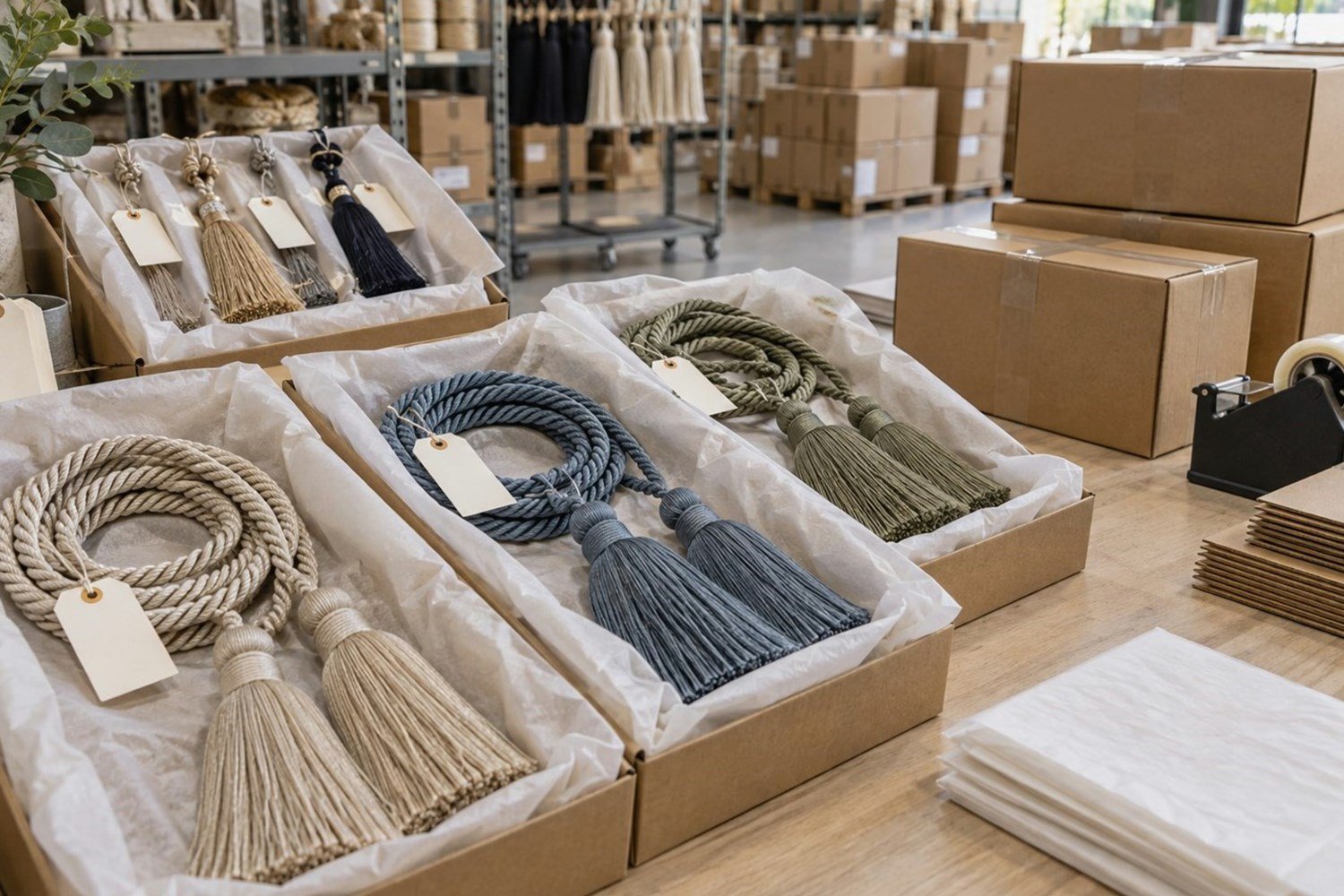
Rope curtain tieback samples with twisted and braided cord, tassels, beads, loops, magnetic closure, material, and color references for a B2B inquiry

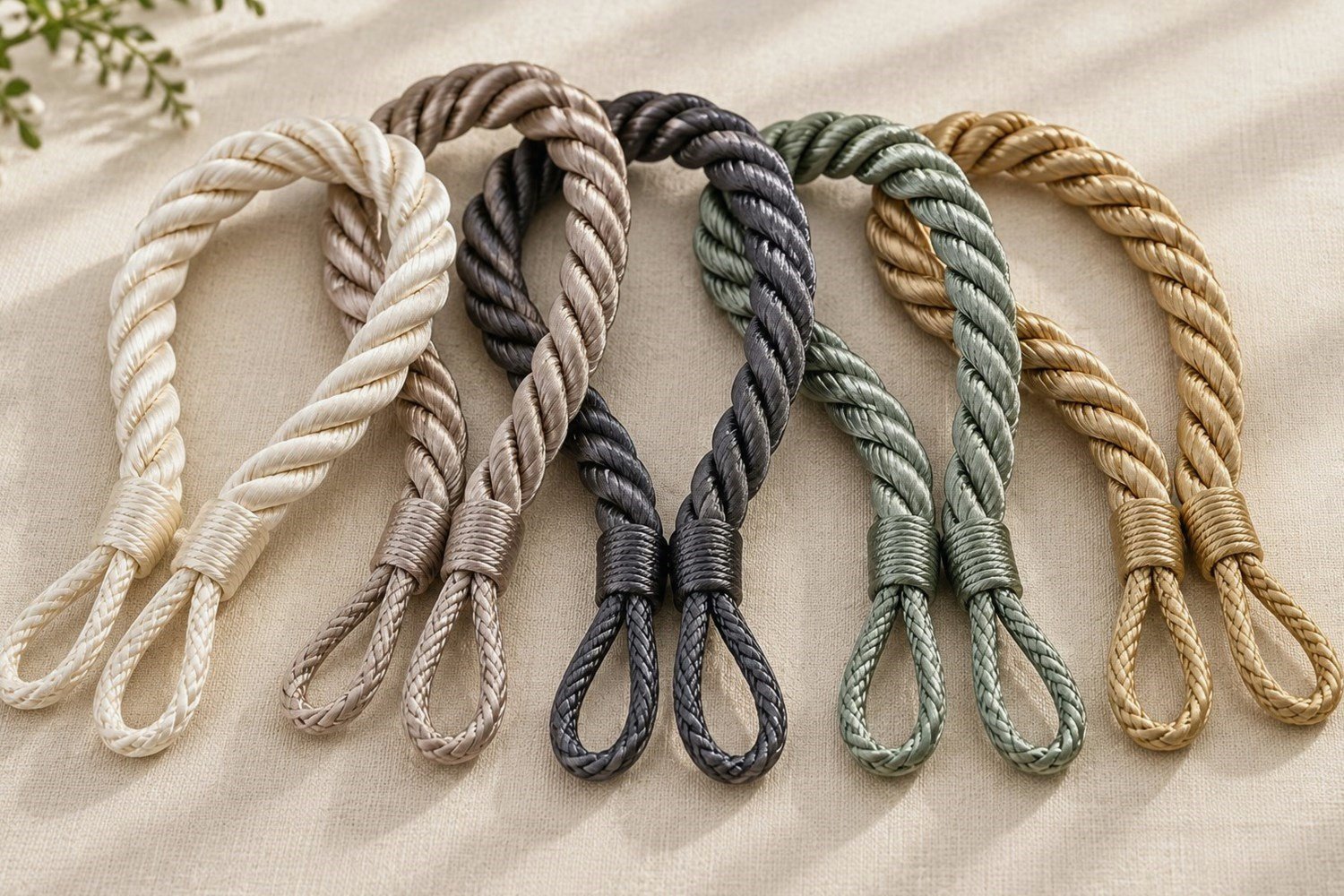
Close-up rope curtain tieback construction with twisted cord, tassel, bead, cap, loop, fastening, and finished details

Published: •Topic: Rope curtain tiebacks

Other Articles

Start a conversation

Tell us what you need

Share your product type, colour, dimensions and quantity. Our sales team will review your request and reply by email.

  • Emailsales@evnubtrims.com
  • Phone+86 18268767650