
Main Content
What Materials Are Curtain Tiebacks Made From?
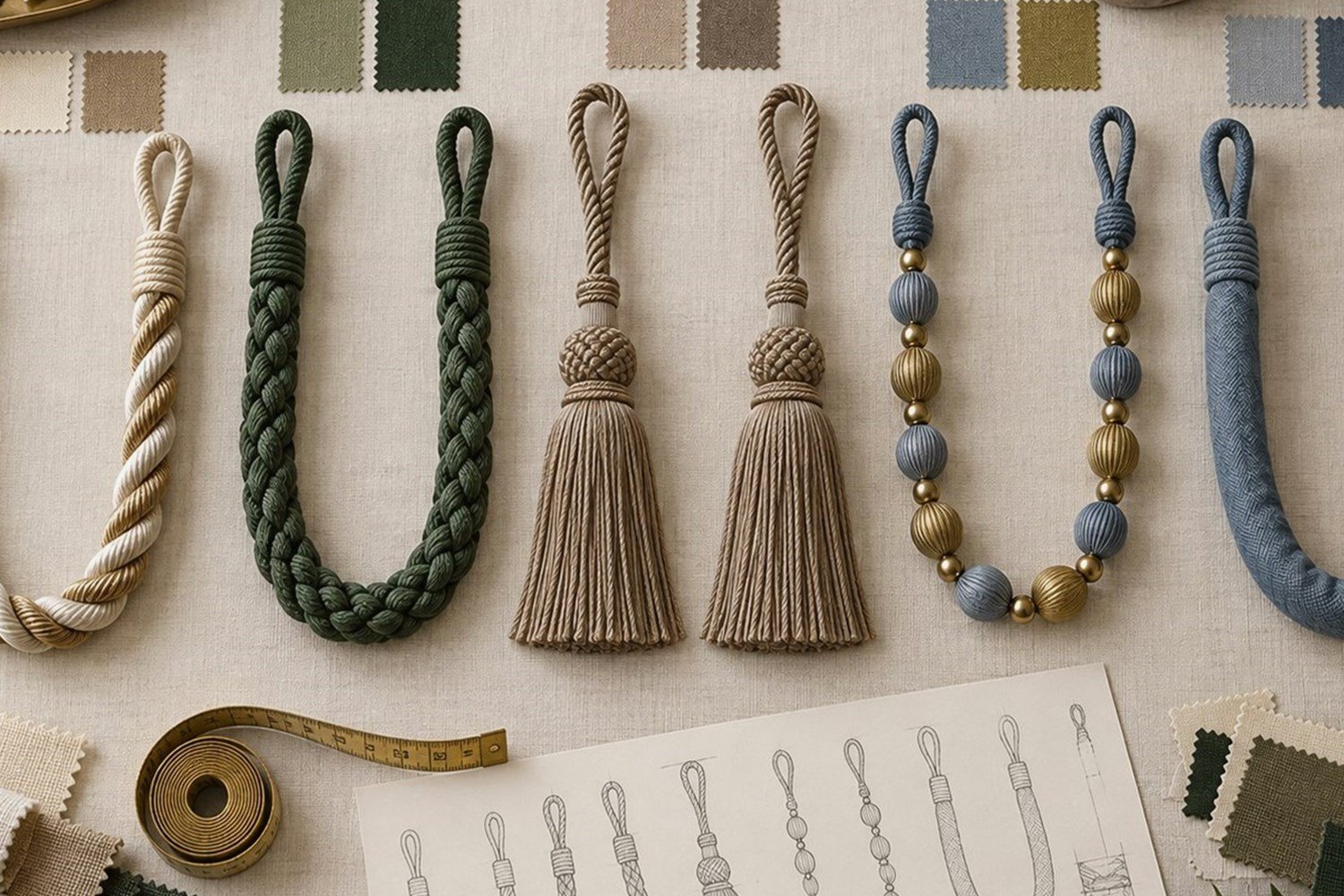
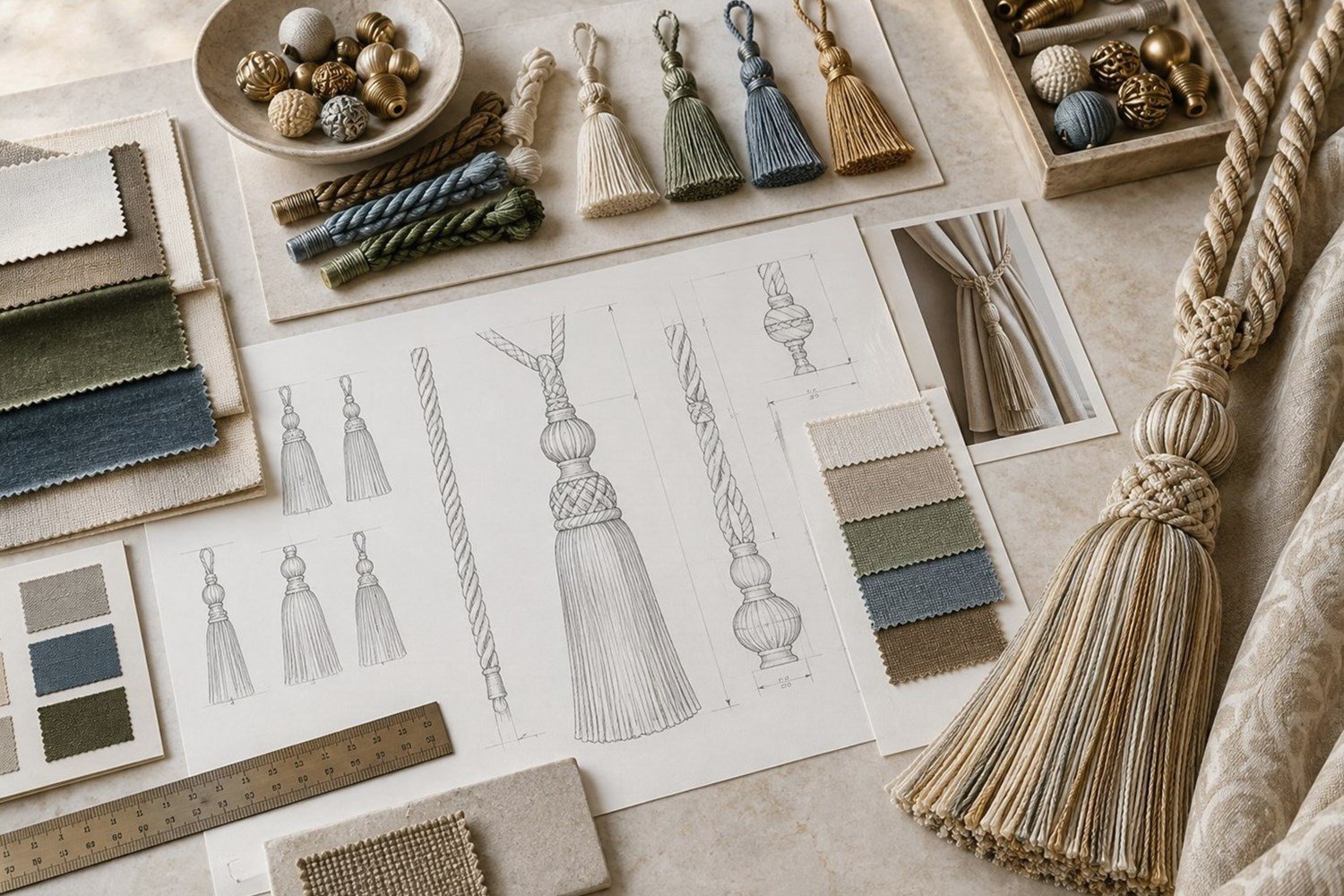
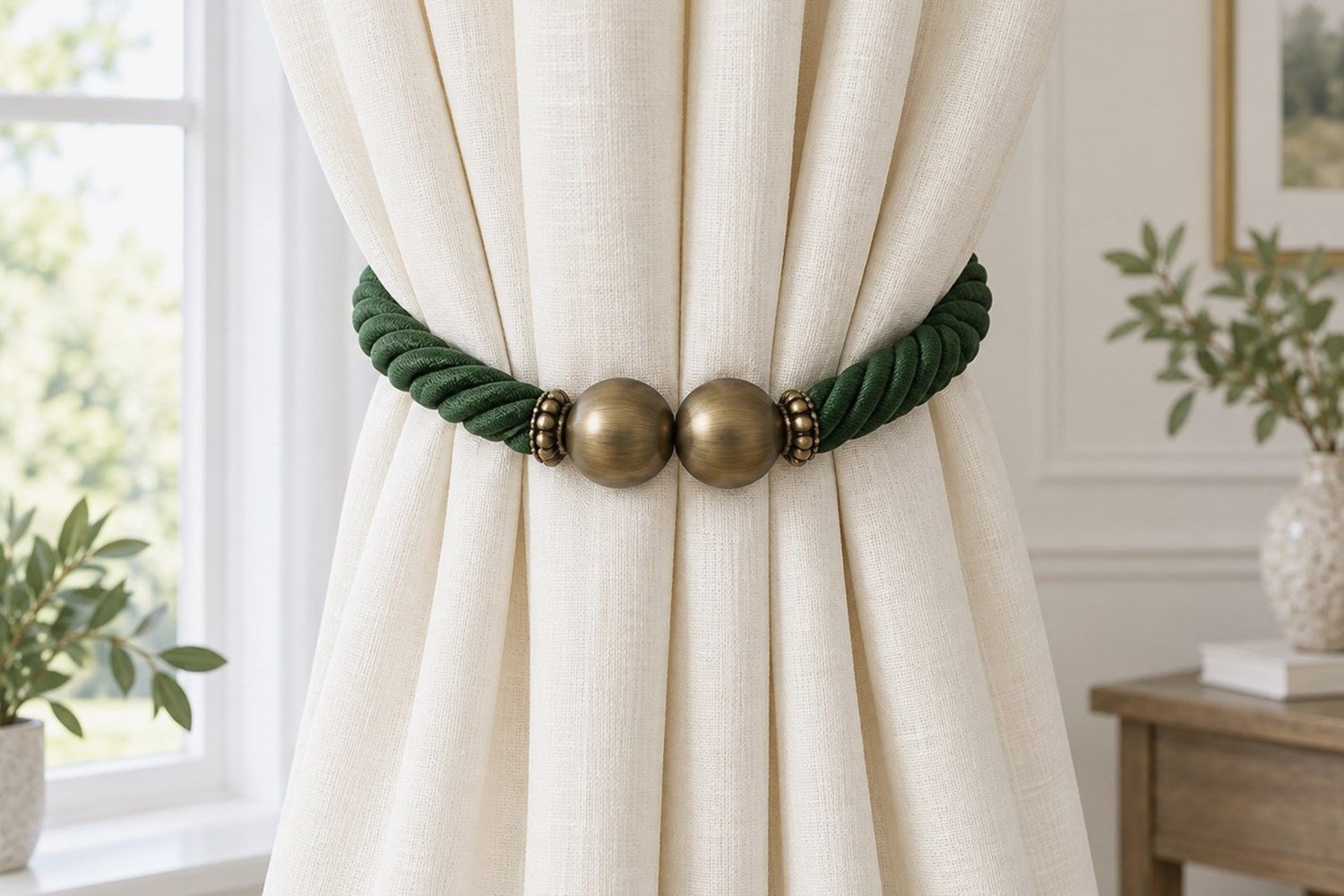
Curtain tiebacks are made from one material or a combination of textile, decorative, and fastening materials selected for the required appearance and construction. Textile elements form the rope, cord, fabric strap, braid, wrap, tassel, or body. Beads, caps, rings, metallic-effect details, magnets, hooks, and connectors can add decoration or establish how the tieback is secured.
| Material category | Selection focus | Specification note |
|---|---|---|
| Fabric and yarn | Texture, surface, color, and construction | Identify fiber or material description clearly |
| Rope and cord | Twist, braid, wrap, body, and visible diameter | Define construction as well as material |
| Tassels | Head, skirt, cord, sheen, and proportion | Specify components separately where needed |
| Beads and hardware | Visual effect, finish, placement, and connection | Do not rely on a color name alone |
| Magnetic components | Closure design and complete construction | Review with intended curtain sample |
Fabric, Rope, and Cord Materials
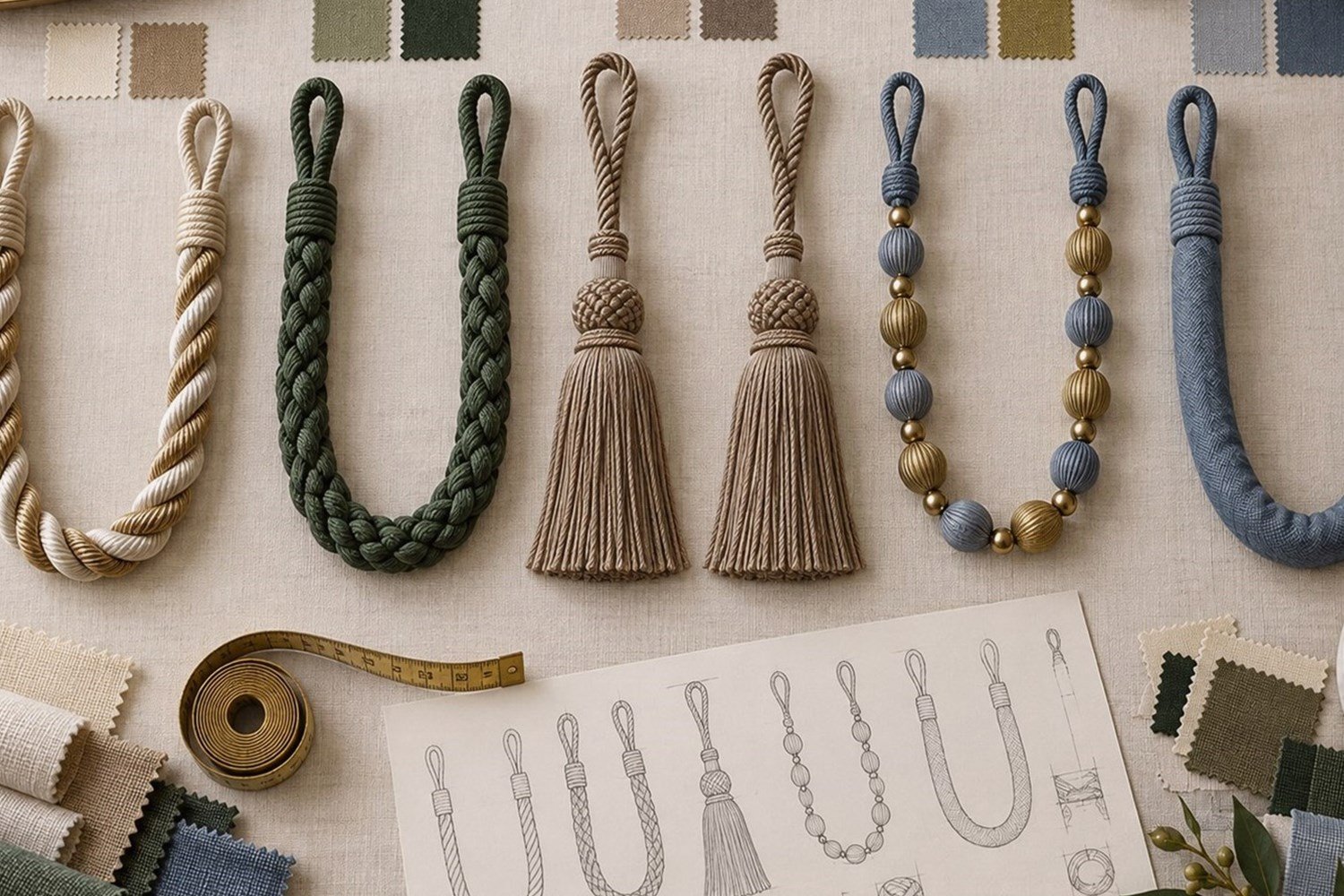
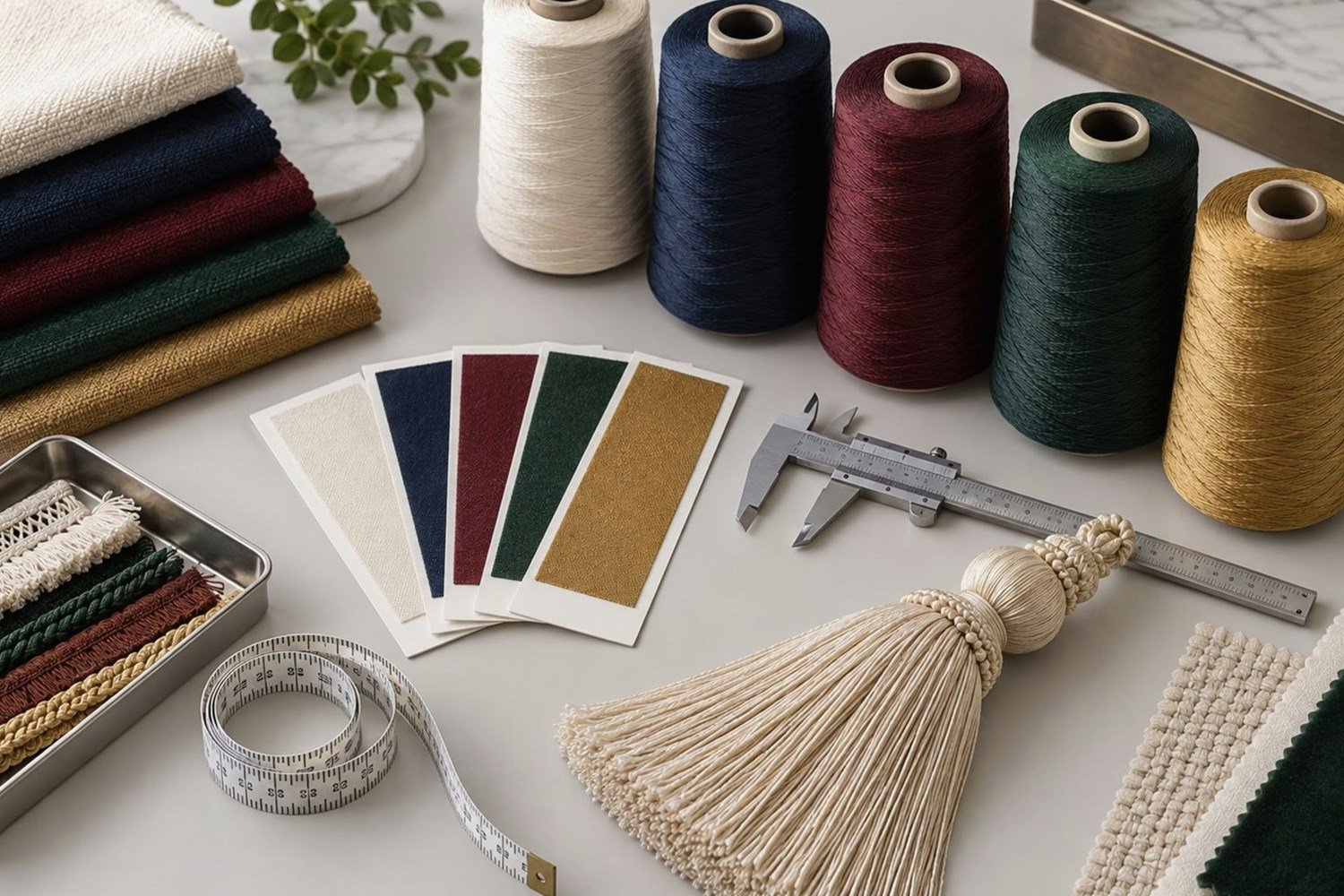
Fabric, rope, and cord materials define much of a curtain tieback’s surface texture, color expression, construction direction, and connection to the curtain treatment. Polyester, cotton, rayon or viscose, silk and silk-like options, linen, jute, and blended constructions can each be considered when they support the required product reference.
- Polyester: commonly used in yarn, rope, braid, tassels, and decorative textile components; review actual surface and construction.
- Cotton: a textile option with its own texture and visual character; confirm the specified yarn, weave, braid, or fabric form.
- Rayon and viscose: often selected for a distinctive textile appearance and tassel direction; do not describe rayon as natural silk.
- Silk and silk-like materials: these are different material descriptions. “Silk-like” should not be presented as silk unless the specification supports it.
- Linen and jute: can contribute a more visibly textured or natural-looking construction; review the actual material and finish.
Natural and synthetic are categories, not automatic rankings. Natural materials are not automatically better, and synthetic materials are not automatically lower quality. The suitable material depends on the intended design, construction, color direction, curtain compatibility, components, and approved reference.
How Material Affects Appearance, Color, and Proportion
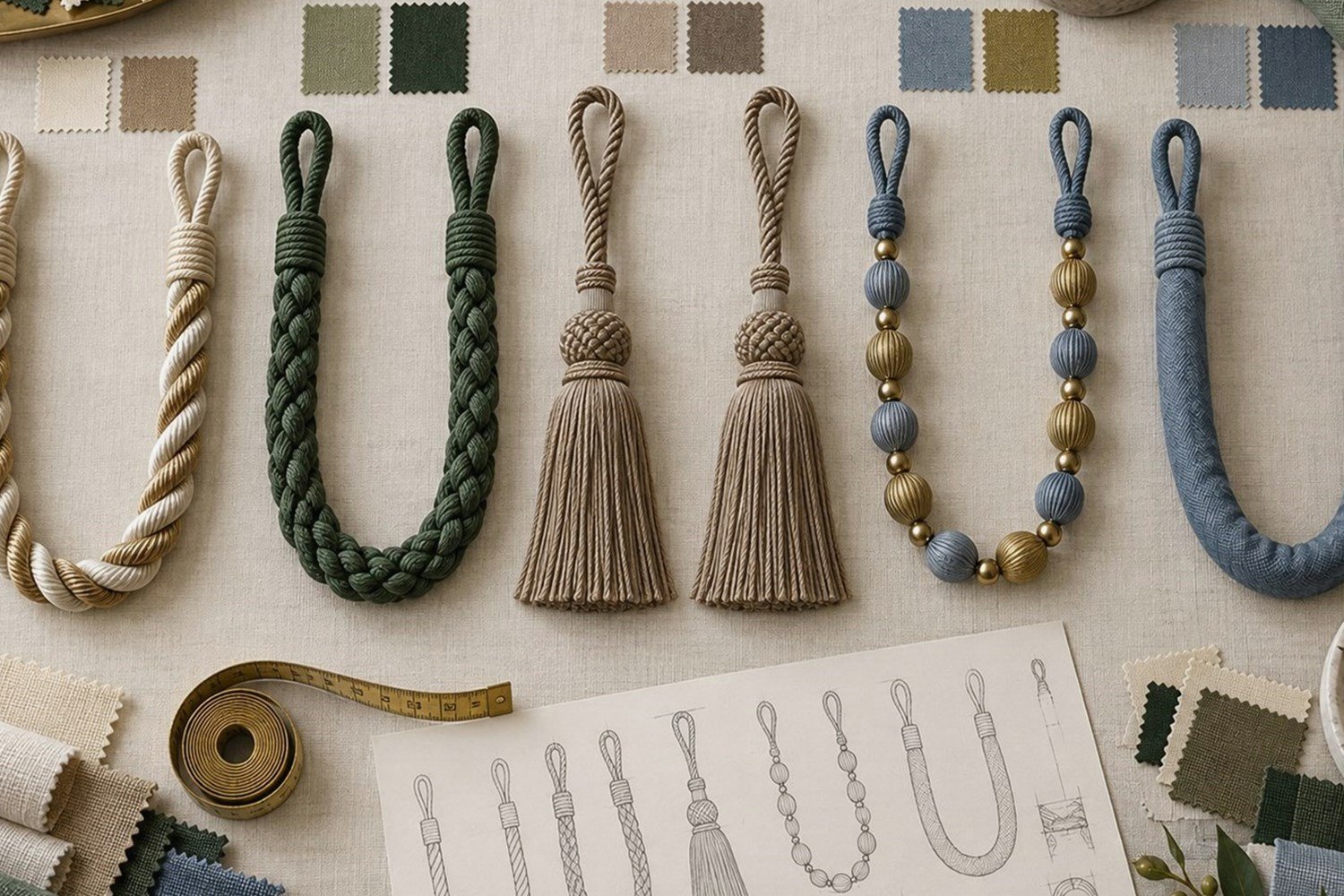
Material affects how a curtain tieback reads at a distance and in close view because surface texture, sheen, color absorption, component shape, and visual weight are tied to material and construction. Two products in a similar hue can look different when one uses a matte textile, another a high-sheen yarn, and another reflective beads or metallic-effect components.
| Material effect | What to review |
|---|---|
| Texture | Twist, braid, fibers, weave, fabric surface, bead finish |
| Color | Material base, dye direction, sheen, adjacent components, approved reference |
| Weight and proportion | Visible scale, tassel or bead relation, gathered curtain appearance |
| Reflective effect | Metallic-effect yarn, coatings, hardware finish, component surface |
| Construction | How materials connect, wrap, fasten, and retain the intended shape |
Do not call every reflective bead crystal, every pearl-looking bead a natural pearl, or every gold-colored component gold. Describe component materials and finishes accurately. Color approval should also include the actual material, because the same color reference can appear different across textile yarn, fabric, bead surfaces, or hardware finishes.
Tassels, Beads, Magnets, and Hardware
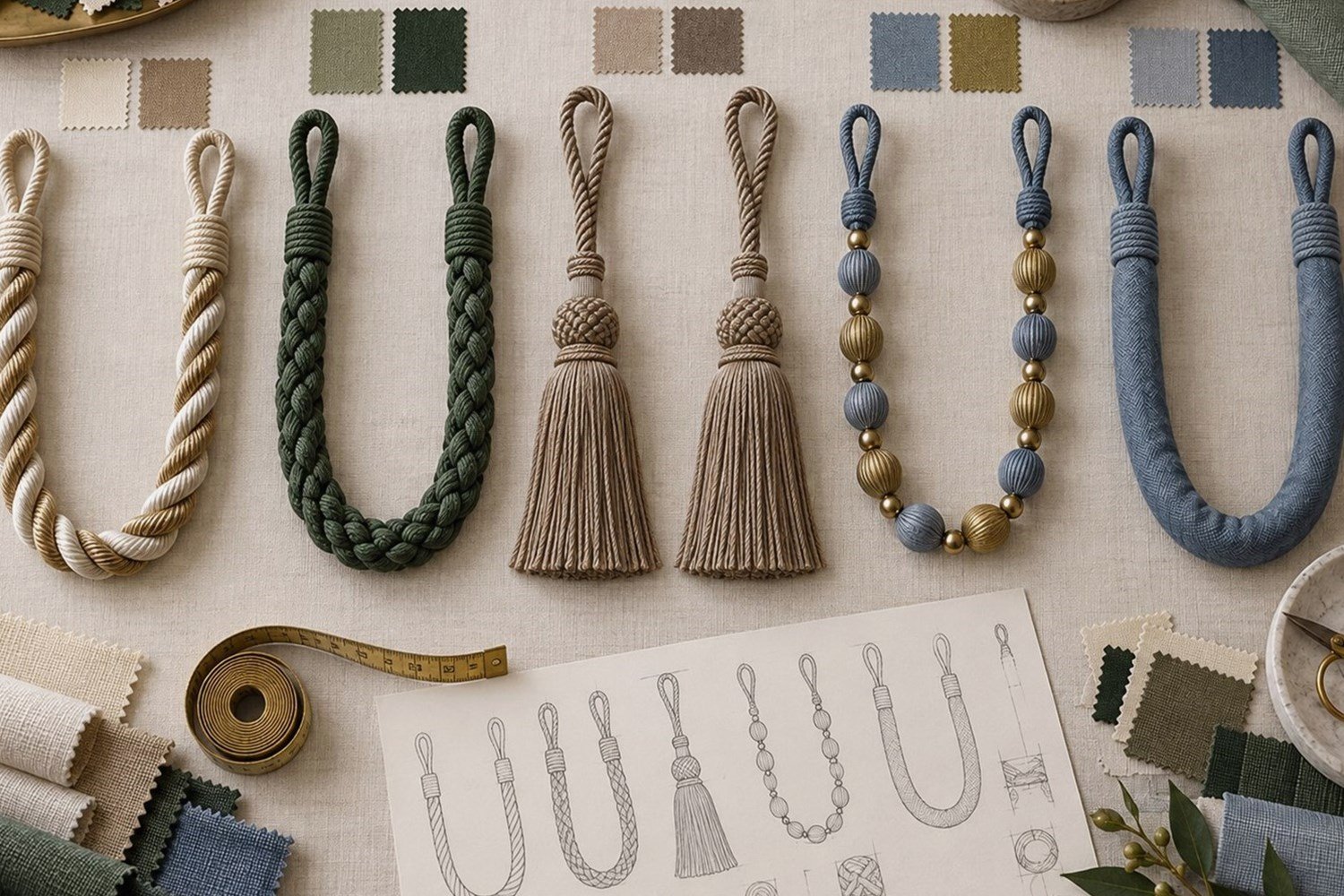
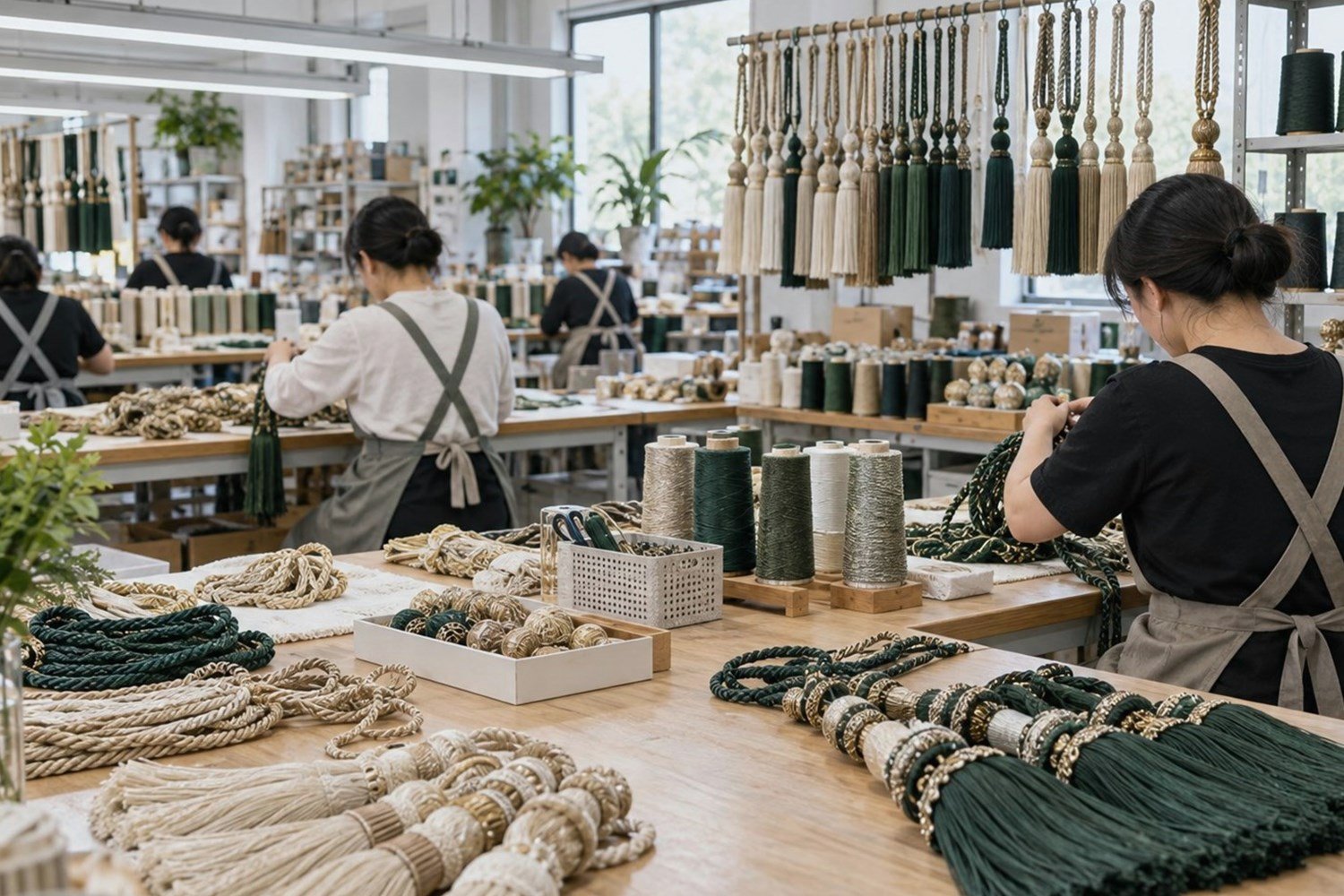
Decorative and fastening components should be specified as individual parts because they may use different materials from the rope or fabric body. Tassel yarn, beads, wood elements, metal components, plastic or acrylic components, magnets, caps, rings, loops, hooks, and connectors each contribute to the visible and functional composition.
| Component | What to specify | What to check in sample |
|---|---|---|
| Tassels | Yarn or fiber, head, skirt, color, dimensions, attachment | Proportion, fullness, finishing, relation to cord |
| Beads | Material description, shape, color, surface, position | Visible effect and component balance |
| Wood, acrylic, or plastic | Material, form, color, finish, connection | Surface and placement in the design |
| Metal components | Component material and stated finish | Color, sheen, caps, rings, and connectors |
| Magnetic closure | Complete closure and body construction | Fit and intended operation with curtain |
A magnetic tieback should be evaluated as a complete construction. Consider gathered curtain volume, cord or body length, closure placement, connection design, curtain fabric, and frequency of adjustment. Do not reduce selection to a single claim about magnet strength or assume all magnetic tiebacks suit the same curtain applications.
Mixed-Material Curtain Tiebacks and Material Selection
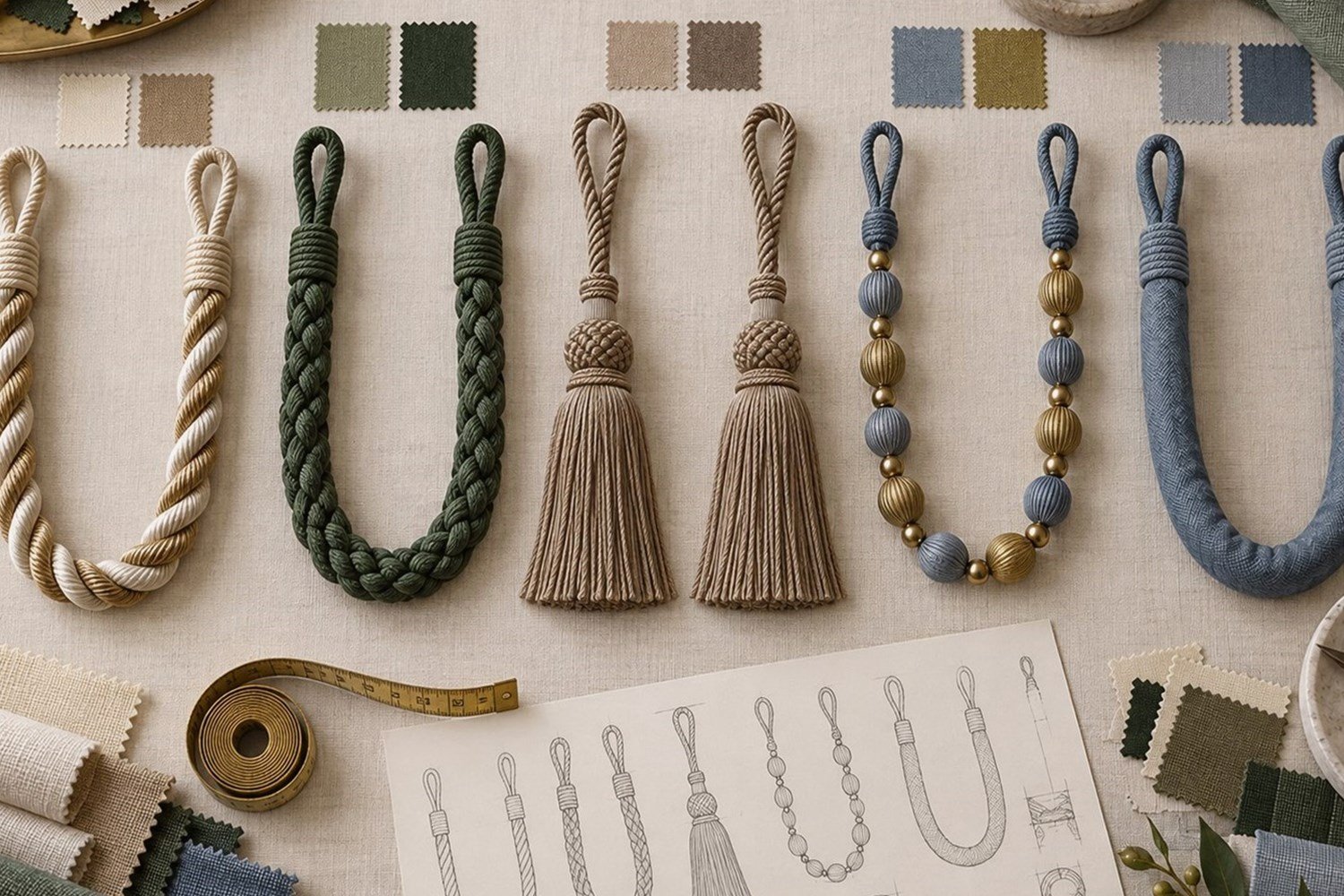
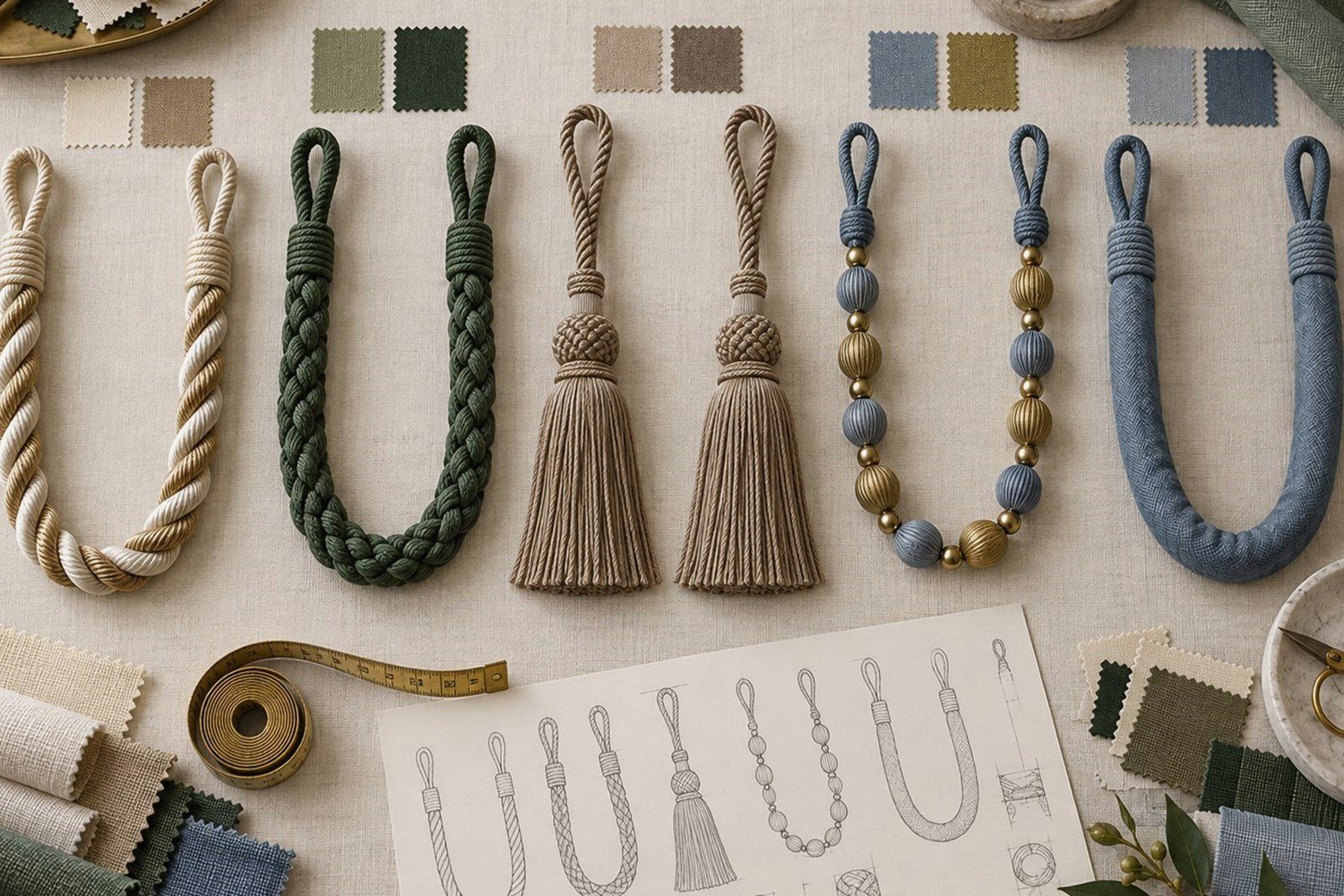
Mixed-material curtain tiebacks combine components deliberately so each material contributes a specific textile, decorative, or fastening role. A braided textile rope can be paired with tassel ends and metal-look caps; a fabric body can include a magnetic closure; a beaded design can use cord, connectors, and textile elements. The material list should state all visible and functional elements rather than naming only the main body.
Select materials after the curtain application, fabric, fullness, gathered volume, intended position, tieback type, fastening, and basic fit are known. Then choose texture, color, sheen, tassels, beads, and components to support the complete window treatment. A material choice that suits one curtain may not suit another because the visible relationship changes with fabric surface, drape, volume, and project context.