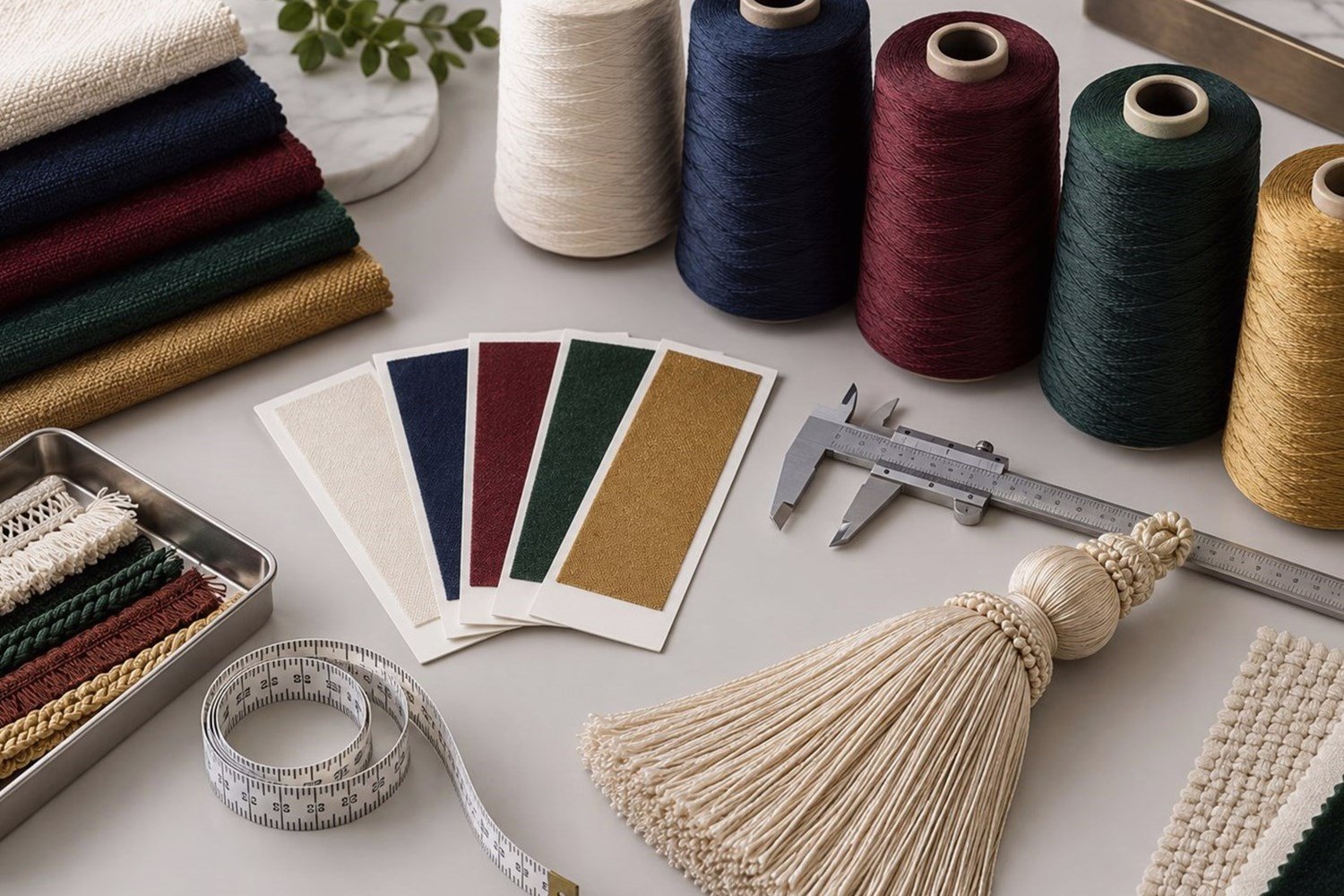
Curtain knowledge base

How to Customize Curtain Tiebacks

Customize curtain tiebacks by starting with the intended curtain application and reference, then defining the tieback type, materials, colors, dimensions, construction, fastening, tassels, beads, and decorative components. Review the complete representative sample with the intended curtain, record required revisions, and approve the final specification before bulk production.

Custom curtain tieback workflow from curtain reference to rope, tassel, bead, fabric, magnetic, and final sample approval

Quick Reference

Custom Workflow

Start
Application and reference.
Define
Body, fastening, fit, and materials.
Develop
Colors and decorative components.
Review
Complete sample and revisions.
Approve
Final B2B specification.
Custom curtain tieback planning with curtains, rope, fabric, tassels, beads, loops, magnetic closure, and material references

Overview

Customize From the Curtain Outward

A practical custom curtain tieback workflow starts with the curtain and intended application rather than decorative components alone. The curtain fabric, fullness, gathered volume, open position, use pattern, and project direction establish the context for type, fastening, dimensions, material, color, construction, and visible details.

Workflow stageMain decisionOutput
Project startApplication and curtain contextClear product objective
Reference reviewImages, drawing, existing item, material sampleShared visual direction
SpecificationBody, fastening, size, materials, componentsComplete product definition
Sample reviewFit, proportion, color, construction, finishRequired revisions or approval
Final approvalRepresentative sample and documentApproved production reference

Customization does not have to mean that every feature changes. A project can adapt a stock direction, modify selected elements, or develop a new construction. State which features are fixed and which need development so the final sample answers the right questions.

Main Content

How to Start a Custom Curtain Tieback Project

Custom curtain tieback project brief showing intended curtain, application, product reference, construction, and component requirements

Start a custom curtain tieback project by defining the intended curtain, application, desired gathered position, and product objective. This avoids choosing a rope, tassel, bead, or magnetic detail before the body has been matched to the curtain. A useful opening brief records the curtain material, fullness, layers, gathered volume, intended appearance, and whether the tieback will be adjusted occasionally or repeatedly.

  • Identify the residential, hospitality, collection, showroom, or other application.
  • Provide a curtain reference, fabric sample, photo, drawing, or intended window treatment direction.
  • Define the desired open or decorative gathered position.
  • Clarify stock, modified, or fully custom development scope.
  • Record the target type, fastening, dimensions, materials, colors, components, and packaging needs.

A product photo is useful as a direction, but it may not define all materials, measurement points, body construction, component placement, or fastening details. Supplement visual references with written requirements and physical materials where practical.

How to Define the Complete Tieback Specification
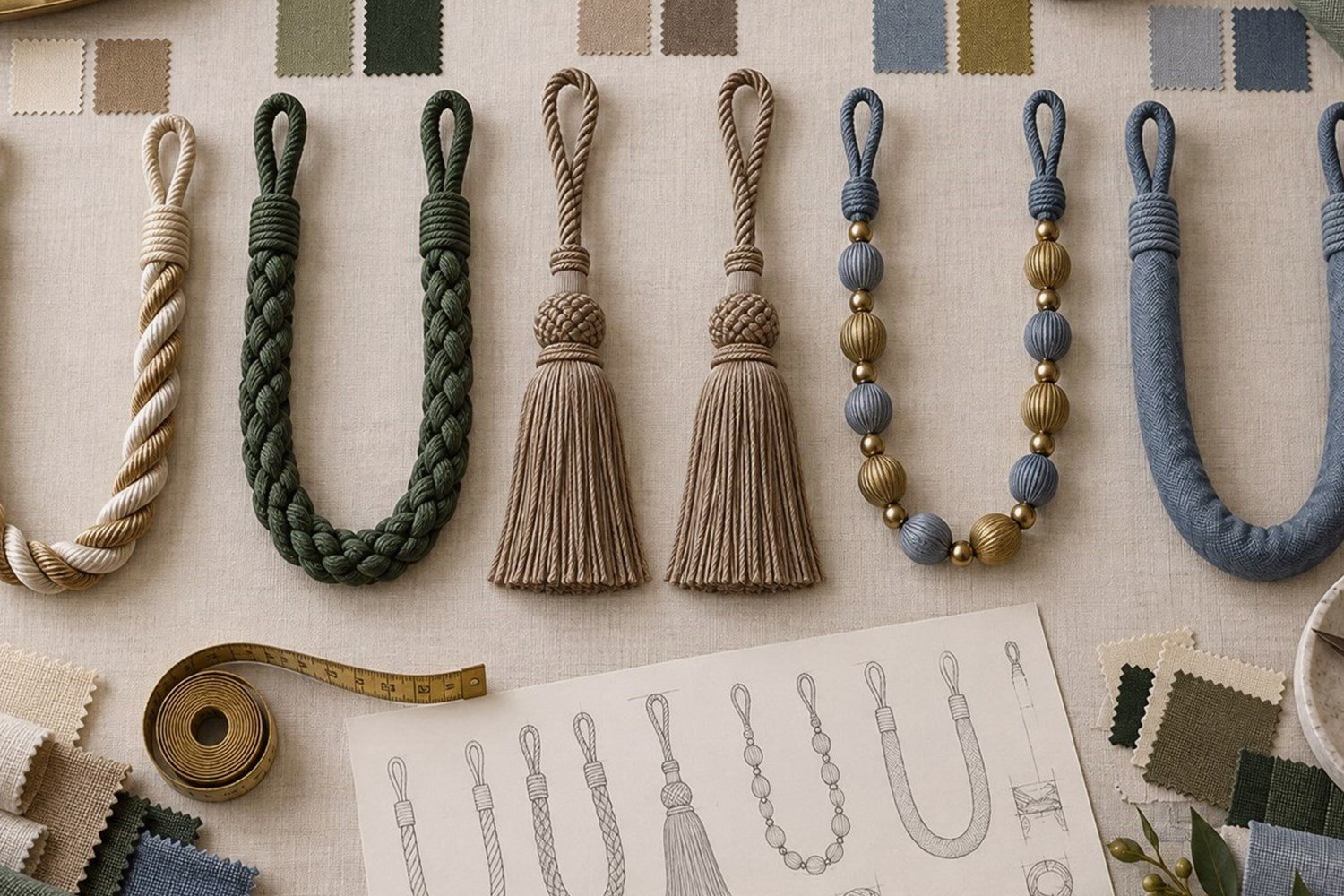
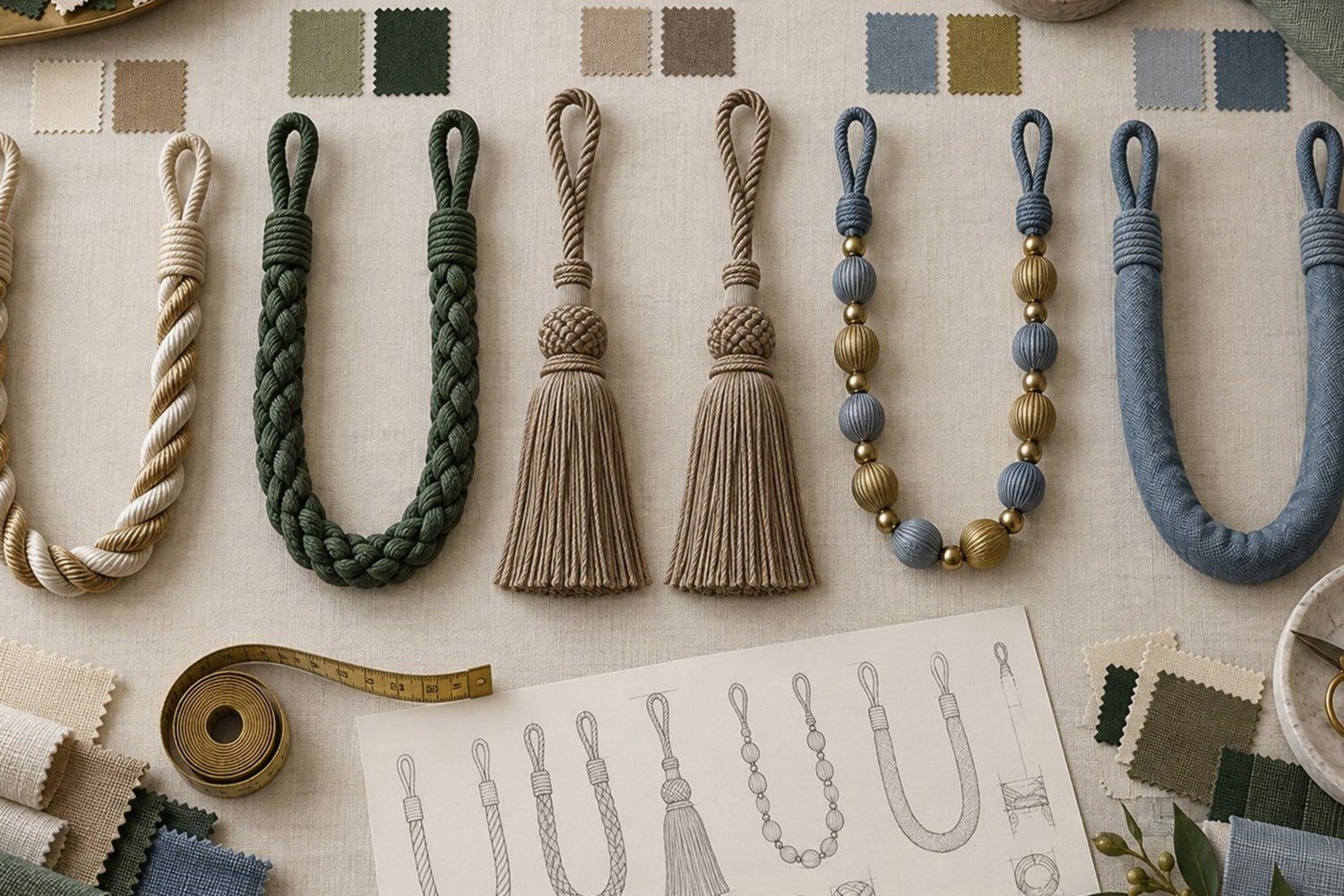
Custom curtain tieback specification with rope, fabric, tassels, beads, loop, ring, magnetic closure, dimensions, materials, and color references

A complete specification connects the main body, fastening, fit, materials, color, construction, decorative components, packaging, and curtain reference into one product definition. These choices influence each other. A change in rope construction can alter visible scale; a closure can affect usable length; a new bead or cap can change overall proportion; a color direction can vary across yarn, fabric, hardware, and components.

Specification areaQuestions to answer
Tieback typeRope, tassel, beaded, fabric, magnetic, braided, or mixed material?
Body and constructionTwisted, braided, wrapped, fabric band, multiple cord, or combined body?
FasteningHook, loop, ring, magnetic, self-tied, or integrated closure?
Size and lengthOverall length, usable wrap, rope or fabric body, loops, tassels, beads?
Materials and colorsTextile, fabric, bead, hardware, finish, and approved references?
DecorationTassels, caps, beads, knots, rings, connectors, or other components?

There is no universal curtain tieback length or universal rope diameter. Define size from the actual gathered curtain and construction. A tieback should fit securely without unnecessarily compressing or distorting the curtain. Overall length and usable wrap can differ when tassels, loops, caps, rings, or closures extend beyond the part that gathers fabric.

How to Customize Materials, Colors, and Components

Custom curtain tieback materials and components including rope, fabric, tassel yarn, beads, caps, loops, rings, and magnetic closure

Customize materials and components by defining their role in the complete tieback and reviewing them with the intended curtain rather than selecting them as isolated decorative items. The main body can use rope, cord, braid, fabric, or mixed material. Tassels, beads, caps, rings, loops, hooks, magnets, connectors, and packaging can each require their own material, color, finish, and placement reference.

Custom elementWhat to defineWhat to review
Rope and cordMaterial, twist, braid, body, visible scale, endsTexture, fit, proportion, and color
Fabric bodyTextile, width, construction, edge, attachmentRelation to curtain and fastening
TasselsHead, skirt, cords, caps, color, dimensionsFullness, alignment, and visual scale
Beads and detailsMaterial, shape, surface, placement, connectorsBalance and visible character
Magnetic designBody, closure, connection, component placementComplete fit and intended adjustment

Tiebacks do not have to match curtain color exactly. Matching, tone-on-tone, contrasting, hardware-coordinated, and brand-coordinated approaches can all be valid. Do not call a material silk, crystal, natural pearl, or gold simply because it looks similar; specify actual materials and finishes accurately.

How to Review Samples and Request Revisions
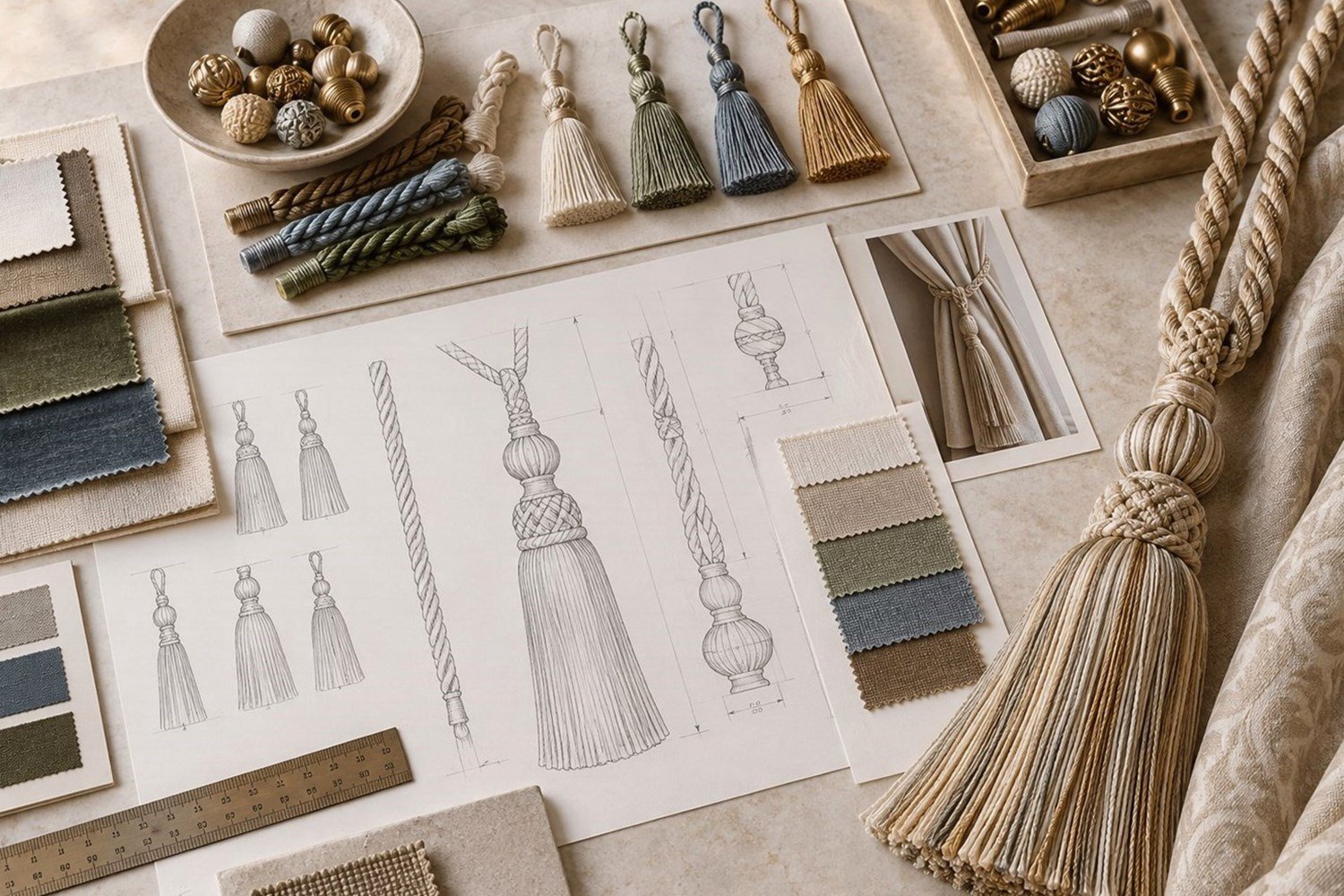
Custom curtain tieback sample reviewed with the intended curtain for fit, rope, tassel, bead, color, fastening, and decorative proportion

The sample review should assess the complete curtain tieback on the intended curtain or a representative curtain reference because fit, fold shape, fastening, and visual proportion cannot be confirmed by loose materials alone. Record revision feedback against specific product areas rather than describing the sample only as “good” or “not right.”

Review pointQuestions for sample approval
Curtain fitDoes the usable body accommodate the actual gathered curtain?
Open positionDoes the tieback create the intended fold shape and visible window area?
FasteningDoes the loop, hook, ring, magnet, or closure work as specified?
DimensionsAre overall and component measurements taken from agreed points?
Materials and colorDo textile, bead, and hardware references match the approved direction?
Decoration and finishAre tassels, beads, caps, connectors, trimming, and placement proportionate?

Request revisions by naming the exact element and desired change: for example, body length, usable wrap, loop construction, tassel proportion, bead placement, cap finish, or color reference. Review revised samples as complete products, then document the approved sample and final specification before the project moves into bulk production.

B2B Approval

Move From Sample to Final Specification

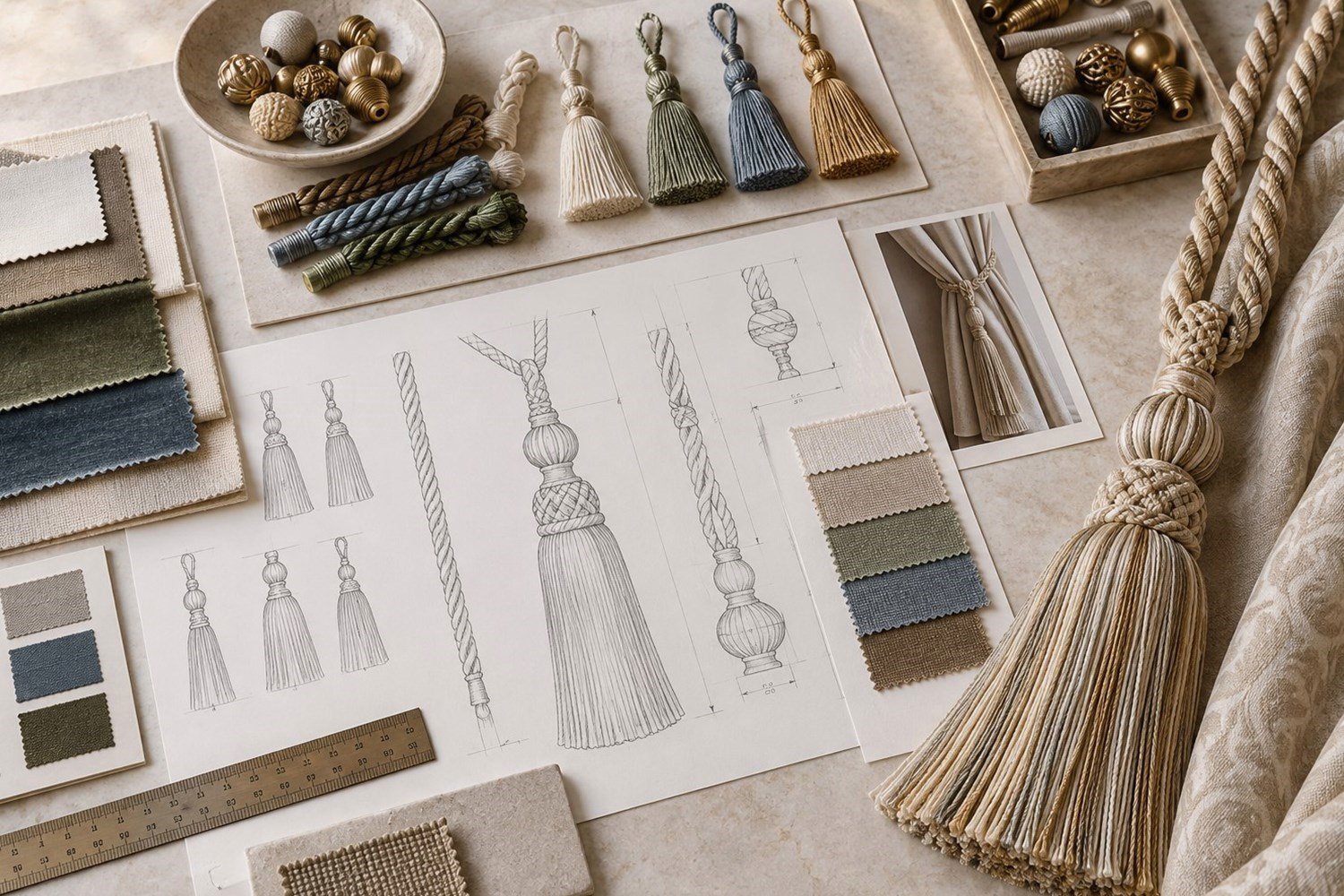
B2B custom curtain tieback development board with curtain sample, rope, fabric, tassel, bead, closure, color, and packaging references

Move from sample to bulk production only after the representative tieback and its full specification have been approved together. This keeps the curtain context, body construction, materials, dimensions, colors, components, fastening, packaging, and final reference aligned for the project.

RequirementBuyer ReferenceApproved Specification
Curtain contextApplication, fabric, fullness, gathered volume, open position
Body and fasteningRope, fabric, tassel, bead, magnetic, loops, rings, closures
DimensionsOverall, usable wrap, components, defined measurement points
Materials and colorTextile, components, finish, physical or approved reference
Packaging and projectPresentation, quantity, representative sample, final reference
  • Keep the representative sample with its corresponding written specification.
  • Document every agreed revision before final approval.
  • Confirm the complete finished product, not component choices in isolation.
  • Use the final reference to support consistent project review.

Explore Custom Curtain Tiebacks, How to Choose Curtain Tiebacks, Curtain Tieback Materials, and Custom Curtain Tiebacks for related context.

Common Custom Workflow Mistakes

Custom curtain tieback workflow checklist covering curtain reference, materials, colors, rope, tassels, beads, fastening, sample, revisions, and approval

Custom development becomes less reliable when a project skips curtain context, treats a product image as a full specification, or approves materials without reviewing the finished tieback. A step-by-step record gives every participant a consistent reference.

MistakeBetter approach
Starting with a tassel or bead onlyDefine curtain use, body, fastening, and fit first.
Leaving size undefinedMeasure the actual gathered curtain and named components.
Using one screen image as approvalUse defined references and a finished representative sample.
Ignoring loops or closureSpecify fastening with the complete construction.
Giving vague revision feedbackName the specific body, material, component, dimension, or finish change.
Approving a loose componentApprove the complete tieback with the intended curtain.
Custom curtain tieback samples showing rope, fabric, tassels, beads, loops, magnetic closure, color references, and final approval points

FAQ

Frequently Asked Questions

How do you customize curtain tiebacks?

Start with the intended curtain and application. Then define the tieback type, body, fastening, size, materials, colors, tassels, beads, and components. Review a complete representative sample, record revisions, and approve the final specification before bulk production.

What should I provide to start a custom project?

Provide the curtain application, fabric or visual reference, desired open position, product direction, dimensions where known, materials, colors, components, fastening, packaging, and any existing drawing or sample.

Can I customize rope, tassels, beads, and magnets together?

Yes. A custom tieback may combine rope or fabric bodies with tassels, beads, caps, loops, rings, magnets, and other details when they support the intended construction and curtain compatibility.

How should custom tieback size be defined?

Use the actual gathered curtain as the fit reference and separate overall length from usable wrap and component dimensions. There is no universal length that suits every tieback construction.

How should colors be approved?

Review colors on the specified materials because yarn, fabric, bead, and hardware surfaces can show the same color direction differently. Use an agreed reference and complete sample where coordination matters.

How do sample revisions work?

Record the exact element to change, such as body length, usable wrap, rope construction, tassel scale, bead position, closure, material, or color. Review revisions on the completed tieback.

What should be approved before bulk production?

Approve the curtain context, body construction, materials, colors, dimensions, components, fastening, packaging, representative sample, and final written specification together.

Custom curtain tiebacks matched with curtain fabric, rope, fabric, tassels, beads, fastening, colors, and approved B2B specifications

Conclusion

How to Customize Curtain Tiebacks: Key Takeaways

Customize curtain tiebacks by building the product definition from the intended curtain outward, then approving the complete sample and specification. This process ties together application, fit, body construction, fastening, materials, colors, components, packaging, revisions, and final approval.

  • Start with curtain application, fabric, fullness, and gathered volume.
  • Define type, fastening, dimensions, materials, colors, tassels, beads, and details as one system.
  • Review the full tieback with the intended curtain.
  • Document revisions and approve the representative sample before bulk production.
Discuss a custom curtain tieback project

Inquiry Form

Start a Custom Curtain Tieback Project

Describe the curtain, application, reference, construction, fastening, dimensions, material, color, tassels, beads, packaging, and other requirements in one request.

Curtain fabric, rope, fabric, tassel, bead, magnetic closure, color, and packaging samples for a custom B2B project inquiry

Close-up custom curtain tieback detail with rope, tassel, bead, cap, loop, magnetic closure, and finished hardware

Published: •Topic: Custom curtain tieback workflow

Other Articles

Start a conversation

Tell us what you need

Share your product type, colour, dimensions and quantity. Our sales team will review your request and reply by email.

  • Emailsales@evnubtrims.com
  • Phone+86 18268767650