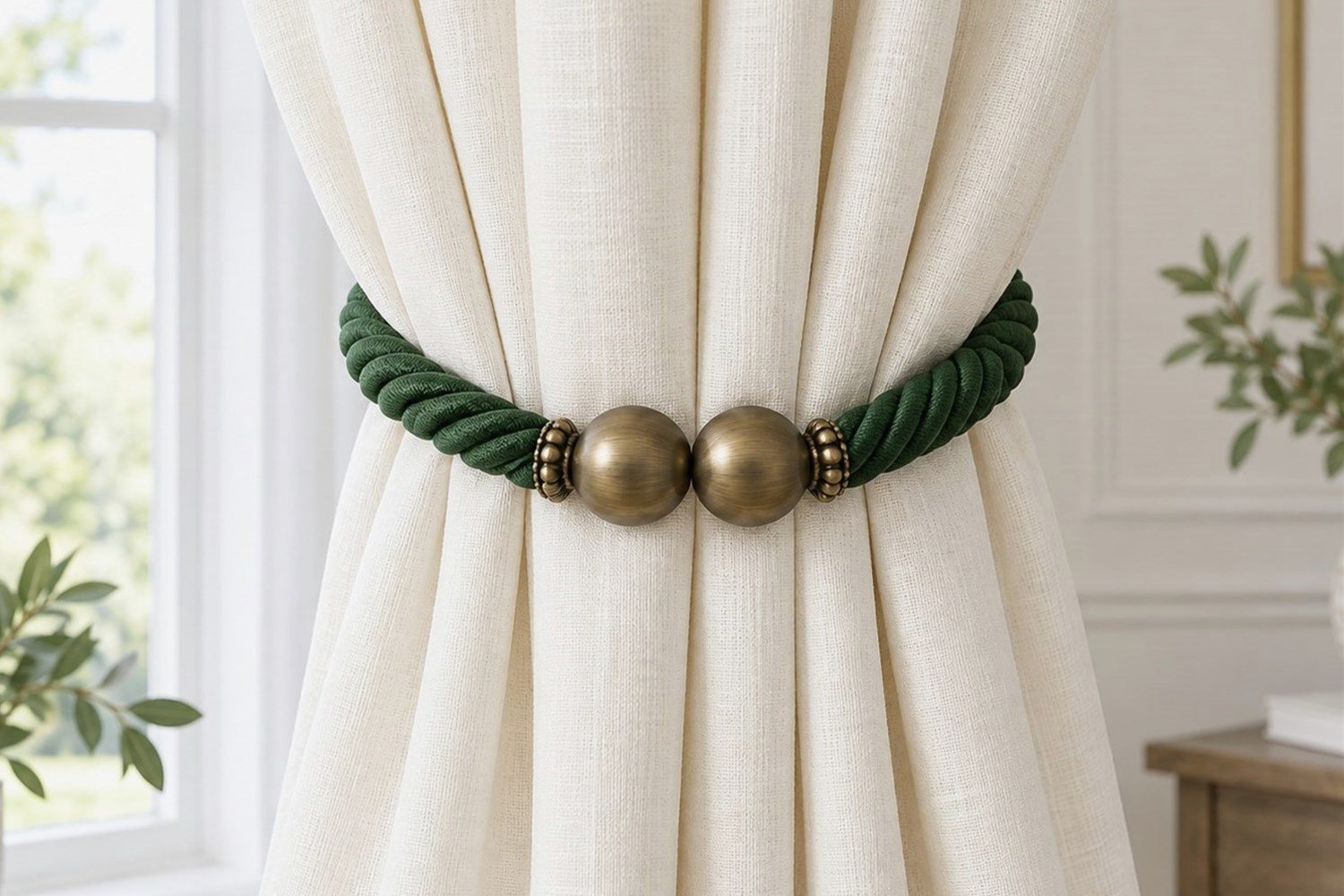
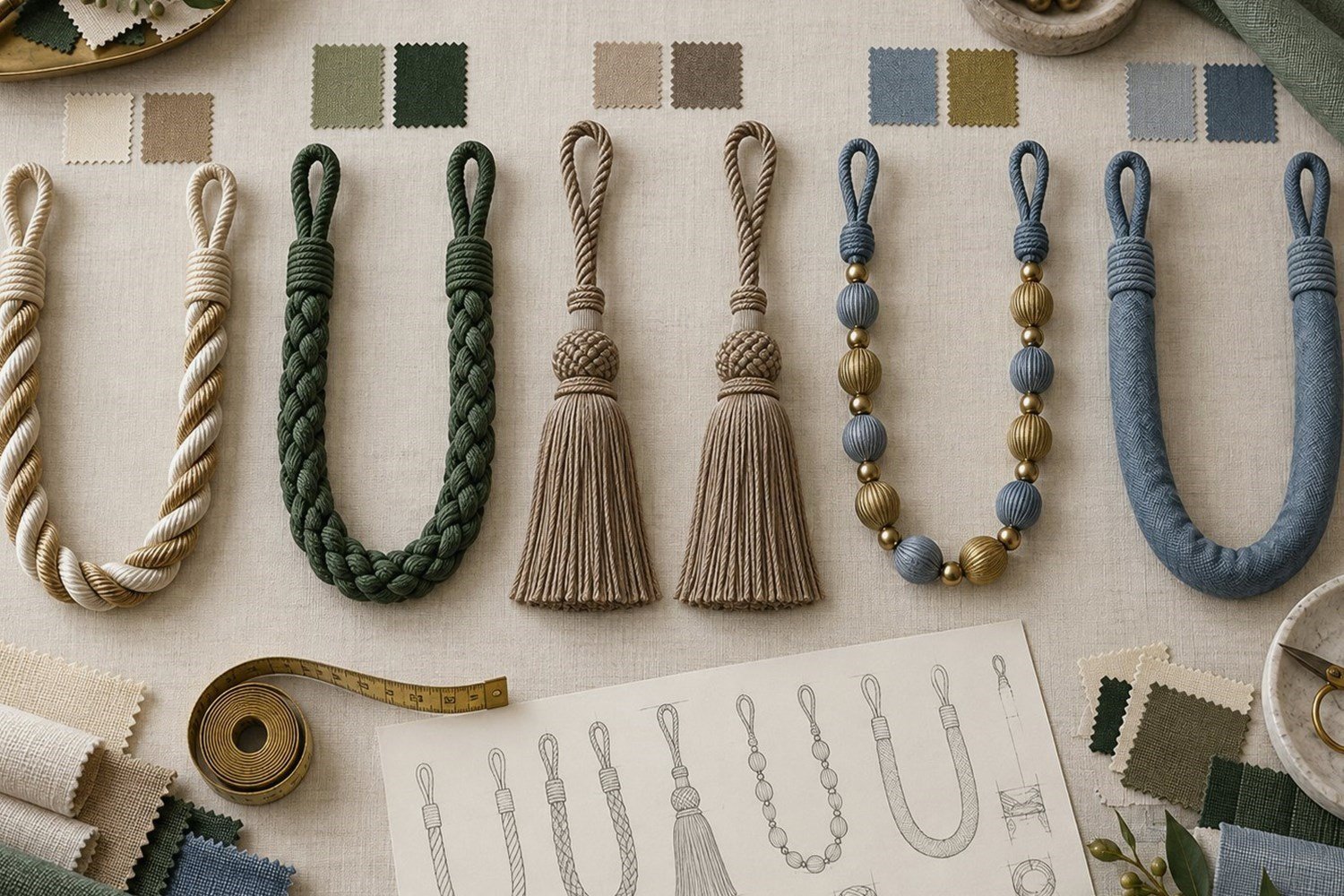
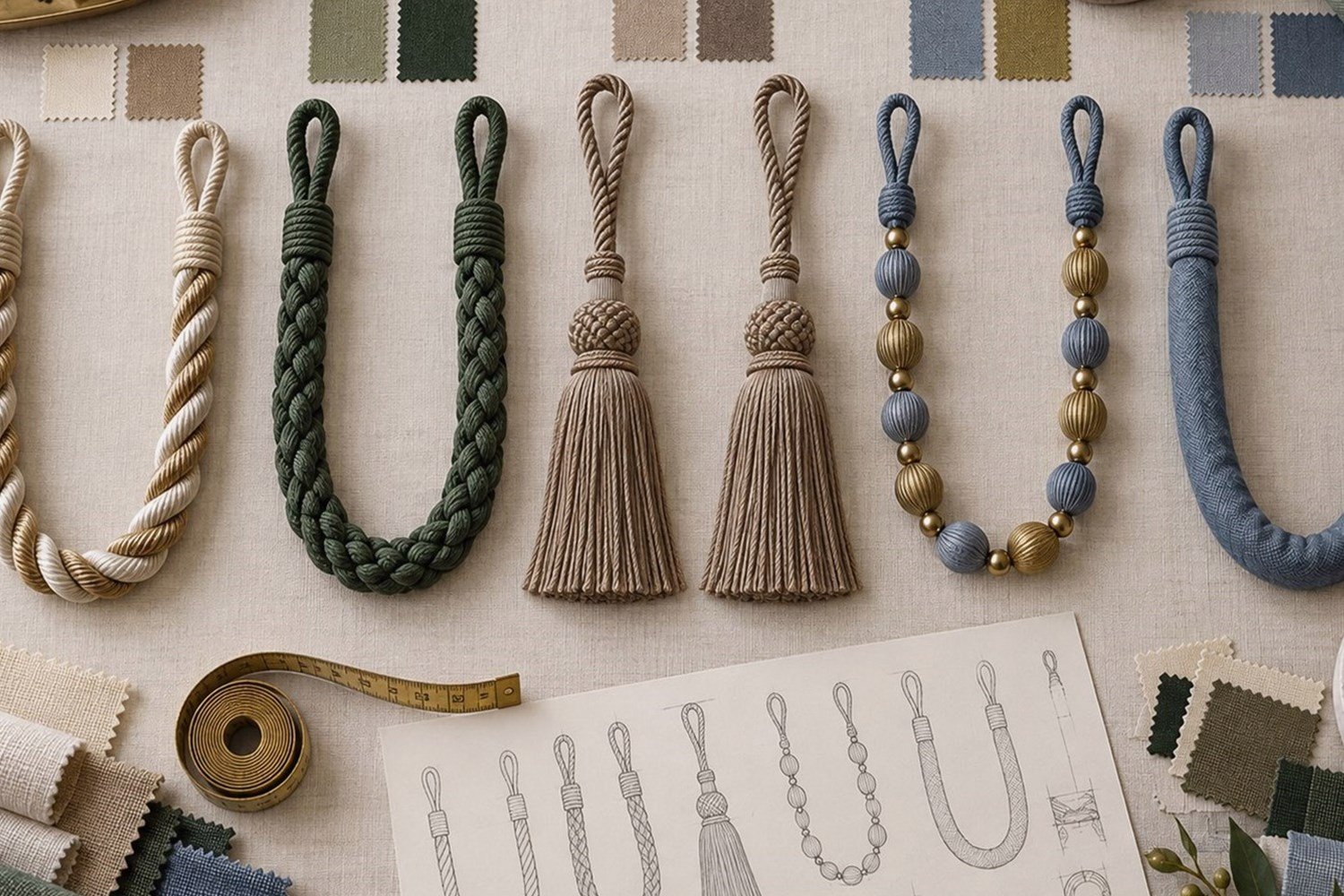
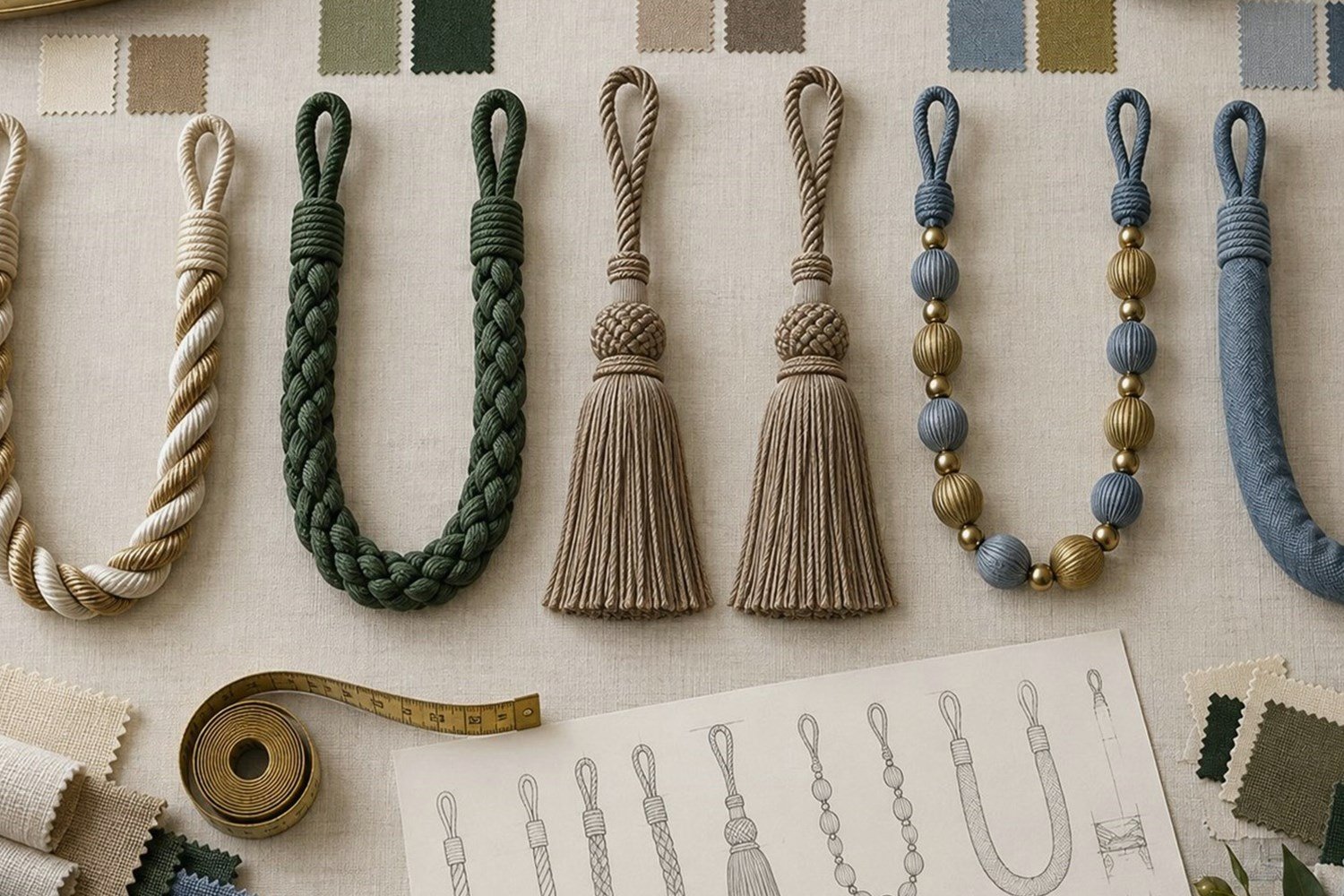
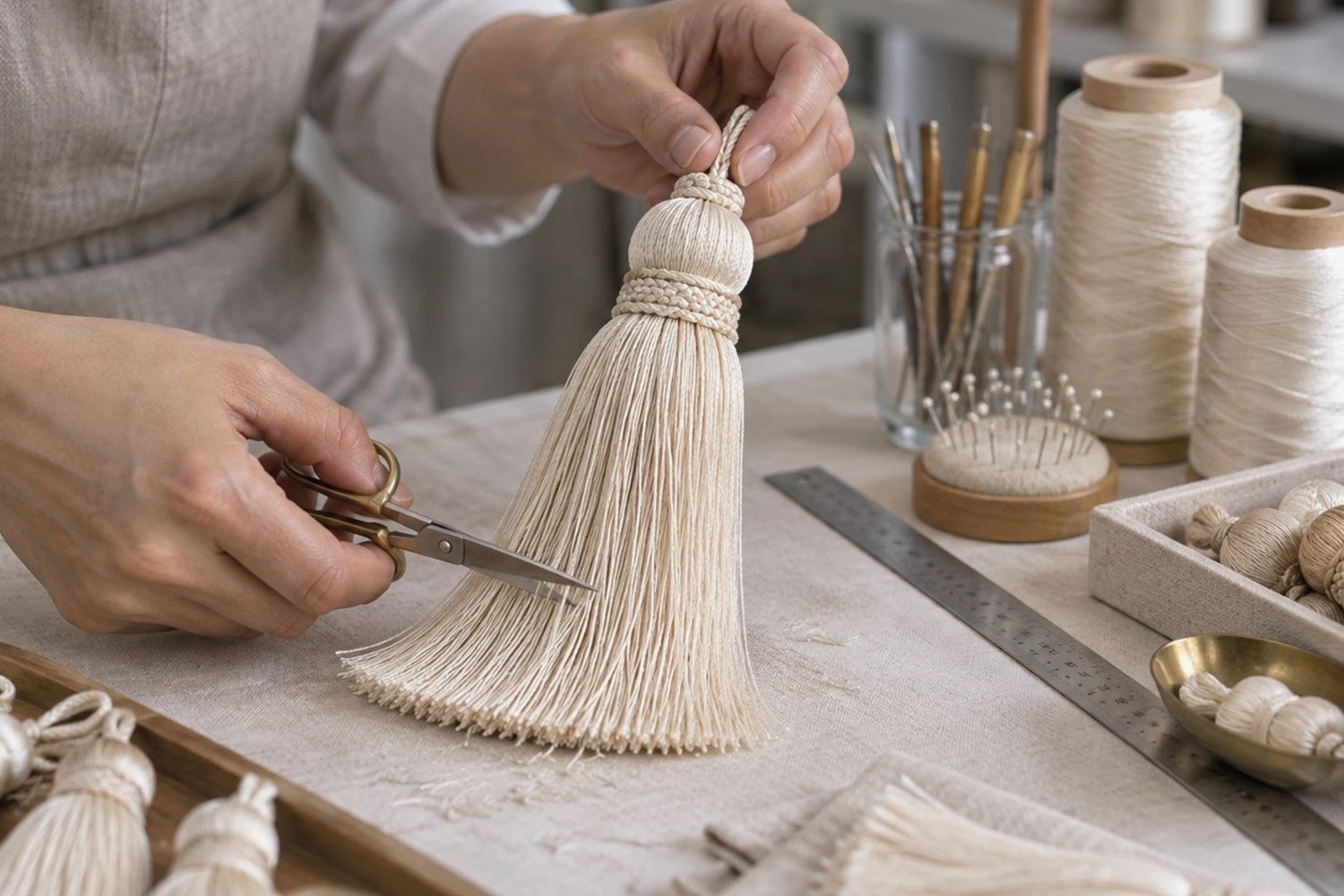
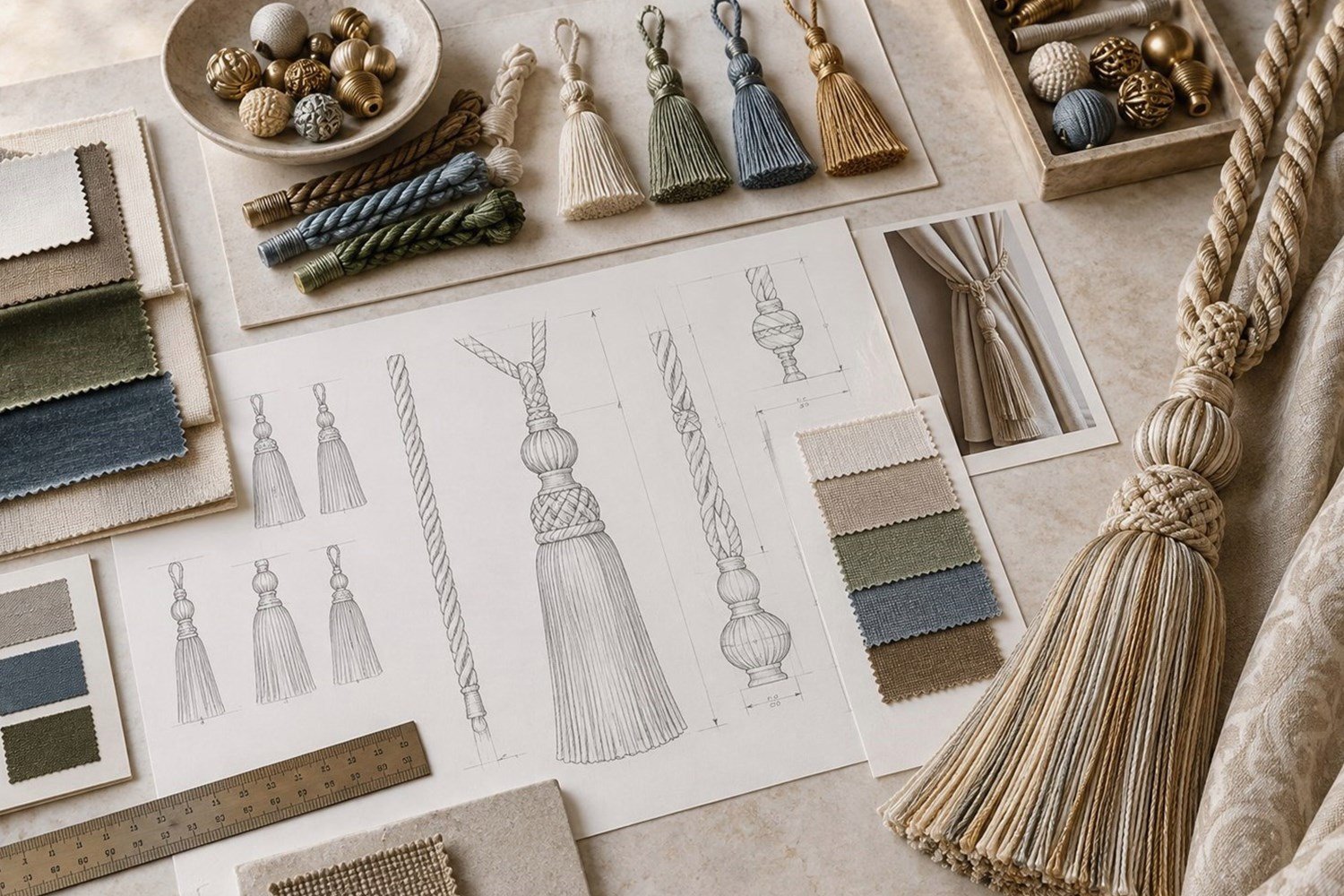
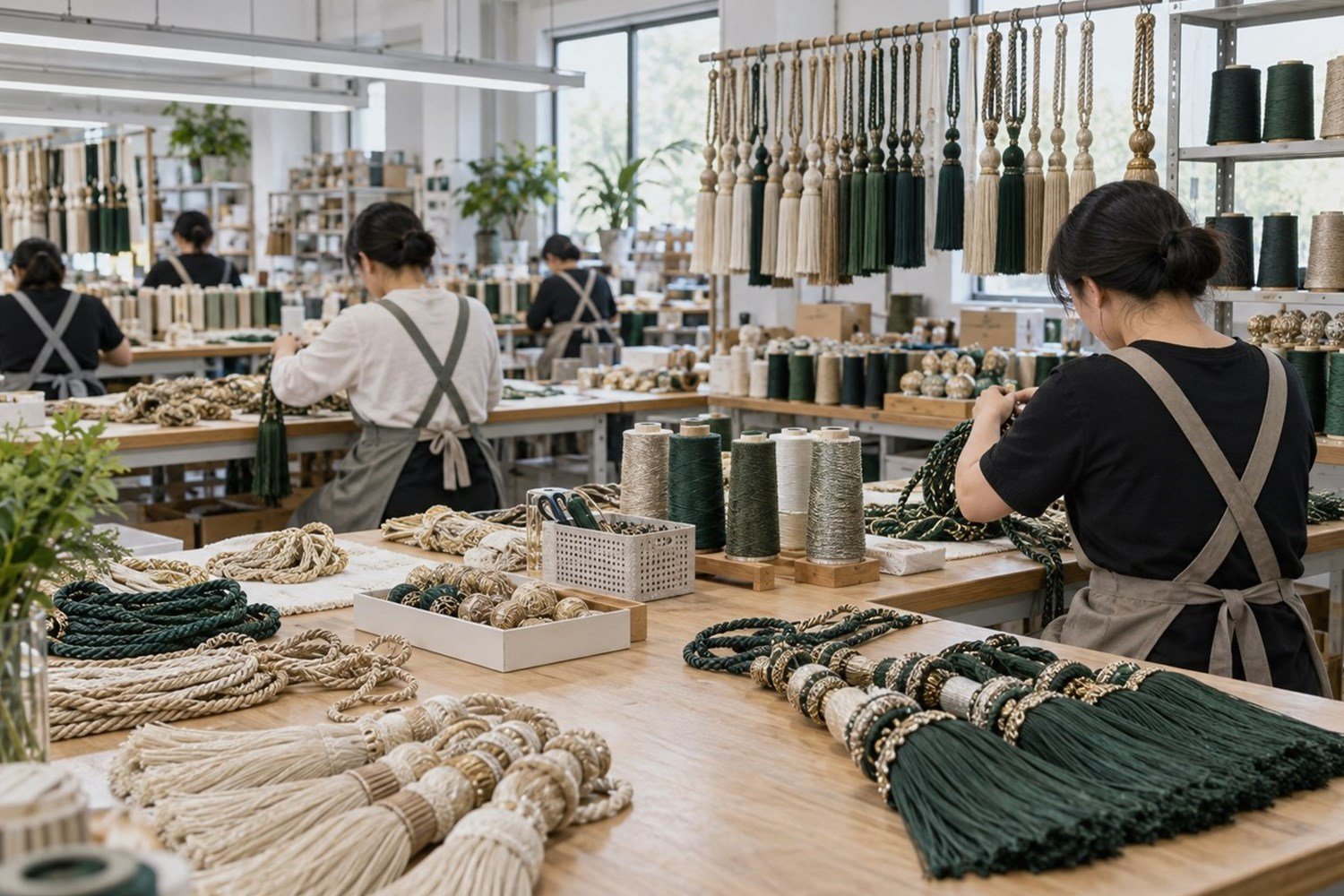
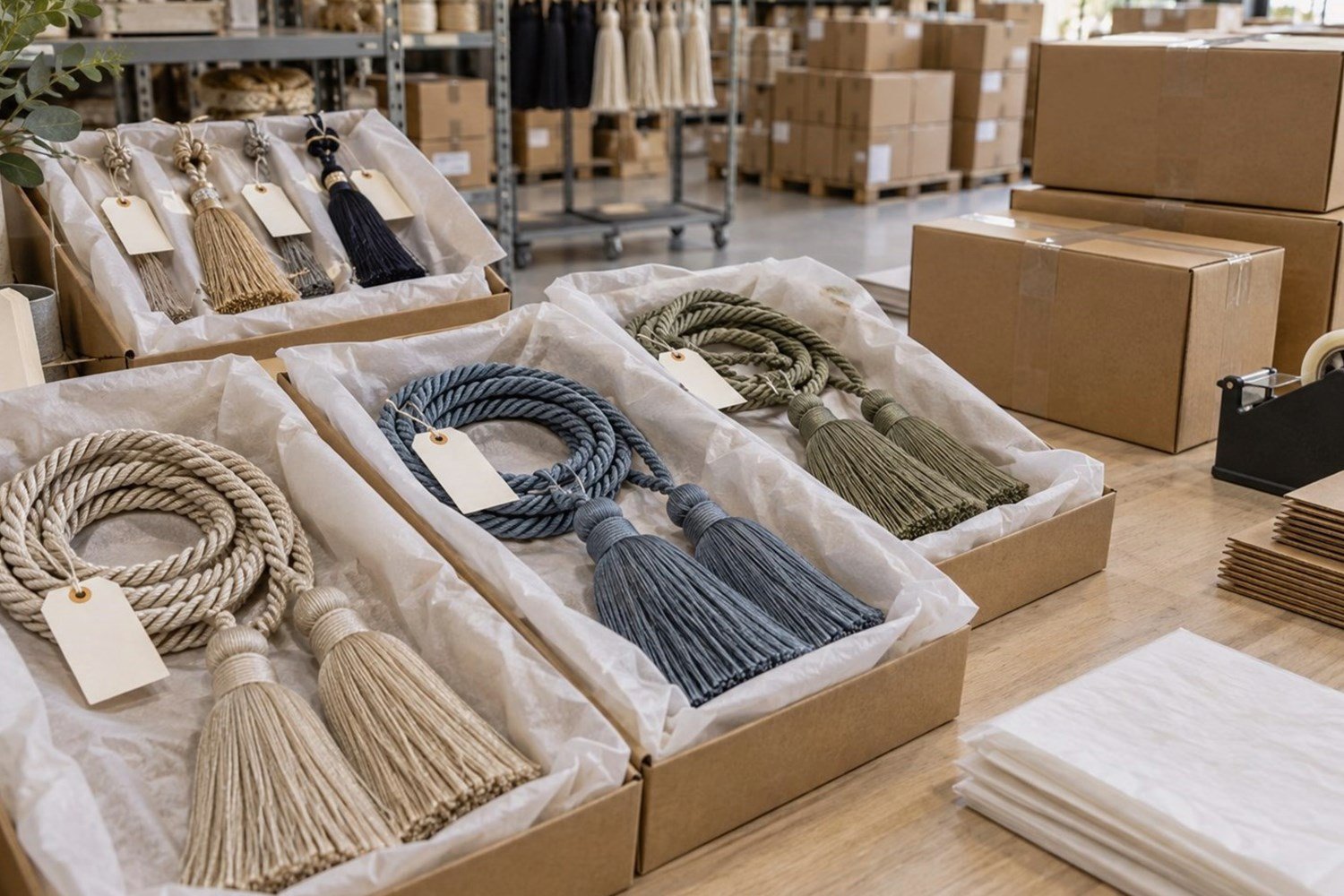
Custom curtain tiebacks are developed or modified for a defined curtain application, product collection, interior project, or brand reference. Customization can include tieback type, materials, colors, size and length, rope or cord construction, tassels, beads, loops, rings, magnetic closures, decorative components, packaging, and final specification. The complete curtain and tieback combination should guide every choice.
Quick Reference
Custom Scope
Starting point
Stock, modified, or new design.
Define
Body, fastening, size, and materials.
Coordinate
Colors and components with curtain.
Test
Complete representative sample.
Approve
Final B2B specification.
Overview
Customization Is a Complete Product Definition
Custom curtain tieback development turns a curtain application and product direction into a complete, approved specification. A buyer may adapt an existing construction, select defined options from an established direction, or develop a new combination of body, fastening, size, materials, colors, and decorative components. The final reference should describe the full product rather than only one feature.
Development route
What It Means
What to Confirm
Stock tieback
Existing defined product direction
Whether the existing specification fits the project
Modified tieback
Established construction with selected changes
Which materials, colors, dimensions, or components change
Fully custom tieback
New product definition or combination
Complete body, fastening, components, and sample
Personalized detail
Limited brand or presentation element
How it relates to the full product specification
Custom and personalized do not mean the same thing. Personalization may concern a limited mark, label, or packaging direction, while a custom tieback can involve the entire construction. Define the requested scope early so the sample and approval process match the project.
Main Content
What Can Be Customized?
Custom curtain tiebacks can be defined through the visible body, fastening, dimensions, materials, colors, construction, decorative components, packaging, and project reference. These options interact. A new rope construction can affect the visible diameter and tassel proportion; a different fastening can affect usable length; a color direction can look different across yarn, fabric, beads, and hardware.
Customization area
Typical decisions
Why it matters
Type
Rope, tassel, magnetic, beaded, fabric, mixed material
Custom tieback types can overlap because rope, tassel, beaded, fabric, and magnetic labels may describe different aspects of one finished product. A braided rope tieback can include tassel ends and bead components. A magnetic tieback can use rope, fabric, or mixed materials. Choose the construction based on the curtain, intended open position, fastening, and product direction rather than a rigid style rule.
Material, width, construction, edge and attachment
Coordination with curtain and fastening
Tassels
Head, skirt, cords, caps, colors, placement
Fullness, scale, alignment, and finish
Beads and components
Material, shape, color, surface, connector, position
Balance and visible relation
Magnetic closure
Body, closure, connection design, placement
Complete curtain fit and intended adjustment
Loops and rings
Material, length, attachment, hardware finish
Functional and visual connection
Do not assume that natural materials are automatically better, that more decoration creates higher quality, or that a magnetic design suits only one curtain kind. The appropriate product arises from the complete specification and representative sample.
Custom Colors, Sizes, and Curtain Compatibility
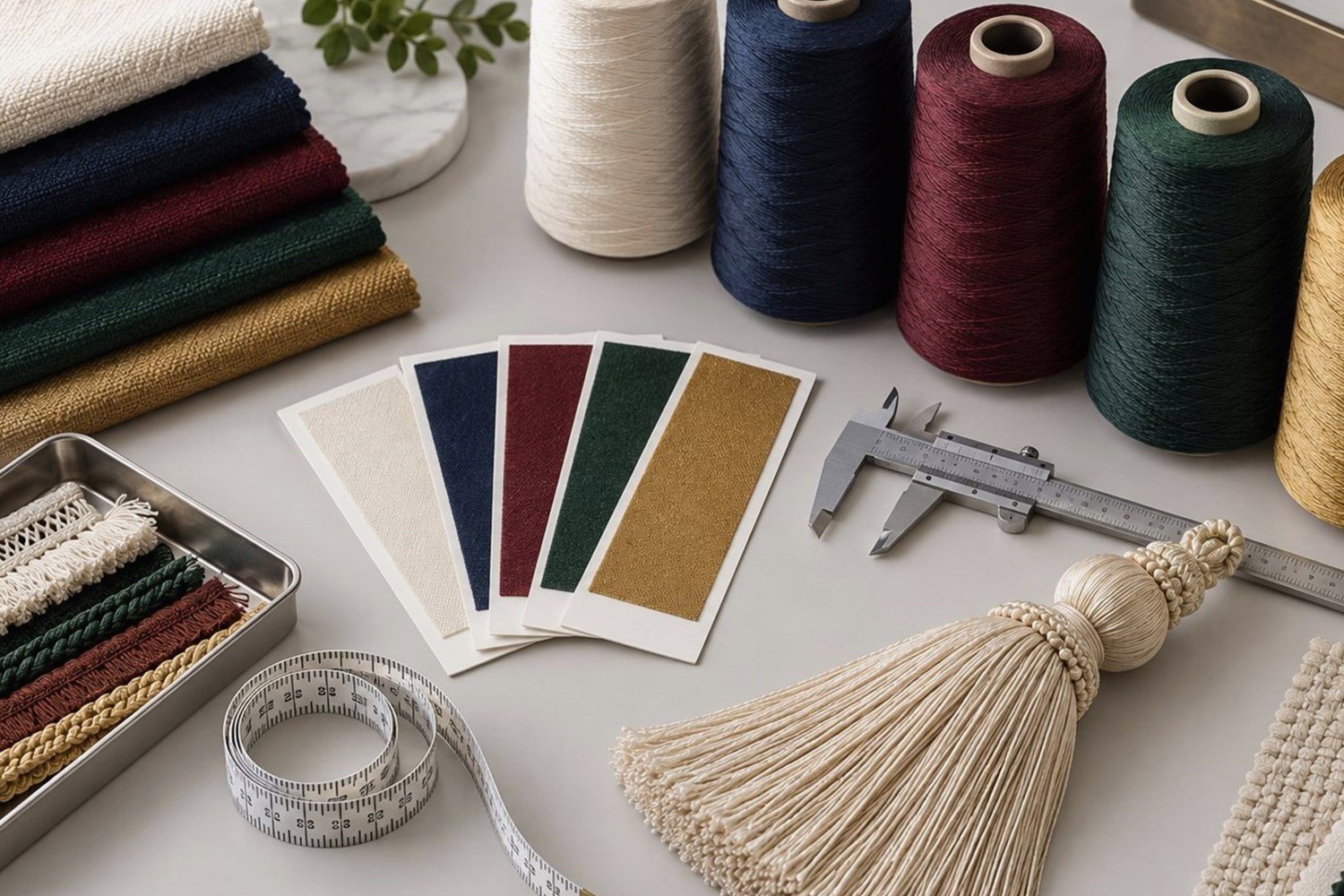
Custom colors and dimensions should be selected together with the intended curtain because fabric, fullness, gathered volume, surface sheen, fastening, and decorative components determine the final visual and practical fit. Tiebacks can match the curtain, use a related tone, contrast, coordinate with hardware, or follow a brand or project palette. Exact matching is not a universal requirement.
There is no universal curtain tieback length. Measure the actual gathered curtain and define the relevant overall and usable dimensions for the chosen construction. A secure but appropriately fitted tieback should hold the required open arrangement without unnecessarily compressing or distorting the fabric. Window width alone does not establish tieback length.
Development Workflow
From Reference to Approved Sample
A reliable custom curtain tieback workflow starts with the intended curtain and ends with an approved representative sample and final specification. Every decision should be recorded so the product remains clear when material, color, construction, components, packaging, and final review are discussed.
Define the curtain application, fabric, fullness, gathered volume, intended position, and product objective.
Identify whether the starting point is stock, modification, or a new construction.
Select type, fastening, overall and usable dimensions, material system, colors, and components.
Provide reference images, drawings, physical materials, or an existing sample where available.
Review a representative complete tieback with the intended curtain or appropriate reference.
Confirm packaging and document the final approved specification before bulk production.
Use a physical or clearly documented reference for color and materials where the project needs precise coordination. A screen image can provide direction, but it does not replace the approved finished sample. Review the body, tassels, beads, hardware, closure, dimensions, and complete appearance together.
B2B Specification
What Should Buyers Confirm for Custom Curtain Tiebacks?
B2B buyers should convert a custom tieback idea into a complete documented product specification before bulk production. A name such as “custom rope tieback” or a single visual does not define the final product. Record the curtain context, construction, materials, colors, dimensions, components, fastening, packaging, representative sample, and approved reference.
Requirement
Buyer Reference
Approved Specification
Curtain context
Application, fabric, fullness, gathered volume, open position
Customization risk usually comes from a missing product detail, an untested fit, or an approved image that does not define the complete tieback. A concise but complete specification helps each party review the same product direction.
Mistake
Better approach
Specifying only a product name
Define construction, materials, components, size, and fastening.
Starting with decoration
Confirm curtain fit and basic construction first.
Using universal length
Measure the actual gathered curtain.
Approving color from a screen
Use an agreed material and physical reference where relevant.
Ignoring the closure
Review fastening within the complete product.
Approving loose elements only
Approve the complete representative sample.
FAQ
Frequently Asked Questions
What are custom curtain tiebacks?
Custom curtain tiebacks are developed or modified for a defined curtain application, product collection, project, or brand reference. They can include custom construction, materials, colors, dimensions, tassels, beads, closures, packaging, and approval requirements.
What can be customized on a curtain tieback?
Projects can define type, rope or fabric body, materials, colors, overall and usable size, tassels, beads, loops, rings, magnetic components, decorative elements, packaging, and final specification.
What is the difference between stock, modified, and fully custom?
A stock product has an established direction. A modified product changes defined features within an existing construction. A fully custom product uses a new or complete project-specific product definition.
Can rope, tassel, beads, and magnets appear in one product?
Yes. Categories can overlap. A rope body can have tassel ends, beads, caps, loops, and a magnetic or other fastening concept when the construction supports the intended product.
How should custom tieback size be selected?
Measure the actual gathered curtain and define overall, usable, component, and fastening dimensions from the chosen construction. There is no universal length that applies to every curtain tieback.
Do custom tiebacks need to match curtain color exactly?
No. They can match, coordinate, contrast, repeat a hardware finish, or follow a broader project palette. Review the actual materials and curtain together.
What should buyers approve before production?
Buyers should approve curtain context, complete construction, materials, colors, dimensions, components, fastening, packaging, representative sample, and final specification before bulk production.
Conclusion
Custom Curtain Tiebacks: Key Takeaways
Custom curtain tiebacks succeed when the complete product is defined from the curtain application through to an approved representative sample. Type, materials, colors, size, rope or fabric construction, components, fastening, packaging, and visual proportion should be considered as one connected specification.
Define the custom scope: stock, modified, fully custom, or personalized.
Start with curtain fit and function before decorative details.
Record all visible and functional material and component choices.
Approve the full sample and final B2B specification before bulk production.
Describe the curtain application, body construction, material, color, dimensions, tassels, beads, loops, rings, magnetic closure, packaging, and other requirements in one request.