Curtain knowledge base

How Are Curtain Tiebacks Made?

Curtain tiebacks are made by preparing the specified materials, forming rope, cord, braid, or fabric bodies, making or assembling decorative components, attaching loops or closures, completing final assembly, and checking the finished product against an approved reference. The exact process changes with rope, tassel, fabric, beaded, magnetic, and mixed-material constructions.

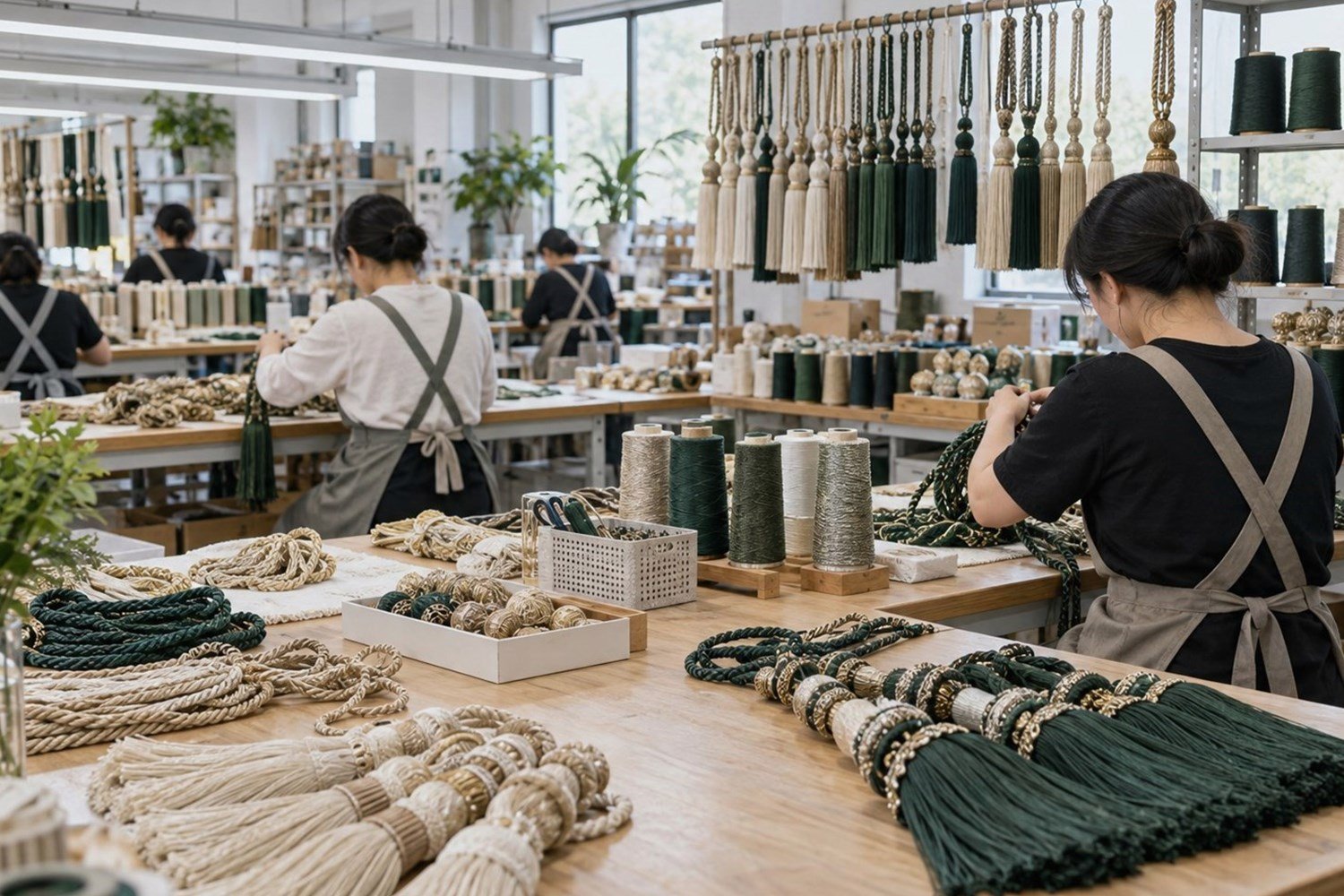
Curtain tieback manufacturing materials including rope, fabric, tassels, beads, loops, magnets, and finished drapery accessories

Quick Reference

Production Flow

Prepare
Confirm materials and reference.
Form
Make rope, cord, braid, or fabric body.
Assemble
Add tassels, beads, loops, and closures.
Finish
Trim, align, and complete details.
Approve
Check the complete sample.
Curtain tieback manufacturing stages from material preparation to finished rope, tassel, fabric, bead, and magnetic designs

Overview

Manufacturing Depends on Construction

Curtain tieback manufacturing follows a general prepare, form, assemble, finish, and inspect sequence, but no single method applies to every construction. A twisted cord, braided rope, fabric band, tassel-ended tieback, beaded design, and magnetic product use different components and assembly points. The approved sample and specification define the correct route.

StagePurposeTypical checks
Material preparationConfirm approved yarn, fabric, components, and color referenceMaterial identity and visible direction
Body formationCreate rope, cord, braid, or fabric elementConstruction and proportion
Component assemblyAdd tassels, beads, caps, loops, hooks, or magnetsPlacement and connections
FinishingTrim, align, secure, and complete productAppearance and dimensions
InspectionCompare with sample and specificationFit, finish, and consistency

Main Content

How Are Curtain Tiebacks Made?
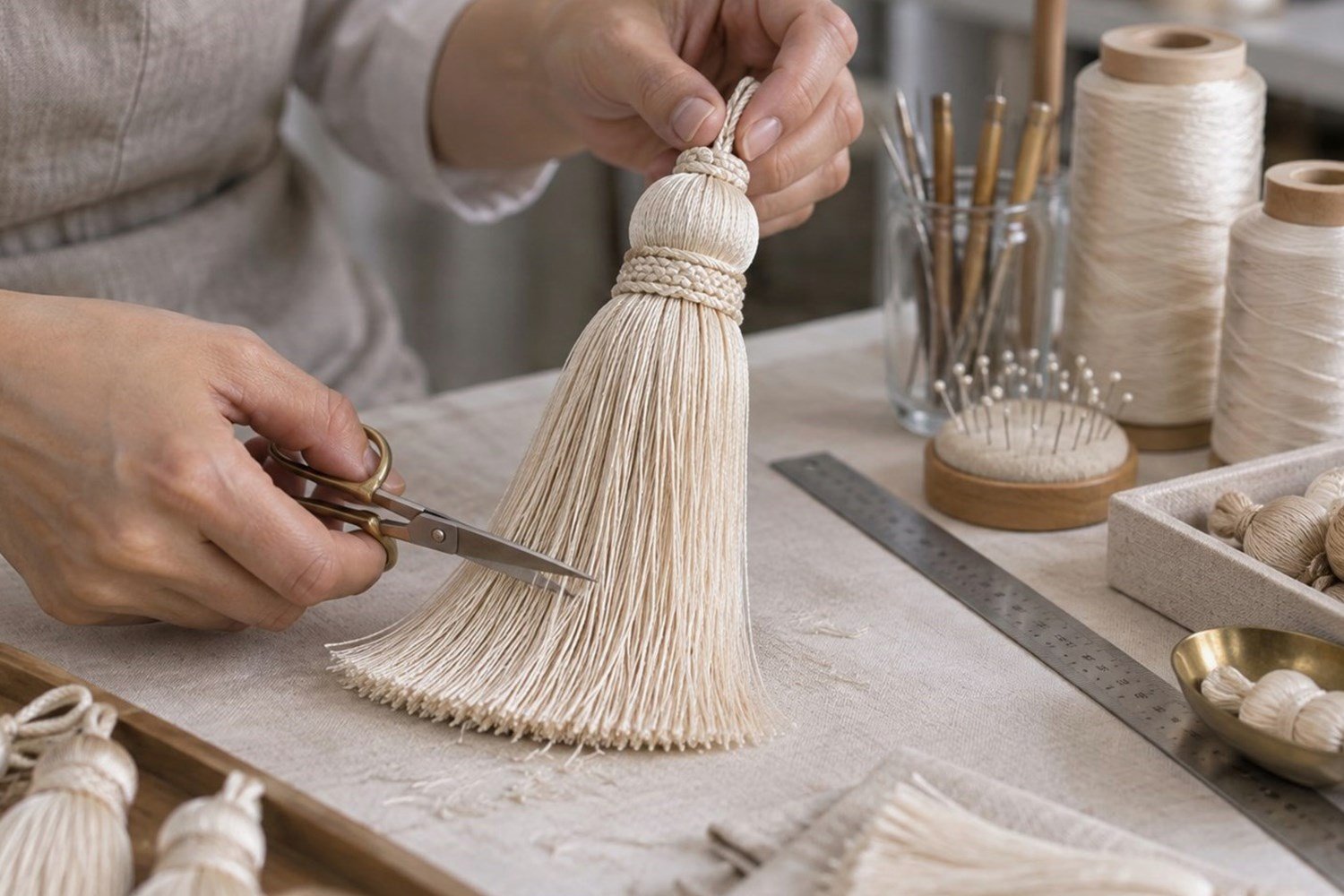
Curtain tieback production process showing material preparation, rope forming, component assembly, finishing, and inspection

Curtain tiebacks are made by translating an approved construction into defined textile bodies, decorative parts, attachment components, and finishing operations. The manufacturing brief should clarify the curtain application, visible direction, main body, fastening method, components, dimensions, color references, packaging, and representative sample before work begins.

  1. Review the approved drawing, reference image, material list, dimensions, and curtain context.
  2. Prepare textile yarn, cord, fabric, beads, tassel parts, caps, loops, magnets, hooks, or connectors as required.
  3. Form the rope, cord, braid, wrap, fabric band, or other main body.
  4. Make or prepare tassels, beads, caps, rings, decorative elements, and closure parts.
  5. Assemble the complete tieback, including loops, attachment features, and visible components.
  6. Trim, align, finish, inspect, and compare the finished product with the approved sample.

The sequence is not a universal factory recipe. Some elements may be formed before others, and a finished tieback may combine several processes. The important point is that the final product matches the approved construction rather than an assumed generic category.

Rope, Fabric, Tassel, Beaded, and Magnetic Construction
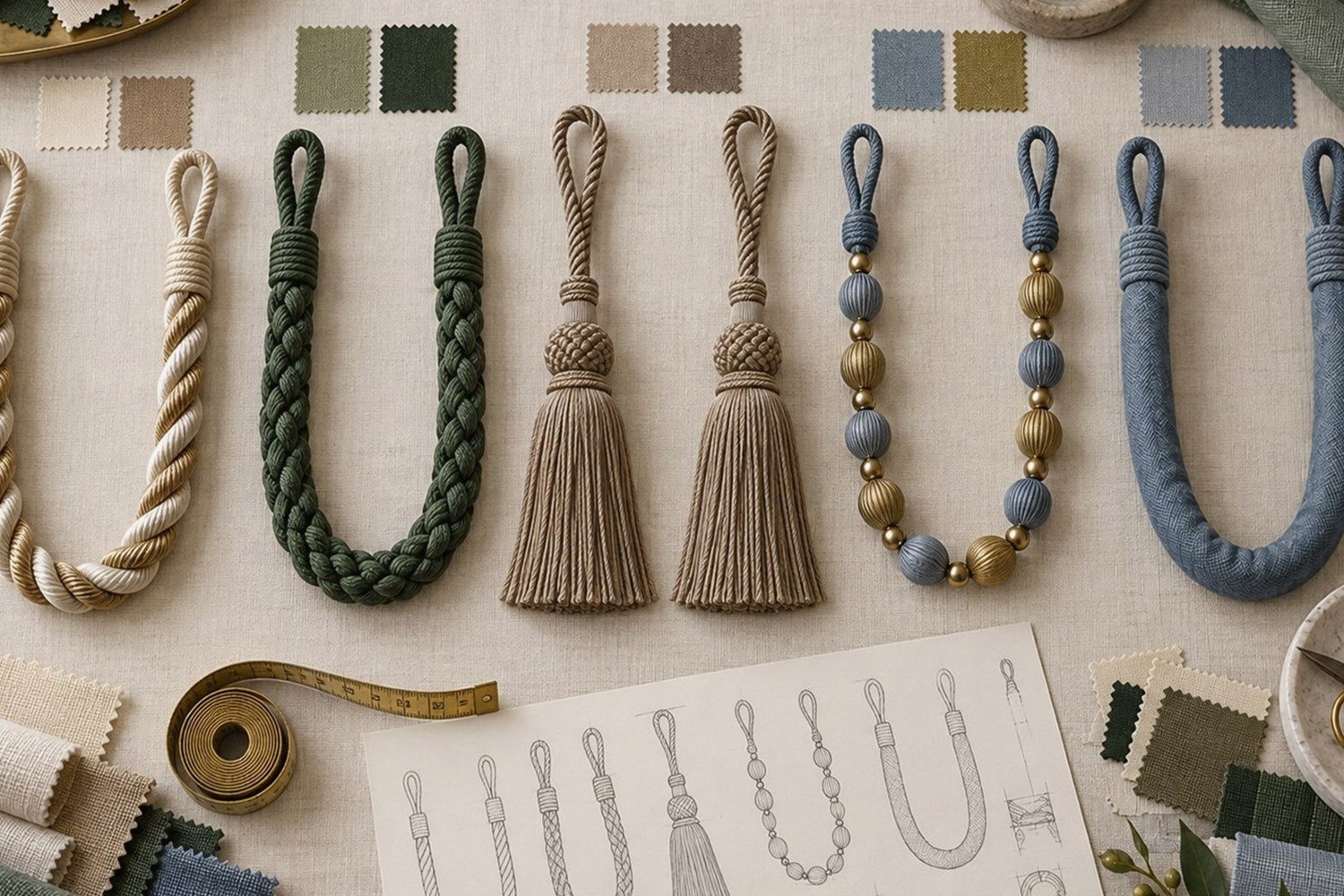
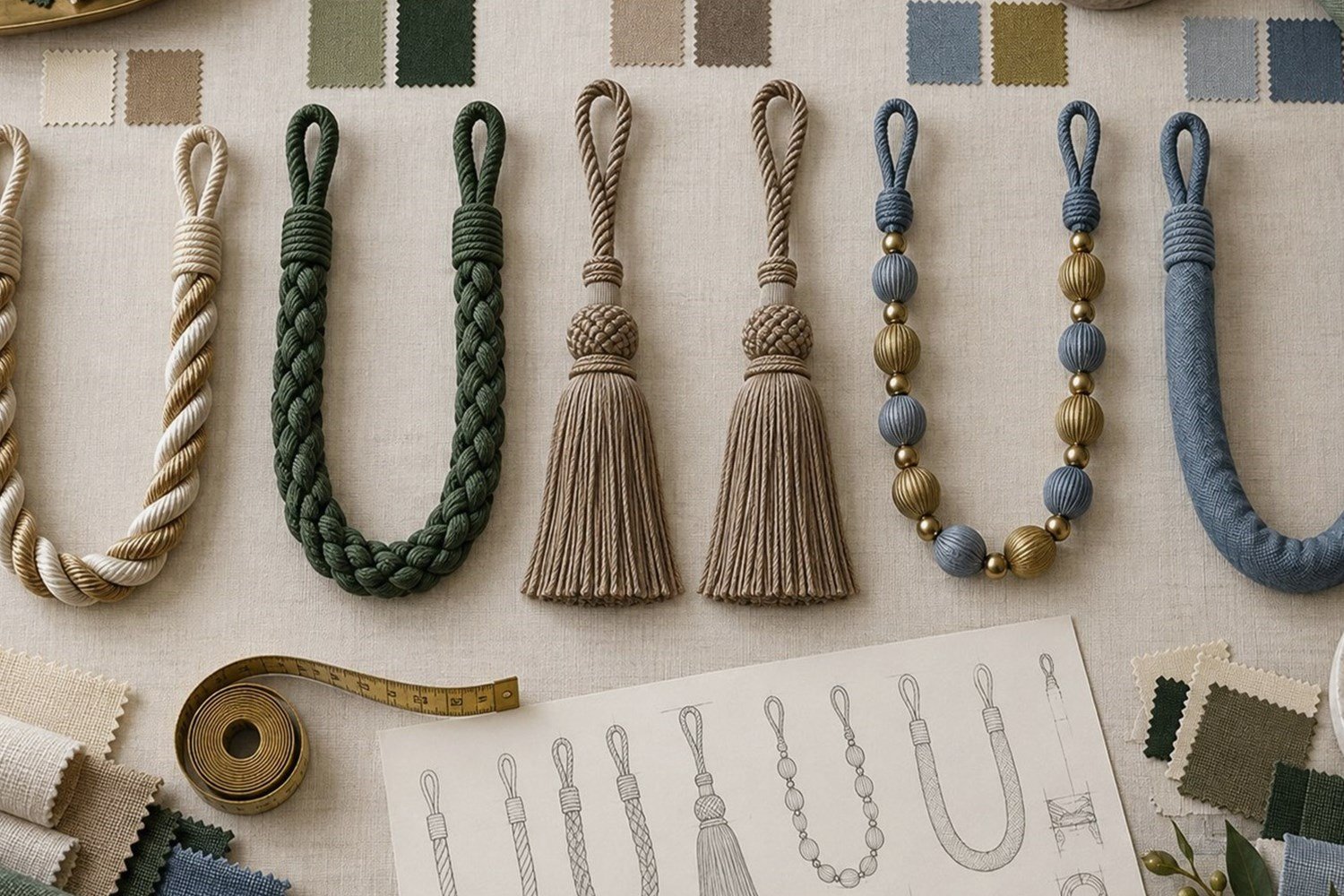
Twisted rope, braided cord, fabric bands, tassel ends, beaded components, and magnetic curtain tieback constructions

Different curtain tieback constructions require different material-forming and assembly steps because each body and closure uses its own component relationship. Rope and cord tiebacks may use twisting, braiding, wrapping, or multiple cords. Fabric tiebacks need their own band or textile construction. Tassel, beaded, and magnetic designs add dedicated decorative or fastening components.

ConstructionGeneral production focusFinished-product review
Rope or cordTwisting, braiding, wrapping, or cord combinationSurface, body, ends, and visible proportion
Fabric tiebackTextile band, shaping, finishing, and attachmentWidth, edge finish, fit, and coordination
Curtain tassel tiebackBody plus tassel head, skirt, cord, cap, and connectionTassel scale, fullness, alignment, and finishing
Beaded tiebackBody, beads, connectors, and end componentsPlacement, relation, and overall balance
Magnetic tiebackBody, closure, connection design, and decorationComplete fastening and intended curtain fit
Mixed materialCoordinate textiles, beads, tassels, and hardwareMaterial relationship and finished appearance

Construction terms should remain accurate. Rope and tassel are not mutually exclusive: a rope tieback can have tassel ends. A magnetic product can include rope, fabric, beads, or other decorations. A material or closure label does not fully describe the finished product by itself.

Material Preparation and Component Assembly
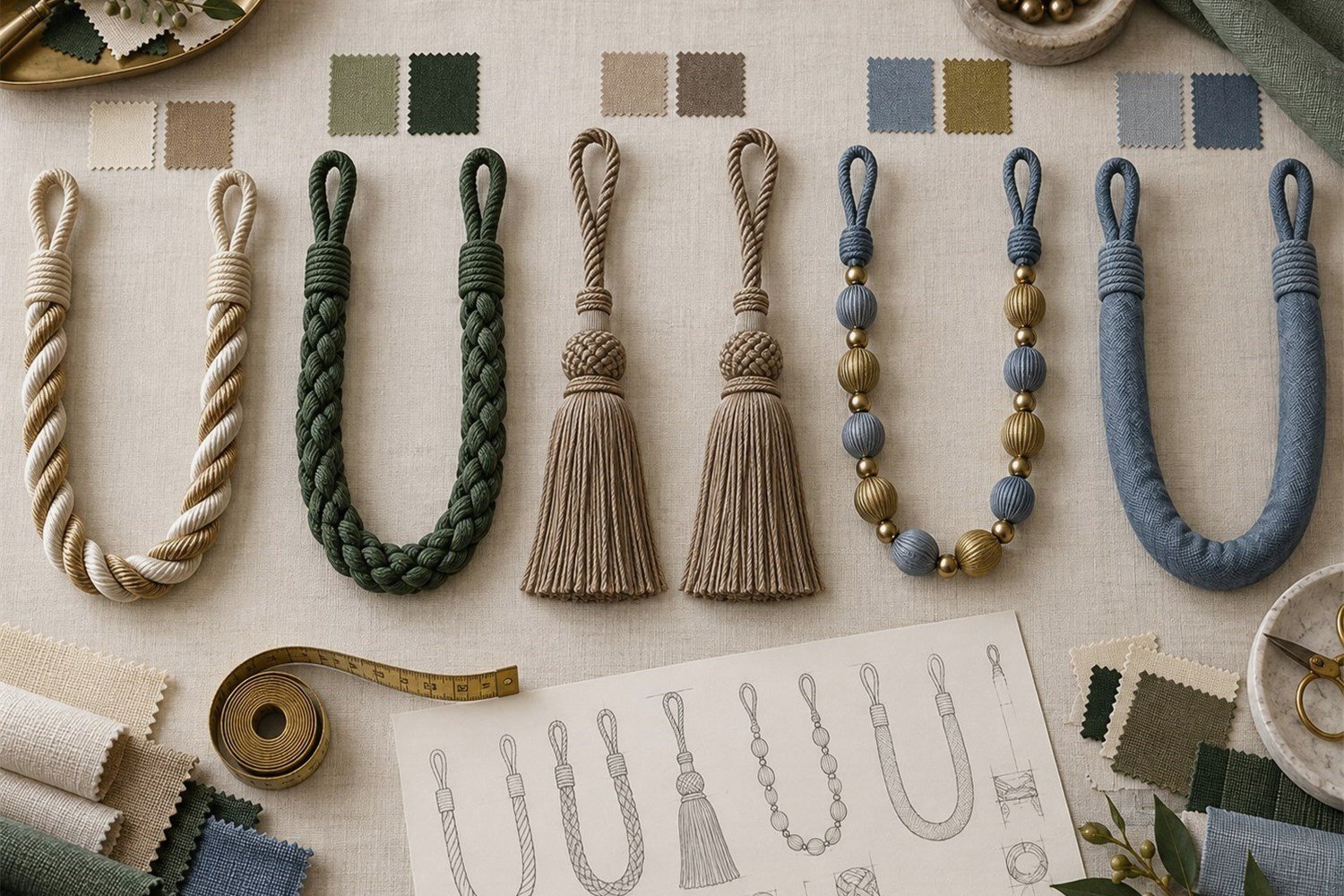
Curtain tieback tassel yarn, rope, beads, caps, loops, magnets, hooks, and connectors prepared for assembly

Material preparation ensures that the tieback body and every visible or functional component follow the selected reference before assembly begins. Textile yarns, rope, fabric, tassel elements, beads, wood or acrylic details, metallic-effect components, loops, hooks, magnets, caps, and connectors may all need separate identification.

Component areaAssembly question
Rope, cord, or fabric bodyDoes the construction match the defined textile and visible direction?
Tassel componentsAre head, skirt, cord, caps, and attachment proportionate?
Beads and decorative componentsAre materials, placement, and connectors correctly assembled?
Loops and attachmentsDo the selected connections match the approved construction?
Magnetic closureDoes the full body and closure work with the intended curtain arrangement?

Do not reduce material selection to a color word or screen reference. A textile, bead, cap, or hardware finish should be defined with the relevant material and component reference. “Silk-like,” “gold-colored,” or “pearl-looking” are appearance descriptions, not material facts without supporting specification.

Finishing, Checking, and Sample Approval
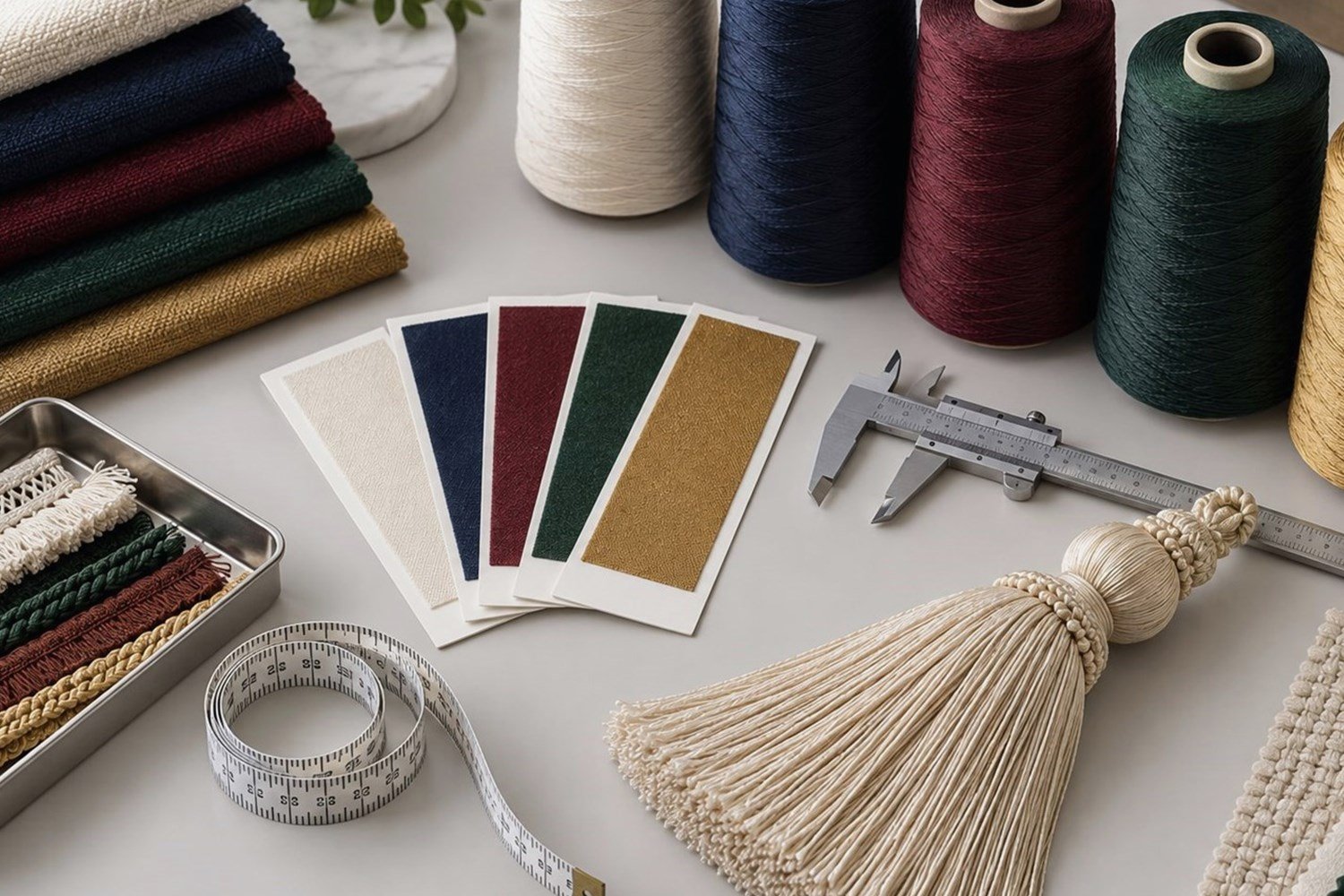
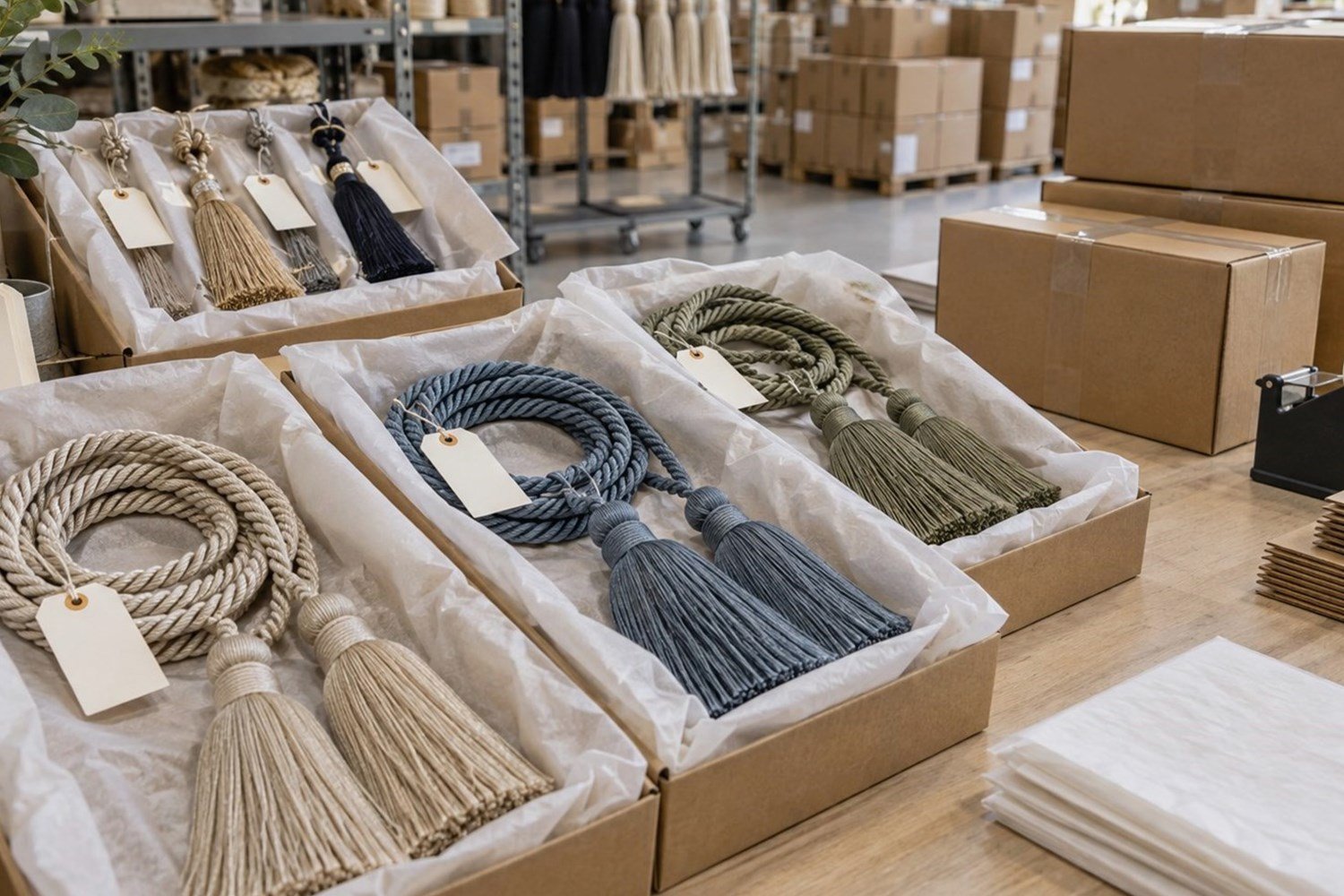
Finished curtain tiebacks checked for dimensions, tassel alignment, bead placement, rope construction, color, and fastening

Finishing and inspection confirm that the complete tieback reflects the approved construction, material direction, dimensions, components, and intended curtain relationship. Final review considers more than a single dimension or isolated component. It checks the completed product as it will appear and function in the window treatment.

  • Check rope, cord, braid, fabric, and visible construction against the approved reference.
  • Check overall and relevant usable dimensions, tassel components, beads, loops, and closure details.
  • Check color, surface, sheen, component placement, trimming, and visual balance.
  • Check the product with the intended curtain or representative sample when fit is important.
  • Approve the representative sample and final documented specification before bulk production.

There is no universal dimensional tolerance, universal magnetic strength, or one construction that is best for all curtain treatments. Requirements should arise from the approved product design and project context.
B2B Development

What Should Buyers Confirm for a Curtain Tieback Project?

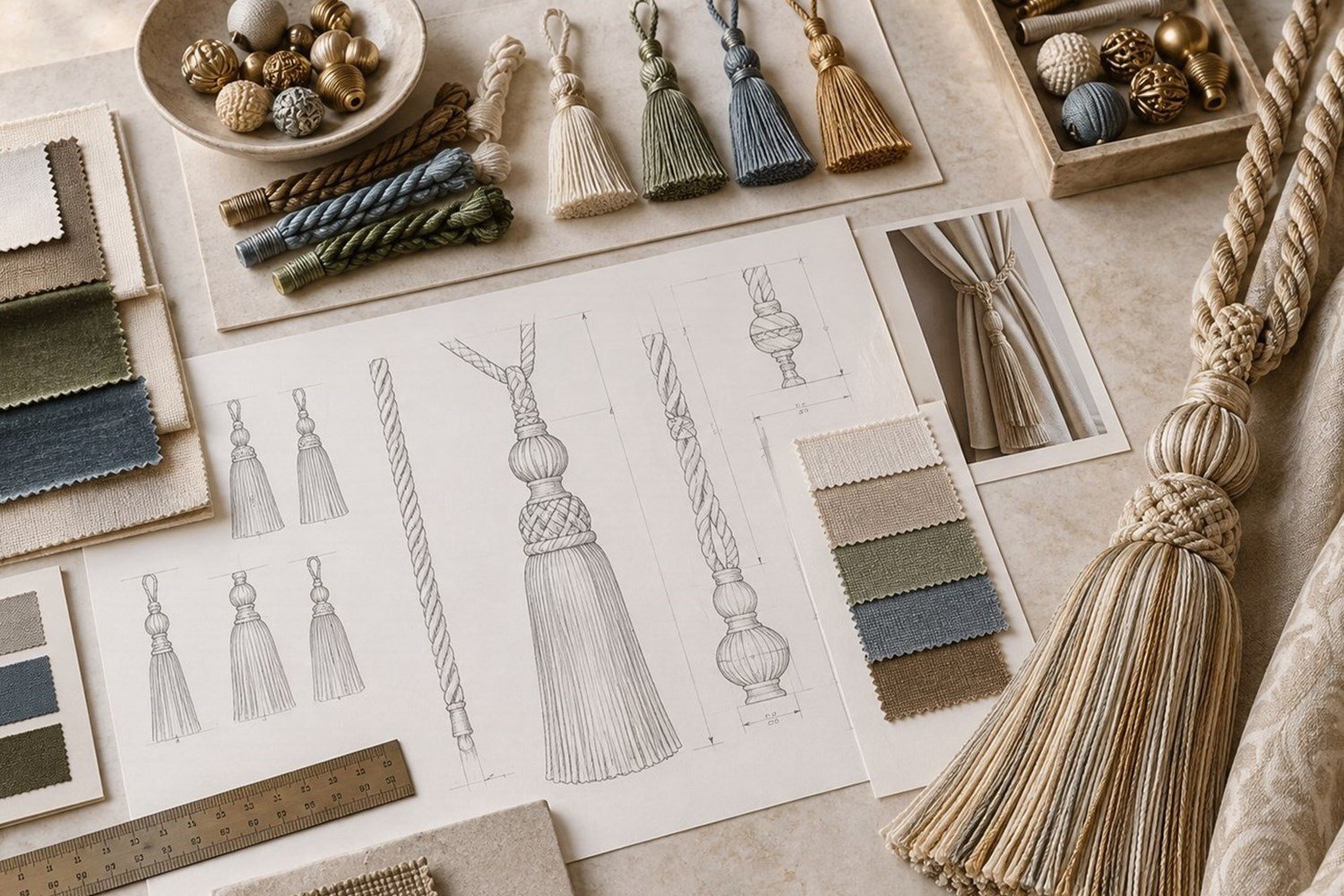
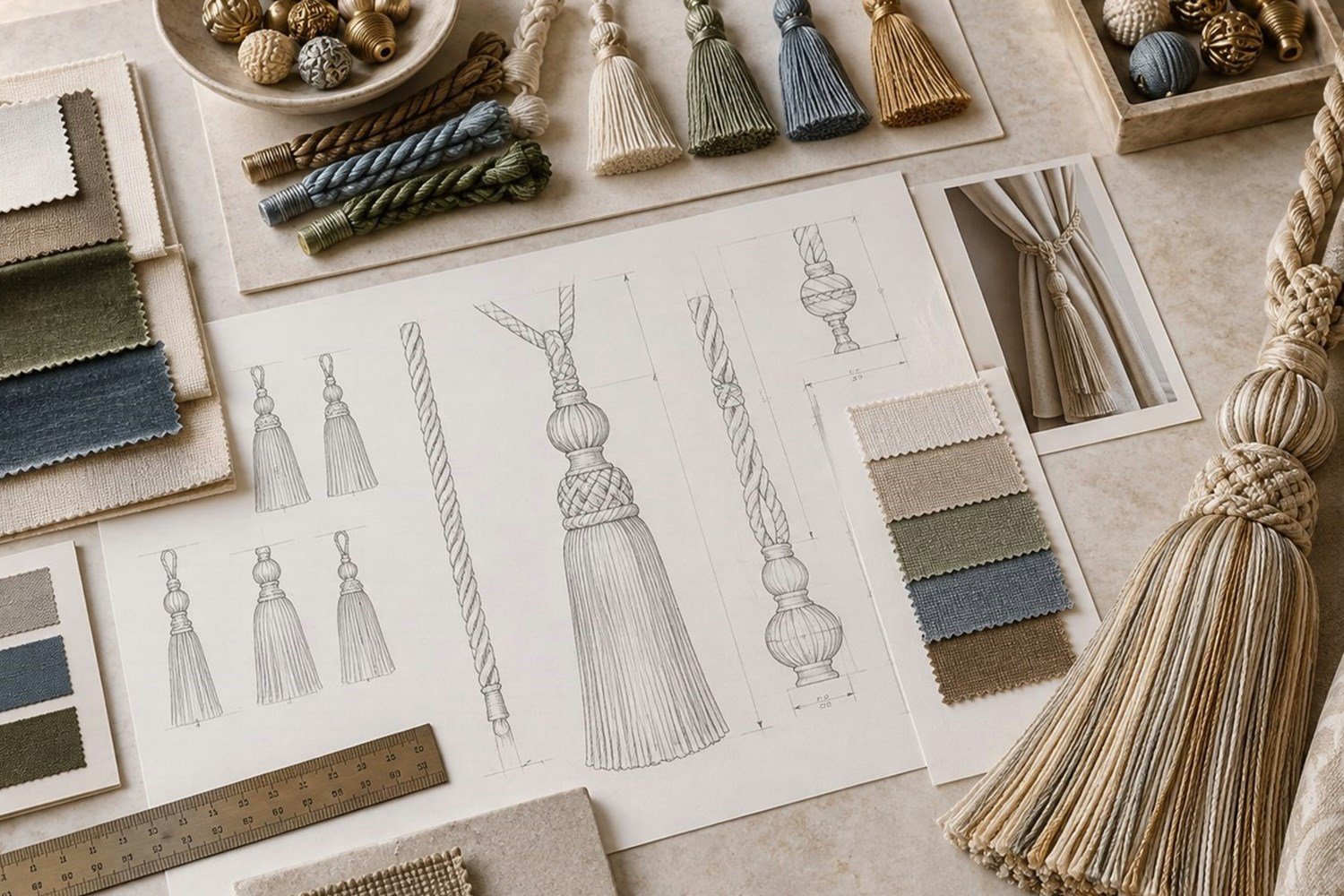
B2B curtain tieback development board with rope, fabric, tassel, bead, magnetic, loop, and color component references

For B2B curtain tieback development, buyers should specify the complete construction and use an approved sample to establish how it is made and reviewed. The brief should state the curtain context, main body, materials, fastening, dimensions, tassels, beads, hardware, colors, packaging, and any project reference required for final approval.

RequirementBuyer ReferenceApproved Specification
Curtain contextApplication, fabric, fullness, gathered volume
Body constructionRope, braid, cord, fabric, or mixed material
ComponentsTassels, beads, caps, loops, hooks, magnets, connectors
Dimensions and finishMeasurement points, color, surface, material references
ApprovalRepresentative sample, packaging, final reference

Explore Custom Curtain Tiebacks, Rope Tiebacks, Curtain Tassel Tiebacks, Magnetic Curtain Tiebacks, and Beaded Tiebacks for product context.

Common Manufacturing Assumptions to Avoid

Curtain tieback manufacturing checklist for materials, rope, tassels, beads, attachment, finishing, sample, and inspection

Production risk increases when a buyer assumes a category name defines all materials, components, dimensions, and assembly details. Use the complete reference and documented specification to guide both the construction and the final check.

AssumptionBetter approach
“Rope tieback” defines the whole productSpecify rope construction, ends, components, fastening, and dimensions.
One image defines all materialsList textile, bead, cap, loop, and closure references.
More decoration means better qualityReview proportion, finishing, and approved construction.
One process fits all designsMatch production steps to the actual construction.
Loose components prove final qualityInspect the complete finished sample on the intended curtain.
Curtain tieback manufacturing examples with rope, tassel, fabric, beads, loops, magnetic closure, and finished products

FAQ

Frequently Asked Questions

How are curtain tiebacks made?

They are made by preparing materials, forming rope, cord, braid, or fabric bodies, assembling decorative and attachment components, finishing the complete item, and inspecting it against an approved reference. The details vary by construction.

Are all curtain tiebacks made the same way?

No. Rope, fabric, tassel, beaded, magnetic, and mixed-material tiebacks require different material-forming and assembly steps. The approved product construction defines the relevant process.

How are rope curtain tiebacks made?

Rope tiebacks may use twisted, braided, wrapped, or combined cords, then receive ends, loops, tassels, caps, or other required components. The exact process depends on the specified design.

How are tassel tiebacks made?

A curtain tassel tieback combines a body with tassel components such as the head, skirt, cords, caps, and attachment. Finished proportion and alignment should be checked on the complete product.

How are magnetic tiebacks made?

Magnetic tiebacks combine a textile or decorative body with a closure and connection design. Review the completed construction with the intended curtain rather than considering the magnetic component alone.

What is checked before bulk production?

Buyers should confirm curtain context, materials, construction, components, dimensions, colors, fastening, sample, packaging, and the final approved specification before bulk production.

Can curtain tiebacks be customized?

Yes. Projects can define rope or fabric bodies, construction, tassels, beads, caps, rings, loops, hooks, magnets, colors, dimensions, packaging, and project references.

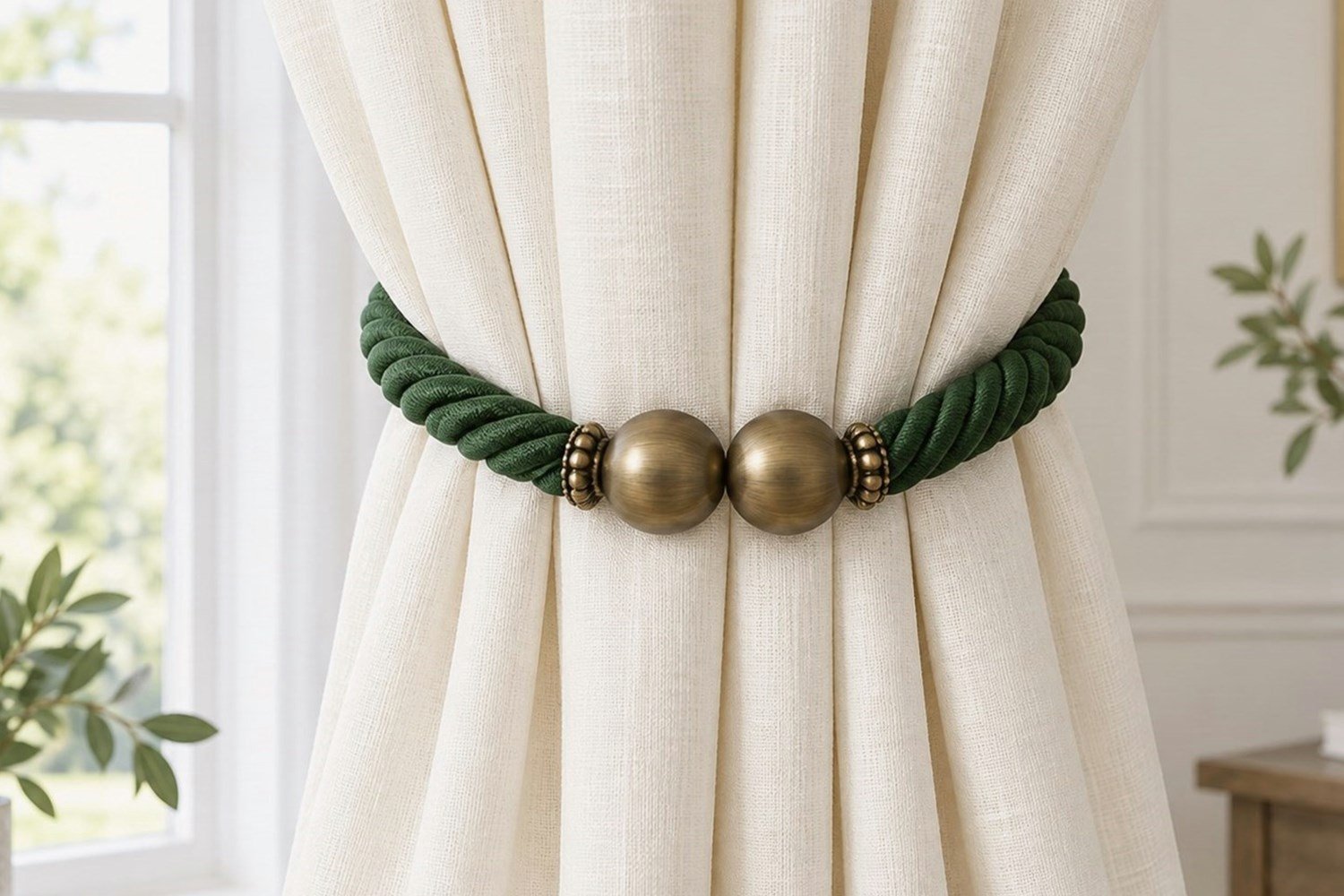
Finished curtain tiebacks showing rope, fabric, tassels, beads, loops, fastening, and approved construction details

Conclusion

How Are Curtain Tiebacks Made? Key Takeaways

Curtain tiebacks are made through a construction-specific process that brings approved textile bodies, decorative components, fastening details, finishing, and inspection into one complete product. Rope, fabric, tassel, beaded, magnetic, and mixed-material designs may share stages, yet each needs a specification that states its own materials, dimensions, and assembly direction.

  • Start production from an approved reference and complete component list.
  • Match rope, fabric, tassels, beads, loops, and closures to the stated construction.
  • Inspect the finished product, not isolated parts only.
  • Approve a representative sample and final specification for B2B orders.
Discuss a curtain tieback project

Inquiry Form

Discuss Curtain Tieback Manufacturing

Describe the curtain application, body construction, materials, tassels, beads, loops, closures, dimensions, colors, packaging, and other project requirements in one request.

Curtain tieback rope, fabric, tassel, bead, loop, magnetic closure, and color samples prepared for a B2B manufacturing inquiry

Close-up curtain tieback manufacturing details showing rope, tassel, bead, cap, loop, and finished hardware

Published: •Topic: Curtain tieback manufacturing

Other Articles

Start a conversation

Tell us what you need

Share your product type, colour, dimensions and quantity. Our sales team will review your request and reply by email.

  • Emailsales@evnubtrims.com
  • Phone+86 18268767650