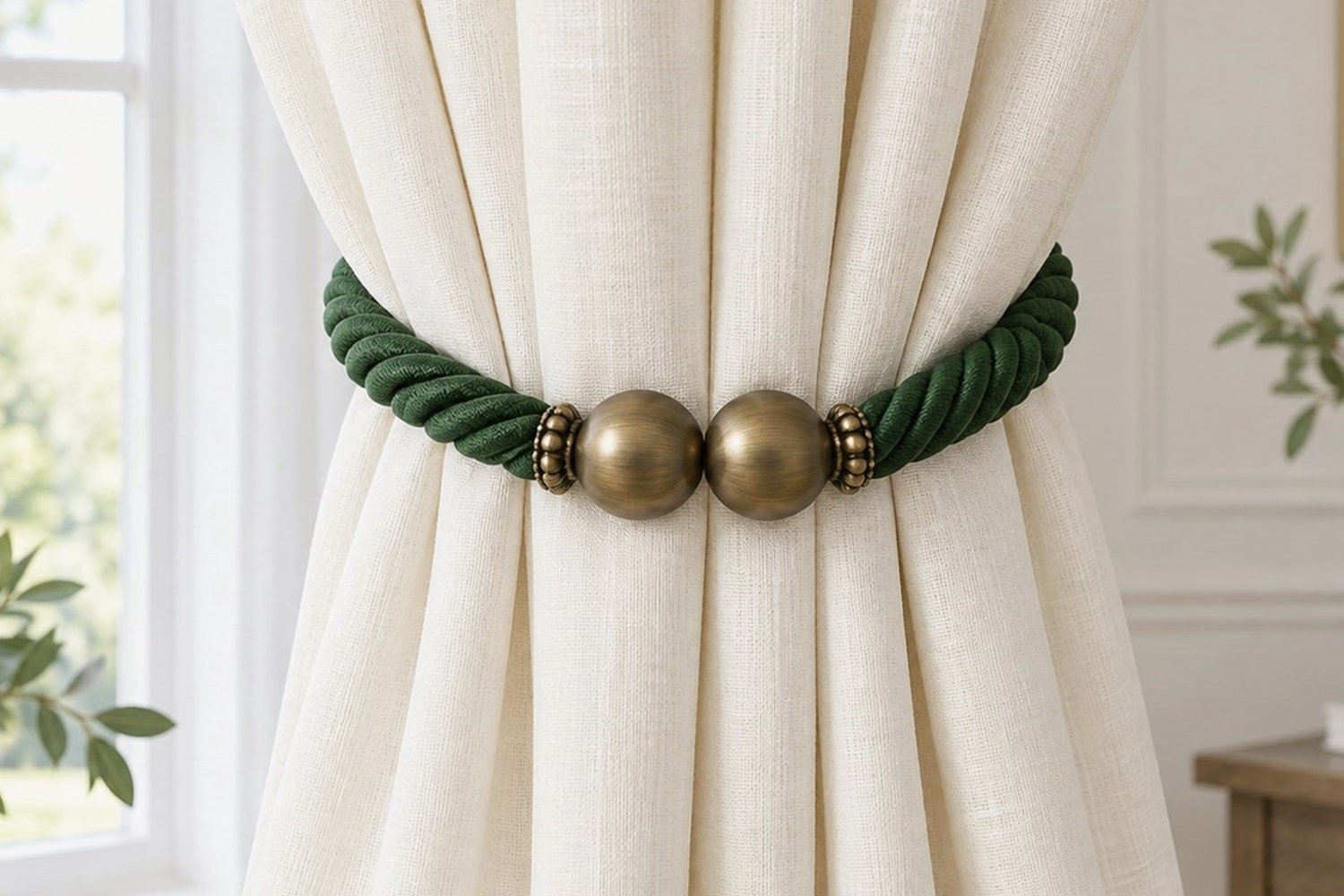
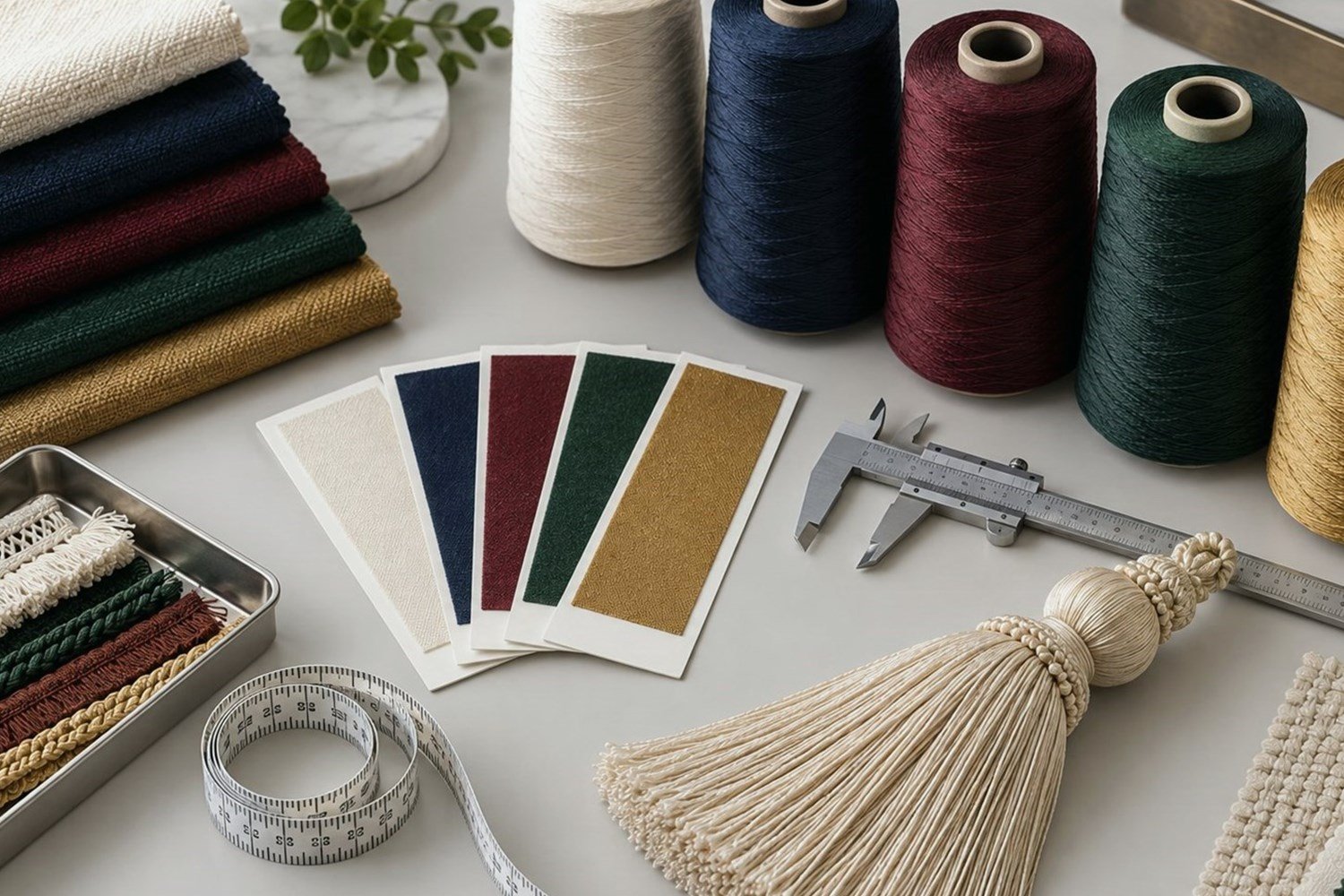
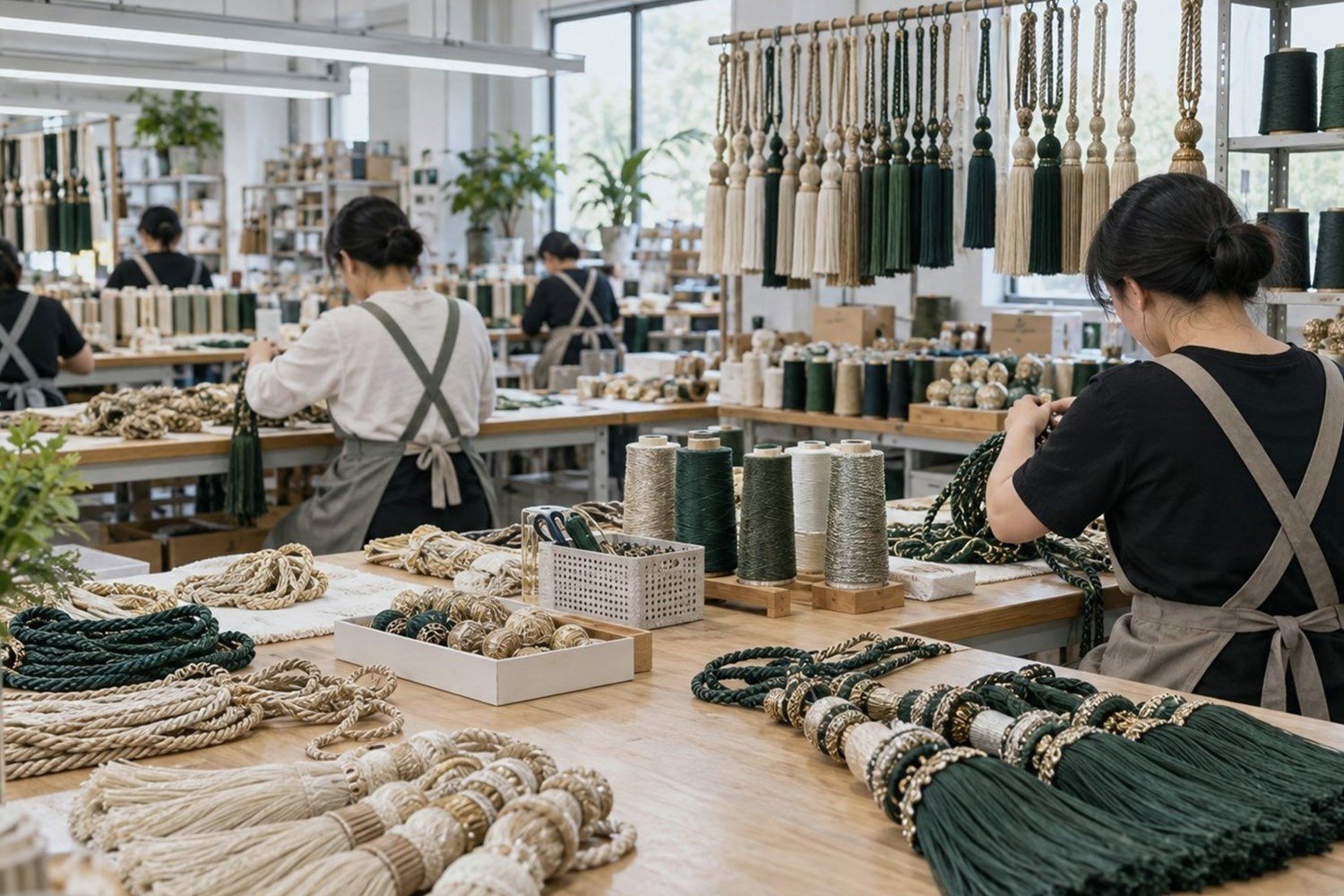
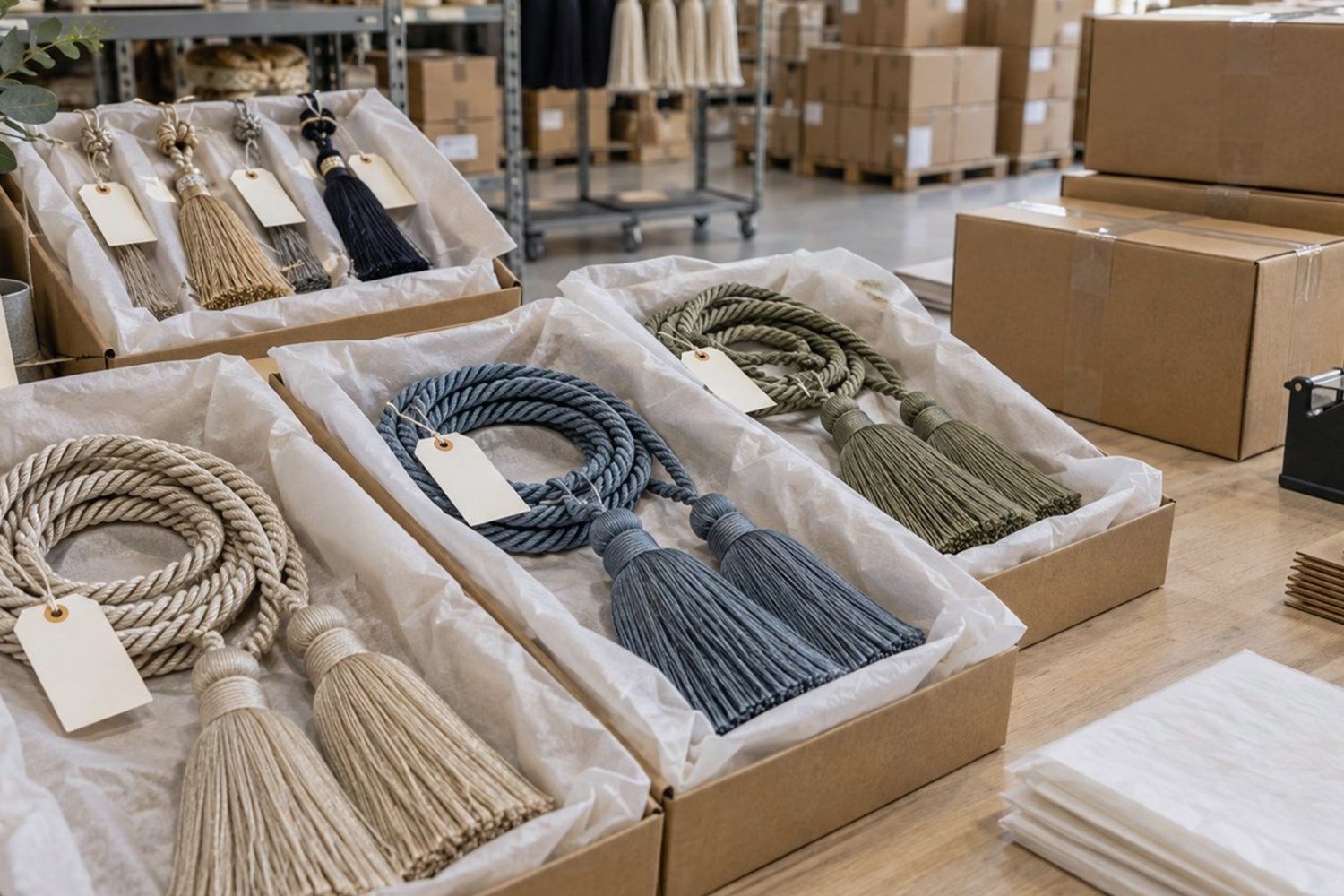
Curtain tiebacks are flexible accessories that wrap around or gather curtain fabric, while curtain holdbacks are typically rigid pieces mounted beside a window. Both can hold a curtain in an open arrangement, but they differ in structure, materials, wall attachment, adjustment, installation, visible components, and the way they shape the gathered curtain.
Quick Reference
Core Difference
Tieback
Flexible gathering accessory.
Holdback
Rigid mounted hardware.
Attachment
Wrap-around versus wall side.
Detail
Textile and components versus hardware form.
Selection
Choose for the window system.
Overview
Two Ways to Hold Curtains Open
Curtain tiebacks and curtain holdbacks both create an open curtain arrangement, but they do so with different product structures and attachment methods. A tieback gathers fabric with a flexible body such as rope, fabric, tassels, beads, loops, or a magnetic construction. A holdback is typically a rigid hardware element installed beside the window to receive or retain the curtain.
Loop, hook, ring, magnet, self-tied, or integrated closure
Mounted position beside the window
Adjustment
Can be repositioned through the flexible body
Relates to fixed mounted location
Neither category is universally better. The relevant choice depends on whether the project needs a flexible textile or decorative gathering product, or a fixed rigid hardware category beside the window.
Main Content
What Is the Difference Between Curtain Tiebacks and Holdbacks?
A curtain tieback is a flexible product that wraps around or gathers curtain fabric, while a curtain holdback is typically a rigid wall-mounted product that retains the curtain from one side. This basic difference affects how the item is specified, installed, adjusted, and presented with the complete window treatment.
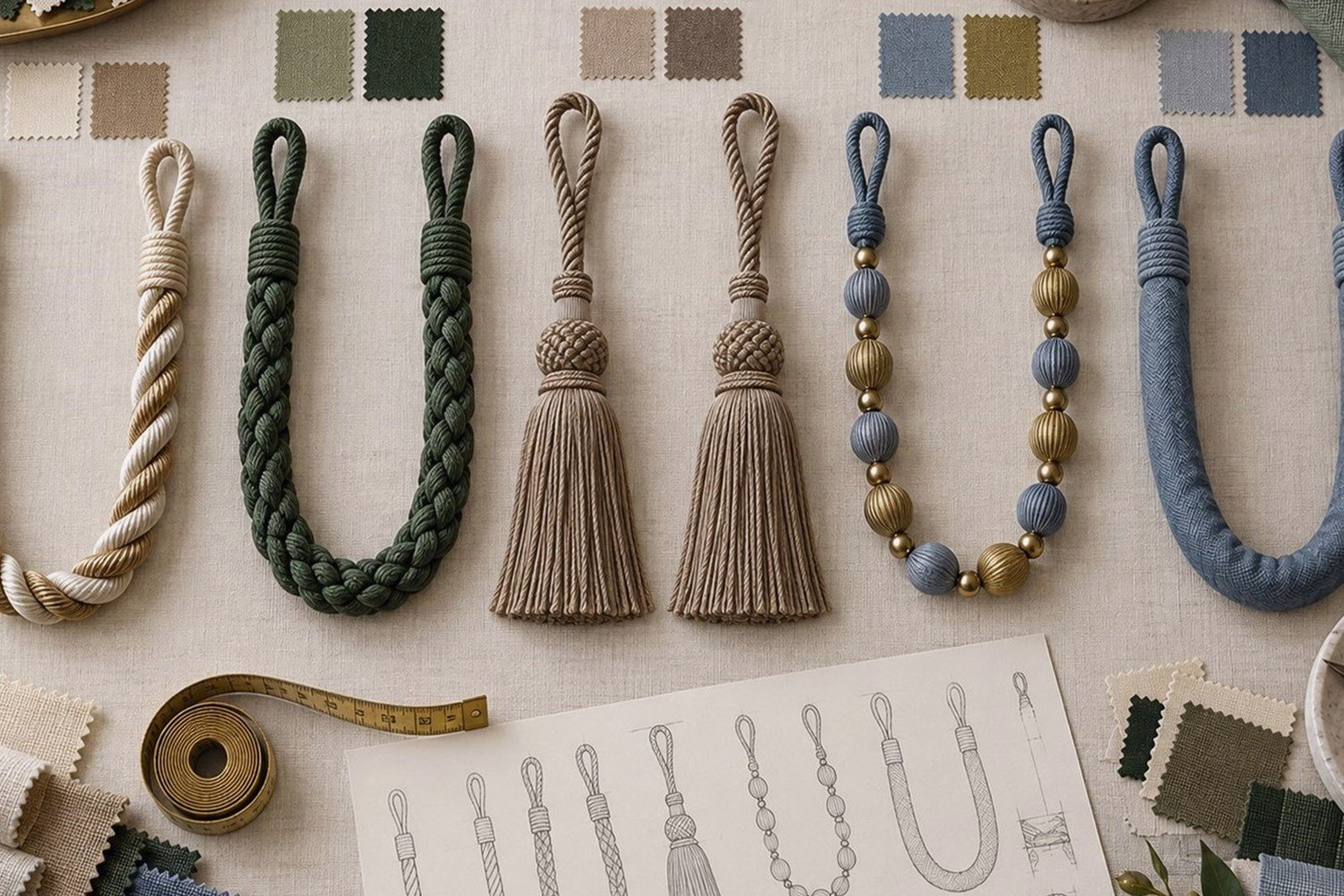
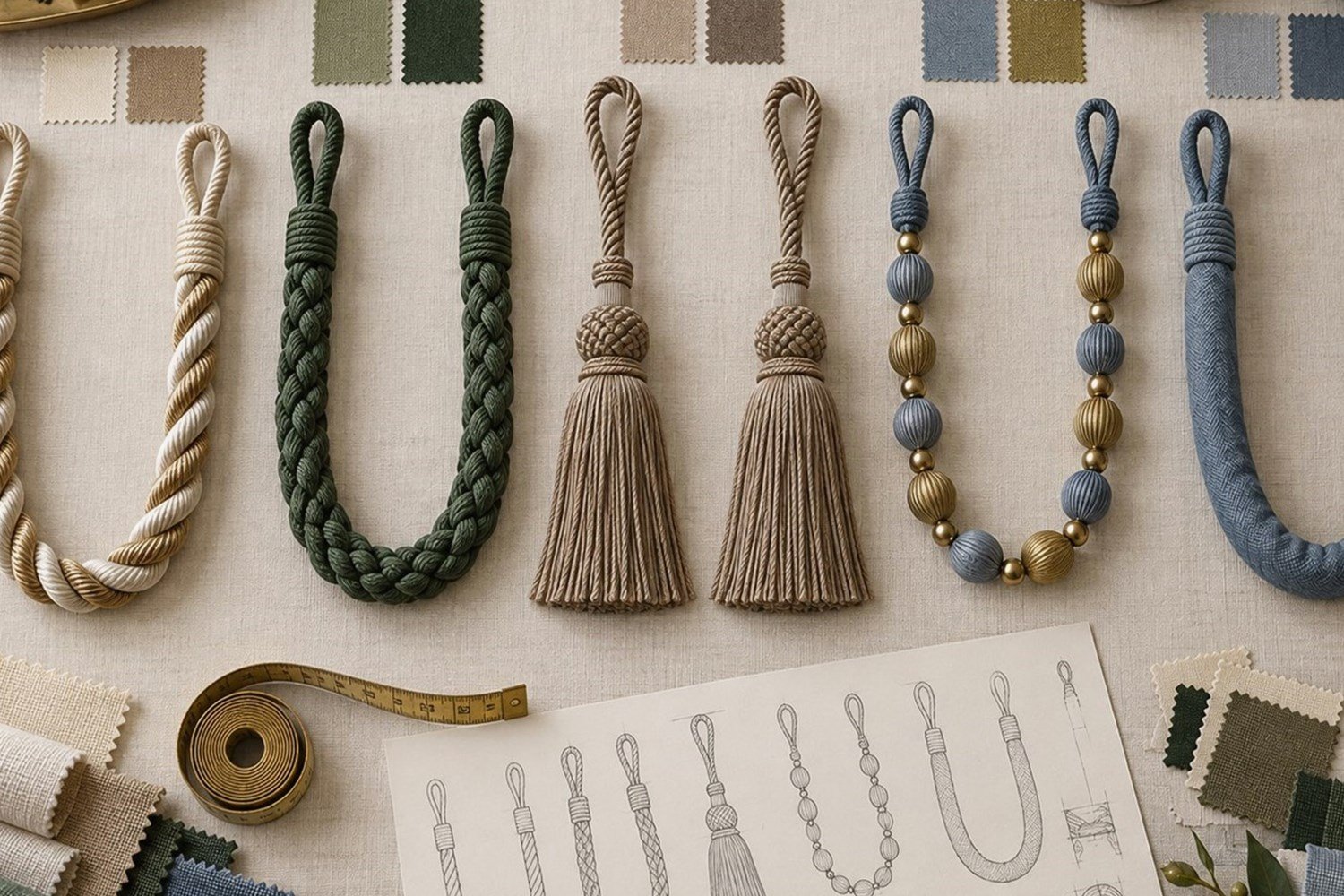
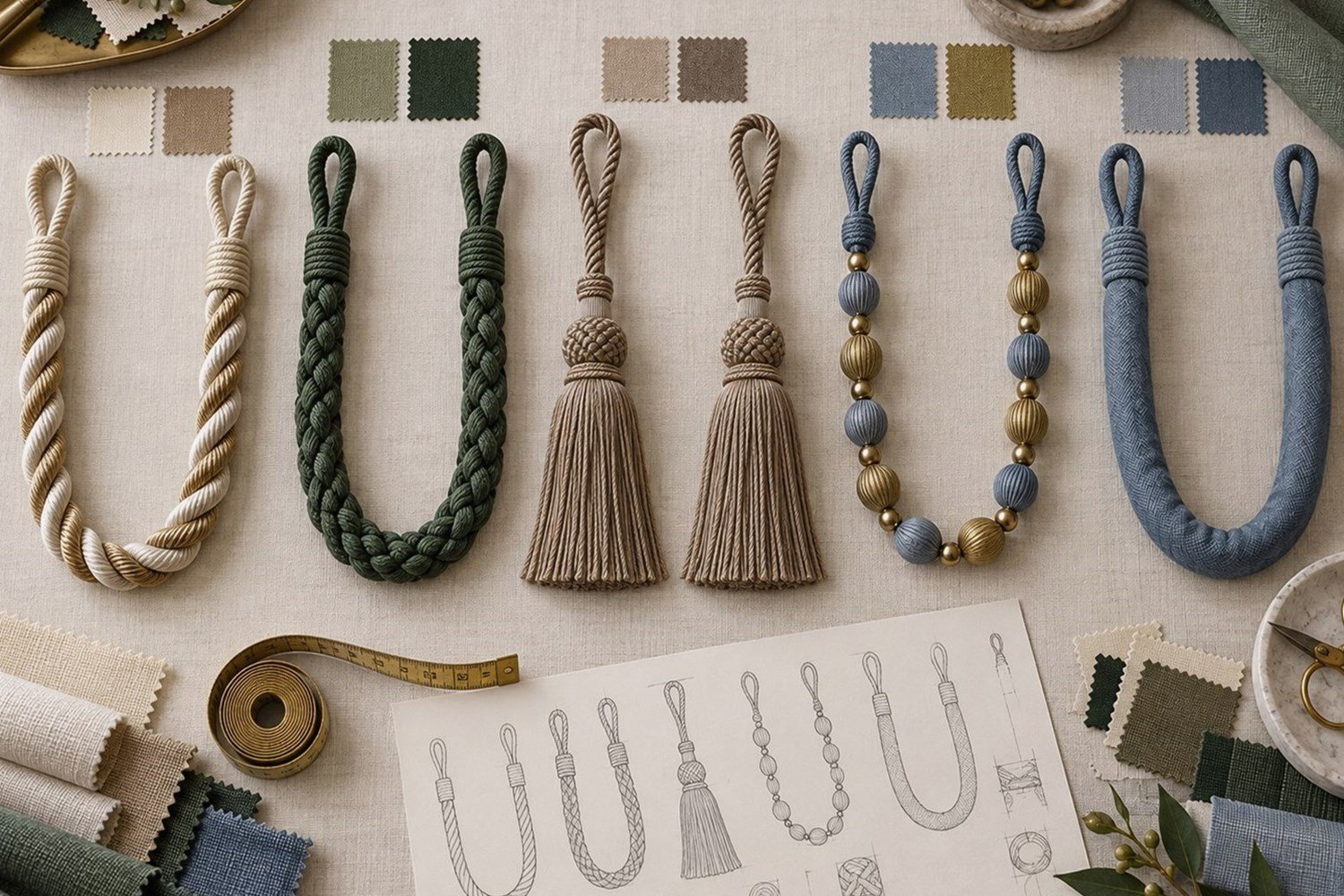
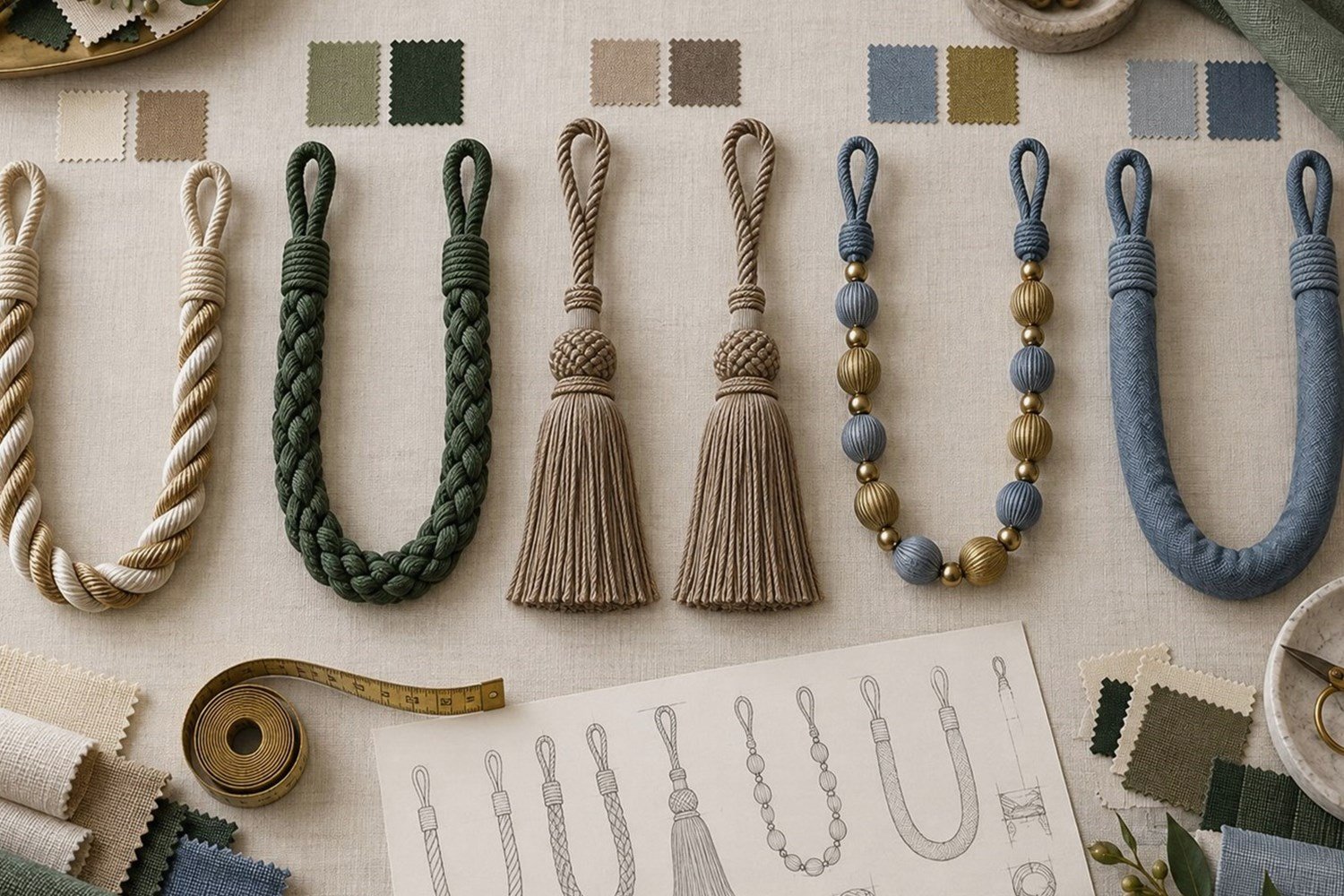
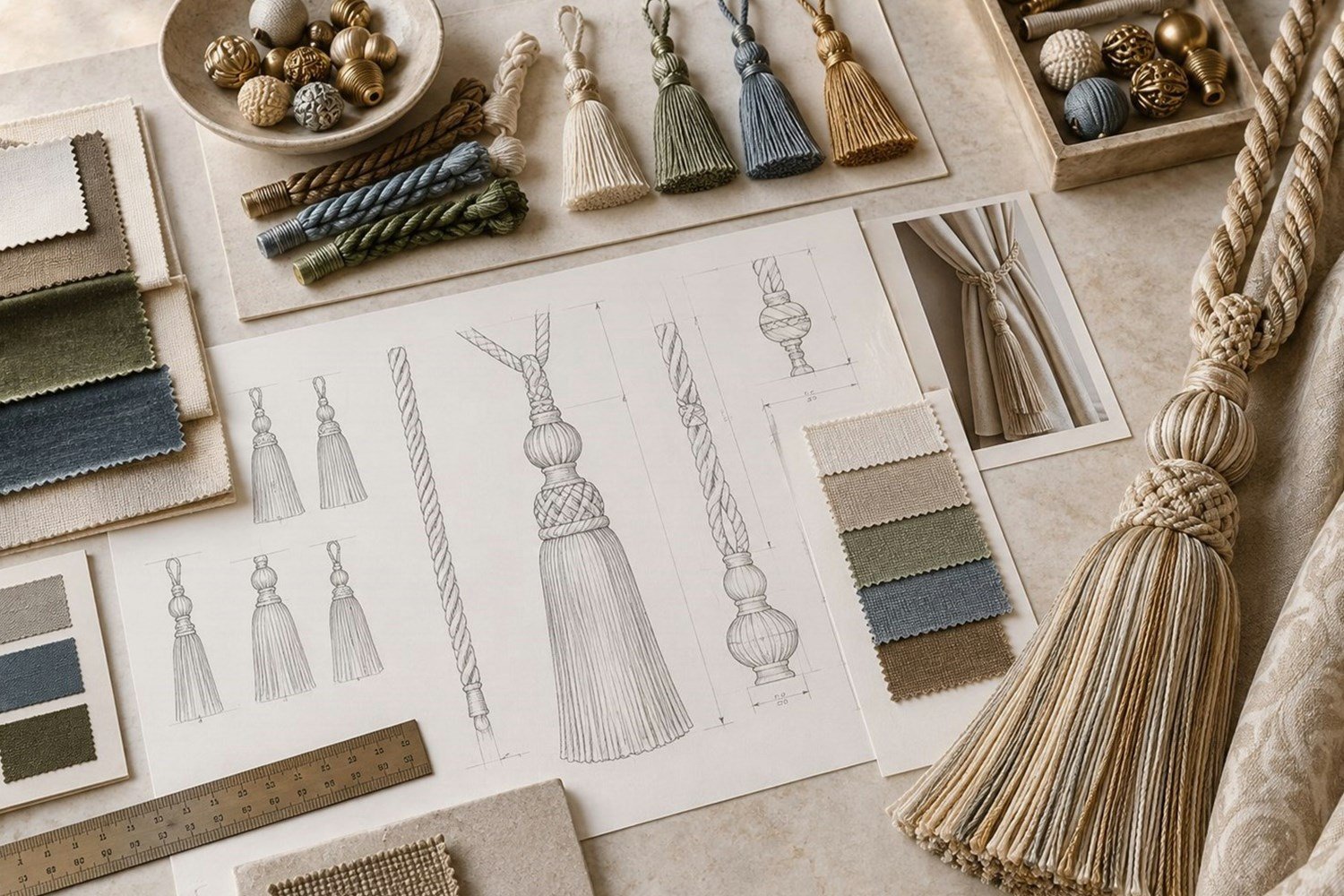
Tiebacks may use rope, cord, fabric, tassels, beads, magnets, loops, rings, hooks, caps, and related components. Their flexible body can create a gathered shape around a defined section of curtain. Holdbacks are a separate category when the buyer needs a fixed rigid attachment beside the window. A detailed project brief should not use the two names as if they describe the same construction.
Structure, Fastening, Installation, and Appearance
Tiebacks and holdbacks differ in how they relate to the curtain and window because flexible wrapping and fixed side retention create different attachment, adjustment, and visual conditions. The right decision should follow the intended curtain system and product category rather than a generic style label.
Comparison point
Tieback
Holdback
Structure
Flexible rope, fabric, cord, or mixed body
Rigid product form beside the window
How it holds fabric
Wraps or gathers a section of curtain
Receives or retains curtain from a side position
Fastening method
May use loop, hook, ring, magnet, knot, or closure
Relates to its fixed mounted hardware arrangement
Wall attachment
May connect through related attachment features
Typically uses the mounted location as its product basis
Adjustment
Flexible body can change gathered form
Fixed position influences final arrangement
Appearance
Can include textile, tassels, beads, and decorative parts
Often follows a hardware-led visible direction
Installation should not dominate a selection article. Attachment location and chosen position influence curtain sweep, folds, exposed window area, and product fit, but there is no universal placement height. Review the actual curtain, intended composition, and selected product construction.
Materials, Components, and Curtain Gathering
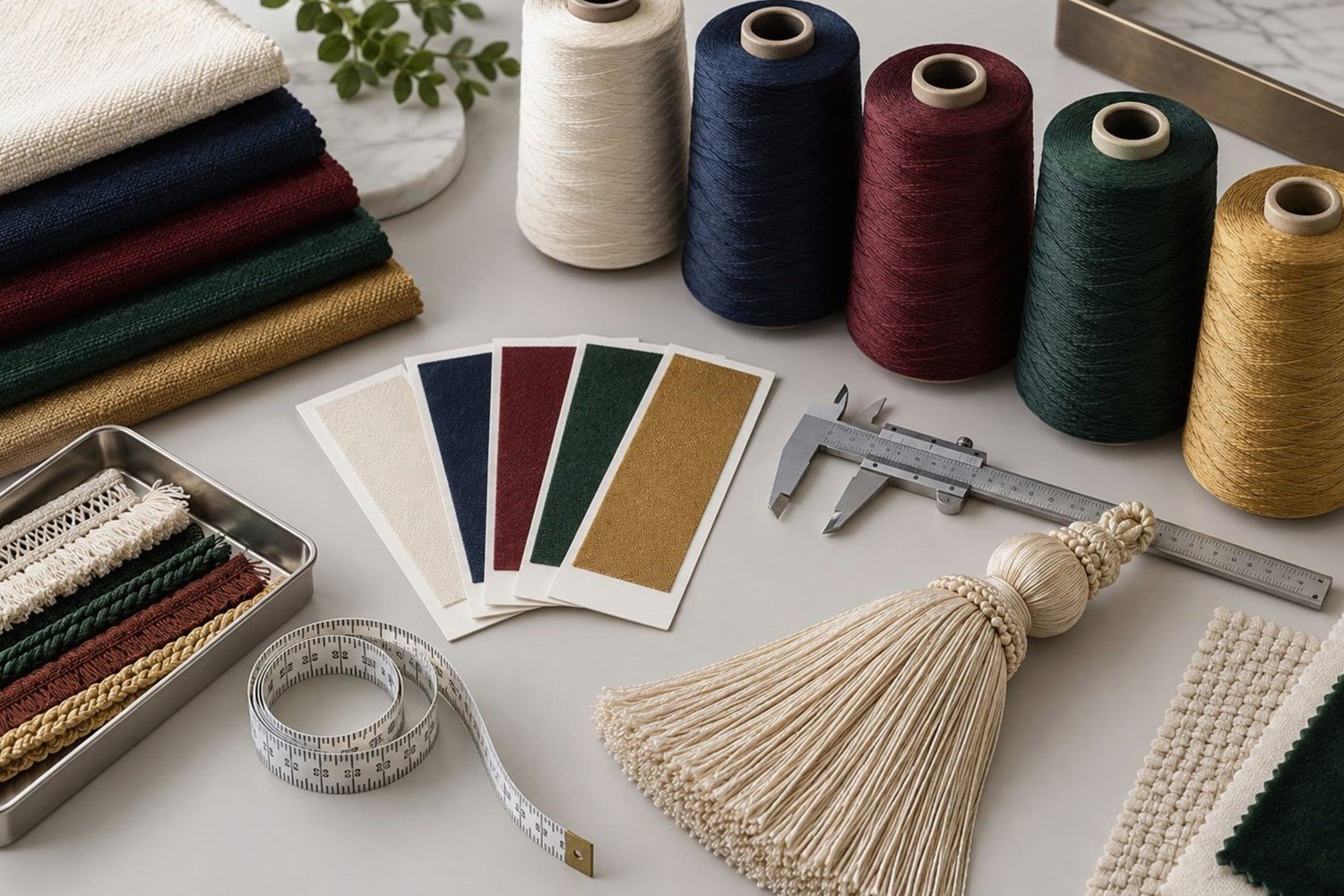
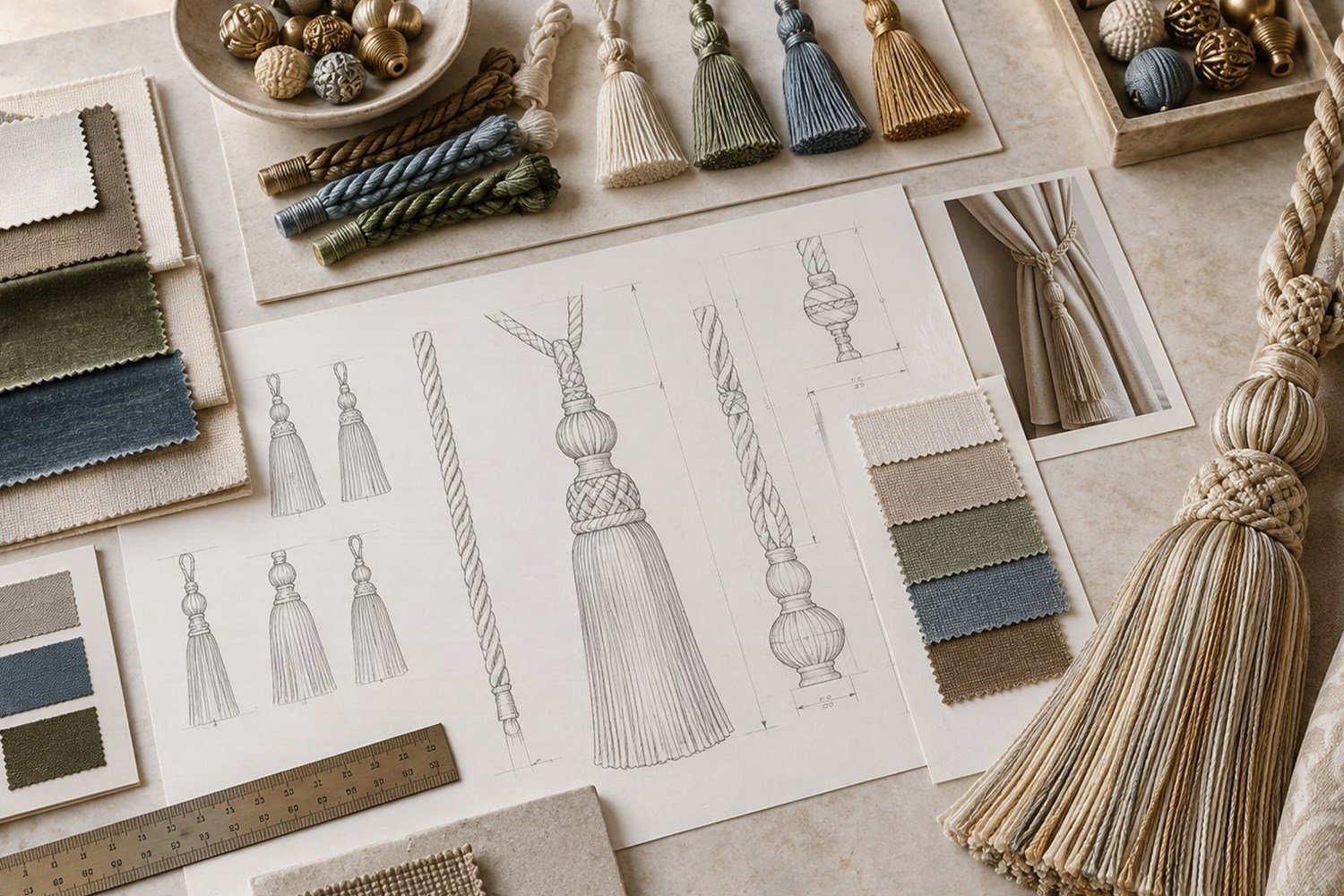
Tiebacks often use textile and decorative component systems, while holdbacks are specified through a different rigid hardware concept; each category should be described by its actual construction and materials. A tieback can be rope-based, fabric-led, tassel-ended, beaded, magnetic, or mixed material. Components add visual direction but do not replace the need for a suitable gathered fit.
Tieback feature
What to check
Rope or cord body
Construction, usable wrap, scale, ends, and attachment
Fabric body
Textile relation, width, edges, fastening, and curtain coordination
Tassels and beads
Material, placement, proportion, visible balance, and finishing
Magnetic closure
Complete body, closure, curtain volume, position, and adjustment pattern
Loops, rings, and hooks
Connection, material, dimensions, and intended curtain relation
Do not assume a rope tieback is always for dense curtains, a fabric tieback is always for lightweight curtains, magnetic options only suit a certain interior, or beaded products are automatically premium. Selection depends on the complete curtain application, gathered volume, product construction, fastening, and approved reference.
Selection
Should You Choose a Tieback or a Holdback?
Choose a curtain tieback when the project calls for a flexible accessory that gathers fabric with rope, textiles, tassels, beads, fabric, or magnetic components; choose a holdback when the product requirement is fixed rigid hardware beside the window. Confirm the exact category early because the product definition, specifications, and installation context differ.
Start with the intended curtain, application, gathered position, and open arrangement.
Decide whether flexible gathering or fixed side hardware is required.
For tiebacks, define body, fastening, usable fit, materials, colors, and components.
For holdbacks, define the rigid product type and its relevant mounted hardware requirements.
Review the selected product with the intended curtain and window treatment direction.
There is no universal tieback length or universal holdback position. A flexible tieback should fit securely without unnecessarily compressing fabric. A holdback should be specified according to its own hardware construction and the intended curtain relation.
B2B Specification
How to Specify Tiebacks and Holdbacks for a Project
For B2B sourcing, state whether the project requires a curtain tieback or a curtain holdback before defining the individual product requirements. A product name alone is insufficient because it does not clarify flexible versus rigid construction, attachment method, materials, dimensions, components, or reference sample.
Requirement
Tieback Brief
Holdback Brief
Category
Flexible gathering accessory
Rigid mounted hardware category
Curtain context
Fabric, fullness, gathered volume, intended position
The most common mistake is using “tieback” and “holdback” interchangeably before confirming the product category and required curtain relationship. A clear brief prevents a flexible textile accessory from being confused with a fixed rigid hardware request.
Mistake
Better approach
Using the two terms as synonyms
Define flexible tieback versus rigid holdback at project start.
Choosing by style label only
Check structure, attachment, fit, and intended use.
Defining only color or material
State complete construction and fastening.
Using universal placement rules
Review the actual curtain and intended composition.
Approving a tieback without curtain test
Review flexible fit with the gathered curtain.
FAQ
Frequently Asked Questions
What is the difference between curtain tiebacks and holdbacks?
Curtain tiebacks are flexible accessories that wrap around or gather fabric. Curtain holdbacks are typically rigid products mounted beside a window. Both create an open curtain arrangement, but their structures and attachment methods differ.
Are curtain tiebacks wall-mounted?
A tieback can use related attachment features such as hooks, loops, rings, or other closures, but its defining feature is the flexible body that gathers curtain fabric. A holdback is typically defined by its rigid mounted side position.
Can a tieback use rope, tassels, beads, or magnets?
Yes. Tiebacks can use rope, cord, fabric, tassels, beads, loops, rings, hooks, magnetic closures, and mixed-material decorative components according to the product design.
Do holdbacks and tiebacks use the same measurements?
No. Tiebacks commonly need overall and usable wrap measurements related to the gathered curtain. Holdbacks have their own product and installation references because they are a different rigid category.
Which is best for a curtain?
Neither is universally best. Choose a tieback for flexible textile or decorative gathering, or a holdback when the project specifically requires fixed rigid hardware beside the window.
Do tiebacks need a universal length or placement height?
No. Tieback fit depends on gathered curtain volume, construction, fastening, and intended appearance. Placement should follow the actual window treatment rather than a universal height rule.
What should B2B buyers confirm?
Confirm category, curtain context, construction, attachment, dimensions, materials, components, reference sample, and final approved specification before development or bulk production.
Conclusion
Curtain Tiebacks vs Holdbacks: Key Takeaways
Curtain tiebacks and holdbacks both hold curtains open, but tiebacks are flexible gathering accessories while holdbacks are typically rigid mounted hardware. This structural difference changes the product’s materials, components, fastening, fit, installation context, adjustment, and B2B specification.
Use tiebacks for flexible rope, fabric, tassel, beaded, magnetic, or mixed-material gathering.
Use holdbacks when the requirement is a fixed rigid product beside the window.
Define the category before writing materials, dimensions, and attachment details.
Review the final product with the intended curtain and approved project reference.
Describe the curtain application, required product category, construction, attachment, dimensions, materials, colors, components, reference, and other project requirements in one request.