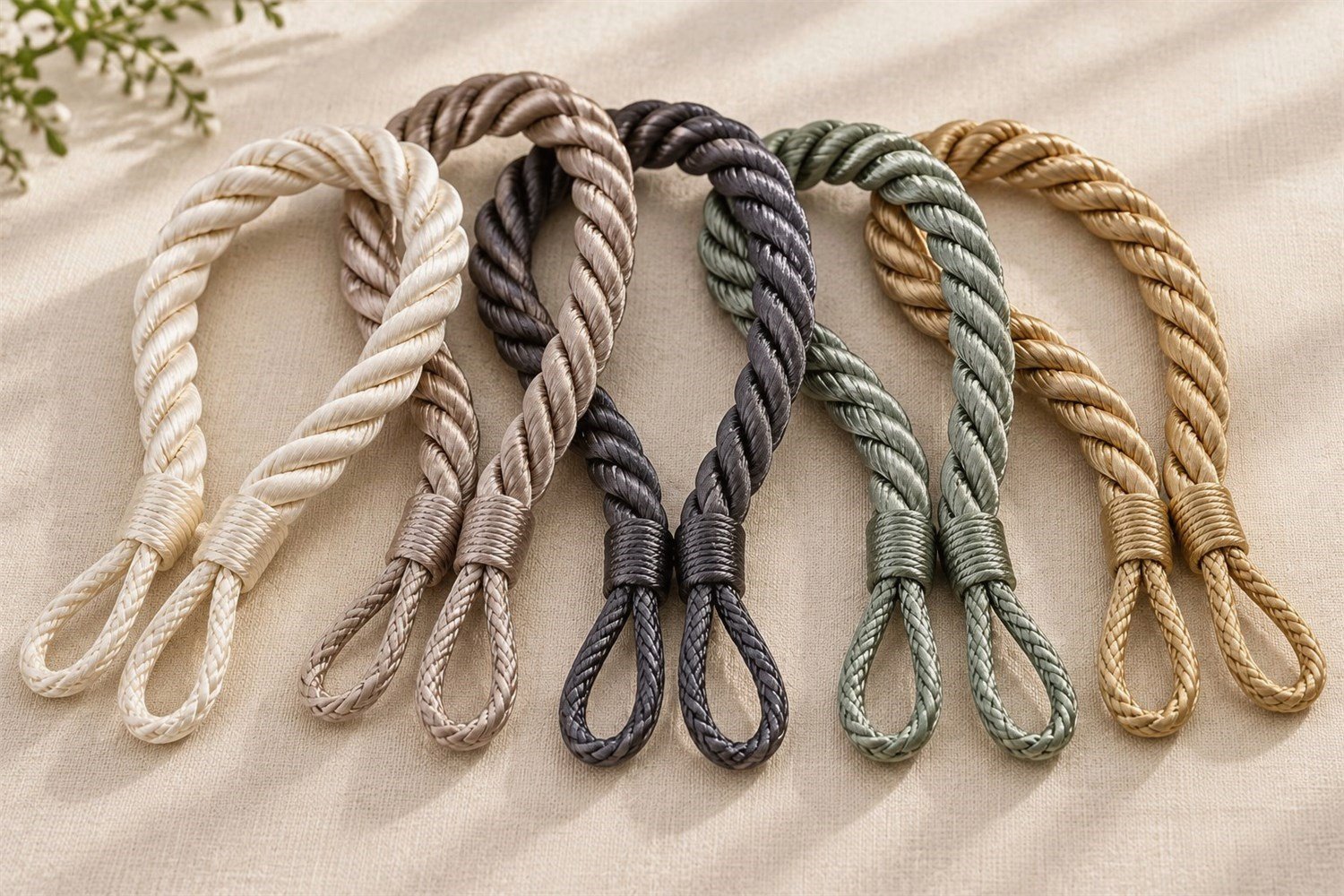
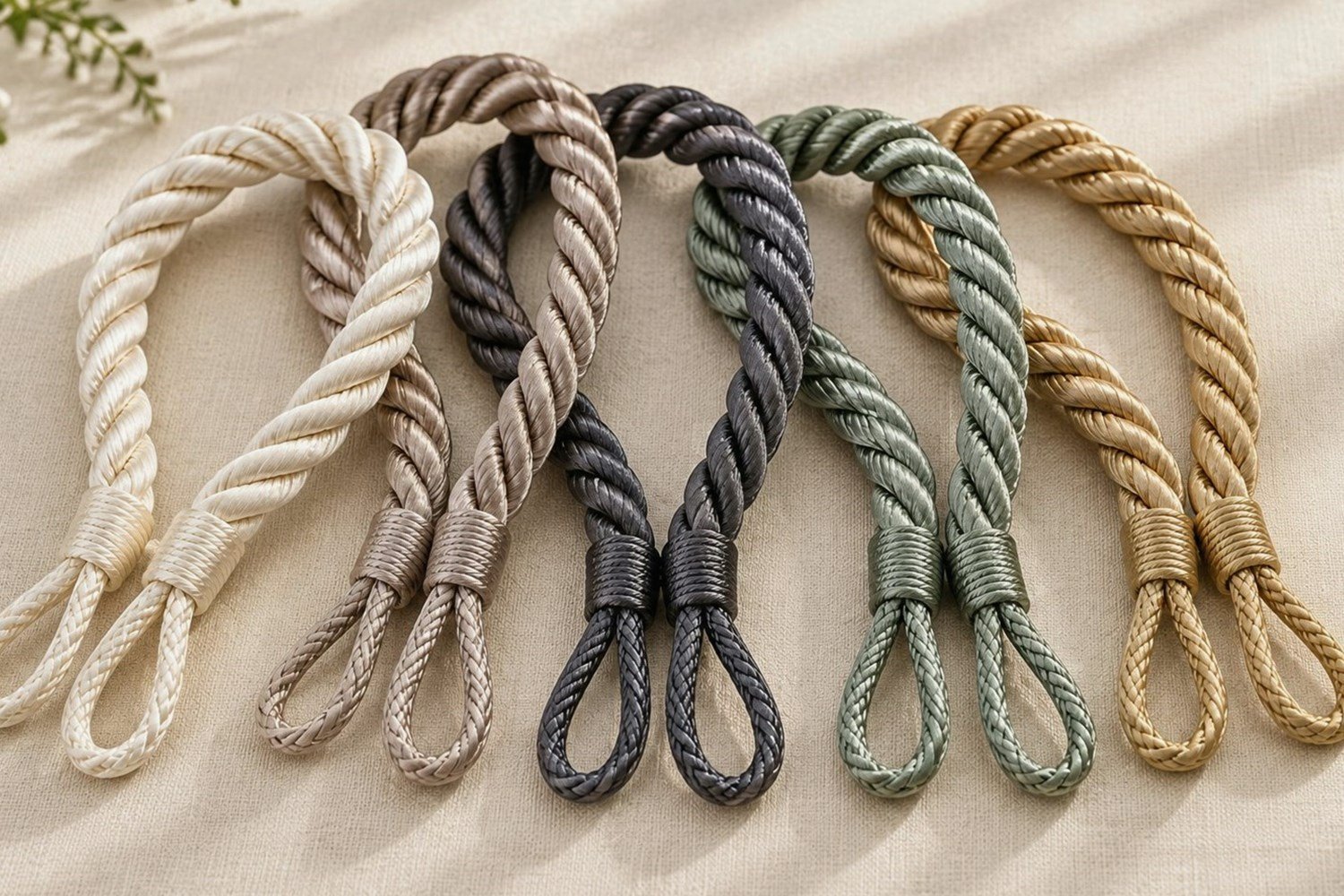
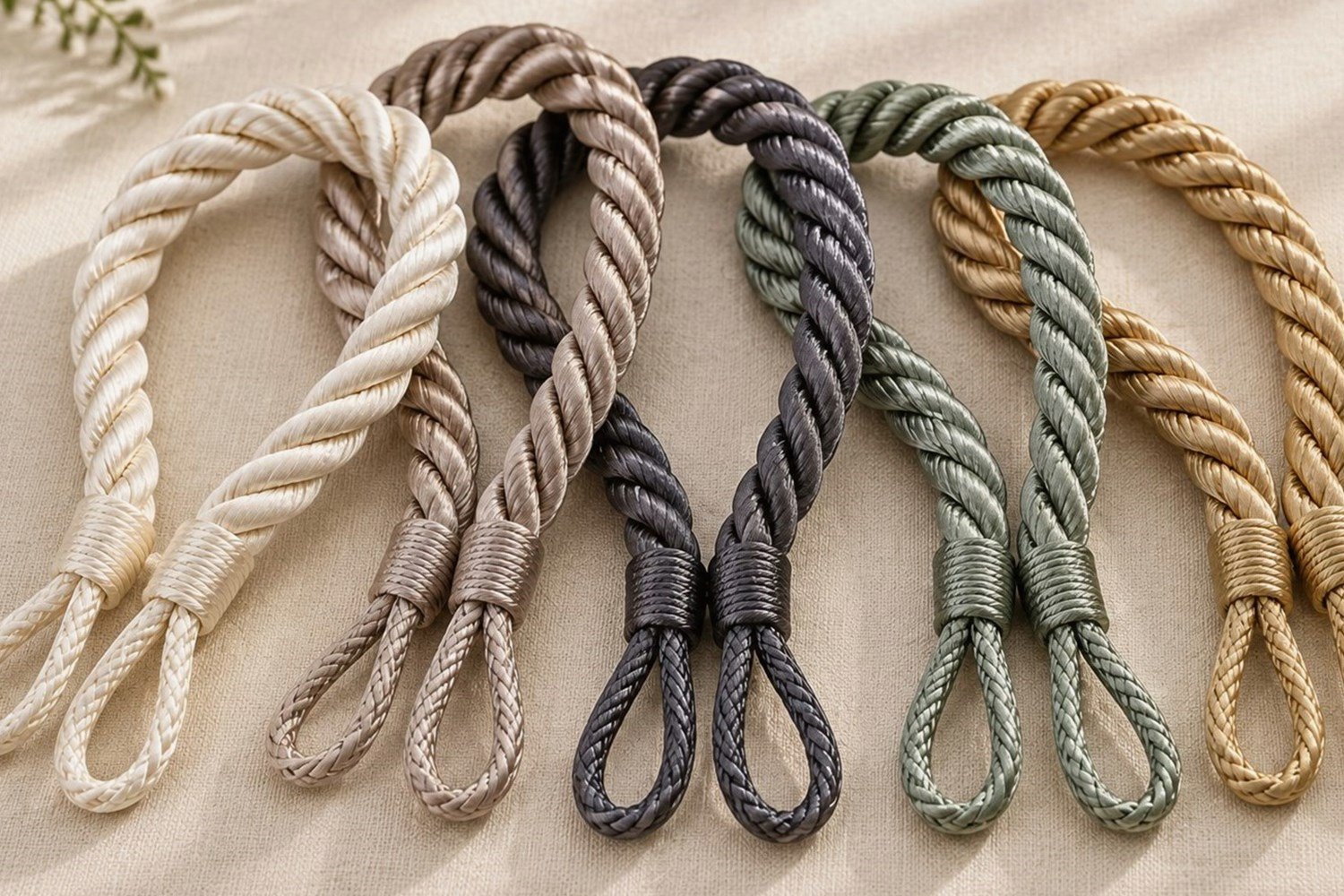
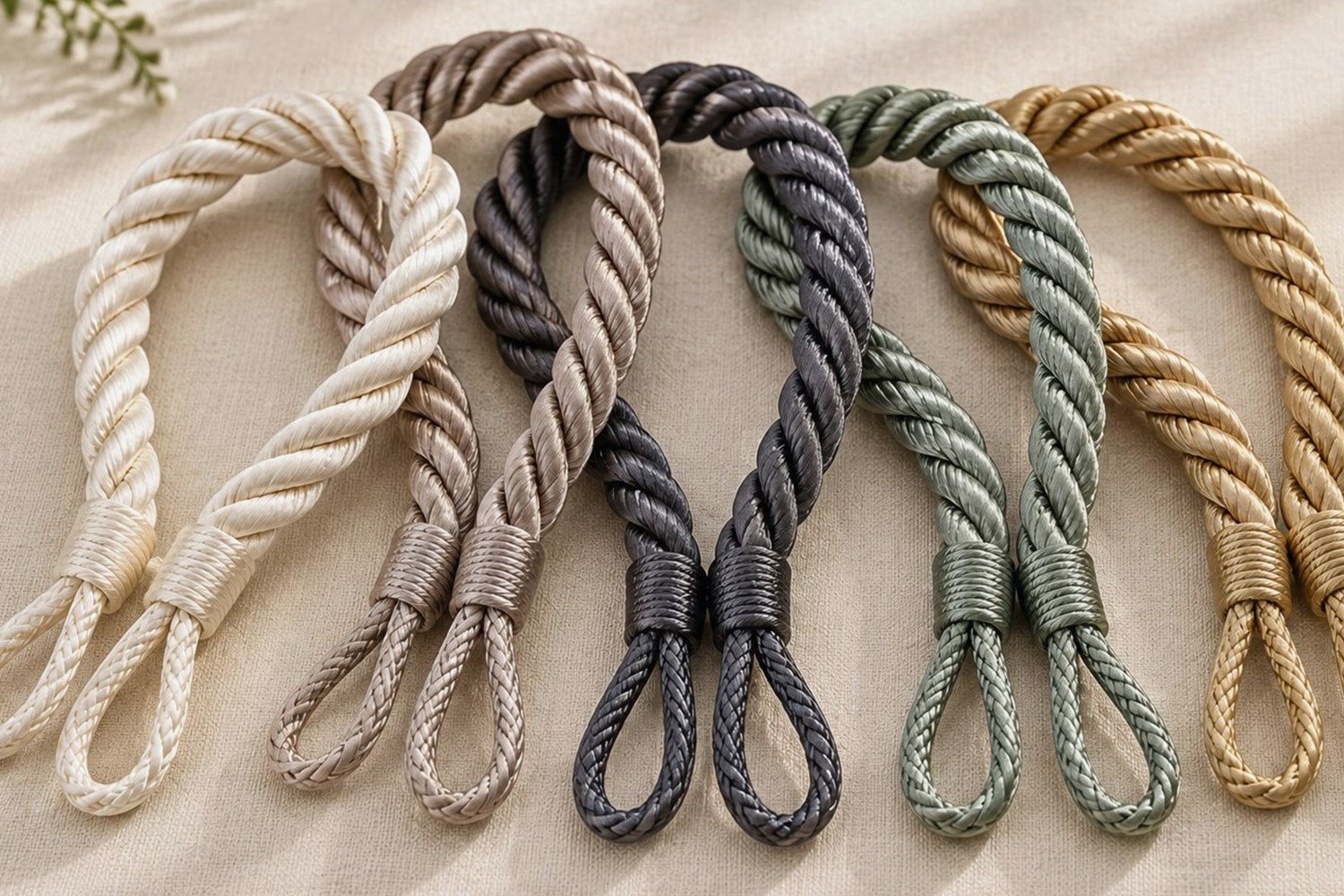
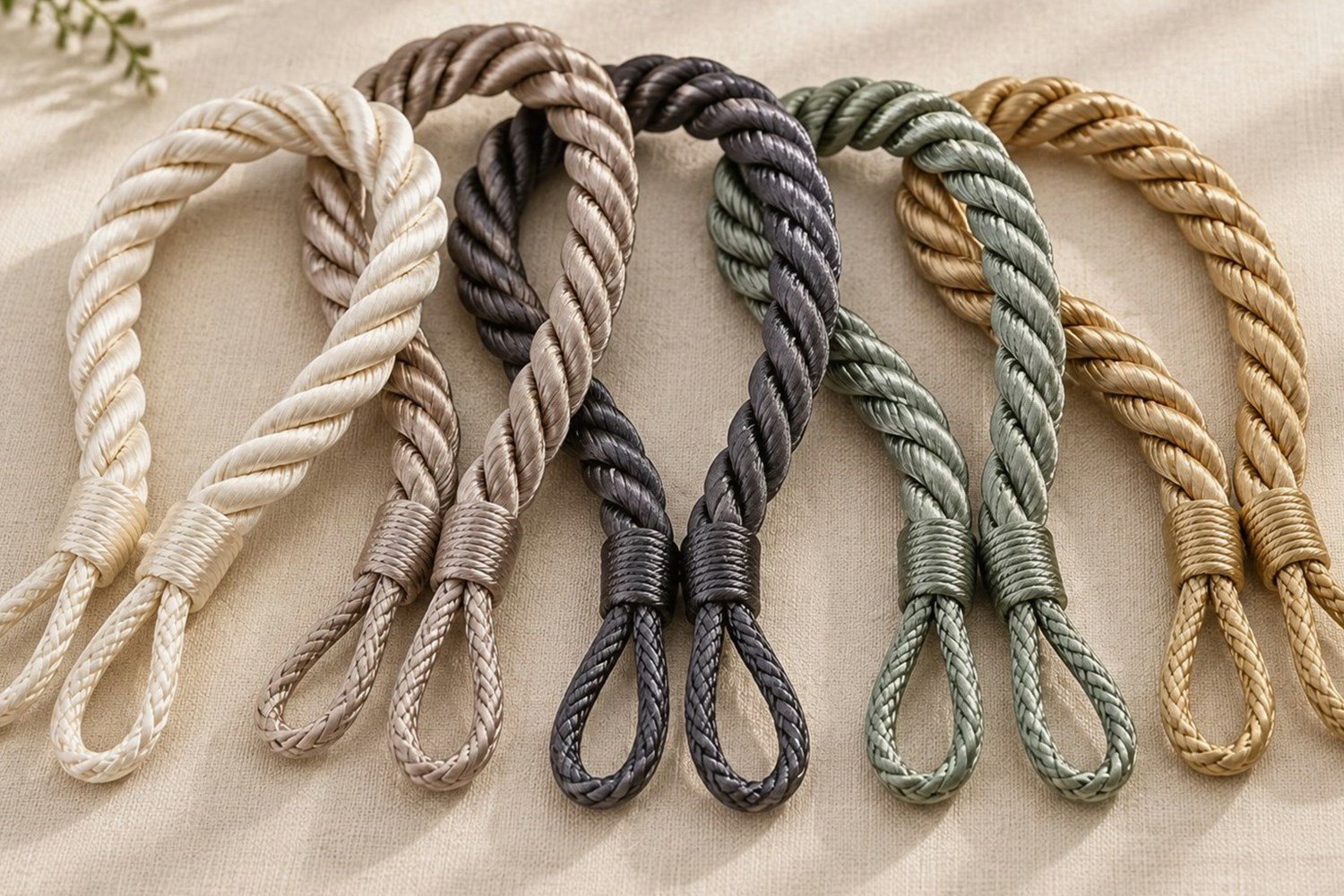
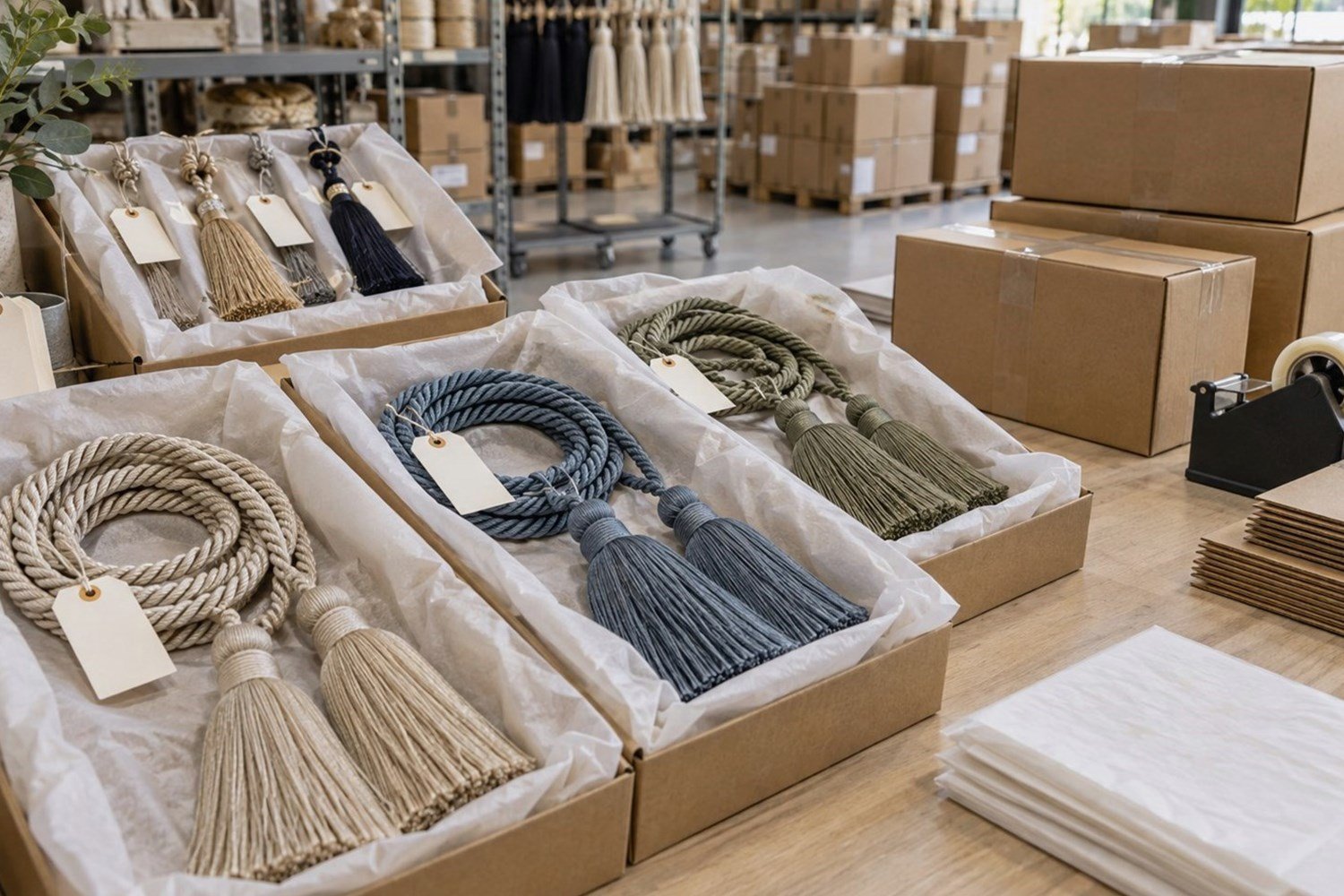
Twisted and braided rope tiebacks differ in how their visible cord bodies are constructed. A twisted rope uses strands arranged in a twist-led structure, while a braided rope uses strands arranged in a braid-led structure. These construction differences affect visible texture, pattern, shape, color arrangement, components, and the finished curtain tieback direction.
Quick Reference
Construction Difference
Twisted
Twist-led strand arrangement.
Braided
Braid-led strand arrangement.
Appearance
Different surface and pattern.
Color
Strands can read differently.
Selection
Choose from full design context.
Overview
Two Construction Directions
Twisted and braided rope tiebacks are both rope-body curtain accessories, but their strand arrangement creates different visible constructions. The distinction helps buyers describe the desired surface, pattern, color relation, and overall tieback direction. It does not create a universal ranking or guarantee one construction is better for every curtain.
Feature
Twisted Rope Tieback
Braided Rope Tieback
Construction
Twist-led strand arrangement
Braid-led strand arrangement
Surface
Visible twist direction
Visible braid pattern
Color arrangement
Strands can create a twist-led reading
Strands can create a braid-led reading
Components
May include tassels, beads, caps, loops, closures
May include tassels, beads, caps, loops, closures
Selection
Based on curtain and approved design
Based on curtain and approved design
Main Content
What Is the Difference Between Twisted and Braided Rope Tiebacks?
Twisted rope tiebacks use a twist-led cord construction, while braided rope tiebacks use a braid-led cord construction. This changes the visible structure of the rope body. It can influence surface appearance, texture, strand pattern, color presentation, component relation, and the overall visual direction of the finished tieback.
Both constructions can be single or multiple cord products and can include tassel ends, beads, caps, loops, rings, hooks, magnetic closures, or other components. Rope construction is one part of the finished product; fastening, length, materials, curtain fit, and decorative details still need their own definition.
Strand Arrangement, Surface, Texture, and Color
Compare twisted and braided rope tiebacks by the actual approved cord body and its visible relationship to the curtain, not by assumptions about universal strength, flexibility, or quality. The strand pattern and finished surface can be used to establish the intended product direction.
Do not claim that braided rope is always stronger, twisted rope is always more flexible, one construction is more luxurious, or one is the right choice for every curtain. Material, construction, visible scale, fastening, and actual curtain application all influence the finished product.
Fit, Fastening, and Decorative Components
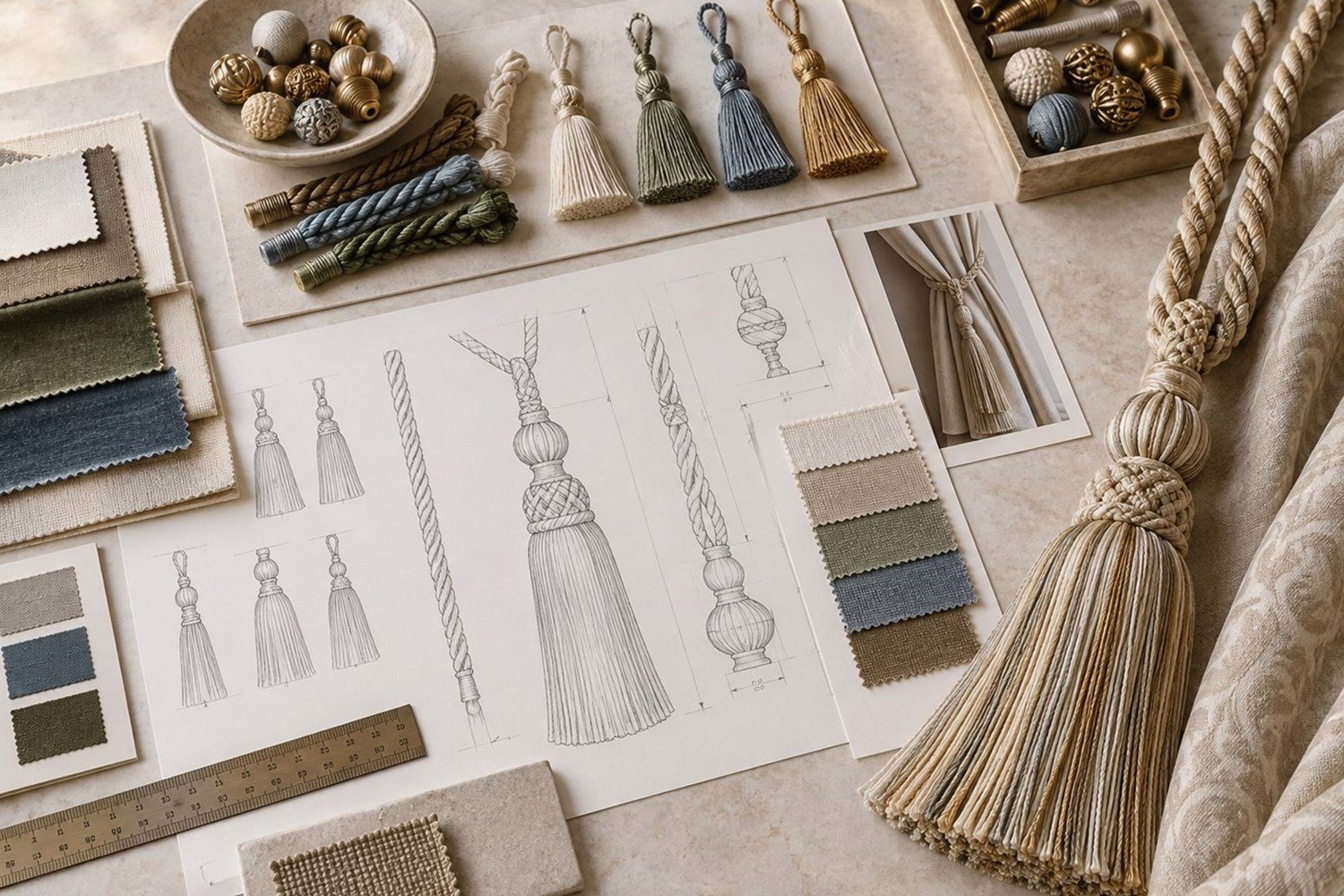
Twisted and braided rope bodies should be evaluated as parts of complete tiebacks that include the required usable wrap, fastening, end details, and decorative components. A rope body can be paired with tassels, beads, caps, loops, rings, hooks, magnets, fabric, or mixed-material details. These choices affect the total visible scale and final curtain relation.
Feature
What to check
Gathered curtain fit
Actual fabric, fullness, layers, volume, intended open position
Usable wrap
Portion of body that gathers curtain, separate from decorative ends
Fastening
Loop, hook, ring, magnetic, self-tied, or integrated closure
Tassels and beads
Materials, scale, placement, color relation, attachment
There is no universal rope tieback length or diameter. Select the complete tieback from the actual gathered curtain and intended product direction. A secure but appropriate fit should hold the curtain without unnecessarily compressing its fabric or distorting the desired fold shape.
Selection
How to Choose Between Twisted and Braided Rope Tiebacks
Choose between twisted and braided rope tiebacks by defining the curtain, intended surface direction, body scale, fastening, fit, components, and approved reference. Construction should support the overall product and window treatment instead of being selected through a generic material or style rule.
Start with curtain fabric, fullness, layers, gathered volume, and intended open position.
Choose the twist-led or braid-led surface direction that supports the product reference.
Define single, multiple, wrapped, or mixed-material body construction where relevant.
Set usable fit, overall and component dimensions, and fastening method.
Review color, tassels, beads, caps, loops, and closures on the complete sample.
Use an approved sample with the intended curtain whenever possible. Screen images and loose cords can communicate direction, but they do not fully confirm the finished tieback’s fit, total proportion, component placement, or visible color relation.
B2B Specification
What Should Buyers Specify?
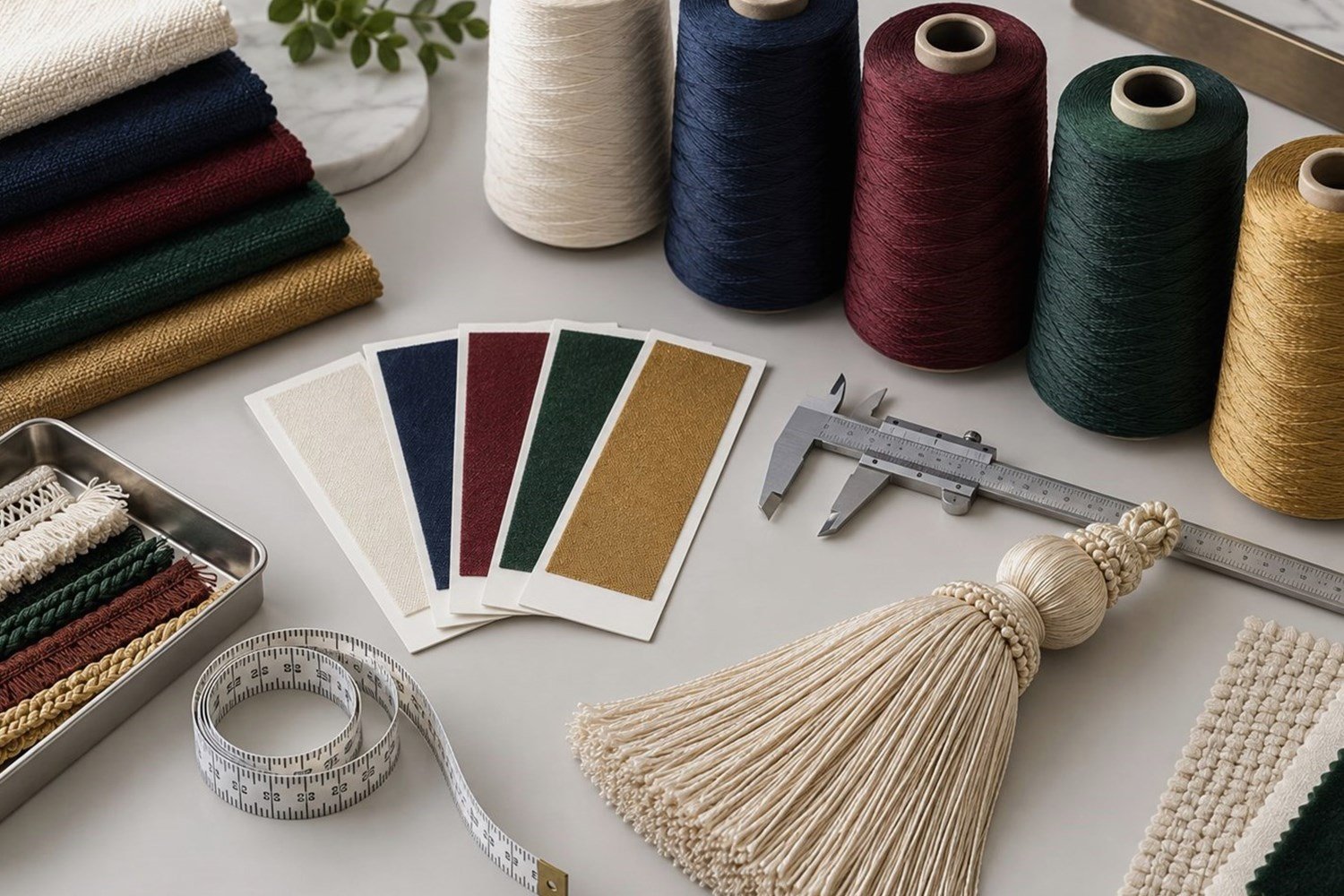
B2B buyers should state whether the rope body is twisted or braided and then define the complete tieback construction, fit, components, and approved reference. A broad rope category does not specify strand arrangement, material, color, usable dimensions, ends, fastening, or decorative details.
Requirement
Buyer Reference
Approved Specification
Curtain context
Application, fabric, fullness, gathered volume, open position
Rope construction
Twisted, braided, single, multiple, wrapped, or mixed
The main comparison mistake is treating twist and braid as universal performance labels instead of specific construction descriptions within a complete curtain tieback. Review the approved finished product rather than a general category claim.
Mistake
Better approach
Assuming braid is always stronger
Review the actual specified construction and project requirements.
Assuming twist is always more flexible
Evaluate the approved body and complete tieback.
Choosing from a loose cord
Review the finished tieback with components and curtain.
Ignoring color arrangement
Review strands, tassels, beads, and hardware together.
Using universal length
Measure the actual gathered curtain and usable wrap.
Describing only “rope”
State twist or braid, body, materials, ends, fastening, and details.
FAQ
Frequently Asked Questions
What is the difference between twisted and braided rope tiebacks?
Twisted rope tiebacks use a twist-led strand arrangement, while braided rope tiebacks use a braid-led strand arrangement. This changes the visible surface, pattern, texture, and color reading of the rope body.
Is braided rope always stronger than twisted rope?
No universal claim applies. Twist and braid describe construction. Evaluate the specified body, material, components, fastening, curtain application, and approved sample for the actual project.
Is twisted rope always more flexible?
No. Do not treat a broad construction label as a universal performance rule. Review the finished rope body and complete tieback according to the approved specification.
Can both constructions use tassels and beads?
Yes. Both twisted and braided rope bodies can include tassels, beads, caps, loops, rings, hooks, magnets, fabric, and other decorative or fastening components.
How should rope tieback length be selected?
Use the actual gathered curtain, intended fit, construction, fastening, and components. Separate overall length from usable wrap where appropriate; there is no universal rope tieback length.
How should B2B buyers specify rope construction?
State twisted or braided construction, body arrangement, materials, colors, dimensions, ends, components, fastening, curtain context, representative sample, and final approved specification.
Conclusion
Twisted vs Braided Rope Tiebacks: Key Takeaways
Twisted and braided rope tiebacks differ in their visible strand arrangement, surface, pattern, and color reading, while both remain flexible rope-body products for gathering curtains. Choose the construction as part of a complete tieback definition that includes curtain fit, usable wrap, fastening, materials, components, and approved reference.
Twist and braid describe construction, not a universal quality ranking.
Both constructions can include tassels, beads, loops, caps, and closures.
Use the actual gathered curtain to define fit and proportion.
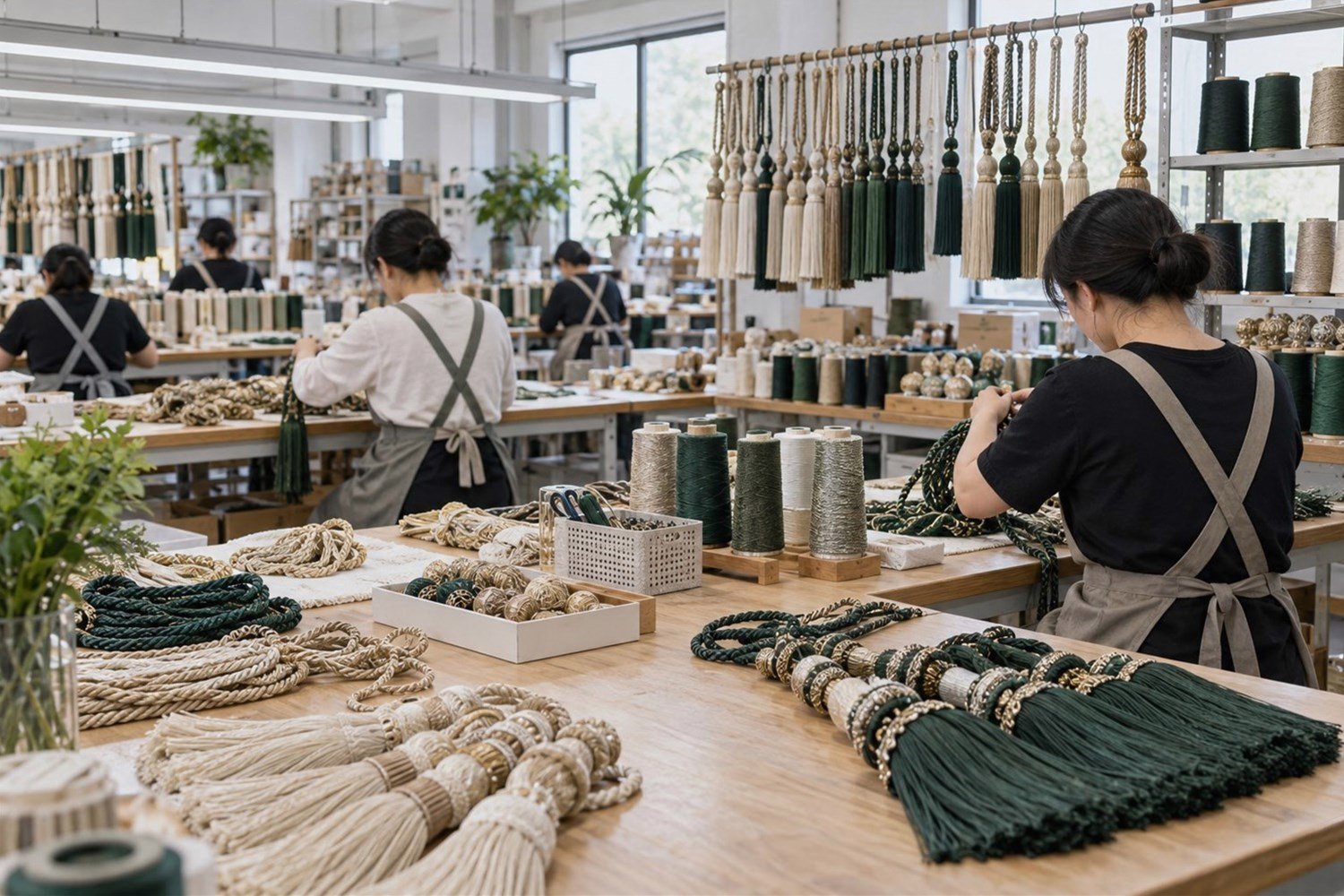
Approve a complete representative sample for B2B projects.
Describe the curtain, rope construction, body arrangement, fit, fastening, dimensions, materials, colors, tassels, beads, components, packaging, and other project requirements in one request.