
B2B sourcing knowledge base

How to Choose a Tassel and Tieback Manufacturer

Choose a tassel and tieback manufacturer by evaluating product specialization, customization capability, sample development, material and color control, specification management, quality control, production capability, communication, lead-time planning, packaging, and export support. The best manufacturer is not simply the lowest-priced supplier; it is the supplier that can consistently reproduce the approved product specification at the required quantity and schedule.

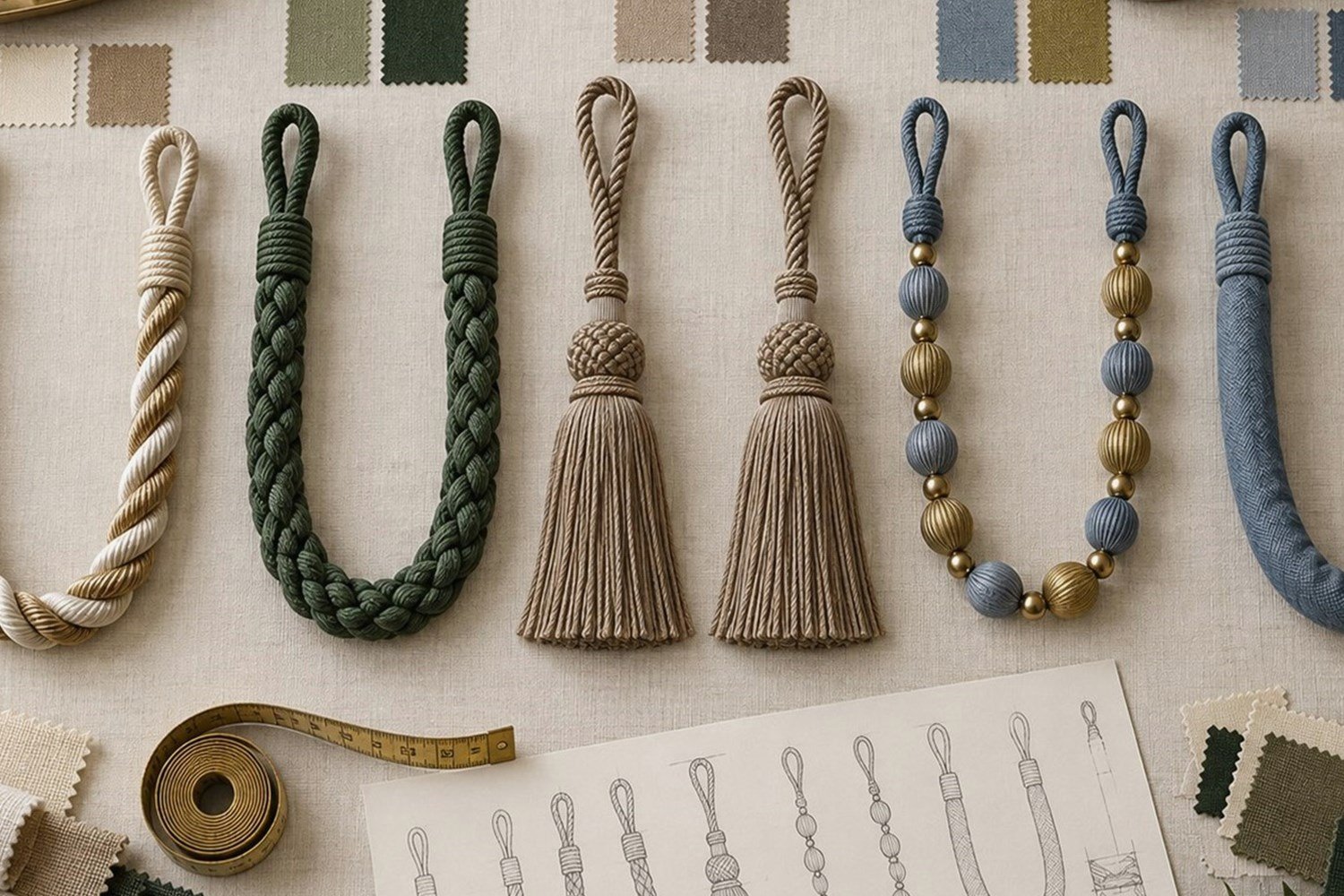
Tassel and curtain tieback production samples, materials, colors and B2B specification references

Quick Reference

Repeat the Approval

Specialization
Relevant product experience.
Samples
Clear development and approval route.
Control
Materials, colors, construction, quality.
Capacity
Quantity and schedule planning.
Evidence
Written specifications and samples.
Tassel and curtain tieback product samples showing rope, braid, beads, tassels, colors and construction details

Overview

Choose for Repeatable Production

Choose the manufacturer that can repeat the approved product, not simply the manufacturer that can make one good sample. Tassels and curtain tiebacks combine materials, yarns, cords, rope bodies, braids, beads, caps, tassels, closures, colors, measurements, and packaging. A useful supplier evaluation checks whether these details can be documented, sampled, controlled, and reproduced at the required quantity and schedule.

Price is one commercial input, but it is not a complete manufacturing evaluation. A low quotation without an aligned specification, credible sample route, material control, quality plan, or lead-time plan can shift cost and risk into revisions, inconsistent bulk goods, packaging problems, or delayed delivery.

Evaluation areaWhat a buyer should learnUseful evidence
Product specializationRelevant tassel and tieback construction experienceComparable samples and clear technical answers
CustomizationWhich components can be defined or changedSpecification discussion and development route
Sample controlHow the approved reference is establishedSample records, review points, revisions
Production controlHow approved details carry into bulk productionInspection plan and product specification
CommunicationWhether requirements are understood and confirmedAccurate written recap and practical questions
ScheduleHow timing, capacity, and packaging are plannedRealistic production and delivery plan

Main Content

Evaluate Relevant Product Specialization
Tassel and tieback construction details including rope, braid, tassel head, skirt, beads, caps and closures

Begin with the manufacturer’s ability to discuss the exact type of product you need, rather than relying on a broad category name. A tassel or tieback may require a specific yarn direction, head and skirt construction, rope or braid body, bead arrangement, cap, loop, magnetic end, hook, ring, color system, usable dimension, or packaging presentation. The buyer should confirm which details are relevant to the intended product.

Relevant specialization does not mean every manufacturer must make the same product in the same way. It means the supplier can identify the construction choices, limits, risks, sample requirements, and production controls needed for the proposed direction. Ask for comparable construction evidence rather than assuming a factory size, country, business model, or sales claim proves capability.

Product directionUseful evaluation questions
Graduation or bookmark tasselsYarn, head, cord, loop, color, length, attachment, packing.
Decorative or beaded tasselsBody, bead material, spacing, cap, skirt, connectors, finish.
Rope tiebacksRope construction, usable wrap, ends, closure, color, curtain fit.
Tassel tiebacksBody, head, skirt, beads, caps, end position, sample balance.
Magnetic tiebacksFlexible body, end housings, closure arrangement, fit, decorative components.
Custom mixed productsComponent source, assembly sequence, tolerances, quality checkpoints.

Assess Customization and Specification Management

Custom tassel and tieback specification showing rope, beads, tassel yarn, caps, connectors, colors and dimensions

Customization capability is the ability to convert a buyer’s product direction into a controlled, written, sample-approved specification. It is more than agreeing that a color, tassel, bead, or rope can be changed. A good development discussion identifies the starting reference, relevant materials, construction, dimensions, component arrangement, color standard, closure, finish, packaging, inspection points, and approval process.

Ask how the supplier handles incomplete or conflicting references. A responsible manufacturer should identify what needs confirmation rather than silently making assumptions. Product photographs can communicate direction, but a photo does not always define yarn, surface, body construction, usable wrap, bead material, magnetic housing, color tolerance, or finished dimensions.

Useful Specification Inputs

  • Intended end product, application, and target buyer or project.
  • Reference photos, samples, drawings, color references, and required branding elements.
  • Body construction: rope, cord, braid, fabric, tassel, bead, or mixed body.
  • Relevant dimensions, usable dimensions, component sizes, and acceptable variation.
  • Materials, color direction, surface, finish, caps, connectors, closures, and packaging.
  • Quantity, target schedule, inspection expectations, and approval points.

Written clarification helps both parties compare the same product. It also makes quotation, sample development, quality inspection, and bulk production discussion more concrete.

Review Sample Development Before Bulk Production

Tassel and tieback sample development with material swatches, rope bodies, beads, tassel ends and finished approval sample

A sample order is not only a visual exercise; it is the point where the product specification, materials, construction, components, dimensions, and approval criteria become testable. A buyer should learn what the sample represents, which inputs are provisional, what changes are under review, and which reference becomes the approved standard for production.

Review the full assembled product. A loose tassel, bead, rope segment, or cap may be useful for material direction, but it does not show finished balance, usable fit, end attachment, curtain relationship, closure, or packaging. For curtain tiebacks, test the representative sample with relevant gathered curtain fabric where practical.

Sample stagePurposeBuyer decision
Reference reviewClarify product direction and missing detailsConfirm development brief
Material or color referenceReview yarn, rope, bead, fabric, cap, finish directionApprove or adjust inputs
Development sampleReview complete construction and visible compositionRecord requested revisions
Approval sampleEstablish agreed product referenceApprove for production planning
Pre-production checkConfirm bulk execution against approval referenceRelease or correct before production

Check Material, Color, and Component Control

Tassel and tieback material control with yarn, rope, braid, beads, caps, metallic details and color references

Material and color control is central because a small change in yarn, rope, bead, cap, connector, coating, or finish can alter the finished product’s look and construction. Ask how the supplier identifies and confirms the approved materials and components, especially when the product contains multiple visible elements.

Color communication requires a practical reference. Screens and photographs can help establish direction but can vary by display, light, and image processing. A buyer should agree on the relevant color reference, component locations, and acceptable review process. For mixed designs, color must be considered across body, tassel, bead, cap, hardware, fabric, and packaging rather than as one generic name.

Control pointWhat to confirm
MaterialsActual body, yarn, bead, cap, connector, housing, fabric, and finish direction.
ColorsReference, placement, related components, and review method.
ConstructionRope twist or braid, tassel assembly, joins, knot, cap, closure, and relevant dimensions.
ComponentsBead material, size, count, spacing, tassel head and skirt, end configuration.
PackagingProtection, presentation, labeling, packing quantity, and transportation needs.

Selection

Compare Quality, Capacity, Communication, and Planning

Manufacturer comparison for tassel and tieback quality control, production planning, packaging and export-ready samples

Compare suppliers through their ability to control the approved product at the required quantity and timing, not through price alone. Quality control, production capacity, communication, lead-time planning, packaging, and export support should be discussed in relation to the actual project and specification.

  • Ask what is inspected during material preparation, assembly, finishing, packing, and final release.
  • Confirm how changes to an approved sample are recorded and communicated to production.
  • Discuss realistic timing for sample development, revisions, material preparation, production, packaging, and dispatch.
  • Check whether the stated capacity and schedule fit the intended order quantity and seasonal requirements.
  • Review packaging needs for tassel skirts, beads, ropes, magnetic ends, surface finishes, and retail or bulk presentation.
  • Clarify export documents, packing information, labeling, and shipment coordination required for the project.

Clear communication is demonstrated through accurate questions, structured recap, transparent lead-time assumptions, and usable answers when a specification is incomplete. It does not depend on one sales format or one country. The buyer should assess whether the supplier understands the product risk and can maintain the agreed direction.

Use a Practical Supplier Comparison Process

Step-by-step B2B process for evaluating tassel and tieback manufacturer samples, specifications, quality and production readiness

A practical process can reduce avoidable uncertainty. First define the product and required quantities. Then compare relevant manufacturers using the same brief. Review their questions and evidence, request appropriate samples, document revisions, approve the complete reference, confirm the production and quality plan, and only then proceed with the order decision.

StepBuyer actionOutcome
1. DefinePrepare application, reference, specification, quantity, and timing inputs.Comparable supplier brief
2. ScreenCheck relevant product specialization and communication quality.Shortlist with evidence
3. DevelopReview materials, construction, colors, and complete samples.Testable product direction
4. ApproveRecord the final sample and production specification.Shared reference standard
5. PlanConfirm quality, schedule, packaging, and export requirements.Production-ready plan
6. MonitorReview agreed checkpoints and change communication.Controlled bulk execution

B2B Specification

Questions to Ask Before Choosing

B2B manufacturer evaluation meeting for custom tassels and curtain tiebacks with materials, samples and specifications

Use questions that connect directly to the proposed product and order, rather than relying on generic claims of quality or customization. The answers should help a buyer understand how the supplier will develop, document, inspect, pack, and reproduce the approved direction.

Question areaQuestions to ask
Relevant workWhich comparable body, tassel, bead, tieback, or closure constructions can you show?
DevelopmentWhat information is needed to make a representative sample and record revisions?
MaterialsHow will body, yarn, beads, caps, colors, and finish be identified and confirmed?
QualityWhich checks apply to construction, dimensions, components, finishing, and packing?
ProductionHow will the approved sample and specification be communicated to bulk production?
ScheduleWhat planning assumptions affect sample, production, packaging, and dispatch timing?
Export and packingWhat labels, packing, documents, and shipment information can be supported?

Common Buyer Mistakes

Manufacturer selection checklist for tassel and tieback samples, quality control, packaging, timeline and specification approval
MistakeBetter approach
Selecting from price onlyCompare price within a complete specification, sample, quality, and schedule context.
Approving an unclear sampleRecord materials, construction, dimensions, colors, components, and packaging before bulk production.
Assuming a good sample guarantees repeatabilityAsk how the approval reference will be controlled in production.
Using photos as the only specificationAdd written construction, material, color, measurement, and quality details.
Ignoring packaging until lateDefine protection and presentation with the product brief.
Compressing the development schedulePlan time for sample, revisions, materials, production, packing, and shipment.
Questions about choosing a tassel and tieback manufacturer with samples, materials, quality and packaging references

FAQ

Frequently Asked Questions

How do you choose a tassel and tieback manufacturer?

Evaluate relevant specialization, customization, sample development, material and color control, specification management, quality control, production planning, communication, packaging, and export support for the actual product and order.

Is the lowest quote the best choice?

Not by itself. Compare quotations within the same approved or clearly defined specification, sample route, quality plan, packaging requirement, quantity, and schedule.

What proves customization capability?

Look for a practical process that turns your reference into a written, sample-approved specification with defined materials, construction, components, dimensions, colors, and review points.

Why is the approval sample important?

It establishes the shared reference for finished construction, material, color, balance, dimensions, closure, and packaging before bulk production is released.

What should be checked before a bulk order?

Confirm the approved sample, production specification, quality checkpoints, packaging, quantity, schedule, change process, and export or shipping requirements.

Approved tassel and curtain tieback sample with material, color, construction, packaging and production reference details

Conclusion

Choose a Partner That Can Repeat the Approval

The right tassel and tieback manufacturer is the one that can consistently reproduce the approved product specification at the required quantity and schedule. Evaluate relevant specialization, development process, material and color control, specification management, quality, capacity, communication, packing, and export planning together. This creates a more useful basis for supplier comparison than a price-only decision.

  • Start with a complete product and application brief.
  • Use evidence of relevant construction and sample-development capability.
  • Approve the assembled product, not only loose components or photographs.
  • Document the production reference, inspection points, packaging, and schedule.
  • Compare suppliers on repeatable execution, not one-off claims.
Discuss a custom product project

Inquiry Form

Discuss a Tassel or Tieback Project

Share the product application, reference, required construction, materials, colors, dimensions, components, quantity, packaging, schedule, and sample needs in one request.

B2B inquiry for tassel and tieback manufacturing with product samples, material references, packaging and specifications

Close-up tassel and tieback manufacturing details with rope, caps, beads, tassel yarn and finished components

Published: •Topic: B2B manufacturer selection

Other Articles

Start a conversation

Tell us what you need

Share your product type, colour, dimensions and quantity. Our sales team will review your request and reply by email.

  • Emailsales@evnubtrims.com
  • Phone+86 18268767650