Curtain knowledge base

How to Check Curtain Tieback Quality

Check curtain tieback quality against an approved specification, representative sample, intended curtain application, and relevant batch consistency. Review overall appearance, dimensions, materials, colors, rope or cord construction, loops, tassels, beads, magnetic closures, connectors, finishing, attachment, and functional fit as parts of the complete finished product.

Curtain tieback quality inspection for rope, fabric, tassel, bead, loop, magnetic closure, finish, and curtain fit

Quick Reference

Inspection Order

Reference
Approved sample and specification.
Appearance
Body, components, color, and finish.
Dimensions
Defined points and complete construction.
Function
Fit, fastening, and intended curtain use.
Consistency
Compare relevant batch features.
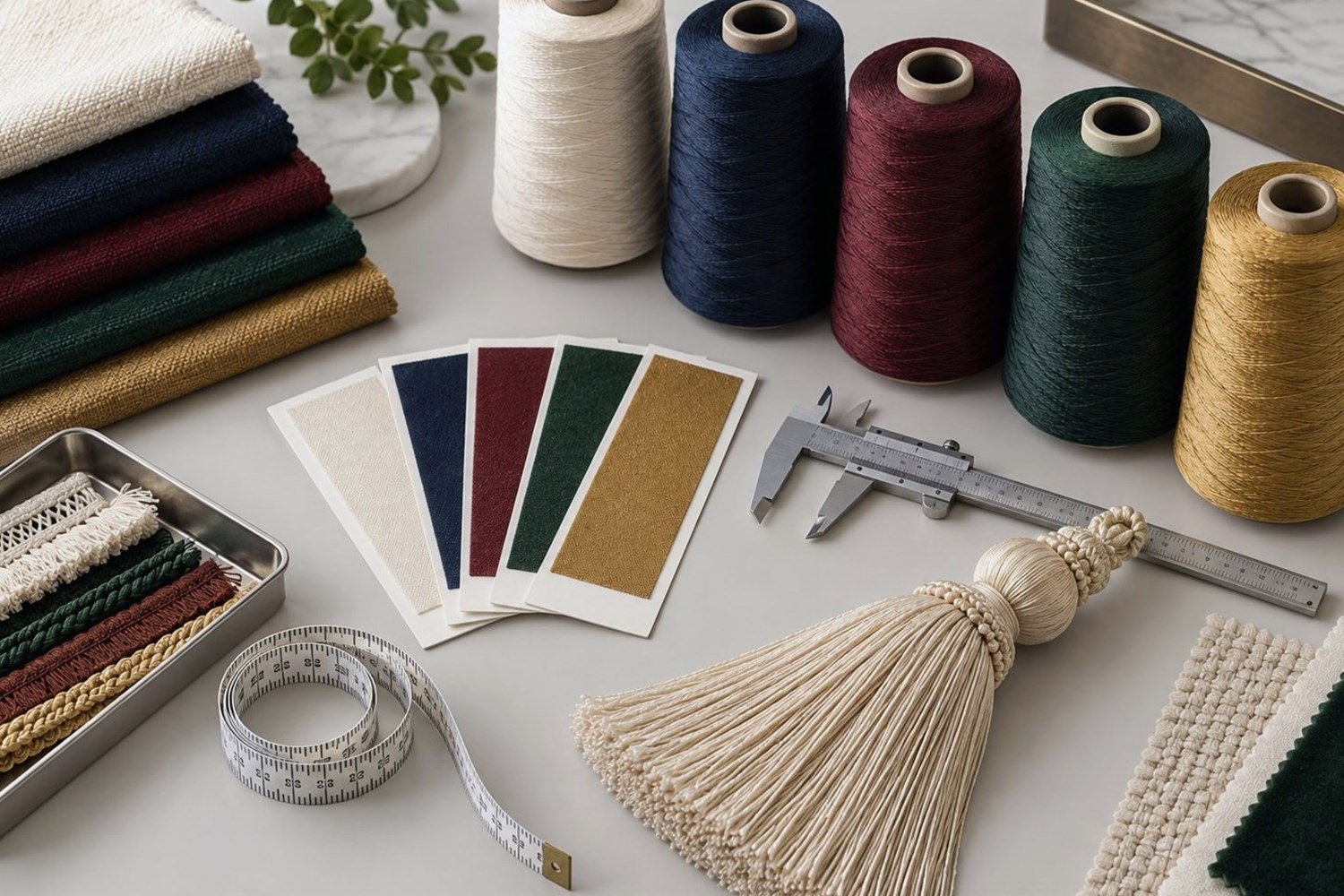
Curtain tieback quality comparison showing approved sample, rope, fabric, tassels, beads, loops, closure, and finished product appearance

Overview

Quality Means Conformity to the Approved Product

Curtain tieback quality should be evaluated by how closely the finished product conforms to its approved sample, specification, intended application, and agreed construction. More decoration, a heavier component, or a higher-sheen material does not automatically mean better quality. Inspection begins with the actual product direction and checks each visible and functional element against it.

Inspection areaWhat to compareWhy it matters
Overall appearanceBody, proportion, color, components, finishingConfirms complete product direction
DimensionsDefined overall, usable, and component measurement pointsConfirms fit and construction
MaterialsTextile, beads, caps, loops, hardware, closureConfirms specified material system
AssemblyAttachment, components, alignment, connectorsConfirms finished construction
Functional fitGathered curtain and fastening relationConfirms intended use

Use an approved complete tieback sample whenever possible. A loose tassel, bead, cord, or color reference may help identify one element, but it cannot confirm the finished product’s total proportion, fastening, or relation to the intended curtain.

Main Content

How Do You Check Curtain Tieback Quality?

Curtain tieback quality check against approved sample for rope construction, tassels, beads, loops, dimensions, color, and finishing

Check curtain tieback quality by comparing the complete item with the approved specification and representative sample, then reviewing appearance, dimensions, materials, construction, components, fastening, finish, and curtain compatibility. Follow a consistent order so a visual impression does not replace the actual product requirements.

  1. Confirm the approved product reference, specification, curtain application, and sample.
  2. Review overall shape, body construction, color direction, visible scale, and component arrangement.
  3. Check the defined dimensions from agreed measurement points.
  4. Check main textile, rope, fabric, tassel, bead, hardware, and closure materials.
  5. Inspect assembly, attachment, loops, rings, caps, connectors, tassels, and finishing.
  6. Test the completed tieback with the intended curtain or representative curtain reference.
  7. Compare relevant finished pieces for the agreed batch consistency requirements.

Do not create a universal quality tolerance, universal magnetic strength, or fixed length standard where the approved project does not define one. Quality checks should remain connected to the specific design and its intended use.

Check Overall Appearance, Dimensions, Materials, and Color
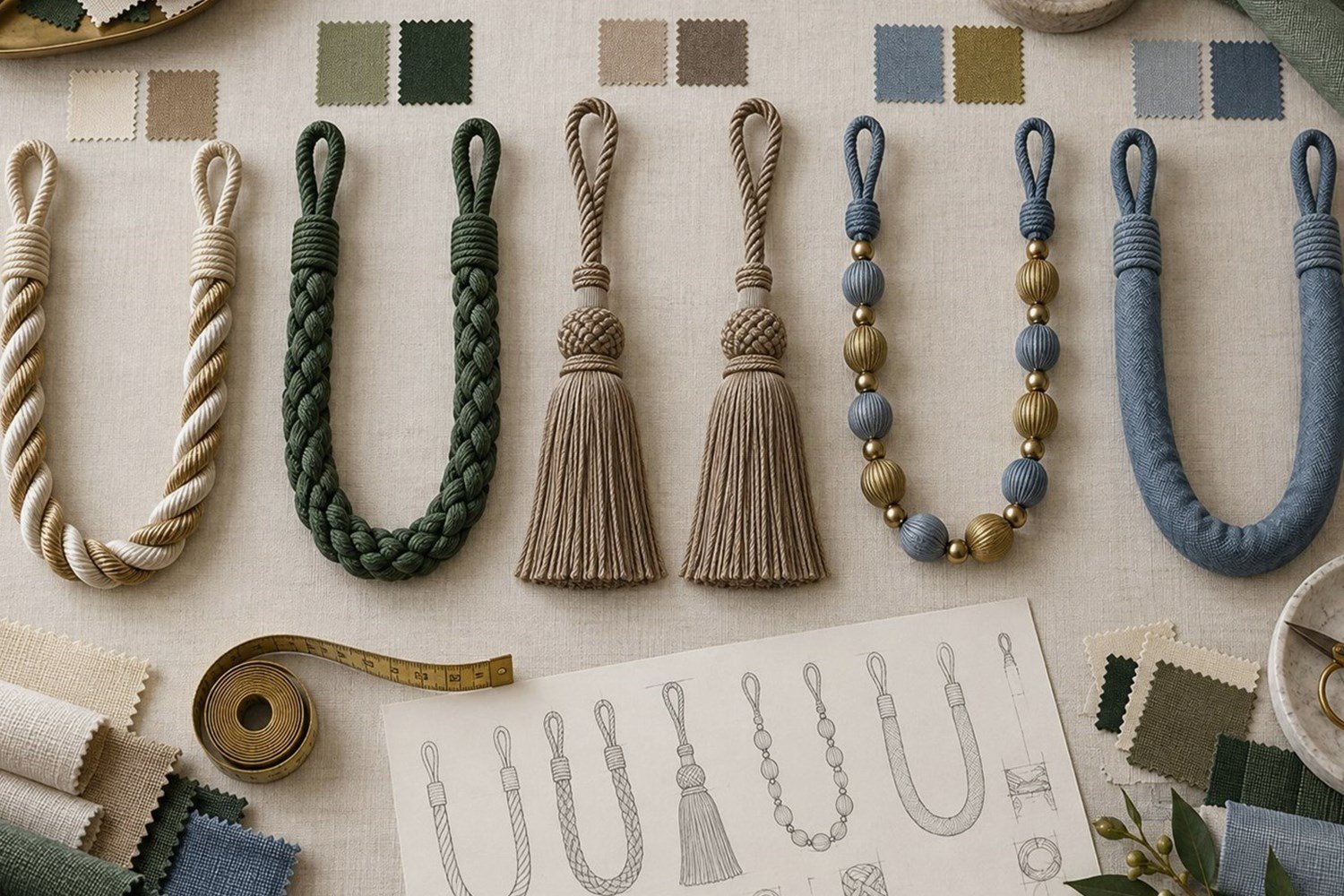
Curtain tieback inspection points for overall appearance, overall length, usable wrap, rope diameter, tassel, bead, loop, material, and color

Overall inspection confirms that the body, visible proportion, dimensions, materials, color, and finishing match the approved product direction as a whole. A rope tieback can look different if the twist, braid, visible scale, caps, tassels, or color relation changes. A fabric or beaded design has its own construction and component relationships to inspect.

CheckReview pointReference
AppearanceSilhouette, body, decorative balance, finishingApproved finished sample
DimensionsOverall length, usable wrap, body, loops, componentsDefined measurement points
MaterialsTextile, fabric, tassels, beads, caps, hardware, closureApproved material specification
ColorMain, secondary, component, and finish directionApproved material or physical reference
ConstructionTwist, braid, band, component connection, attachmentProduct drawing or approved sample

Review color on the specified material, not as an abstract screen value alone. Yarn, fabric, bead, and hardware surfaces can show similar color directions differently. Use accurate component descriptions rather than assuming that a reflective bead is crystal, a pearl-looking bead is natural pearl, or a gold-colored component is gold.

Check Rope, Loops, Tassels, Beads, and Closures

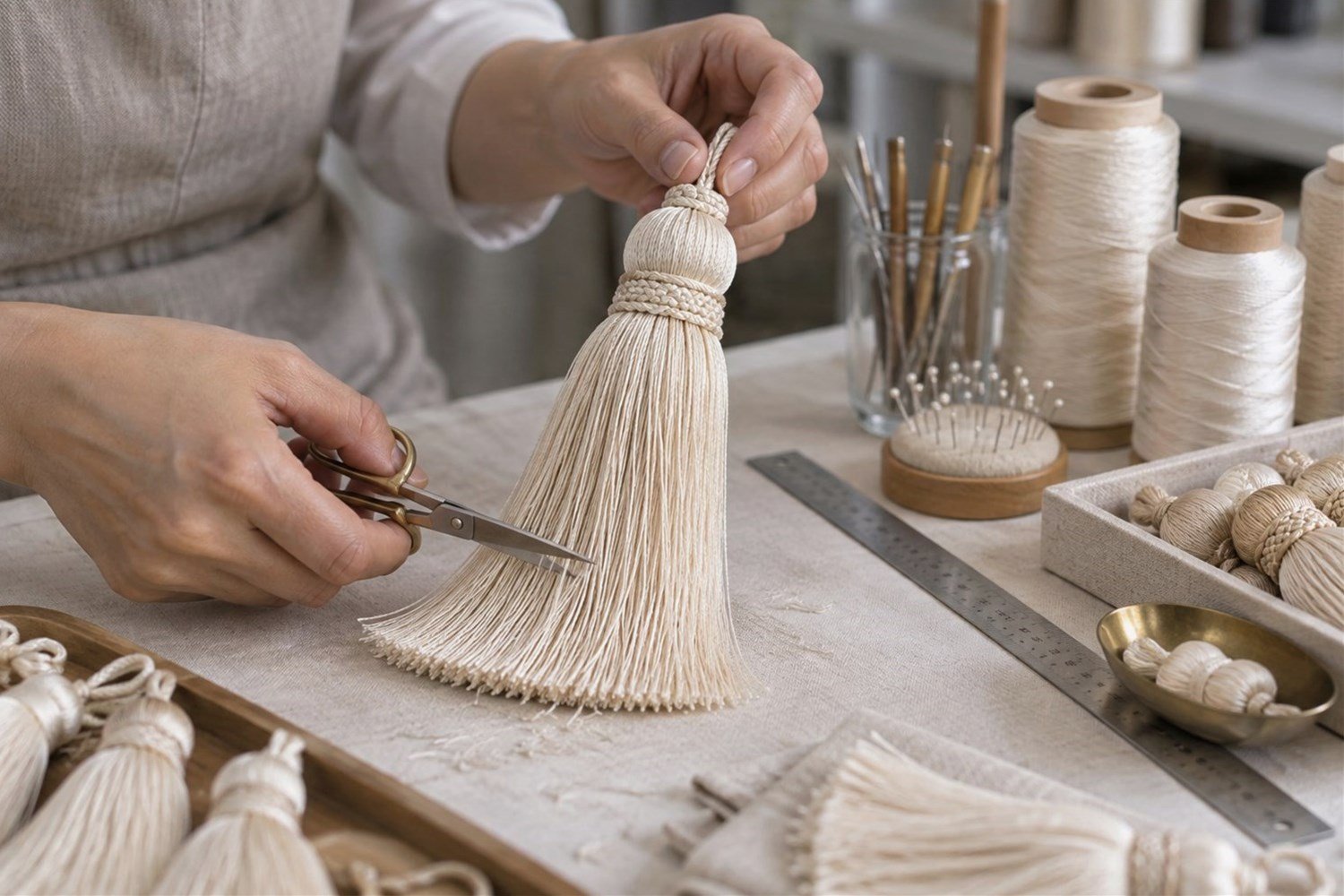
Curtain tieback component inspection showing twisted and braided rope, tassel head and skirt, beads, caps, loops, rings, magnets, and connectors

Component inspection checks whether every visible and functional element has the material, construction, placement, proportion, and connection required by the approved design. Check rope and cord construction first, then loops, rings, tassels, beads, caps, connectors, magnetic closures, and other decorative parts as individual elements within the complete product.

ComponentWhat to inspectWhy it matters
Twisted or braided ropeDefined construction, surface, body, ends, and visible proportionConfirms main tieback direction
Loops and ringsMaterial, length, placement, attachment, finishConnects body and fastening
TasselsHead, skirt, cords, caps, scale, alignment, finishingControls decorative balance
Beads and capsMaterial, shape, color, surface, placement, connectorsConfirms component specification
Magnetic closureBody, closure, connection design, visible relationConfirms complete fastening concept
Decorative connectorsPosition, attachment, material, finishConfirms finished assembly

Do not assume braided rope is always stronger, twisted rope is always more flexible, more beads indicate higher quality, or handmade products are automatically better. The relevant question is whether the selected construction and components match the approved specification and finished sample.

Check Assembly, Fit, and Functional Suitability
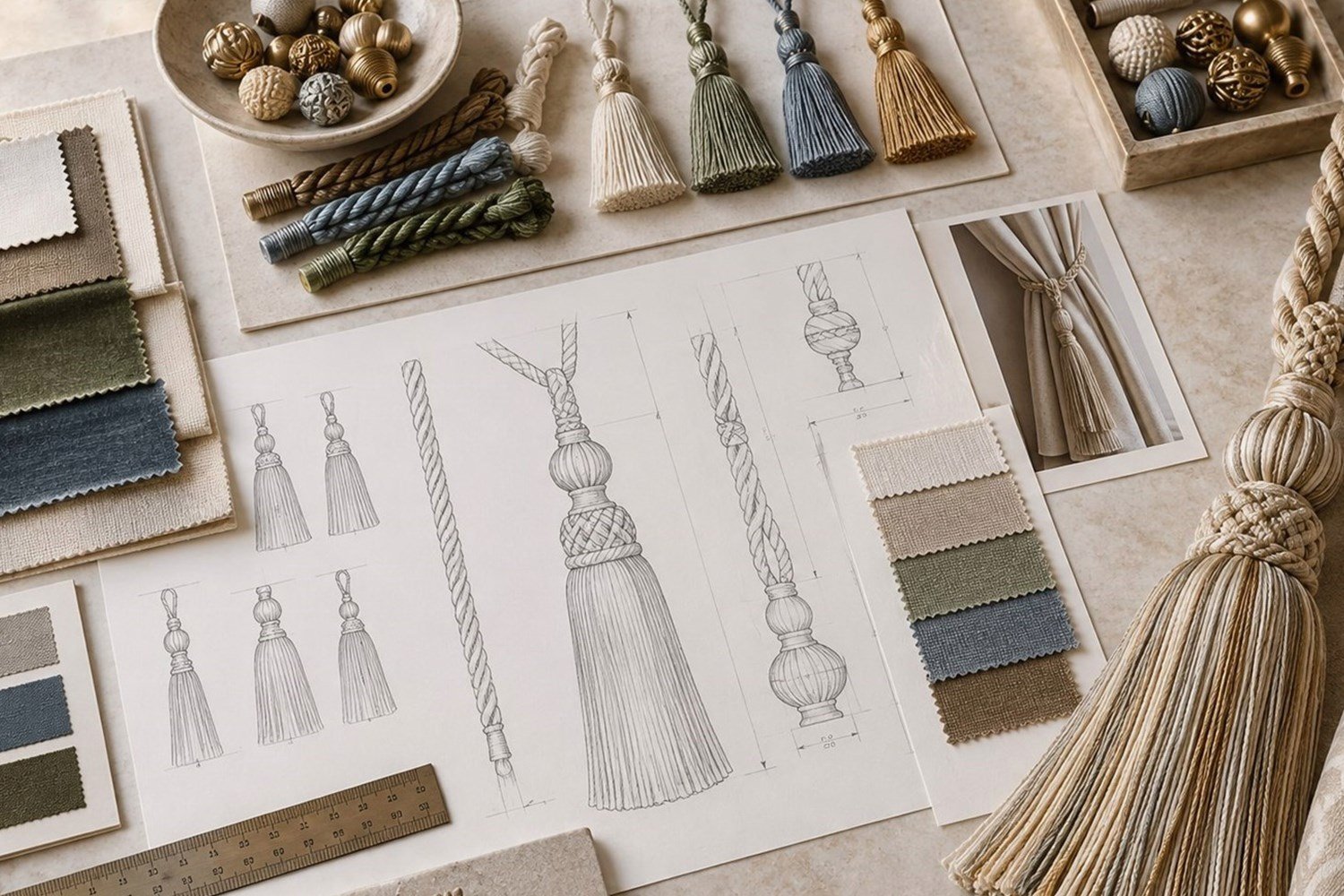
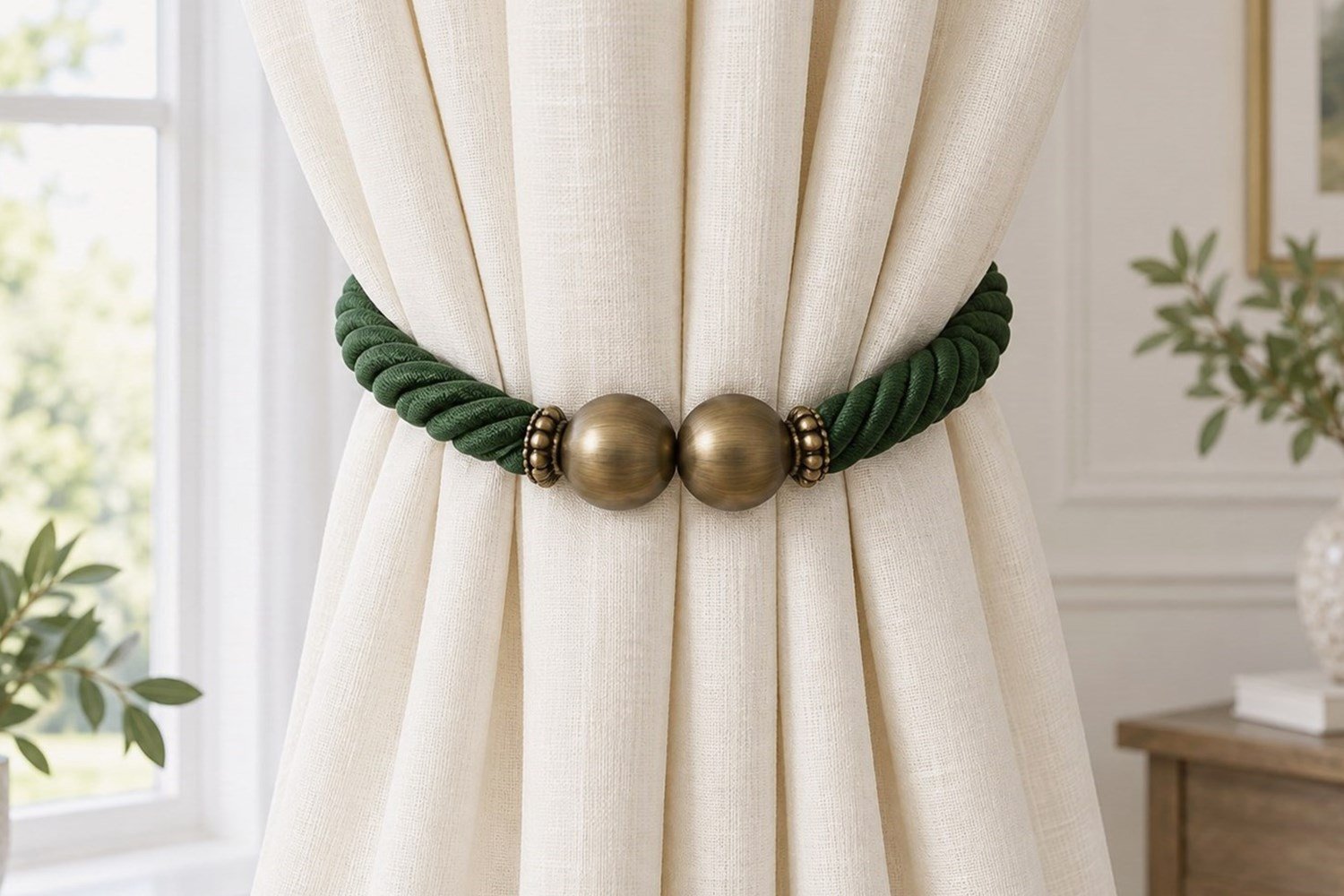
Curtain tieback functional quality test on gathered curtain showing rope, tassel, bead, loop, magnetic closure, fold shape, and fastening fit

Functional suitability is confirmed by reviewing the complete tieback with the intended curtain or a representative curtain sample in the intended gathered position. The product should form the approved open arrangement, support the desired folds, and use its fastening as specified. Fit is not proven by looking at a loose body or closure independently.

Functional checkQuestion
Gathered fitDoes the usable body accommodate the actual curtain volume?
Open positionDoes it produce the intended exposed window and fold shape?
FasteningDoes the loop, hook, ring, magnet, or closure function as specified?
ProportionDo body, tassels, beads, and components relate to the curtain as approved?
Frequency of useDoes the finished construction suit the intended adjustment pattern?

Do not pull a tieback as tight as possible to test it. It should fit securely without unnecessarily compressing or distorting the curtain. Curtain fullness, layers, gathered volume, construction, and intended appearance all influence the appropriate fit.
B2B Quality Control

How to Prepare a Curtain Tieback Inspection Checklist

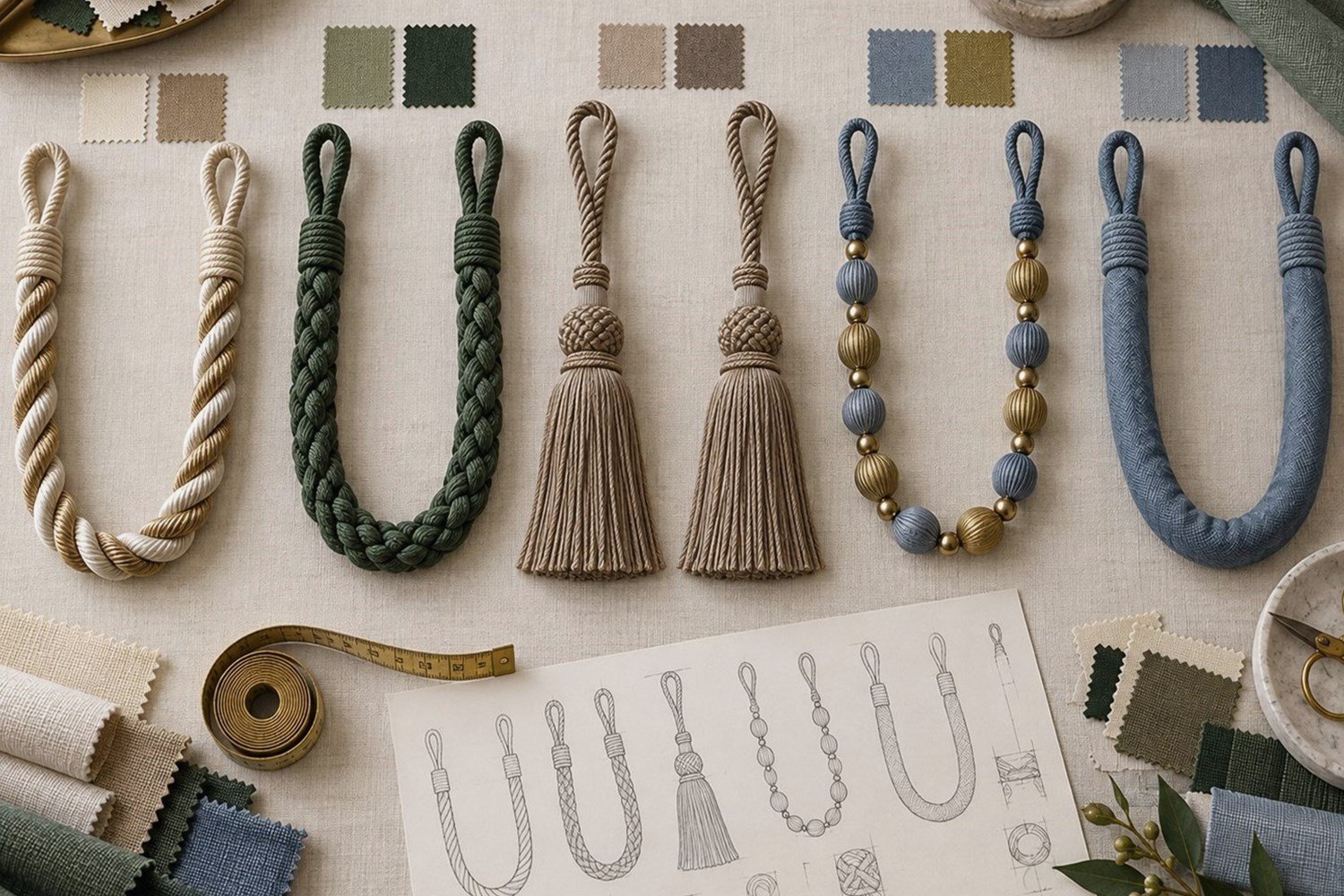
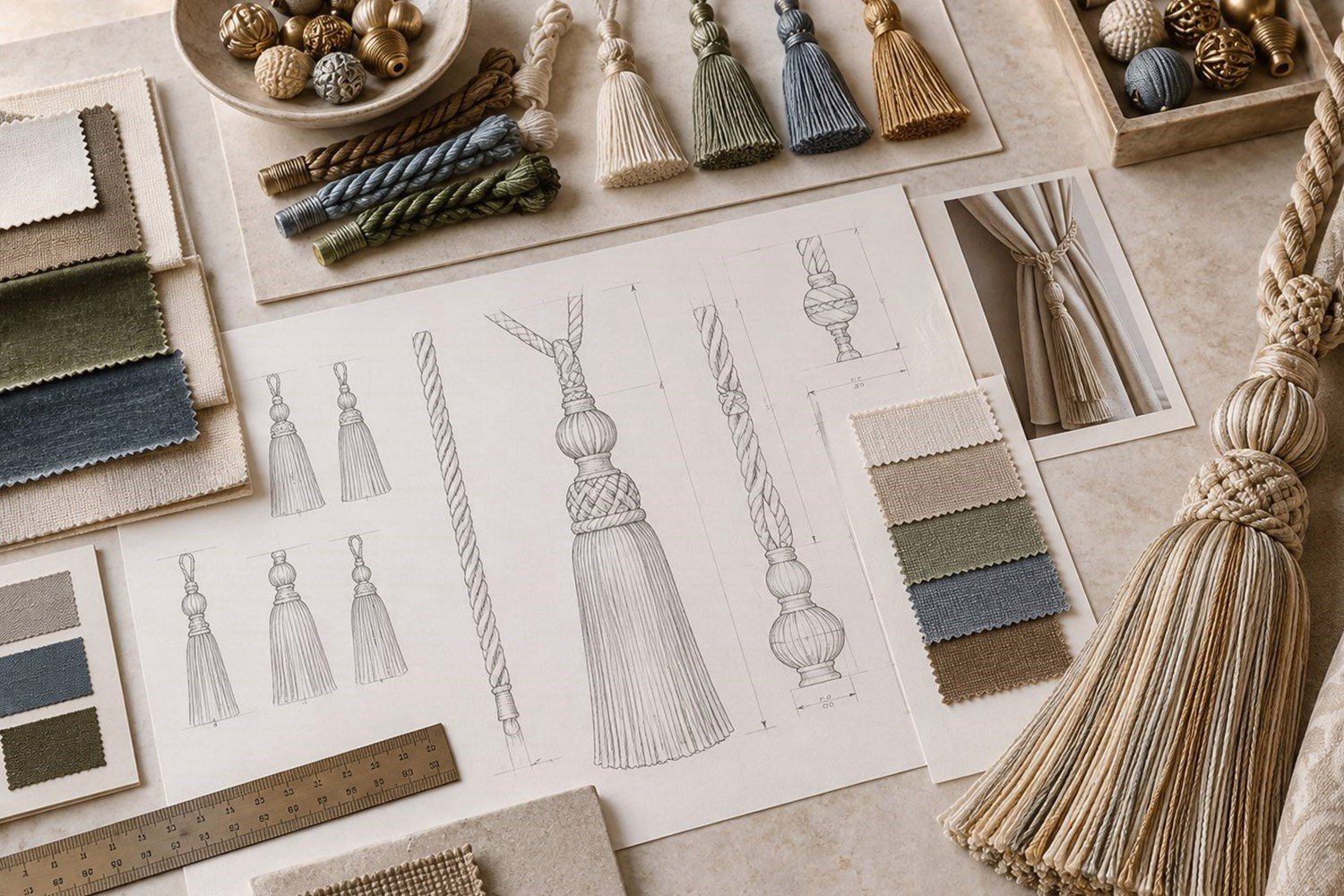
B2B curtain tieback quality control board with approved sample, rope, fabric, tassels, beads, loops, magnetic closure, measurements, and color references

A B2B quality checklist should turn the approved sample and specification into clear inspection points for the finished tieback and relevant batch consistency review. Include the curtain application, main construction, defined dimensions, material system, colors, components, fastening, packaging, representative sample, and final approved reference.

Inspection requirementBuyer ReferenceApproved Specification
Curtain contextApplication, fabric, fullness, gathered position
Overall constructionRope, fabric, tassel, bead, magnetic, mixed material
DimensionsOverall, usable wrap, body, loops, components, measurement points
Materials and colorTextile, components, hardware, finish, approved references
Assembly and finishAttachment, connectors, trimming, alignment, visible balance
ApprovalRepresentative sample, packaging, final product reference
  • Keep the approved finished sample and written specification together.
  • Check complete products, not only individual materials or components.
  • Use agreed measurement points and material references.
  • Review relevant batch consistency against the approved direction.

See Custom Curtain Tiebacks, How to Customize Curtain Tiebacks, How Are Curtain Tiebacks Made?, and Curtain Tieback Size and Length for related project context.

Common Curtain Tieback Quality Mistakes

Curtain tieback quality checklist for approved sample, materials, colors, dimensions, rope, tassels, beads, fastening, finish, and batch consistency

Quality review becomes unreliable when it is based on an assumed standard instead of the approved product definition and complete finished sample. A practical inspection connects each check to a named product requirement.

MistakeBetter approach
Checking only overall appearanceReview dimensions, materials, components, fastening, and fit as well.
Using a loose component as approvalCompare the complete finished tieback with the approved sample.
Assuming material from appearanceUse the specified material and finish reference.
Measuring from inconsistent pointsUse documented measurement points and construction definitions.
Ignoring the curtain during testingReview fit with the intended or representative curtain.
Expecting one rule for every designInspect against the project-specific approved specification.
Curtain tieback quality inspection samples showing approved rope, tassel, bead, loop, magnetic closure, dimensions, materials, color, and finish

FAQ

Frequently Asked Questions

How do you check curtain tieback quality?

Compare the complete tieback with its approved sample and specification. Review overall appearance, dimensions, materials, color, construction, components, attachment, finishing, curtain fit, and relevant batch consistency.

Why does an approved sample matter?

The approved finished sample shows how the body, colors, components, fastening, dimensions, and proportion should work together. Loose materials cannot confirm the complete product direction.

How should rope and cord construction be checked?

Check the stated twist, braid, wrap, body, visible scale, ends, and attachment against the approved construction. Do not assume one rope method is universally better.

How should tassels and beads be checked?

Check their specified materials, components, dimensions, color, surface, placement, attachment, scale, alignment, and relation to the complete tieback and curtain.

How should magnetic tiebacks be checked?

Review the complete body, closure, connection design, gathered curtain fit, intended position, and adjustment use. Do not assess the magnetic component by itself.

How should dimensions be checked?

Use the approved measurement points and separate overall size, usable wrap, body, loops, tassels, beads, and closures where the design requires them.

What should B2B buyers confirm?

Confirm curtain context, construction, dimensions, materials, colors, components, fastening, finish, packaging, representative sample, and final approved specification before bulk production.

Approved curtain tieback quality sample with rope, fabric, tassels, beads, loops, magnetic closure, color, finish, and curtain fit

Conclusion

How to Check Curtain Tieback Quality: Key Takeaways

Check curtain tieback quality against the approved complete product, not a generic expectation or an isolated component. The best inspection combines visual review, documented dimensions, accurate material and component checks, assembly and finish review, functional testing with the intended curtain, and relevant batch consistency comparison.

  • Use the approved sample and specification as the primary inspection references.
  • Check body, components, fastening, and finish as one complete product.
  • Test fit with the actual or representative gathered curtain.
  • Keep inspection points connected to the project-specific product definition.
Discuss a curtain tieback quality project

Inquiry Form

Discuss Curtain Tieback Quality Requirements

Describe the curtain application, approved reference, construction, dimensions, materials, colors, components, fastening, finish, packaging, and other inspection requirements in one request.

Curtain tieback approved samples with rope, fabric, tassels, beads, loops, magnetic closure, measurement, color, and finish references for a B2B inquiry

Close-up curtain tieback inspection detail showing rope, tassel, bead, cap, loop, hardware, color, and finishing

Published: •Topic: Curtain tieback quality control

Other Articles

Start a conversation

Tell us what you need

Share your product type, colour, dimensions and quantity. Our sales team will review your request and reply by email.

  • Emailsales@evnubtrims.com
  • Phone+86 18268767650