
Main Content
What Is the Main Difference?
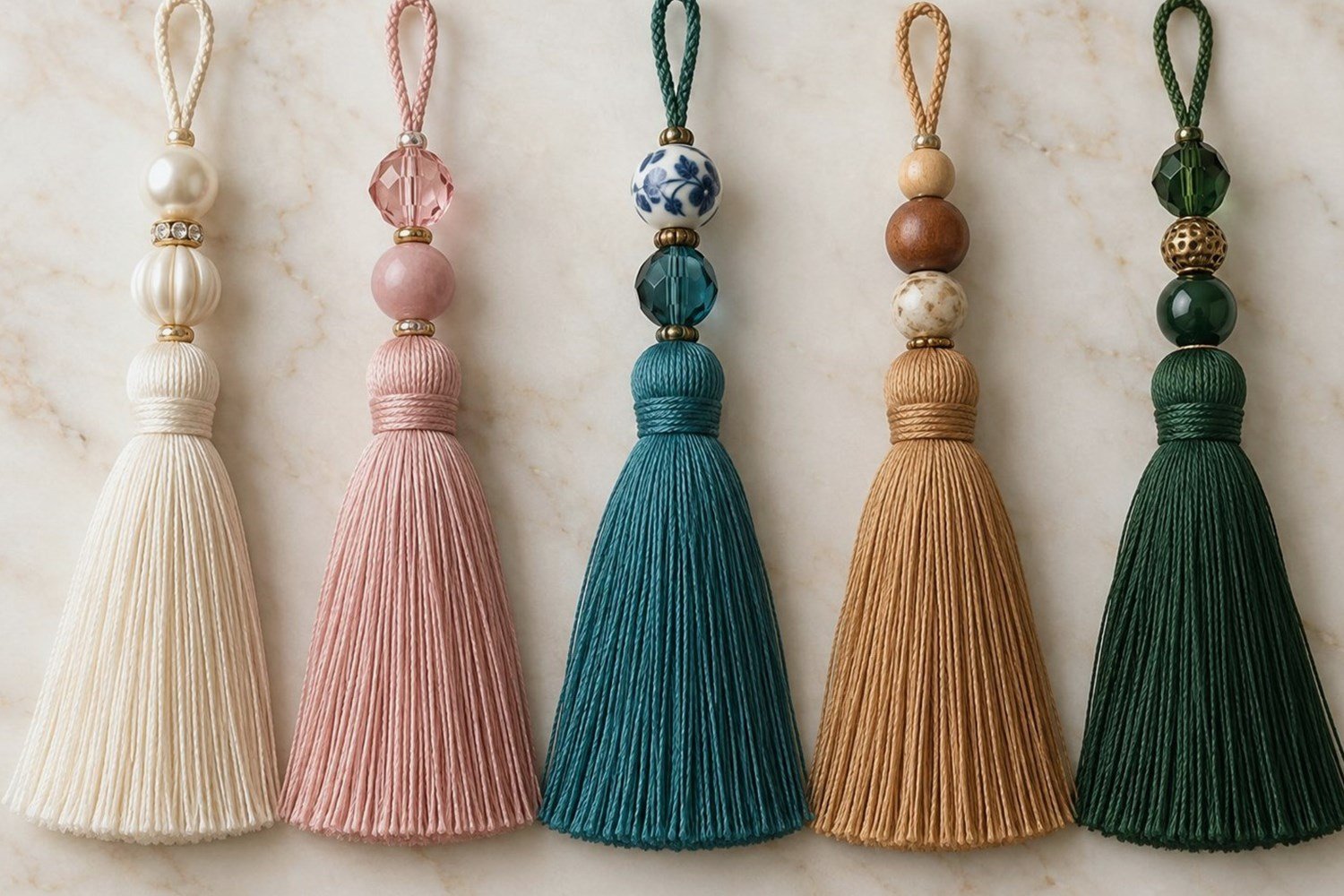
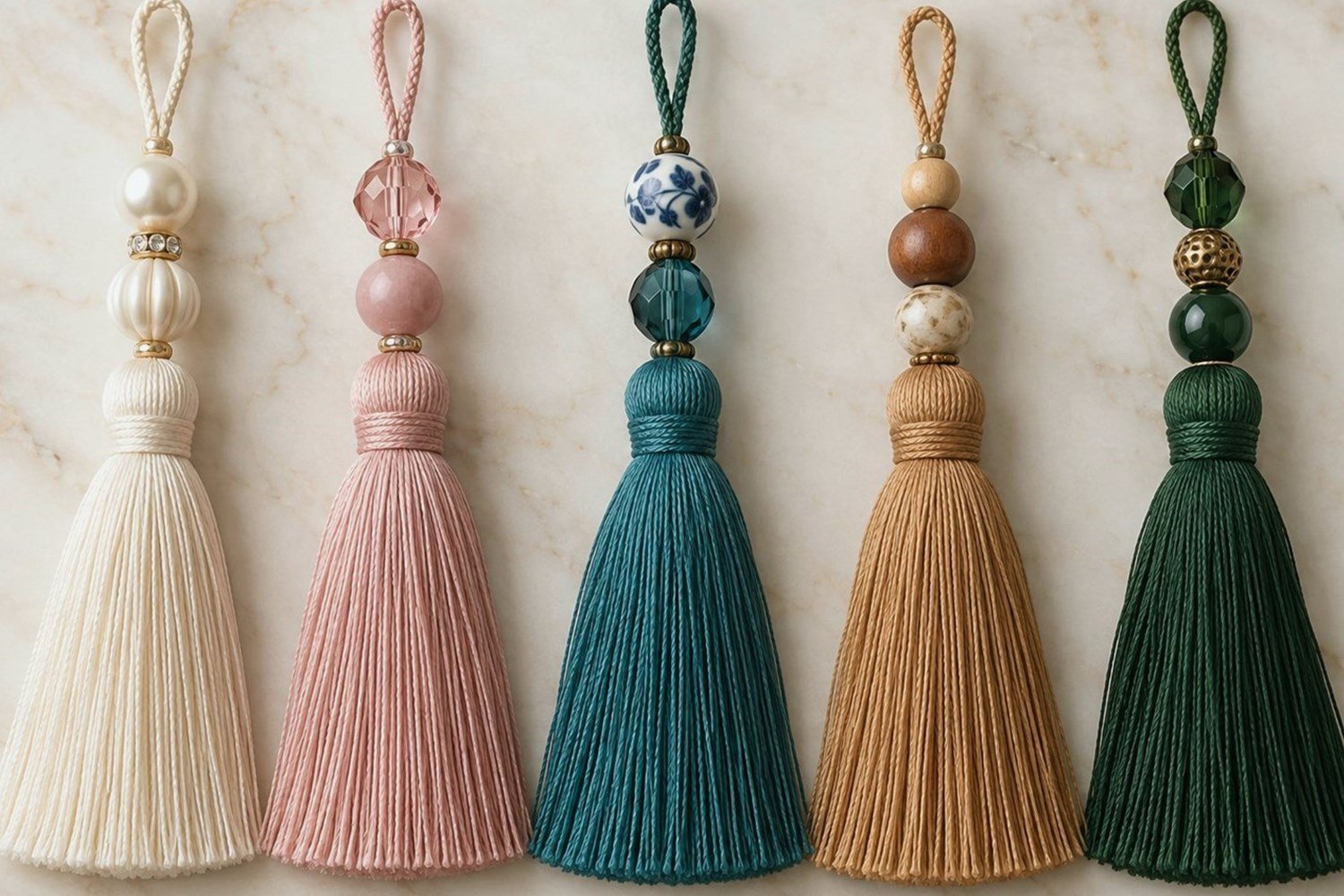
The main difference is classification: beaded tassels have beads as a defining visible feature, while decorative tassels are made mainly to add visual detail, texture, movement, color, or a finished accent. Beads may form strands, sit at the head, decorate a cord, or add components to a textile tassel. Decorative tassels can be thread-based, braided, metallic, layered, or beaded.
| Question | Beaded Tassel | Decorative Tassel |
|---|---|---|
| Must it use beads? | Yes, visibly | No |
| Must it be ornamental? | Often, but use varies | Yes, that is its main purpose |
| Can it use textile strands? | Yes | Yes |
| Can it be a curtain or bookmark tassel? | Yes | Yes |
Construction, Materials, Appearance, and Weight

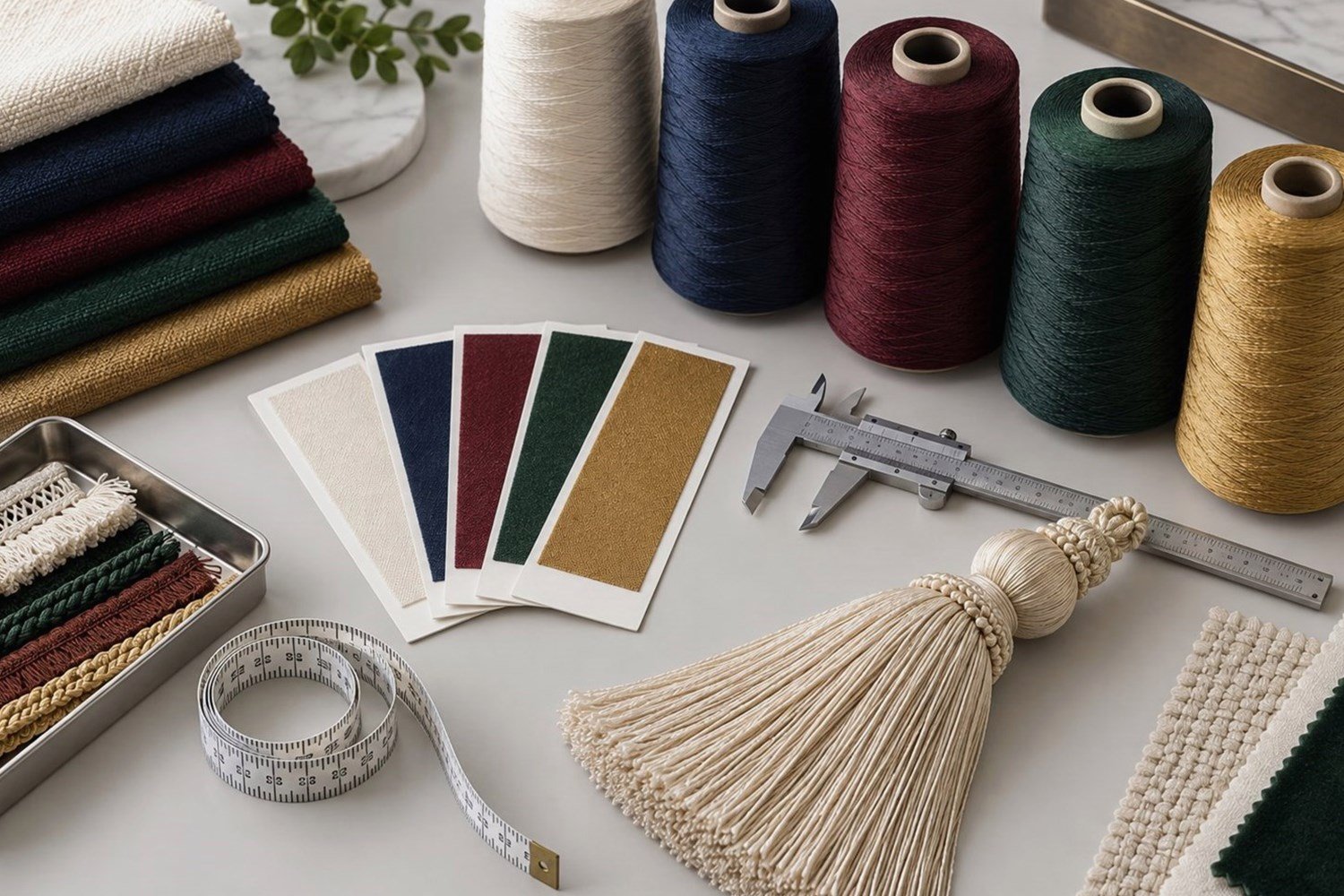
Both categories can use yarn, thread, cord, beads, caps, metal, wood, acrylic, glass, and mixed materials, but beaded projects require extra attention to bead placement, connection, and visual weight. Decorative projects may focus more broadly on silhouette, texture, fabric coordination, and product proportion. More beads, heavier construction, or more sparkle do not automatically create better quality.
| Comparison Area | What Buyers Should Define |
|---|---|
| Structure | Textile body, bead strands, head, cord, loop |
| Materials | Yarn, beads, caps, cord, finish |
| Appearance | Color, texture, silhouette, movement |
| Weight | Suitability for finished application |
| Scale | Body, cord, and product proportion |
| Quality | Approved sample and visible workmanship |
There is no universal size, bead count, bead size, or tassel weight. Define dimensions and components for the actual product; see Tassel Size and Length and Tassel Materials.
Applications and Selection

Both beaded and decorative tassels can serve home décor, curtains, cushions, furniture, bookmarks, keys, bags, gifts, and accessories when their attachment, weight, scale, and materials suit the end product. Beaded detail may be selected for a component-led accent; a non-beaded decorative tassel may suit a softer textile or simpler visual direction.
| Application | Comparison Point |
|---|---|
| Curtains and drapery | Cord, fabric, hanging scale, bead movement |
| Cushions and furniture | Corner proportion, attachment, visual weight |
| Bookmarks | Loop, hole, page use, component weight |
| Keys and bags | Connection, movement, durability in use |
| Gifts and accessories | Theme, color, detail, finished presentation |
Beaded Tassels, Decorative Tassels, and Tassel Trim

Individual beaded and decorative tassels are different from continuous tassel trim and fringe, even when the trim includes beads or decorative tassels. Product form must be specified separately from material or style. An individual tassel is one ornament; trim and fringe run continuously along an edge or header.
Which Is Better for a Project?
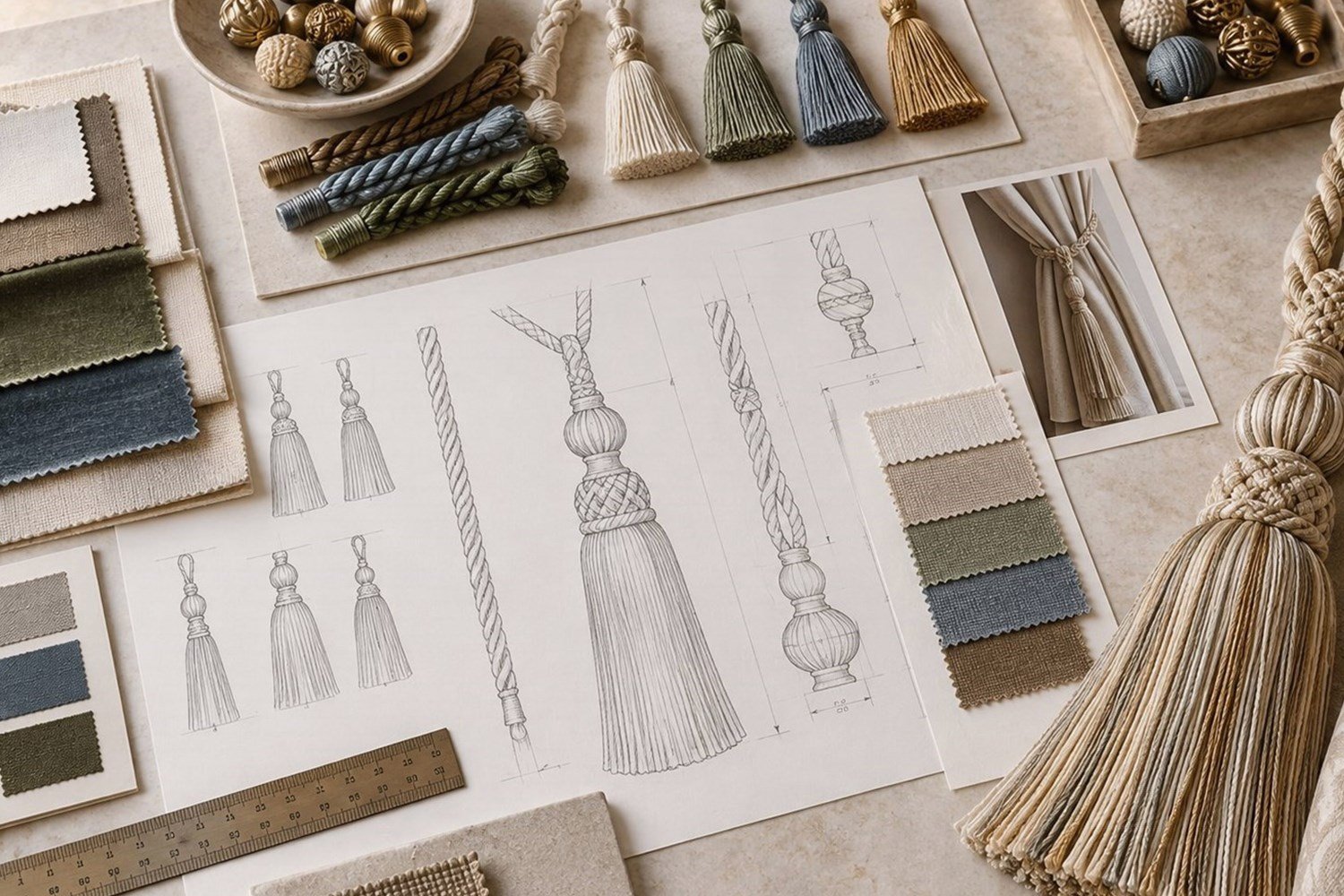
Neither category is universally better: choose a beaded tassel when beads are required as a visible design feature, and choose a decorative tassel when the product needs an ornamental accent that may or may not use beads. A custom request should define application, body, head, skirt, cord, loop, bead material and placement, color, scale, attachment, and sample reference.
- Define the finished application and attachment.
- Decide whether beads are required as a defining feature.
- Define textile, cord, bead, cap, and component materials.
- Define body, cord, loop, and overall dimensions separately.
- Review a complete assembled sample against the product.
| Requirement | Buyer Reference | Approved Specification |
|---|---|---|
| Application | Curtain, cushion, furniture, bookmark, accessory | |
| Construction | Body, head, skirt, cord, loop | |
| Beads | Material, shape, placement, color | |
| Quality | Reference sample and finishing |
Check bead placement, connections, textile body, strands, head, cord, loop, attachment, color, finishing, and relevant consistency with How to Check Tassel Quality.