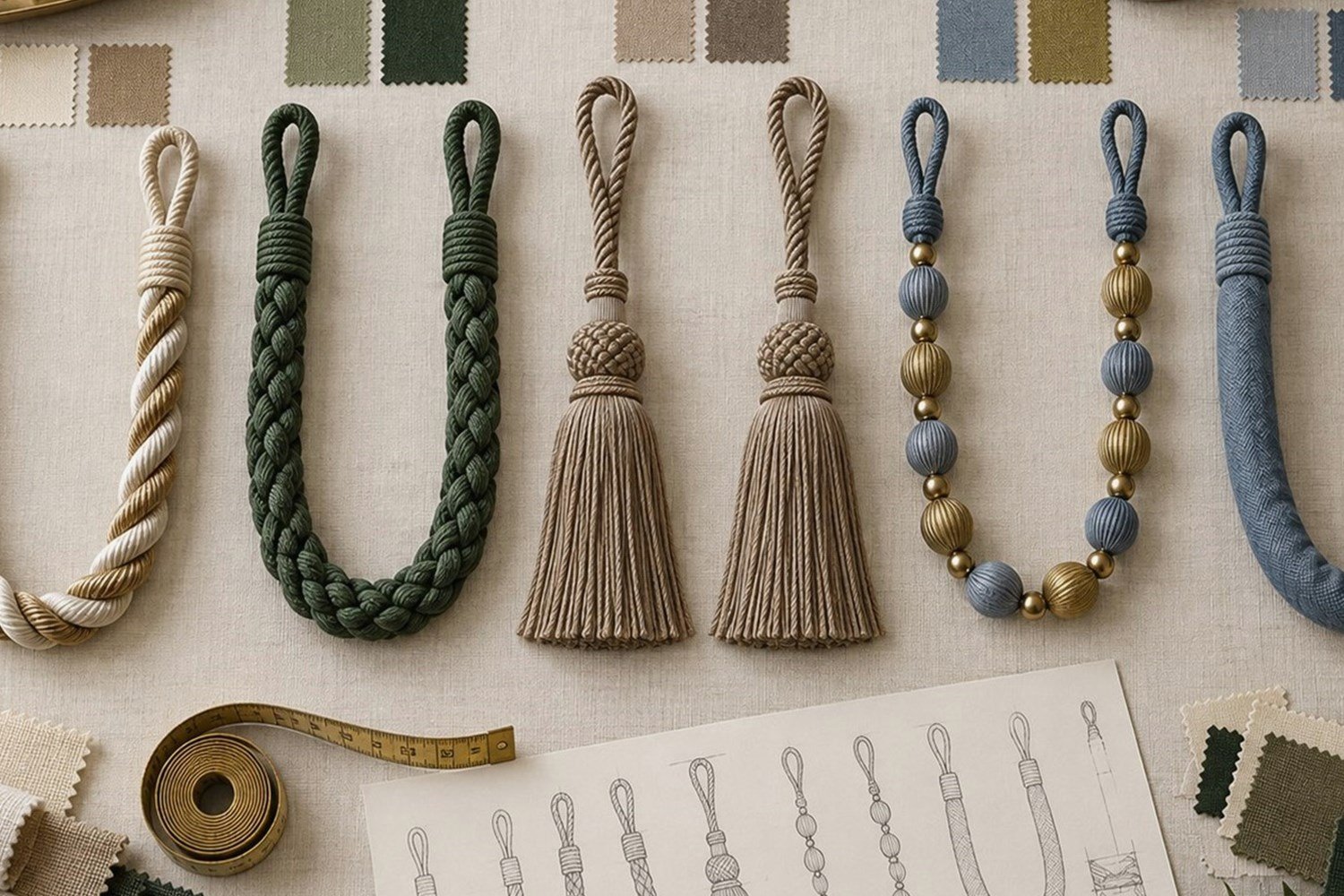
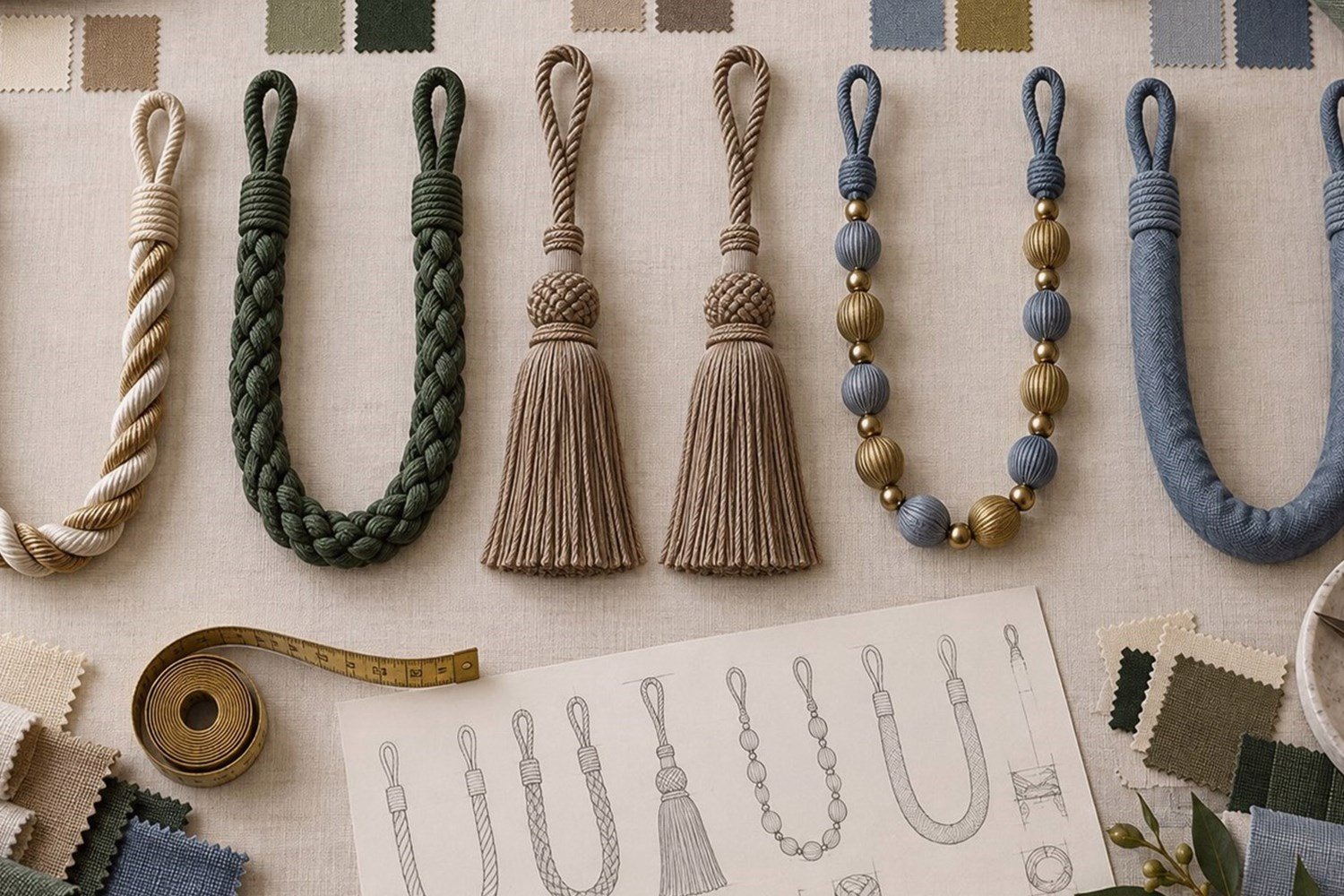
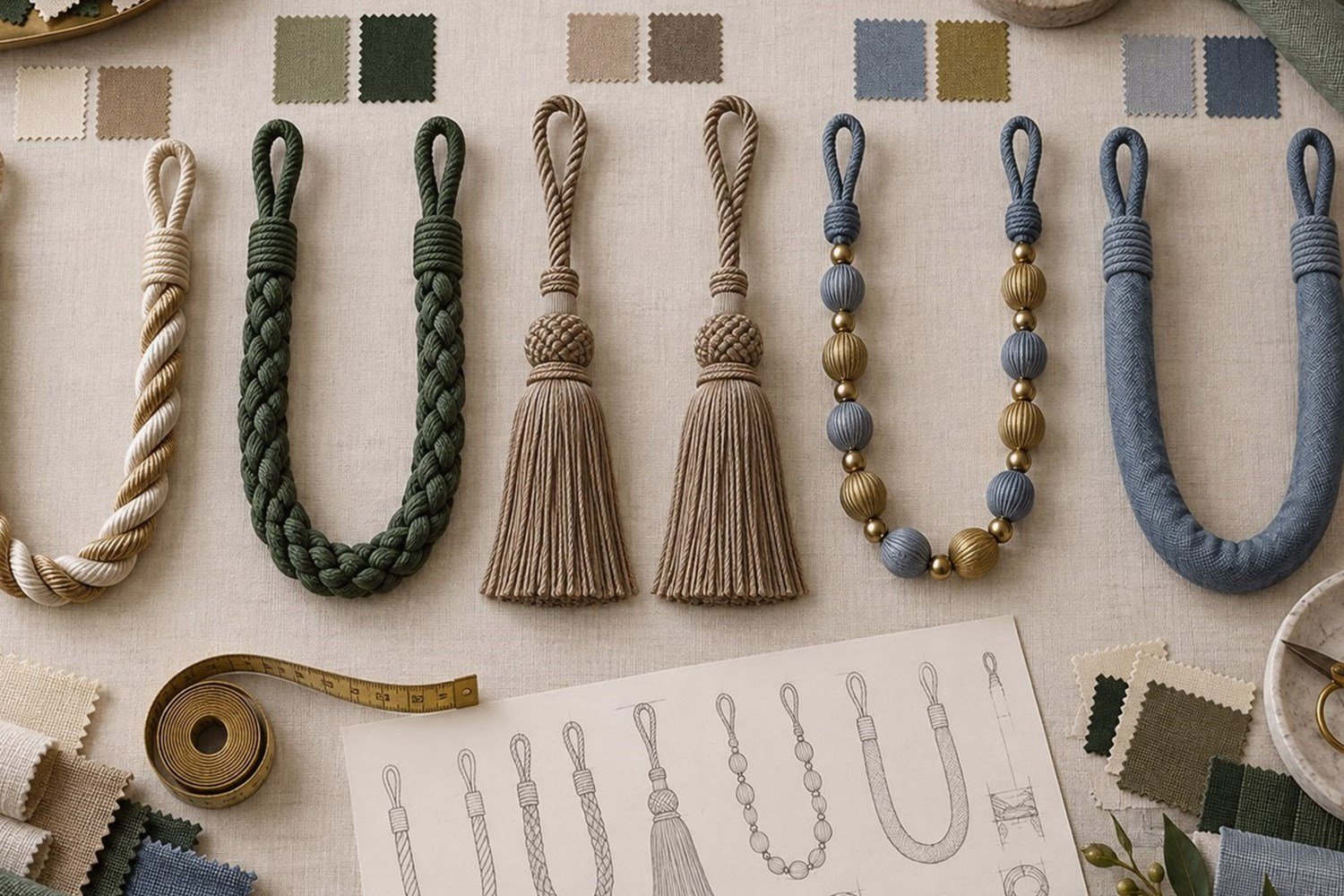
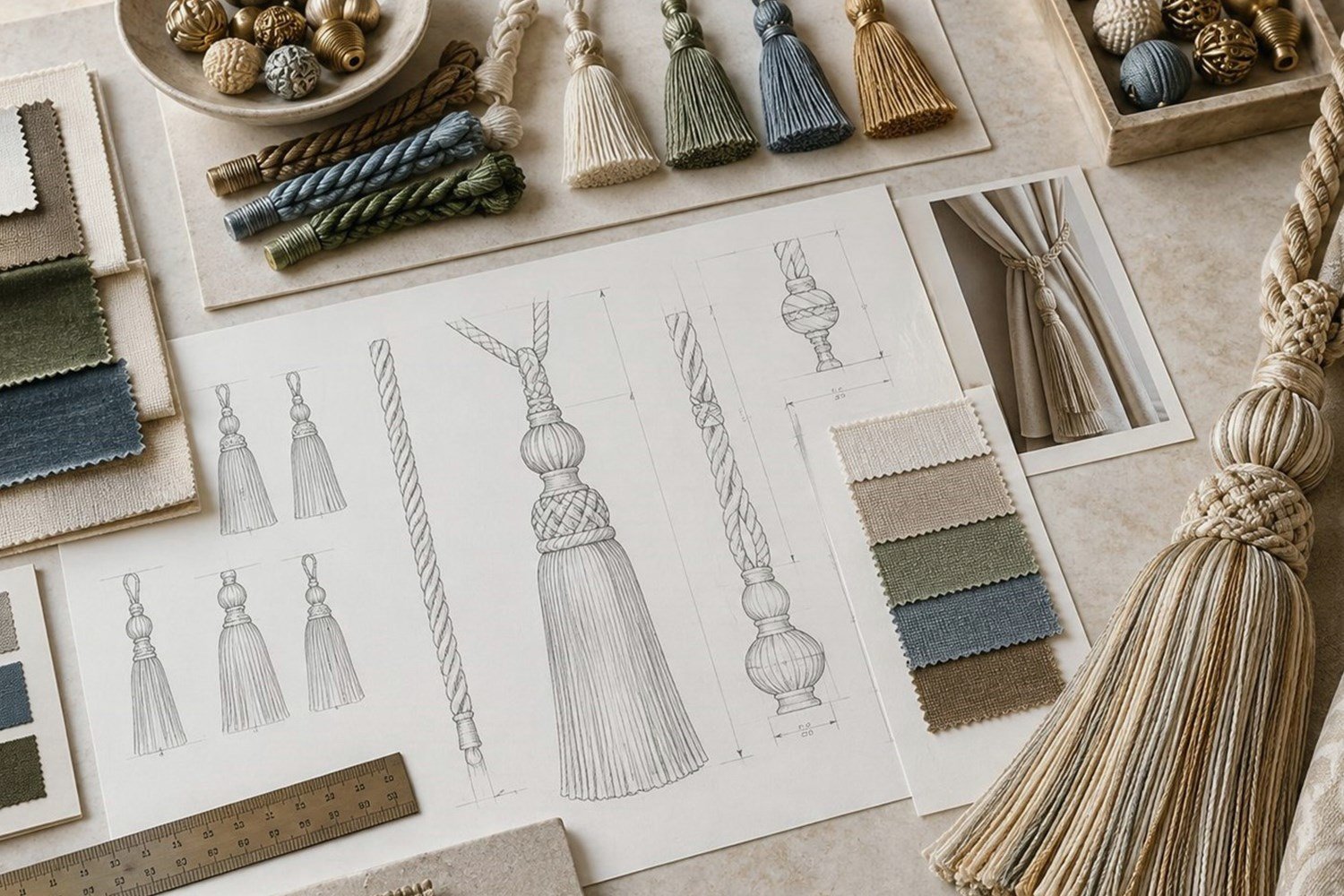
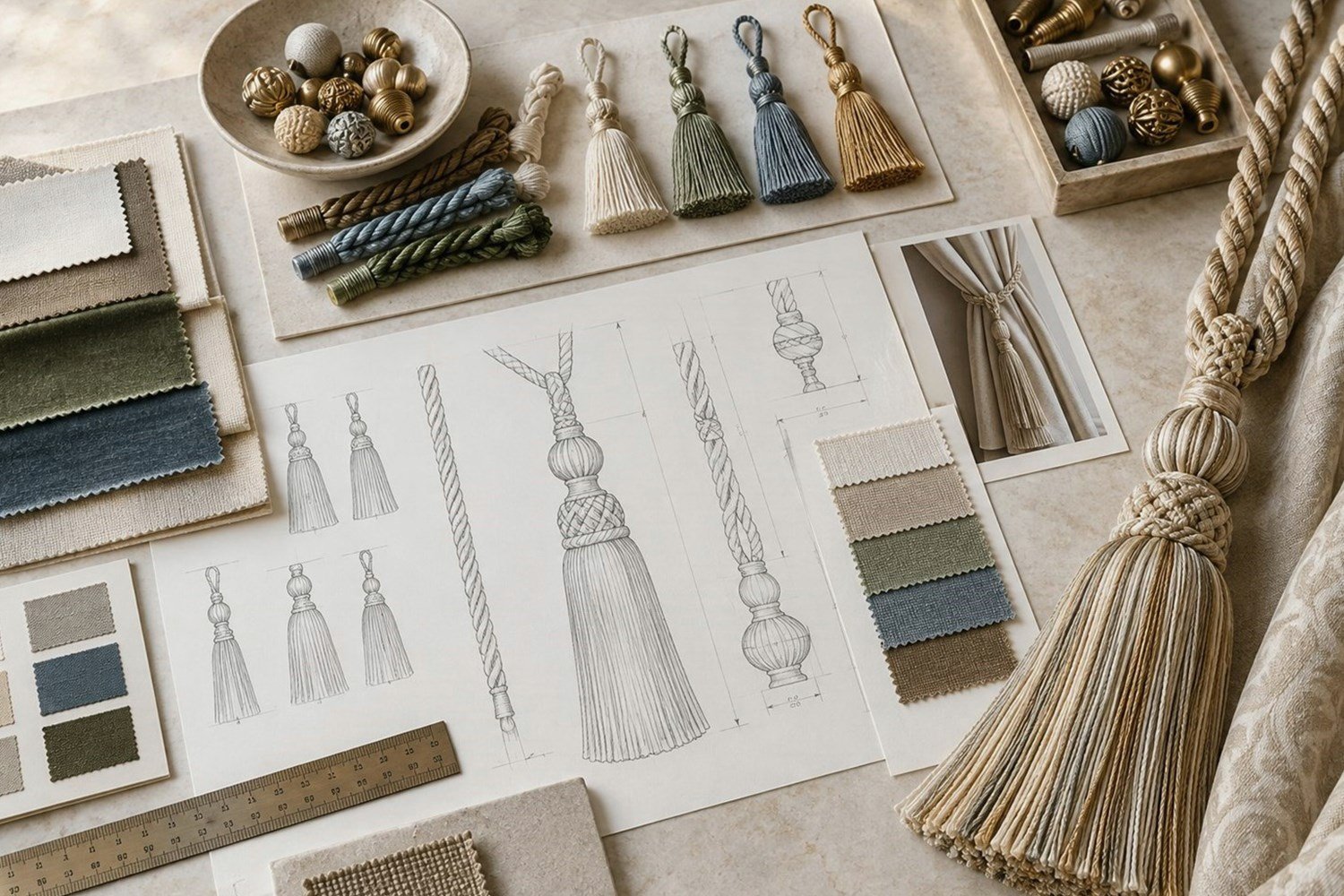
Beaded tiebacks are curtain tiebacks that incorporate beads as a visible structural or decorative feature. The beads may be positioned along a rope or cord, arranged near the ends or connectors, combined with tassels, integrated into decorative strands, or used with magnetic and other fastening systems. Beaded tiebacks gather curtain fabric while adding texture, color, shape, and decorative detail.
Quick Reference
Beaded Feature
Definition
Tieback with visible beads.
Body
Rope, cord, braid, fabric, or mixed.
Role
Gathering plus decorative detail.
Closure
Loop, hook, magnet, knot, or other.
Specify
Construction, beads, fit, sample.
Overview
Beaded Is a Visible Product Feature
Beaded describes a visible product feature, not one fixed tieback construction, material, or fastening method. A beaded tieback is a curtain tieback plus beads as a visible structural or decorative feature. The flexible product wraps around or secures gathered curtain fabric; the beads contribute visible texture, color, shape, material character, or connection detail.
This is a conceptual definition, not a mathematical formula. Beads can form a strand, sit along a rope or cord, appear near an end or connector, sit beside tassels, or join a magnetic, loop, hook, ring, knot, or other fastening arrangement. Product structure matters more than a market name alone.
Term
What it identifies
What it does not define
Beaded
Visible structural or decorative feature
One universal body or closure
Rope
Main flexible body construction
Bead material or fastening method
Twisted / braided
Rope construction method
Complete decorative direction
Tassel
Decorative component or configuration
Whether beads are present
Magnetic
Fastening method
Main body material
Fabric
Body material or construction
Bead placement or closure
Main Content
What Does a Beaded Tieback Do?
Beaded tiebacks perform both a functional curtain-gathering role and a decorative bead-feature role. Functionally, they can gather fabric, hold a curtain open or partially open, maintain a gathered position, shape drapery, and expose more of the window. Decoratively, beads can add color, texture, reflective detail, natural-material character, contrast, pattern, and coordination with the curtain or interior materials.
Functional tieback plus decorative bead feature is another useful conceptual relationship. It does not mean every beaded tieback is primarily decorative, nor that beads are always non-structural. In some designs, the strand and connectors help form the body; in others, beads are positioned as visible embellishment around a rope, tassel, cap, or magnetic end.
Purpose
What the tieback can contribute
Gathering
Brings curtain fabric to an open or partly open position.
Holding
Maintains the selected gather through its complete body and closure system.
Shape
Influences folds and visual drapery presentation.
Color
Adds a coordinated or contrasting bead accent.
Texture
Introduces smooth, faceted, natural, or mixed surface character.
Detail
Creates rhythm, pattern, reflective points, or end emphasis.
Beaded Tieback Structure and Anatomy
There is no universal anatomy for every beaded tieback. A design may include a main rope or cord, twisted or braided body, fabric body, bead strand, individual beads, spacer beads, decorative beads, connector, loop, ring, knot, cap, tassel, tassel head, tassel skirt, magnetic end, decorative end, wood component, or metal component. Not every product includes every component.
A conceptual anatomy can be read as body → bead feature → connection or closure → optional decorative end. In a beaded rope tieback, beads may sit along or between sections of rope. In a beaded tassel tieback, beads may appear above the tassel head, near the cap, at the connector, or as part of a larger decorative assembly. A magnetic beaded tieback can use beads with a flexible body while magnetic components provide the closure.
Common Bead Placement
Beads can be arranged as a continuous strand, spaced along a cord, grouped near the ends, centered around a decorative feature, placed between tassels and body components, or used as connectors. Placement affects visible balance, movement, surface rhythm, total length, and relation to the gathered curtain. It should be specified rather than assumed from the word “beaded.”
Common Tieback Constructions
A beaded design can be beaded plus rope, beaded plus braided rope, beaded plus twisted rope, beaded plus tassel, beaded plus magnetic, beaded plus rope plus tassel, or beaded plus rope plus magnetic. Beaded fabric tiebacks and mixed-material tiebacks are also possible. These categories can overlap because they identify different aspects of one product.
Bead Materials and Main Body Materials
Bead material and tieback body material should be specified separately because they can serve different visual and construction roles. Bead options may include wood, glass-look, crystal-look, resin, ceramic-look, metal, coated finishes, textile-covered elements, or mixed materials according to the approved product direction. The body may use rope, cord, braid, yarn, fabric, textile, or mixed construction.
Material choices affect color, texture, weight distribution, surface appearance, component connection, and compatibility with the curtain treatment. A name such as “wood bead,” “crystal beaded,” or “beaded tassel” gives a useful direction but should not replace a component-by-component specification. Confirm the actual bead size, shape, quantity, spacing, hole or connection method, color, finish, and intended placement.
Knots, loops, rings, caps, links, hardware, or joining method.
Decorative ends
Tassel, cap, bead grouping, magnetic housing, or other visible finish.
Closure
Loop, hook, ring, magnetic, self-tied, or integrated construction.
Curtain relation
Gathered fabric, volume, fullness, intended open position, usable fit.
Selection
Choose Beaded Tiebacks by the Complete Curtain Treatment
Select a beaded tieback after defining the curtain application, gathered volume, body construction, closure, bead direction, desired proportion, and approved sample. Bead decoration should coordinate with the complete tieback rather than replace decisions about usable length, fastening, or fabric fit.
Confirm the curtain fabric, fullness, lining, layers, and intended open or partly open position.
Choose the flexible body: rope, cord, twisted rope, braided rope, fabric, or mixed construction.
Define the bead material, placement, quantity, spacing, color, shape, and finish.
Specify tassels, caps, connectors, loops, magnetic ends, or other decorative elements separately.
Set the closure method and relevant usable dimensions around the gathered curtain.
Review a finished sample with representative fabric and the intended curtain gathering.
Terminology can vary: beaded tiebacks, beaded curtain tiebacks, bead tiebacks, beaded tassel tiebacks, wood bead curtain tiebacks, and crystal beaded tiebacks may describe products with different structures. In this article, a flexible product wrapping or securing gathered curtain fabric is a tieback; a rigid fixture mounted beside a window is a holdback.
Manufacturing and Customization Overview
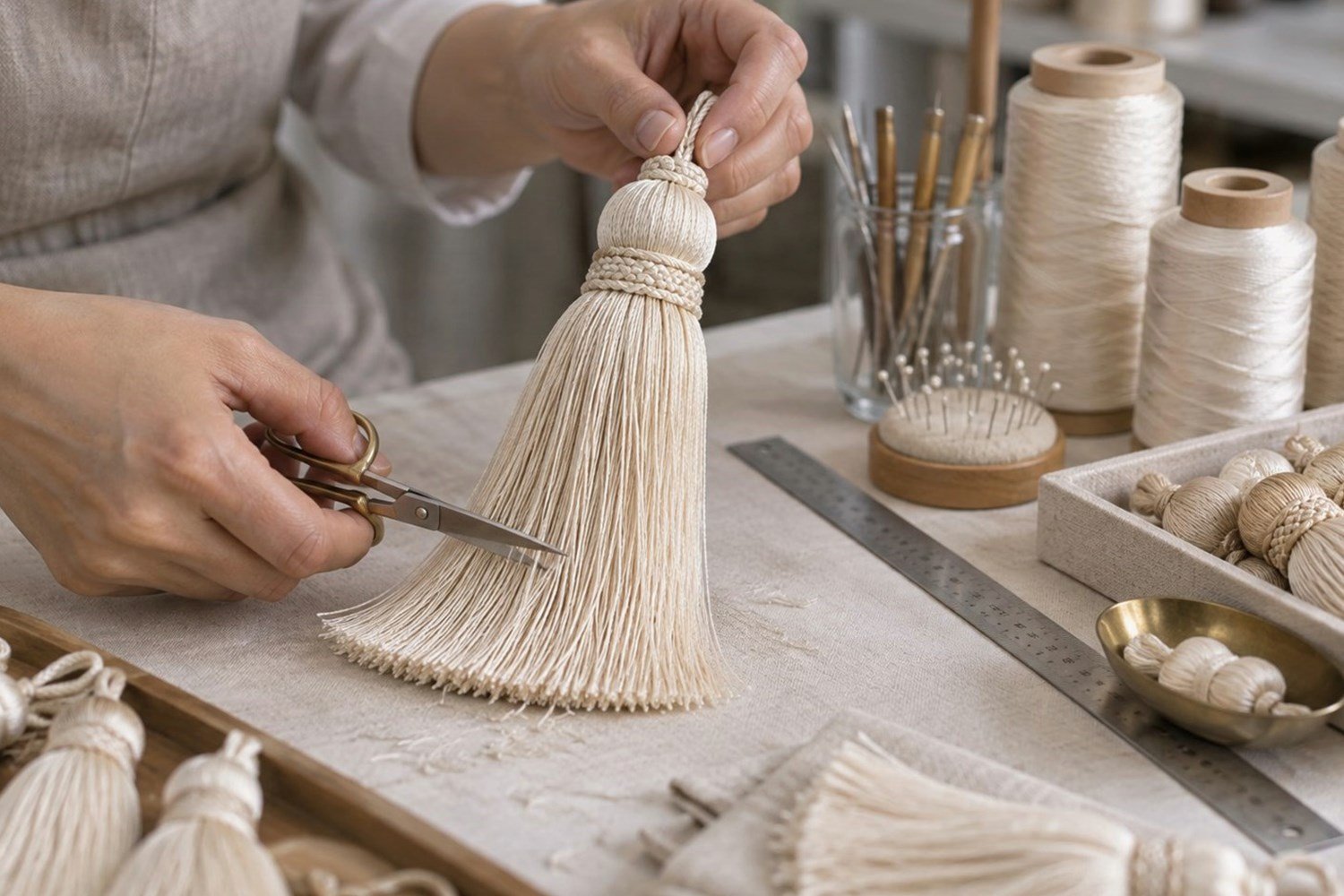
Development commonly begins with the application and reference direction, followed by construction planning, material selection, component preparation, assembly, finish review, representative sample evaluation, and final production specification. The exact process depends on the selected body, beads, connector method, tassel configuration, closure, packaging, and quality requirements.
Customization may include body construction, colors, bead material, bead shape, bead size, bead pattern, spacing, tassel direction, cap and connector details, closure, dimensions, packaging, and branding elements. Each decision should be tied to the approved finished product reference and curtain use case.
B2B Specification
What Should B2B Buyers Specify?
B2B buyers should state that the product is a flexible beaded tieback and then specify the complete body, bead feature, closure, curtain context, materials, dimensions, decorative direction, and representative sample. “Beaded tieback” alone does not define whether the body is rope, braid, fabric, or mixed; where beads sit; how the product closes; or which curtain volume it should surround.
Requirement
Buyer reference
Approval point
Curtain context
Fabric, fullness, layers, gathered volume, intended position
Representative curtain check
Body
Rope, cord, braid, fabric, construction and relevant dimensions
Tassels, caps, connectors, rings, knots, end details
Balanced finished composition
Closure
Loop, hook, ring, magnetic, self-tied, or other approved design
Intended operation with fabric
Quality plan
Sample, packaging, inspection points, final product reference
Approved production direction
Quality checks should review conformity of body construction, bead material and finish, bead placement, connectors, knots or joins, decorative components, closure, colors, dimensions, and packaging against the approved sample. The finished assembled tieback should be assessed with representative curtain fabric rather than as separate loose pieces only.
Common Specification Mistakes
Mistake
Better approach
Using “beaded” as the complete specification
Define body, bead material, placement, closure, fit, and decoration.
Treating product categories as exclusive
Allow beads, rope, tassels, magnets, and fabric to combine when designed together.
Approving bead samples only
Review the complete tieback with all components assembled.
Ignoring gathered curtain volume
Confirm usable dimensions with representative fabric.
Assuming all bead materials behave alike
Specify actual material, surface, connection, and approved reference.
Choosing beads before structure
Confirm body and fastening construction first.
FAQ
Frequently Asked Questions
What are beaded tiebacks?
They are flexible curtain tiebacks that use beads as a visible structural or decorative feature. They gather curtain fabric while adding texture, color, shape, and decorative detail.
Are beaded tiebacks always made with rope?
No. They can use rope, cord, twisted or braided construction, fabric, tassels, or mixed materials. Beaded identifies the feature, not the complete body construction.
Can beaded tiebacks use magnetic closure?
Yes. A magnetic beaded tieback can combine a flexible body, visible beads, and magnetic fastening when the approved product design supports that construction.
Where can beads be placed?
They may run along a body, sit near ends or connectors, appear as strands, group around tassels, or form part of a decorative end. Define placement in the product specification.
What should buyers provide for a beaded tieback project?
Provide the curtain context, body construction, bead details, closure, dimensions, colors, decorative components, packaging requirements, and a finished sample reference.
Conclusion
Beads Add Detail to a Complete Tieback
Beaded tiebacks are flexible curtain-gathering accessories in which beads form a visible structural or decorative feature. The beads can combine with rope, braid, fabric, tassels, magnetic closure, and other components. Choose and specify the complete construction around the intended curtain rather than treating “beaded” as the entire product definition.
Beaded describes a visible feature, not one material, body, or fastening method.
One product can combine beads with rope, tassels, fabric, and magnetic closure.
Bead placement, material, connection, color, and finish should be specified directly.
Usable fit depends on the gathered curtain and complete closure structure.
Approve a finished sample with representative fabric before production.
Describe the curtain, desired body, bead material and arrangement, closure, dimensions, colors, tassels, connectors, finish, packaging, and reference sample in one request.