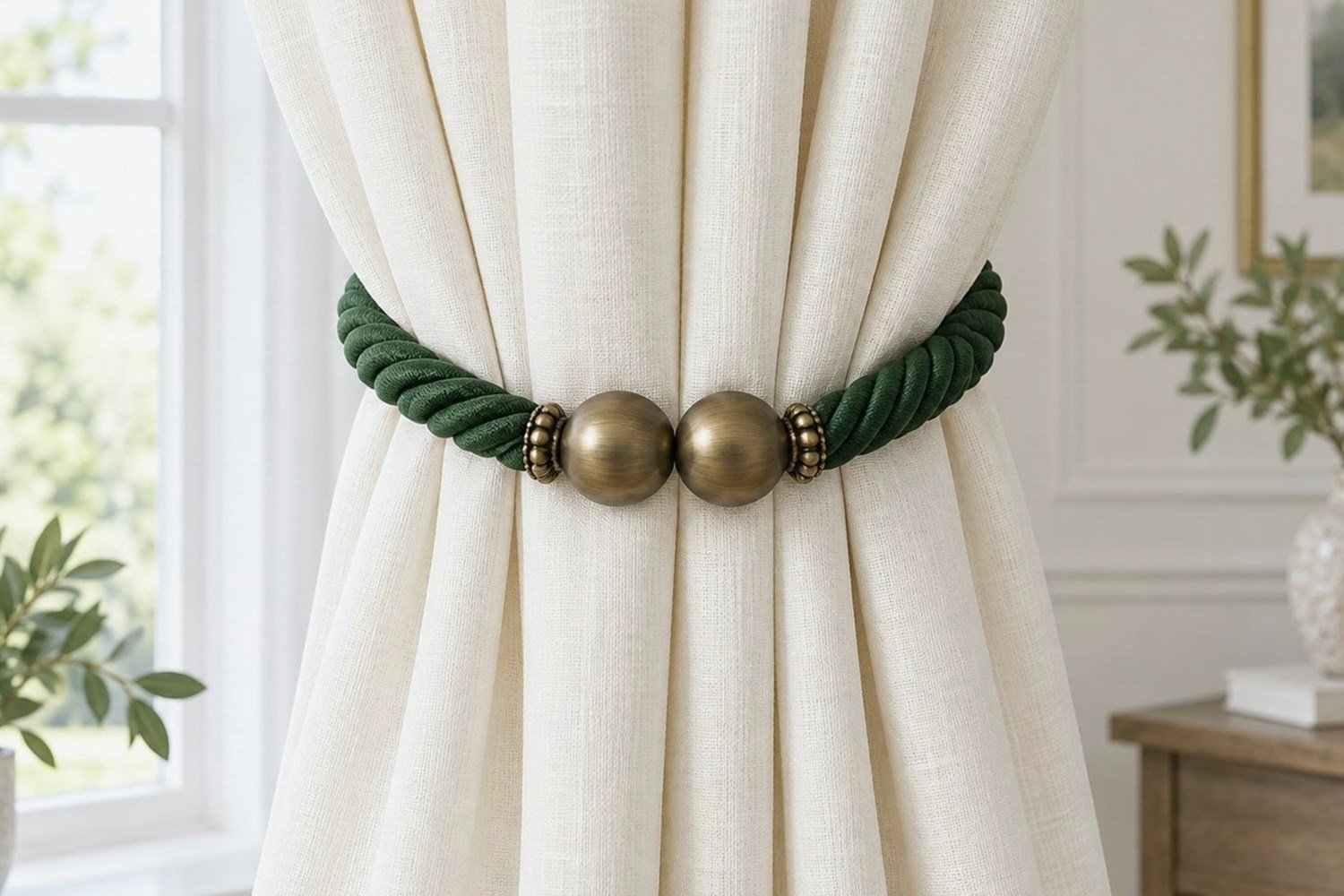
Magnetic curtain tiebacks use magnetic attraction to close or secure the tieback around gathered curtain fabric. In a common corded design, two magnetic ends are connected by a flexible rope, cord, braid, or decorative body. The tieback wraps around the curtain and the magnetic ends are brought together to close it. Other magnetic designs may use two magnetic pieces that connect directly through or around the curtain fabric.
Quick Reference
Magnetic Closure
Principle
Compatible ends attract and connect.
Corded
Body wraps; magnetic ends close.
Direct
Magnetic pieces meet through fabric.
Hold
Complete tieback maintains the gather.
Specify
Construction, fit, components, sample.
Overview
Magnetic Describes the Fastening
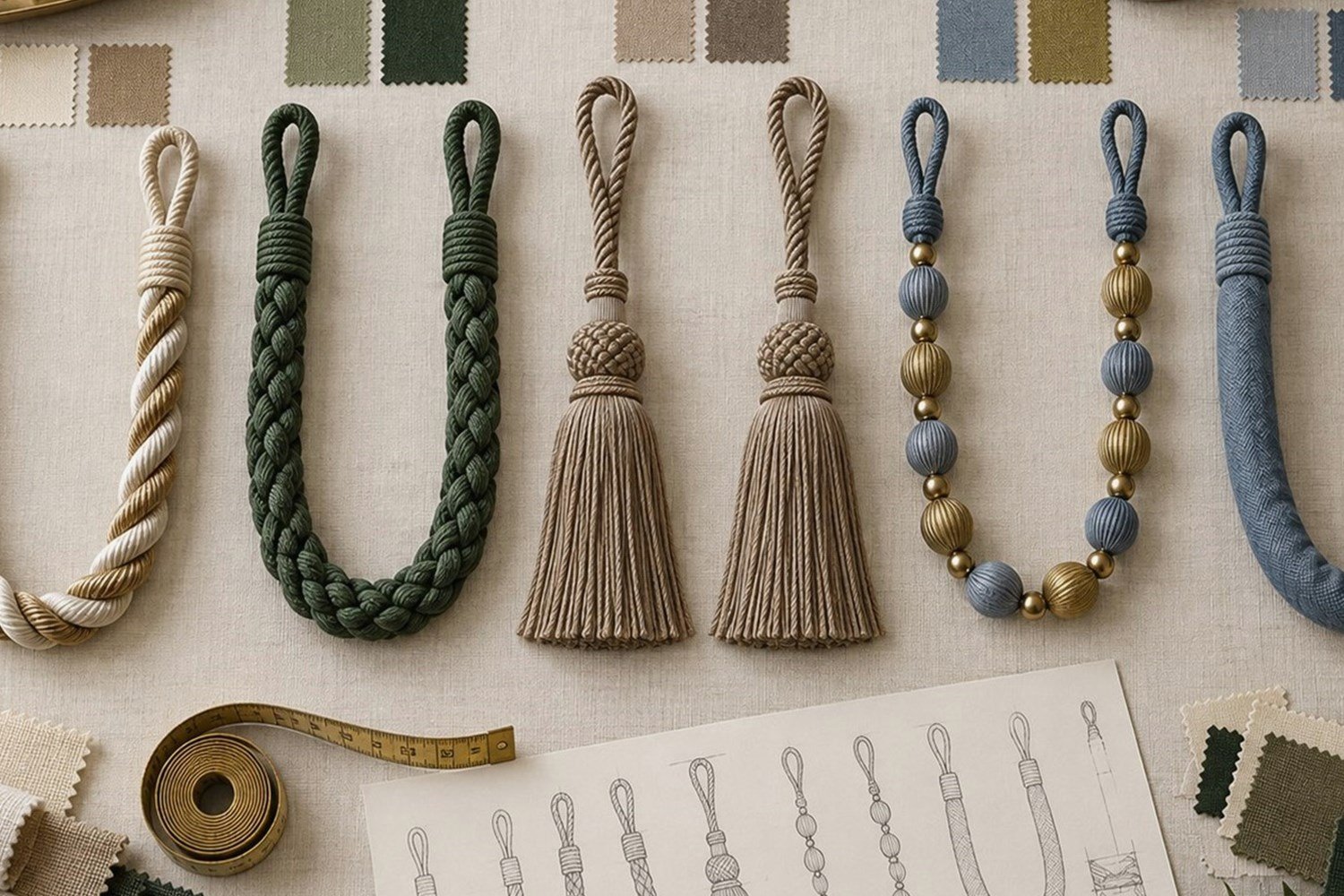
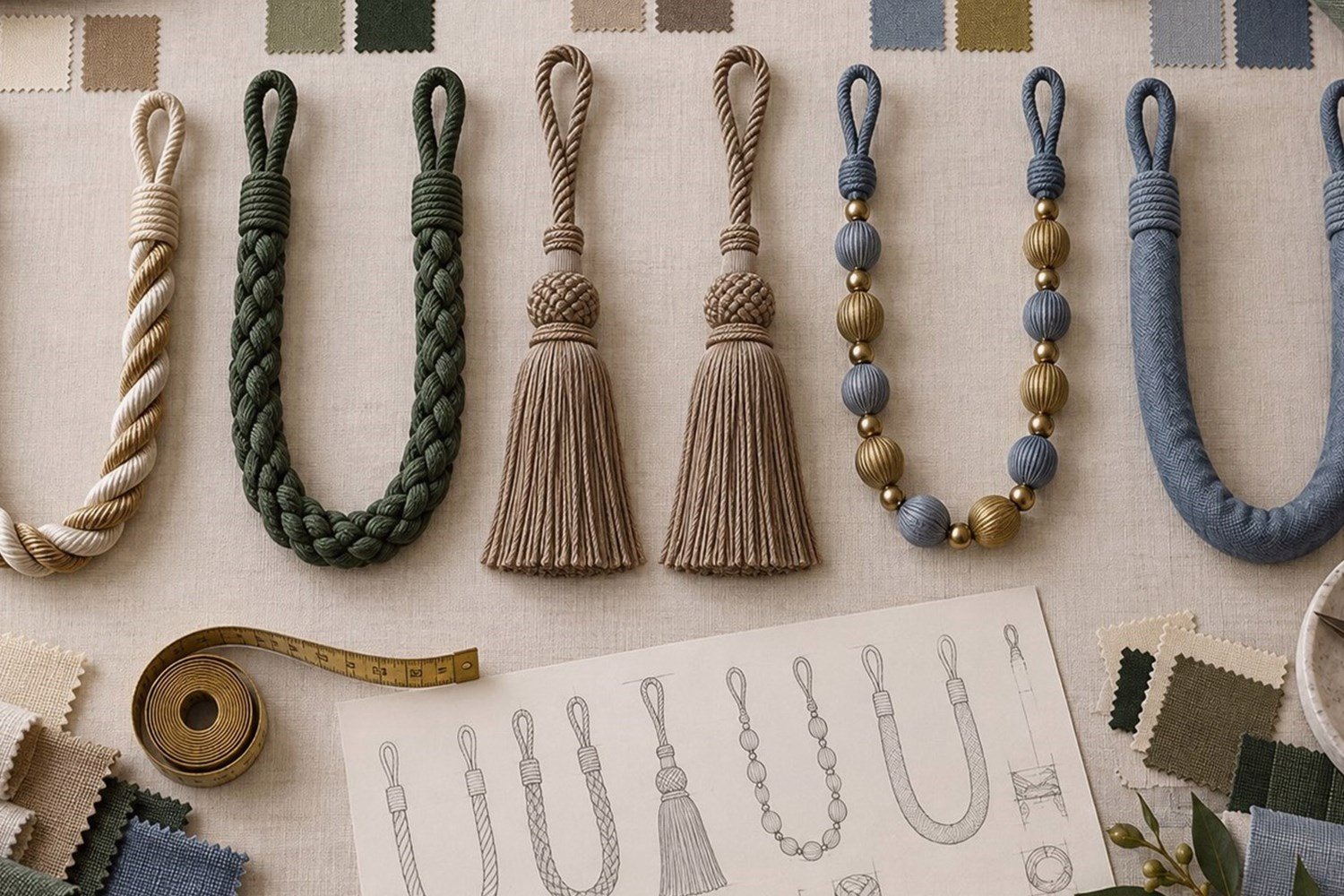
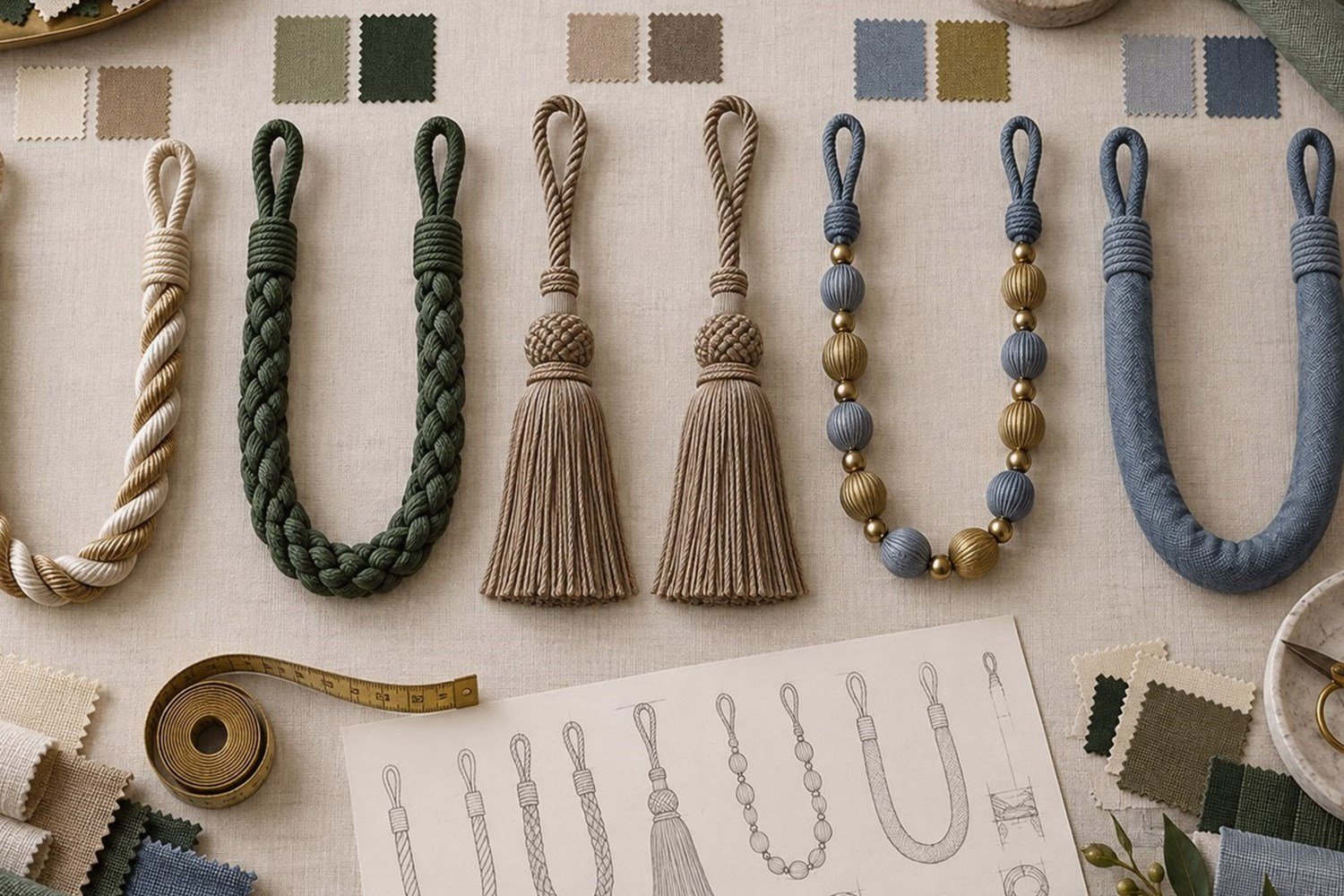
Magnetic describes the fastening method, not the main material or decorative style of the tieback. A magnetic curtain tieback is a flexible curtain-holding structure plus magnetic fastening. Its body may be rope, cord, braid, fabric, or another decorative construction; it may also include tassels, beads, caps, rings, or surface details.
A magnetic tieback closes when compatible magnetic components are brought close enough for magnetic attraction to pull and hold them together. The complete holding result depends on the product design and curtain application rather than magnet type alone.
Product term
What it identifies
What it does not define
Magnetic
Fastening method
Body material or decorative direction
Rope
Main body construction
Closure method
Braided or twisted
Construction method
Magnet type or tassel count
Tassel
Decorative component
Complete fastening system
Beaded
Decorative or structural feature
Complete product category
Main Content
How the Magnetic Closure Works
In a corded magnetic tieback, the flexible body surrounds the gathered curtain and the magnetic ends join to form the closed holding structure. The magnets close the tieback; the cord, rope, braid, or fabric body surrounds the curtain. This distinction matters when assessing fit, intended use, and sample approval.
Magnetic components generally work best when their intended magnetic surfaces align as the product design requires. Orientation, contact area, gap between components, housing thickness, decorative covers, curtain volume, body length, and the position of the gathered fabric can all affect the finished result. These are product and application questions, not universal performance values.
Conceptual step
What happens
Why it matters
Gather
Curtain fabric is brought to the intended open position.
Defines the volume the tieback must surround.
Wrap
Flexible body passes around the gathered fabric.
Creates the curtain-holding structure.
Align
Magnetic ends move toward their intended contact position.
Supports consistent closure.
Connect
Compatible magnetic components attract and meet.
Closes the tieback.
Hold
Closed structure maintains the gathered position.
Combines body, closure, and curtain relationship.
Adjust
Position or gather is refined if required.
Sets the final visual result.
Two Common Practical Configurations
Magnetic curtain tiebacks do not all use the same structure. Two common practical configurations are corded magnetic tiebacks and cordless or direct magnetic tiebacks. They are useful ways to describe common products, not universal classifications for every design in the market.
Corded Magnetic Tiebacks
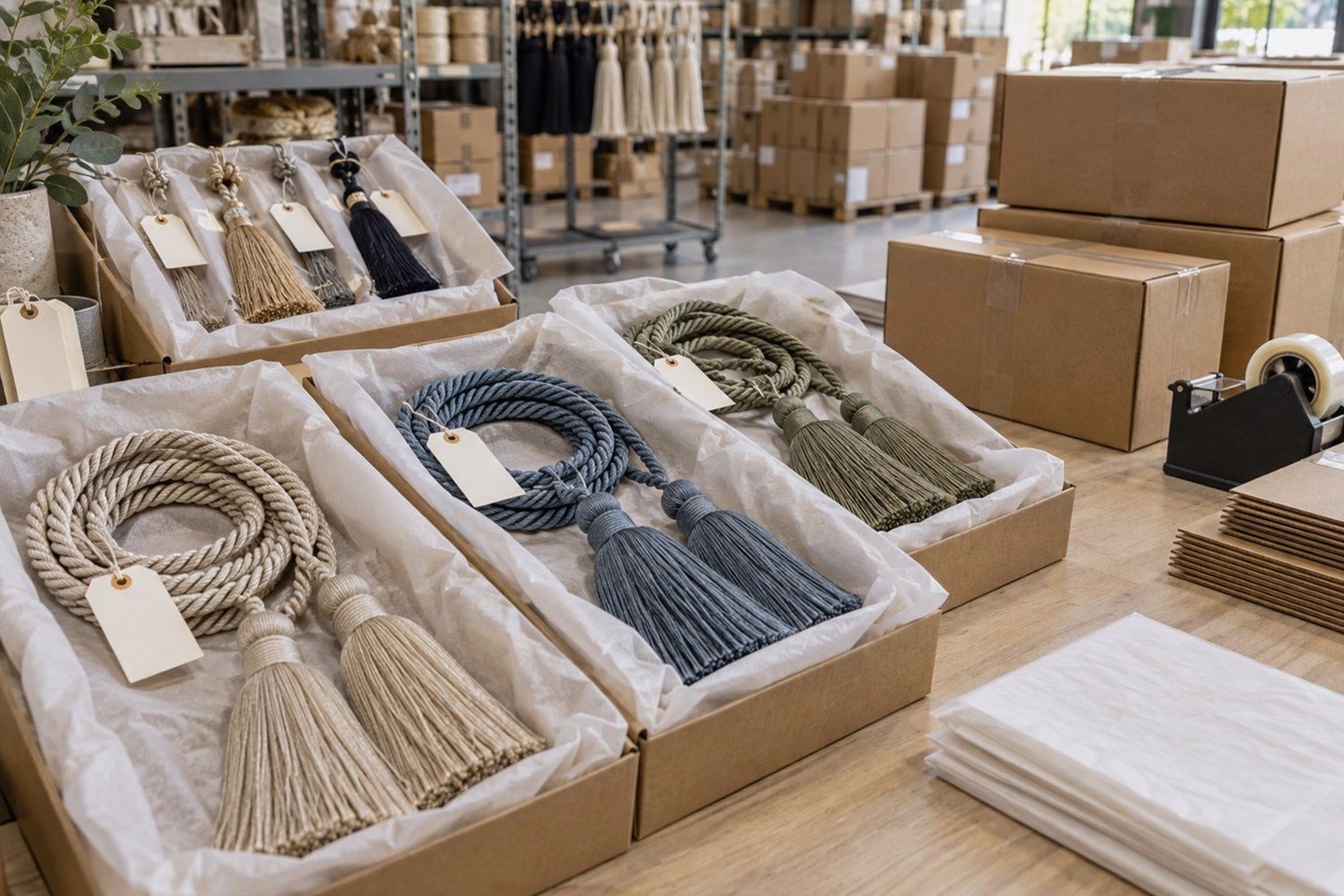
A corded construction commonly includes a magnetic end, a flexible cord, rope, braid, or fabric body, and a second magnetic end. Conceptually: magnetic end ← flexible cord or rope → magnetic end. The body wraps around the gathered curtain; then the two ends meet and close. Tassels, beads, caps, and other details can sit on or near the magnetic ends without changing the fastening principle.
Cordless or Direct Magnetic Tiebacks
Some designs do not use a long cord. They may use a front magnetic piece and a rear magnetic piece, with curtain fabric positioned between or within the assembly according to the product design. The practical sequence is: position front piece → position rear piece → align → magnetic attraction → fabric held between or within the assembly. Exact constructions vary, so product references and samples should define the mechanism.
How the Curtain Is Held
For a corded design, the cord, rope, or braid surrounds the gathered curtain, magnetic ends close the tieback, and the complete tieback maintains the gathered position. It is therefore inaccurate to treat the magnet as the only part holding the full curtain in every design. The body, usable wrap, curtain fabric, gathered volume, closure position, and components work together.
Many commercial products may use compact permanent magnets, including neodymium magnets in some designs, but magnet material should be verified from the actual product specification. A decorative housing may contain magnetic components while presenting a metal, textile, resin, wood-look, bead, or other finish to the user. Do not infer material, grade, pull force, or maximum curtain weight from appearance alone.
Holding factor
What to review
Gathered volume
Fabric thickness, lining, fullness, layers, and intended open position.
Body geometry
Rope, cord, braid, fabric, usable wrap, and total proportion.
Magnetic ends
Alignment, intended contact surfaces, housing, covers, and connection position.
Decorative parts
Tassels, beads, caps, connectors, rings, and their visual balance.
Application
Residential, hospitality, decorative, sheer, lined, or layered curtain context.
Validation
Finished sample checked with representative curtain material.
Selection
Choose the Construction Before the Decoration
Choose a magnetic tieback by first defining the curtain application and fastening construction, then develop its body, decorative components, materials, colors, and finish. Magnetic products can be magnetic plus rope, magnetic plus braided rope, magnetic plus twisted rope, magnetic plus tassel, magnetic plus beads, or a combination of these features.
Confirm curtain fabric, fullness, layers, gathered volume, and intended open position.
Choose a corded, direct, or another approved construction based on the product reference.
Define body material and construction: rope, cord, braid, fabric, or a mixed body.
Specify magnetic-end housing, decorative cover, joining position, and intended alignment.
Set tassel, bead, cap, connector, or other decorative components after the mechanism is clear.
Review the complete sample with representative curtain fabric rather than assessing loose components alone.
Magnetic fastening can offer a no-drill use case because the tieback closes around or through the curtain rather than relying on a wall hook for its basic closure. That does not make it a universal substitute for every hook-based treatment. Hook-based tiebacks and magnetic tiebacks use different fastening concepts, and the selected construction should match the intended curtain presentation.
Materials, Housings, and Decorative Features
A magnetic design can combine multiple component materials. The flexible body may use textile cord, rope, braid, yarn, fabric, or mixed construction. The magnet housing may be covered by a decorative element, and beads or tassels can add visible scale and surface character. Material choices should be reviewed as part of the final construction, including the join between body and magnetic end.
Adjustment depends on the design. In a corded product, the body can be placed around a different gathered circumference and the closure position can be selected around the curtain. Direct magnetic products may allow position adjustment on the curtain fabric within the limits of the intended assembly. Neither statement replaces application testing with the target curtain.
B2B Specification
What Should B2B Buyers Specify?
B2B buyers should identify the magnetic fastening construction and specify the complete tieback around it: curtain context, body, usable dimensions, magnetic-end design, decorative components, materials, color, finish, and representative sample. Saying only “magnetic tieback” does not define the body construction, magnet housing, ends, tassels, beads, closure position, or fit.
Requirement
Buyer reference
Approval point
Curtain context
Fabric, fullness, layers, gathered volume, intended position
Quality review should assess the complete tieback and intended curtain application, not an isolated magnet or decorative component. Check that the flexible body, magnetic ends, coverings, joins, decorative parts, colors, and finish conform to the approved reference. Then review whether the intended closure and gathered presentation work consistently with representative curtain fabric.
Common mistake
Better approach
Calling every design the same magnet type
Verify component material from the actual product specification.
Specifying “magnetic” only
Define construction, body, housing, components, fit, and finished reference.
Assuming magnets alone hold every curtain
Review the complete tieback structure around the gathered curtain.
Choosing decoration before construction
Confirm closure and body direction before tassels, beads, and finish.
Using an unrepresentative fabric test
Check the sample with relevant curtain fabric and gathered volume.
Approving separate components
Approve a finished assembled tieback in the intended use position.
FAQ
Frequently Asked Questions
How do magnetic curtain tiebacks work?
They use magnetic attraction to close a tieback around gathered curtain fabric. In a common corded design, a flexible body surrounds the curtain and two magnetic ends meet to close the structure.
Do all magnetic tiebacks use a rope?
No. Many use rope, cord, braid, or another flexible body, while some direct magnetic designs use magnetic pieces positioned through or around curtain fabric without a long cord.
Does magnetic describe the material?
No. It describes the fastening method. A magnetic tieback can have a rope, braided, twisted, textile, tassel, beaded, or mixed decorative construction.
Are all magnetic tiebacks made with neodymium magnets?
No. Some commercial designs may use compact permanent magnets, including neodymium magnets in some cases. Magnet material should be verified from the actual product specification.
What affects the finished holding result?
Review gathered curtain volume, body construction, usable fit, end alignment, housings, decorative coverings, connection position, and the complete approved sample with the intended application.
What should an OEM buyer provide?
Provide the curtain context, construction reference, body and end design, materials, dimensions, decorative components, colors, finish, packaging requirements, and representative sample approval points.
Conclusion
Magnetic Tiebacks Use a Complete Holding System
Magnetic curtain tiebacks work by combining a curtain-holding structure with magnetic fastening. In a common corded design, the body wraps around gathered fabric and magnetic ends close the loop. Direct magnetic designs use an alternative configuration of magnetic pieces around or through the curtain. Define the complete construction and approve it with the target curtain.
Magnetic identifies fastening, while rope, braid, tassels, and beads identify other product features.
Magnetic ends close the tieback; the complete body and closure system maintain the curtain gather.
Corded and direct magnetic products are two common practical configurations.
Material and performance details should be verified from the actual approved specification.
B2B development requires a complete assembled sample, not only separate parts.