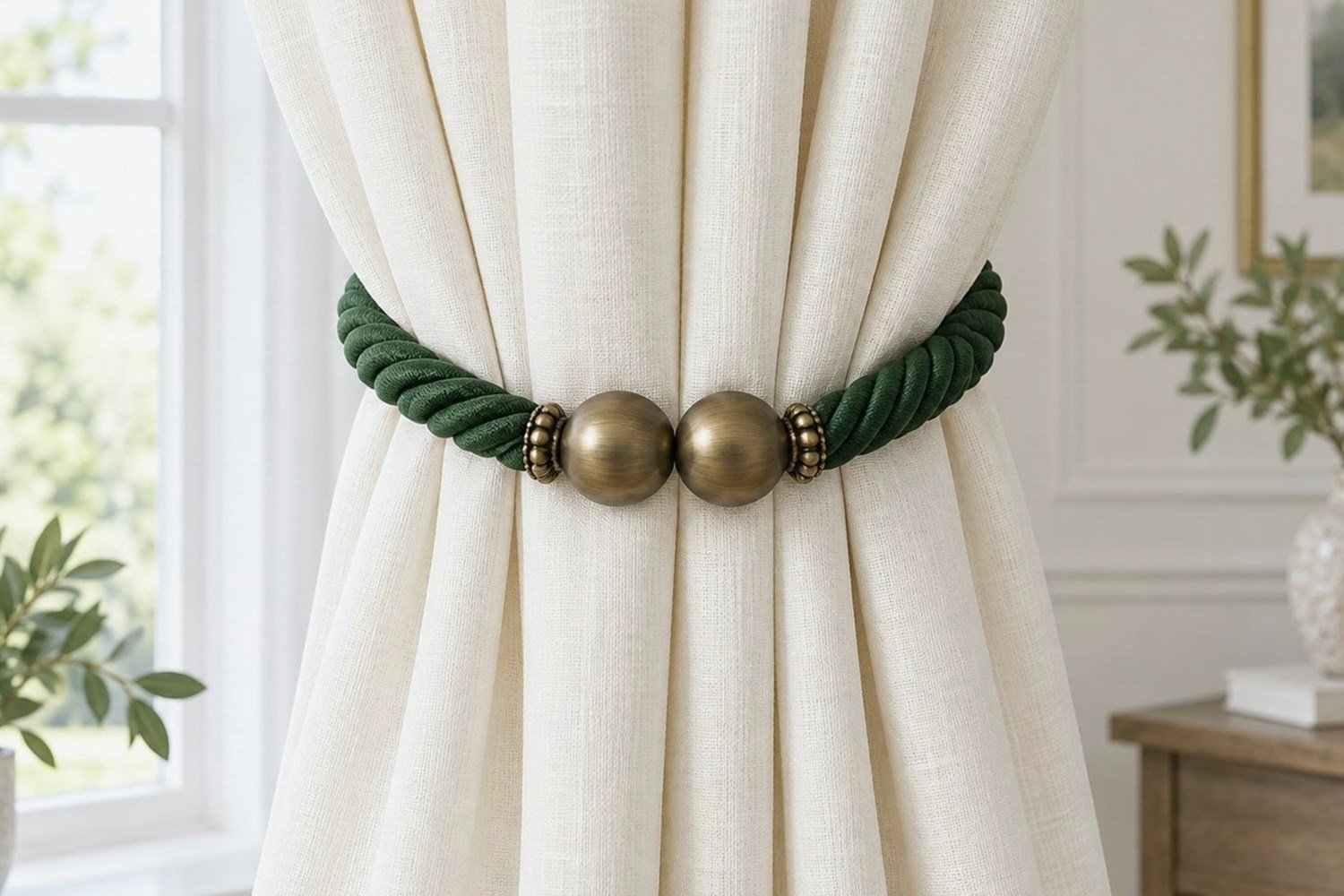
Magnetic tiebacks and curtain holdbacks both gather curtains in an open or partially open position, but they use different structures. A magnetic tieback is typically a flexible accessory that wraps around gathered curtain fabric and closes through magnetic attraction. A curtain holdback is typically a rigid fixture installed beside the window, with the curtain pulled behind or against it.
Quick Reference
Structure First
Magnetic
Flexible accessory with magnetic closure.
Holdback
Rigid fixture in a fixed position.
Installation
Magnetic may support no-drill use.
Gather
Wrap-around versus supported fabric.
Specify
Construction, fit, materials, sample.
Overview
Different Structures, Similar Purpose
A magnetic tieback surrounds the curtain; a conventional curtain holdback supports the curtain from a fixed position. Both products can create an open or partly open drapery treatment, yet their structure, fastening, position, installation, daily operation, and B2B specification are different.
These are conceptual definitions, rather than mathematical formulas: a magnetic tieback is a flexible curtain accessory plus magnetic fastening; a curtain holdback is a rigid fixture plus a fixed curtain-supporting position. Product names in the market can overlap, so structure and fastening method are more useful than the product label alone.
Product term
Primary meaning
Typical form
Magnetic
Fastening method
Magnetic ends or pieces connect
Tieback
Flexible curtain-gathering accessory
Wraps around gathered fabric
Holdback
Rigid curtain-supporting fixture
Installed beside the window
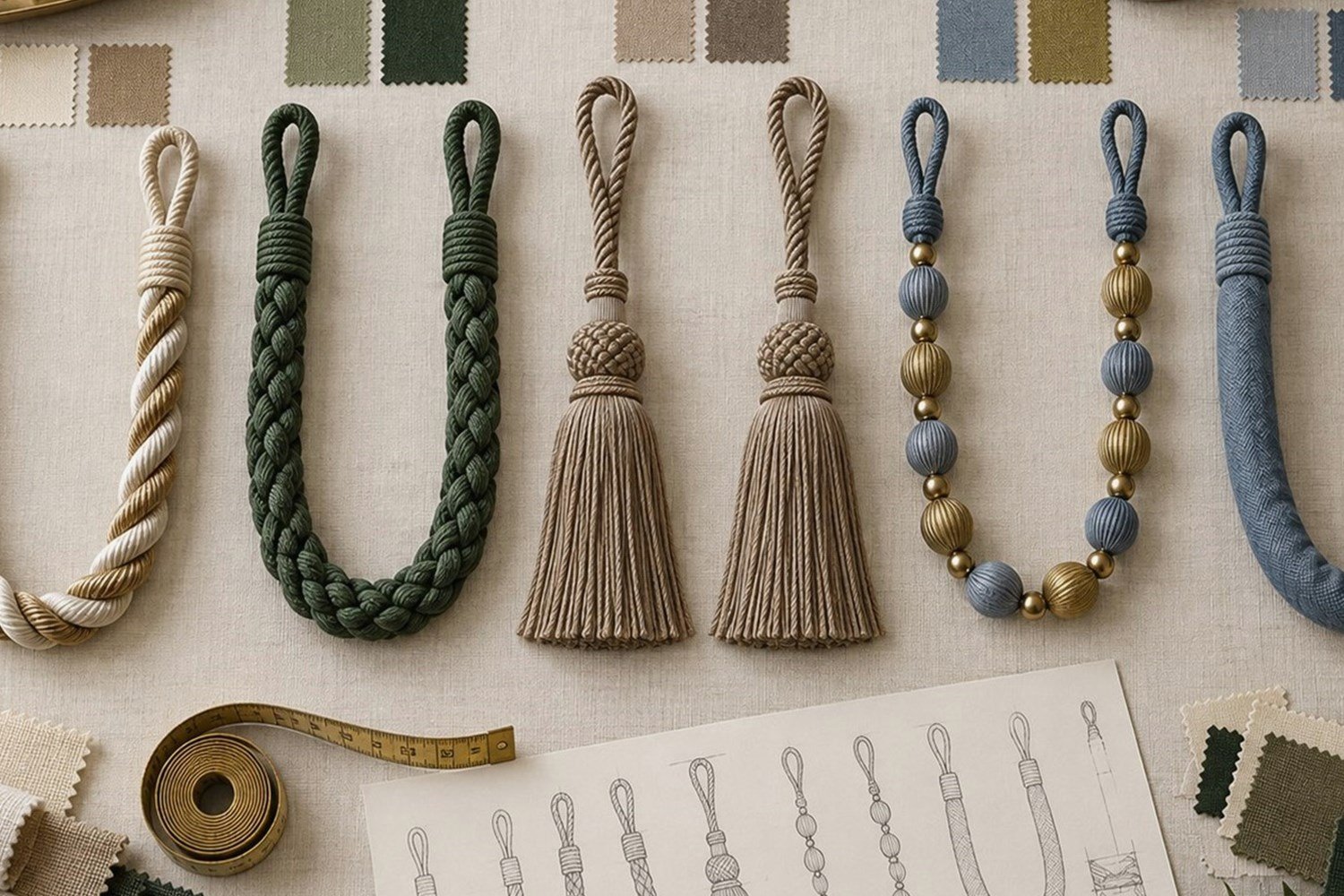
Rope / braid
Flexible body construction
May be part of a magnetic tieback
Tassel / beaded
Decorative or structural feature
May be added to a magnetic tieback
Main Content
What Is the Main Difference?
Magnetic tiebacks use a flexible structure and magnetic closure around the gathered curtain, while conventional holdbacks use a rigid fixture positioned beside the window. A magnetic product commonly has two magnetic ends linked by rope, cord, braid, fabric, or decorative body. A holdback can be a metal, wood, resin, hook-style, arm-style, knob-style, or other rigid decorative fixture.
Commercial terms are not always consistent. Some sellers may call a flexible magnetic product a magnetic holder, magnetic holdback, curtain holder, or curtain tie. For clarity here, magnetic tieback means a flexible accessory using magnetic fastening, and curtain holdback means a conventional rigid fixture that supports fabric without wrapping around it.
Comparison point
Magnetic tieback
Conventional holdback
Basic structure
Flexible body plus magnetic fastening
Rigid fixture plus fixed support position
Curtain relationship
Surrounds gathered curtain fabric
Curtain sits behind or against fixture
Closure
Compatible magnetic ends connect
No wrap-around magnetic closure required
Location
Positioned around curtain at use
Installed beside window in a defined place
Installation
Often used without wall drilling
Usually requires wall attachment
Adjustment
Body and closure position can be moved
Support location is determined by installation
How Each Product Holds the Curtain
In a common magnetic tieback, the flexible body wraps around gathered fabric and magnetic ends meet to close the loop. The cord, rope, braid, or fabric body creates the surrounding structure; the magnets close it. The finished position depends on curtain volume, usable body length, end alignment, housing, decorative components, and the intended gather.
A conventional holdback is fixed to a wall or other supporting surface beside the window. The curtain is pulled behind, around, or against its arm, hook, knob, or decorative protrusion. It holds fabric by its fixed physical position rather than by a flexible body that wraps around the curtain. Installation position has a strong effect on how the curtain drapes and where the open treatment remains every day.
Magnetic Tieback Flow
Gather → wrap flexible body → align magnetic ends → connect → hold → adjust. Magnetic ends close the flexible accessory. The complete tieback then maintains the gathered position. Do not treat the magnets as the only element responsible for every curtain in every product design.
Conventional Holdback Flow
Install fixture → draw curtain toward fixed position → place fabric behind or against holdback → arrange folds → support gathered treatment. The wall-fixed fixture provides the reference point. The curtain presentation is adjusted with the fabric, while the fixture location stays fixed unless reinstalled.
Installation, Positioning, and Daily Use
Installation is a central difference: a magnetic tieback can be applied around the curtain without a wall-mounted fixture, while a conventional holdback normally needs planned attachment and a stable fixed location. No-drill use can be useful for certain product directions, temporary styling needs, rental-oriented contexts, or applications where a wall fixture is not part of the intended solution. It is not a claim that one approach suits every window treatment.
Holdback positioning usually needs to be decided before installation. The fixture should work with curtain width, fabric fullness, lining, window proportions, intended open position, and surrounding interior details. Magnetic tiebacks can be repositioned around the curtain during use, although the correct body length and closure arrangement should still be defined for the intended gathered volume.
Use factor
Magnetic tieback
Conventional holdback
Wall attachment
Not inherent to the basic closure concept
Commonly required for intended installation
Position changes
Can be moved around gathered fabric
Limited by installed fixture location
Flexible body
Rope, cord, braid, fabric, or mixed body
Usually not the central holding element
Fabric contact
Surrounded by complete tieback structure
Placed behind or against rigid fixture
Daily operation
Open ends, gather, close, adjust
Draw fabric to installed support and arrange
Selection
Choose by Curtain and Project Direction
Choose between a magnetic tieback and a curtain holdback by defining the complete curtain treatment, not by assuming either term represents a universal level of quality or a universal application. Consider the curtain material, fullness, lining, gathered volume, desired open position, installation context, daily operation, decorative direction, and approved sample.
Use magnetic tiebacks when a flexible wrap-around accessory and magnetic closure fit the project direction.
Use conventional holdbacks when a fixed rigid support beside the window is part of the intended treatment.
Define whether the product should work with sheer, lined, layered, decorative, hospitality, or other curtain types.
Review usable dimensions for the gathered curtain, not only an overall visual size.
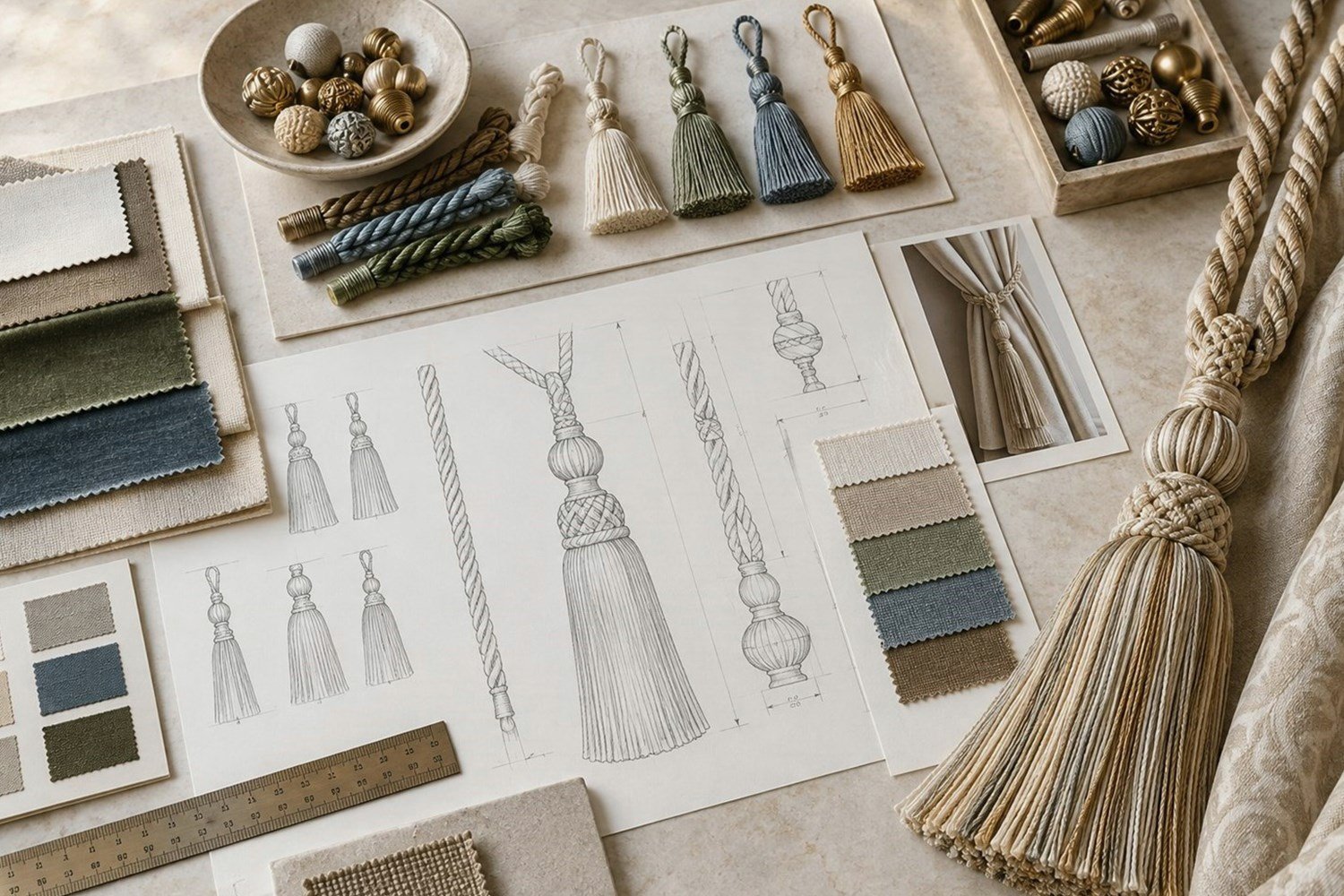
Specify rope, braid, tassels, beads, caps, or other decorative components separately from the fastening concept.
Review metal, wood, resin, surface finish, mounting method, and support geometry for a fixed holdback.
Magnetic + rope, magnetic + braided rope, magnetic + twisted rope, magnetic + tassel, and magnetic + beaded are compatible combinations when the design supports them. A rigid holdback can similarly be metal, wood, resin, hook-style, arm-style, knob-style, or another decorative rigid construction.
Materials, Dimensions, and Curtain Compatibility
Material selection should follow structure. A flexible magnetic tieback may use textile cord, rope, braid, yarn, fabric, tassels, beads, caps, housings, and other details. Many commercial magnetic products may use compact permanent magnets, including neodymium magnets in some designs, but the actual magnetic component should be verified from the approved product specification.
A conventional holdback may use metal, wood, resin, or mixed components. Its dimensions and mounting arrangement should be evaluated with the intended wall, curtain construction, window setting, and decorative proportion. Neither tieback body length nor holdback projection has a single universal value; each must be defined against the actual curtain treatment.
B2B Specification
What Should Buyers Specify?
B2B buyers should first state whether the project needs a flexible magnetic tieback or a fixed rigid holdback, then define the complete construction, curtain application, materials, dimensions, decorative direction, and representative sample. A name by itself does not communicate how the curtain is gathered, whether mounting is required, or how the finished product should look and operate.
Requirement
Magnetic tieback brief
Holdback brief
Curtain context
Fabric, fullness, gathered volume, intended position
Fabric, fullness, open treatment, fixture location
Fixture, mounting reference, and curtain treatment sample
Quality inspection should review conformity to the approved product reference. For a magnetic tieback, check body construction, joins, magnetic-end housings, closure operation, decorative components, finish, and representative fabric use. For a holdback, check rigid geometry, mounting parts, surface finish, fixture stability, installation reference, and intended curtain support position.
Common Comparison Mistakes
Mistake
Better approach
Using names as the only definition
Confirm structure and fastening method first.
Treating all magnetic products as holdbacks
Distinguish flexible wrap-around accessories from rigid fixtures.
Ignoring mounting in a holdback brief
Specify installation context, base, attachment and final position.
Ignoring gathered volume for a tieback
Define usable wrap with representative curtain fabric.
Approving loose components only
Approve a complete assembled product in its intended use position.
Assuming one option is always better
Choose from the complete curtain treatment and project direction.
FAQ
Frequently Asked Questions
What is the difference between magnetic tiebacks and curtain holdbacks?
A magnetic tieback is typically a flexible accessory that wraps around gathered fabric and closes magnetically. A conventional holdback is a rigid fixture beside the window that supports fabric from a fixed position.
Do magnetic tiebacks need wall installation?
The basic magnetic tieback closure works around or through gathered curtain fabric, so a wall-mounted fixture is not inherent to that fastening concept. Confirm the actual product design and application.
Are magnetic holdback and magnetic tieback the same term?
Market naming can overlap. For sourcing clarity, review the actual structure: flexible body and magnetic closure, or rigid fixture and fixed support position.
Can a magnetic tieback have rope, tassels, or beads?
Yes. Magnetic identifies fastening. Rope, braid, tassels, and beads can be body or decorative features within a compatible product design.
What should buyers inspect?
Inspect the complete approved construction with representative curtain fabric or, for a fixed holdback, the intended mounting and curtain treatment context.
Conclusion
Match the Product to the Holding Method
Magnetic tiebacks and conventional curtain holdbacks can both create an open curtain treatment, but their structures are distinct. Magnetic tiebacks are flexible accessories that surround gathered fabric and close magnetically. Conventional holdbacks are rigid fixtures that support fabric from a defined wall-side position. Specify the complete construction before selecting materials or decoration.
Use structure and fastening method to clarify overlapping market names.
Magnetic tiebacks combine flexible body construction with magnetic closure.
Holdbacks combine rigid fixture construction with a fixed support position.
Installation and adjustment should be evaluated with the actual curtain treatment.
Approve a complete B2B sample or installation reference before production.
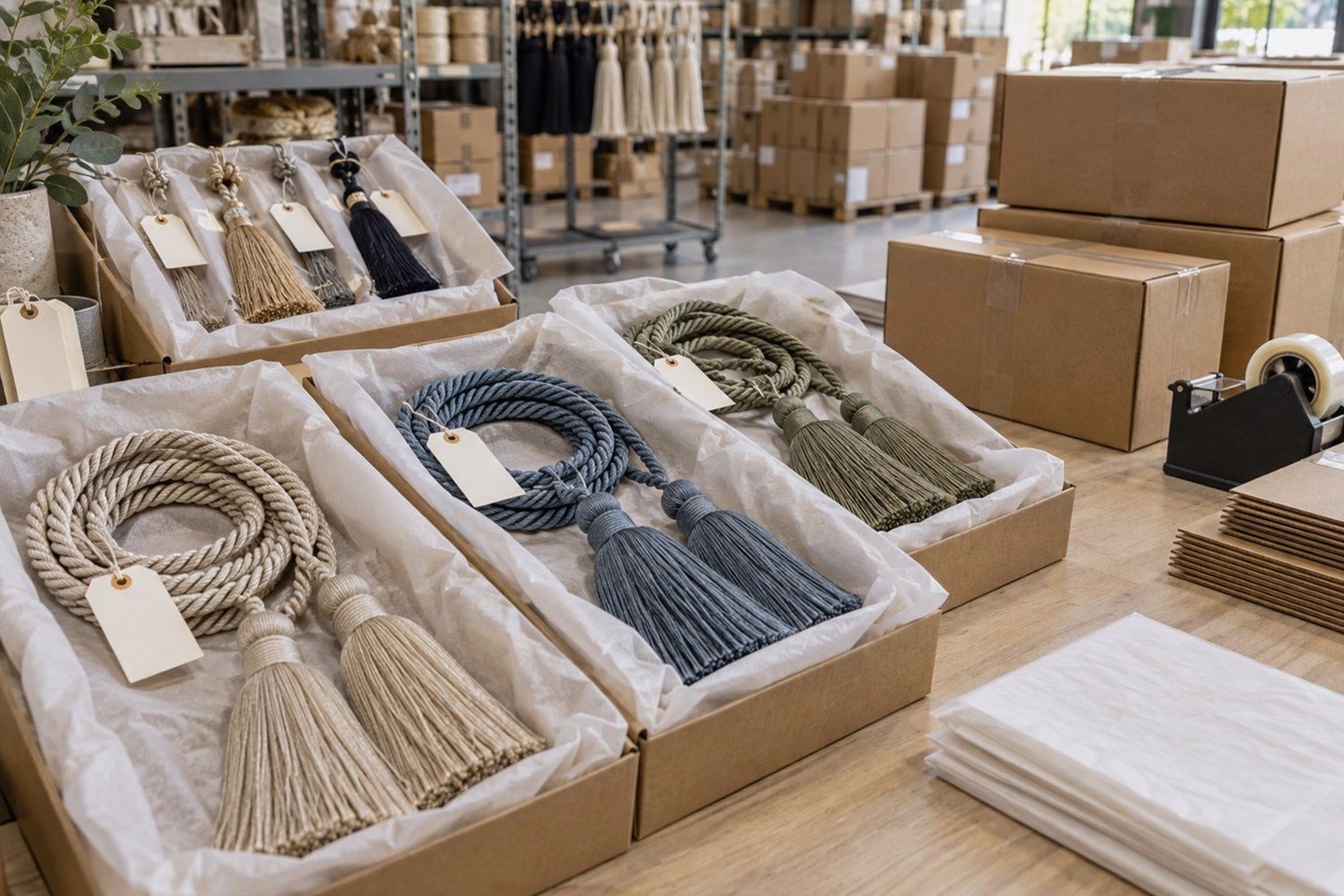
Describe the curtain, preferred product structure, fastening or mounting method, dimensions, materials, colors, decorative components, finish, packaging, and sample reference in one request.